Sam Robbins wrote in 1991 Wisconsin Birdlife that black scoters are an uncommon fall migrant east (Lake Michigan); rare fall and spring migrant elsewhere.”
Sam also reported that “Until 1981, Wisconsin had no record between early June and late September. So it came as a complete surprise to Jim Hale to find a female escorting five downy chicks along the Lake Michigan shore in Door County on 6 July, 1981." Mark worked in the DNR’s Bureau of Research at that time where Jim was the Bureau Director.
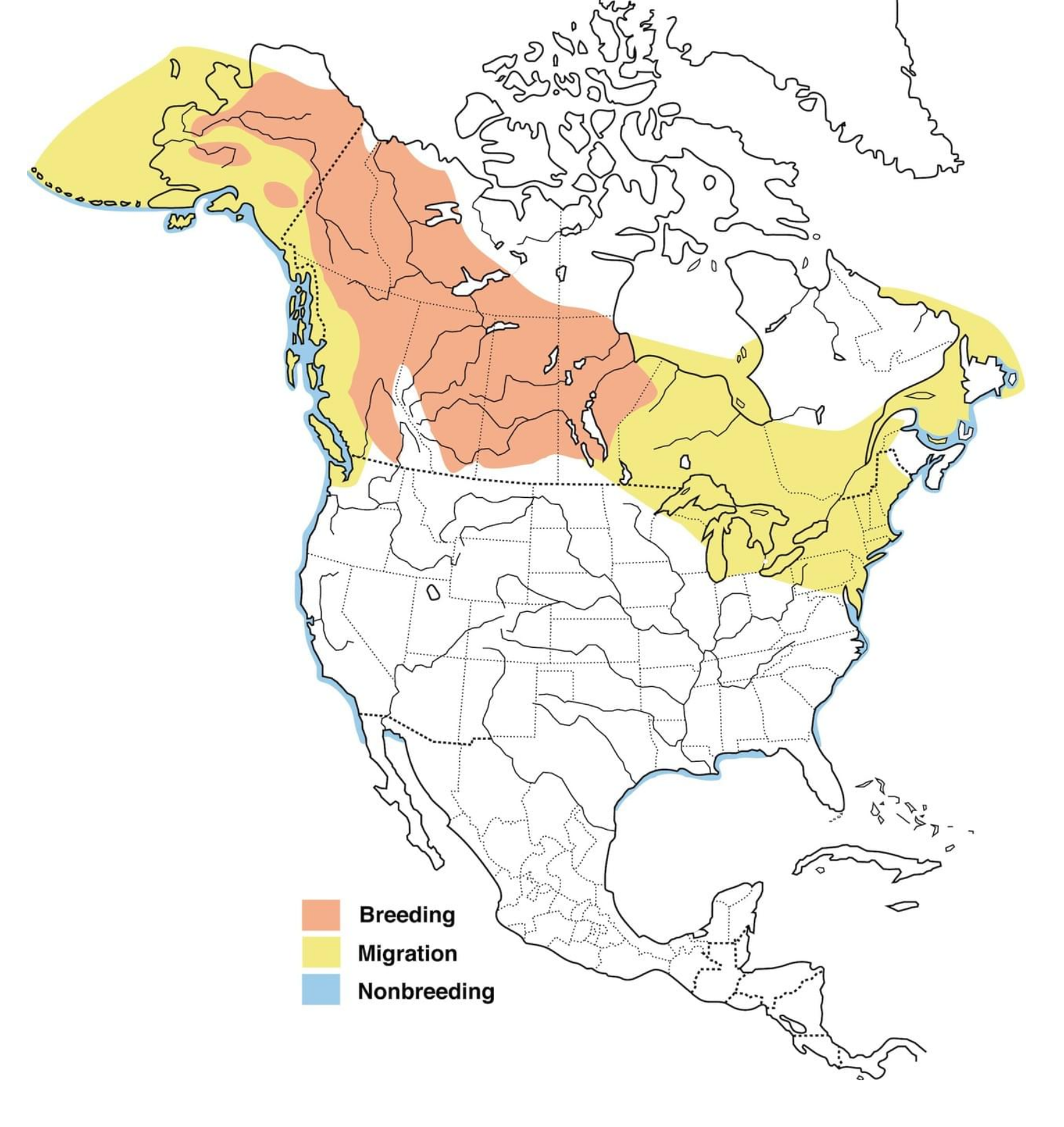
According to the Cornell Laboratory of Ornithology, “Late autumn migration occurs across a broad front, so migrants may turn up almost anywhere in the continent’s interior, usually on lakes and larger rivers, where they normally do not linger long.
Black Scoters nest in the remote north, making their population trends hard to estimate, but they appear to be in decline. A 1993 study of eastern North America estimated a decline in all 3 scoter species at 1% per year between 1955 and 1992, indicating a cumulative decline of 31% over that period. Partners in Flight estimated the 2017 global breeding population at about 500,000 and rated the species a 12 out of 20 on its Continental Concern Score, indicating a species of low concern. Black Scoters form large winter flocks along both Atlantic and Pacific coastlines, though they are scarcer south of the Carolinas and northern California. During late autumn, tens of thousands may migrate southward past prominent headlands or peninsulas. Inland, Black Scoters turn up briefly on lakes or reservoirs, especially when bad weather drives them out of the sky. As with most waterfowl, a spotting scope is useful to get good views.”
There must have been bad weather before the fourth weekend in October to the north and east of us. On October 23 to October 25 there were numerous reports of scoters in Dane County. Rare eBird reports had black, white-winged, and surf scoters at Ferchland Place Overlook and Olbrich Park. Black scoters were found at Hudson Park and white-winged scoters were found at Tonyawatha Park, Marshall Park, Schluter Beach, University Bay, Hudson Park, Lake Farm County Park, and Lake Kegonsa State Park in Dane County.
JD Arnston reported on the following observations on October 24 and 25:
“This past weekend, I received several eBird alerts about all three species of scoter being sighted on the Madison lakes. Excited to add them to my life list, I checked out a number areas on the 24th and was lucky enough to see two of the three species—3 black scoters and 1 surf scoter.
The next day, while talking with Mark Martin about my scoter sightings, he suggested keeping an eye out on Goose Pond for scoters as well. That afternoon, I went out to Goose Pond for some birding—hopeful, but not convinced—that I would see any scoters. I surveyed the entire pond but had no luck in the way of a single scoter. After this, I drove around the area, visiting several other wetlands and ponds in search of migratory waterfowl. After seeing many birds but no scoters, I made my way back to Goose Pond, figuring I would give it one more quick look before calling it a day.
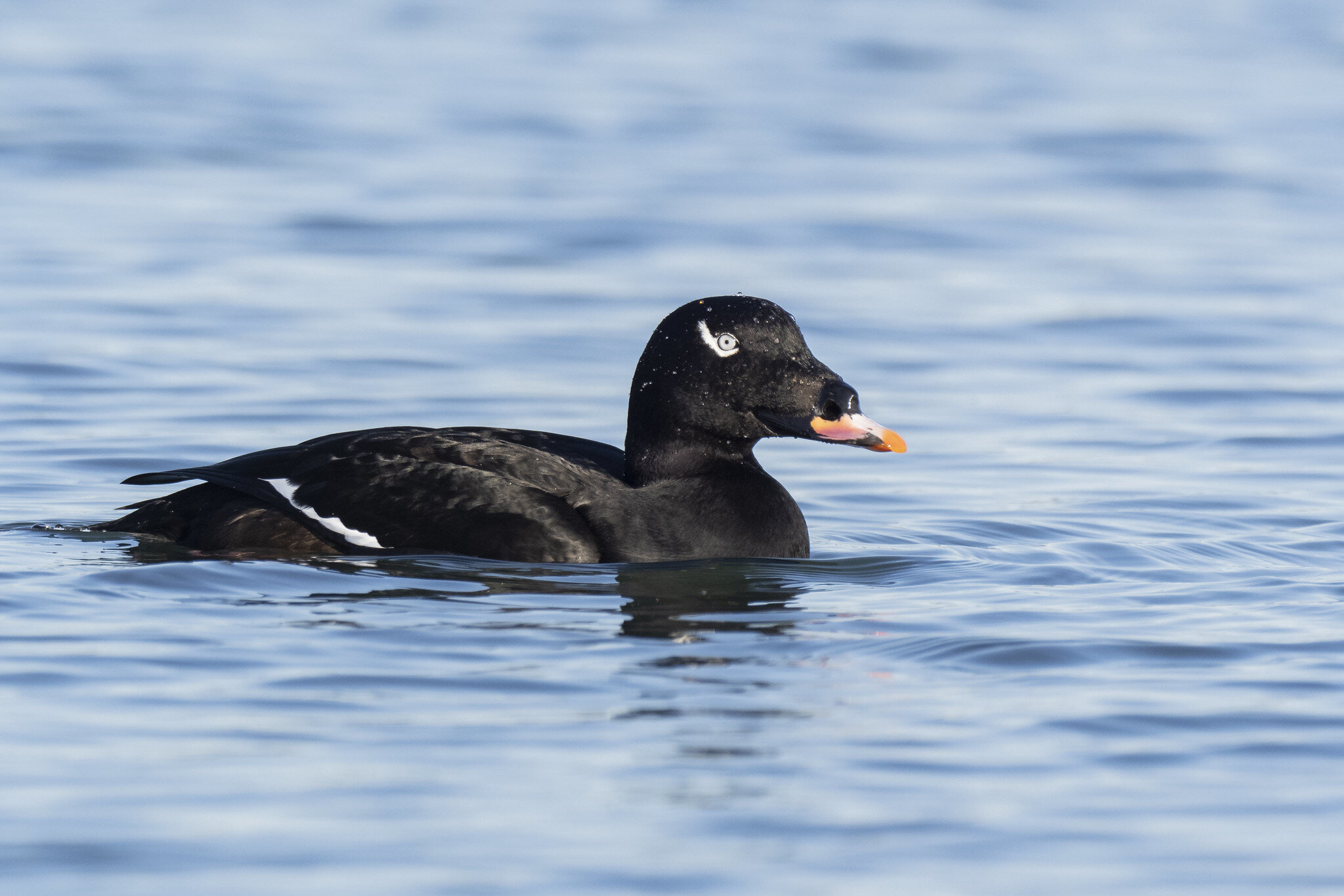
As I scanned the pond, I almost couldn't believe it—a group of 8 white-winged scoters near the center of the west pond. Not only was this a lifer for me, but it was also the first record of a white-winged scoter at Goose Pond.” JD’s eBird report contained the following observation. "Juvenile/female plumage. Large bill, especially at the base. Dark colored with the exception of the white eye markings on both sides of the eye. The white wing patch was also visible." Mark, Graham, and Calla searched the next day but it appeared that the scoters had moved on.