
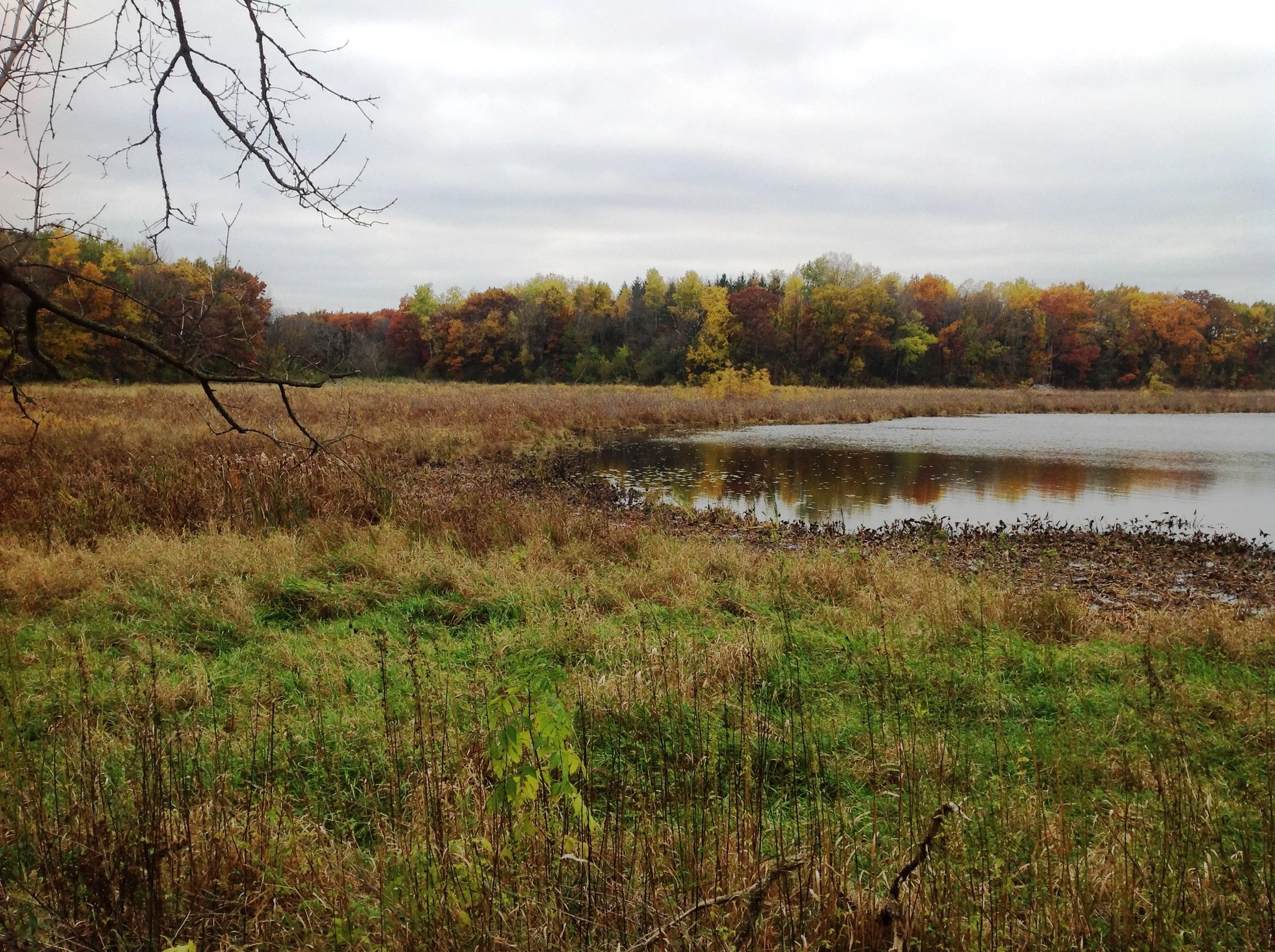
This season at the sanctuaries: autumn 2026
Southern Wisconsin Bird Alliance’s lands are permanently protected and conserved habitat for birds, plants, and other wildlife. They are stewarded, restored, and managed by our sanctuary teams. Learn more here.
Migrating monarchs at goose pond
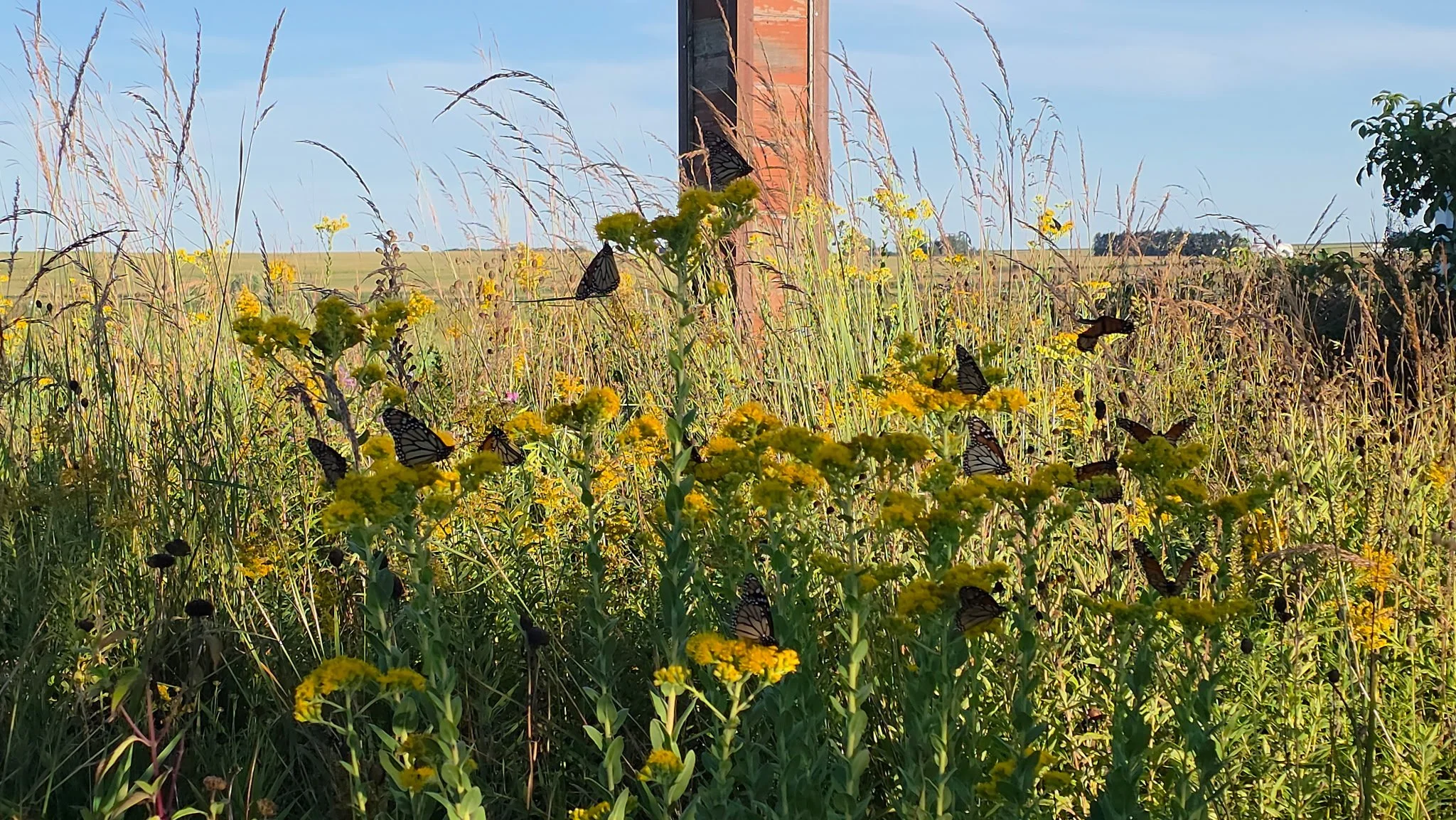
Monarchs in the pollinator garden at Goose Pond Sanctuary in September 2026 (JD Arnston).
This fall has been all about monarch butterflies. Since 2012, we’ve been tagging monarchs with lightweight sticker tags, but this year we took it up a notch. In addition to the 1,500 sticker tags we’ve been busy applying, we’ve equipped 30 monarch butterflies with BlūMorpho cellular tracking tags (learn more about Project Monarch and how you can download an app to follow their migration).
In addition to the new technology, 2026 has been an incredible year for monarch numbers at the sanctuary. Our tagging field trips have been a huge success with most sessions tagging over 100 monarchs. The abundance of monarchs roosting in the windbreak near the Kampen Road residence has inspired awe and hope for these beautiful travelers. We’ve counted up to 607 monarchs roosting—we haven’t seen such impressive numbers since 2021.
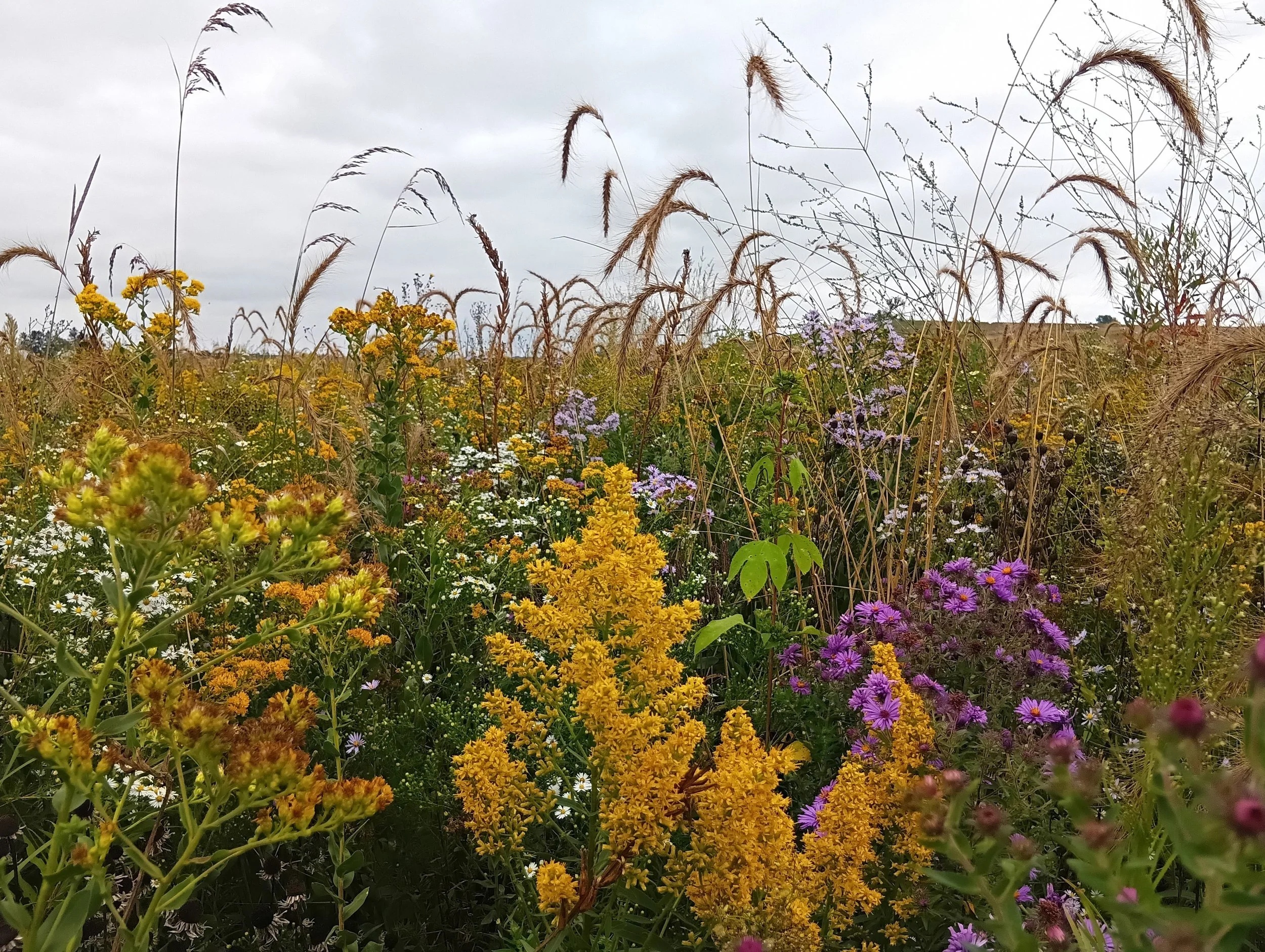
Blooms at Goose Pond (Rose Brown).
Plan your visit
Fall colors have arrived at Goose Pond: the lush, green vegetation has been obscured by seas of amber indian grass and big bluestem and the vibrant yellows of goldenrods and sunflowers. Numerous asters like New England, smooth blue, and silky are also in bloom this time of year.
Unfortunately, the pond has been dry since mid July, but we are crossing our fingers that autumn rain could pool enough to support some migrating waterfowl. However, our prairies will still support an abundance of other migrants like Northern Harriers, Short-eared Owls, various sparrows, blackbirds, and more. Park at one of our parking lots to enjoy the fall foliage and migrating birds from our mowed hiking trails.
Get involved
Join us for a Saturday morning on the prairie as we collect seed for our upcoming restoration projects. To be notified when and where seed collecting events will occur, email land steward Emma Raasch at eraasch@swibirds.org.
Fall is also a great time to contribute to one of the most important ways to care for our prairies: prescribed fire. Whether you’re a recurring volunteer crew member, or would like to experience your first burn, we cannot accomplish these burns without you. To be added to the volunteer burn list, contact Emma at the address above.
Learn more:
Goose Pond StoryMap: take a virtual tour
If you have questions, or would like to receive more detailed updates from the team, email goosep@swibirds.org
Dinner with a view at Faville Grove
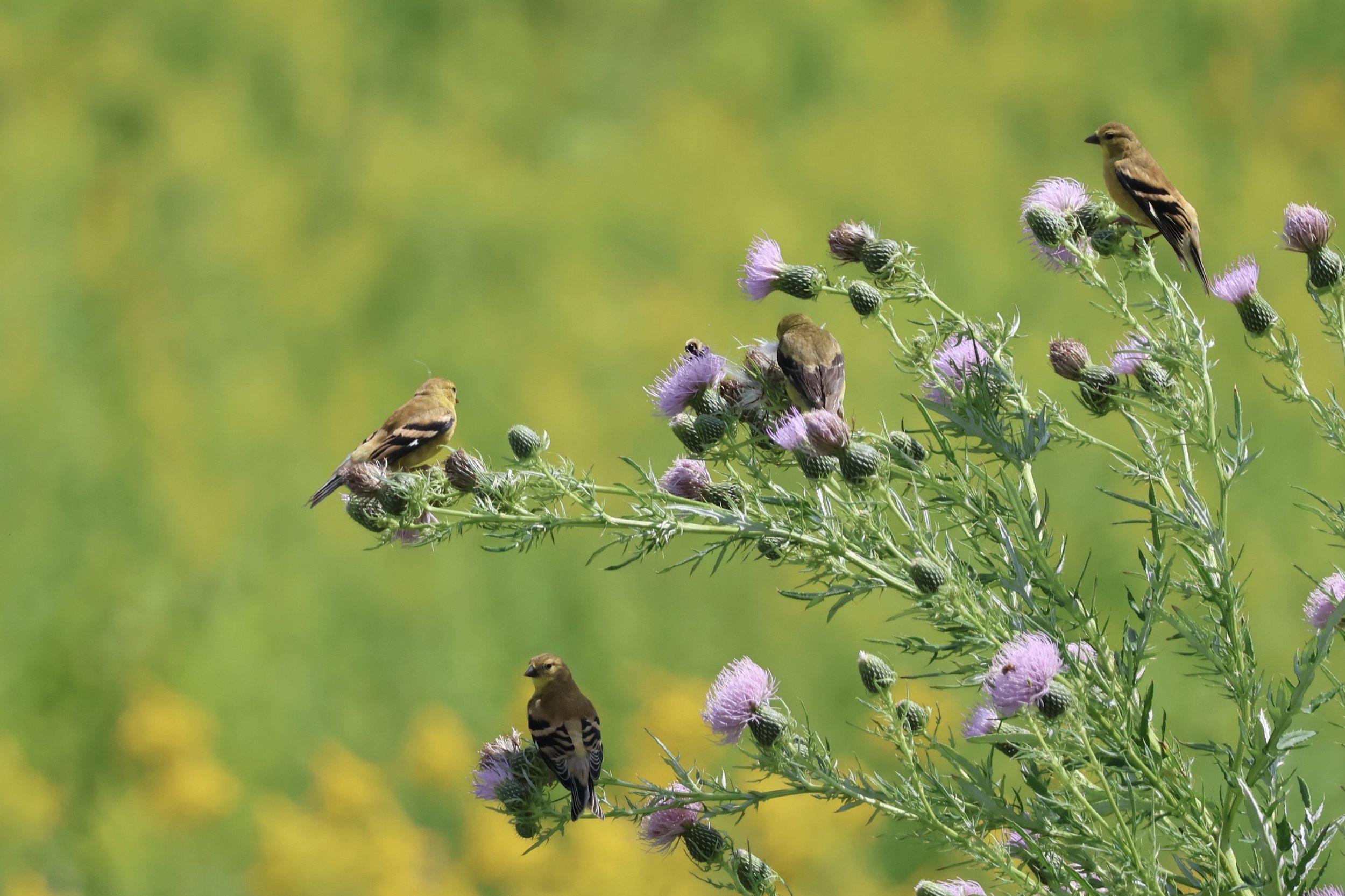
American Goldfinches on thistle at Faville Grove (Soraya Castle/SoWBA).
Millions of songbirds and waterfowl will pass through the upper Midwest on their journeys, and most will fly overhead at nighttime. Faville Grove’s ripening plant species provide them with nutritious fuel and a picturesque rest stop. Thistles are a favorite of American Goldfinches, who waste no time feasting on the seeds when ready and build late summer nests in the plants, often using thistle fluff as lining. Seeds of the Silphium genus—like prairie dock and cup plant—provide protein and fat for long-distance travelers. Seeding coneflowers and sunflowers are also frequented by sparrows, cardinals, and finches.
Goldenrods, asters, and gentians flush the landscape with yellow, white, and purple. Short-statured beauties like cylindrical blazing star, Great Plains ladies’ tresses, and greater-fringed gentian reward those who look low to the earth. September and October’s lovely flowers will feed the last pollinators and migrants of the year before the blue hush of winter.
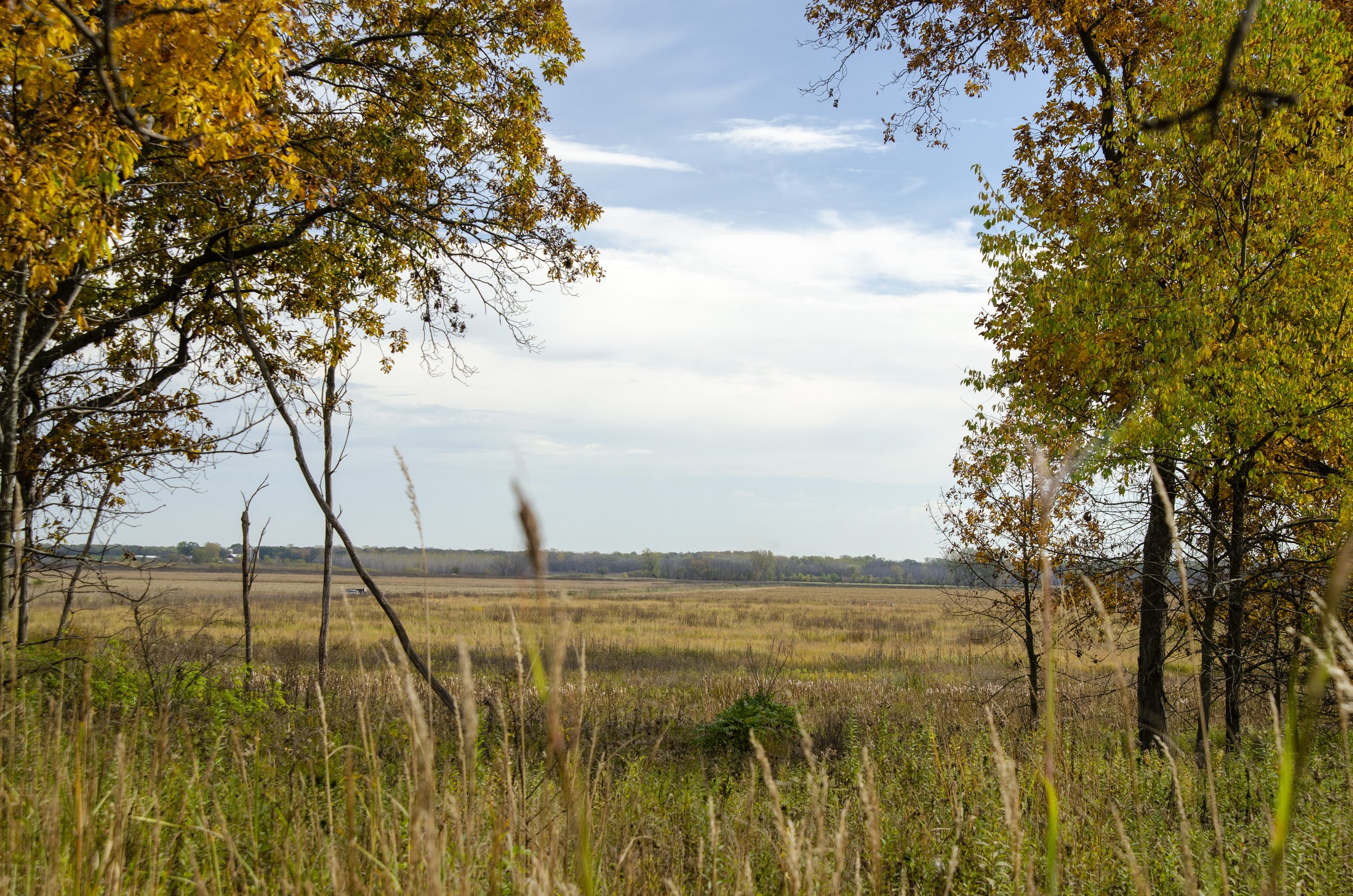
Autumn at Faville Grove (Kaitlin Svabek/SoWBA).
Plan your visit
Now is a wonderful time to visit Faville Grove, not only because each autumn day brings forth new colors and wildlife, but also because we have recently mowed trails around the sanctuary. The first thing you notice as a tallgrass prairie comes into view is the namesake grasses, swaying in the wind and drawing a peach-colored veil over the diverse forbs that grow beneath. Indiangrass and big bluestem reach the highest, but shorter clumps of prairie dropseed, sideoats grama, and little bluestem charm with their distinctive flowers and seeds. Head to the Buddy’s Prairie parking lot to observe the shift in plant community and height of vegetation in the undulating landscape, passing by the Mackenzie Overlook for a serene view of Faville Relict Bog. If you spot something that interests you, document it on the free iNaturalist app to support our Biodiversity at Faville Grove Project!
Get involved
There is nothing like walking through the prairies in the fall, and seed collecting is a great way to spend time outside and help our restoration efforts! No prior experience is needed and all necessary tools will be provided—although long pants, water, and gloves are suggested. Events are weekly on Wednesday mornings in addition to Saturday mornings and afternoons; though other times can be arranged. RSVPs and questions are appreciated, contact land stewards Parker and Soraya at faville@swibirds.org.
Learn more:
Faville Grove StoryMap: take a virtual tour
Questions? Contact faville@swibirds.org
The autumnal palette at FaIR MEADOWS
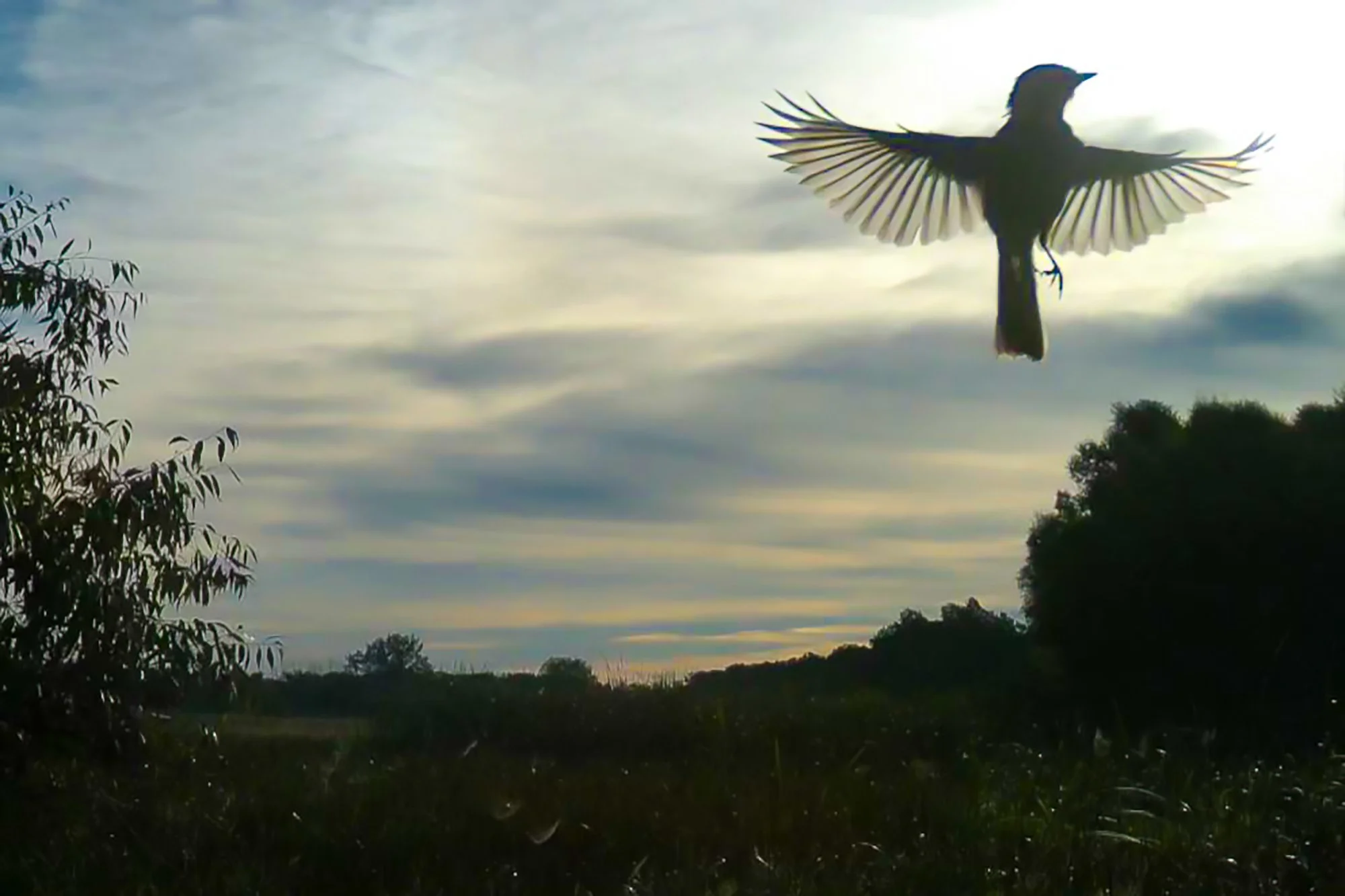
A bird takes off from Fair Meadows during fall migration in September 2026 (Jeff Newcomb).
It’s the season of blue and gold. Those are not the colors of the local football team—they are the radiant colors of goldenrods and asters in the woodlands, prairies, and wetlands of Fair Meadows Sanctuary. It’s a beautiful table setting for a feast of nectar and pollen and abundant fall insects as the bees prepare for winter and the birds embark on their long journeys south. Migrating thrushes, vireos, warblers, and flycatchers are moving through while other species are settling in to stay the winter—White-breasted Nuthatches and Black-capped Chickadees in the woods; American Goldfinches in the prairies.
The deer hunters who work with us to help maintain the balance of the sanctuary’s ecosystem are also preparing for the season. We recently met with them for our annual meeting, where we reviewed regulations (no lead ammunition permitted, no hunting during sanctuary birding days) and determined the work projects that they will participate in this fall and winter—prescribed burns, brush removal, and forest stand improvement.
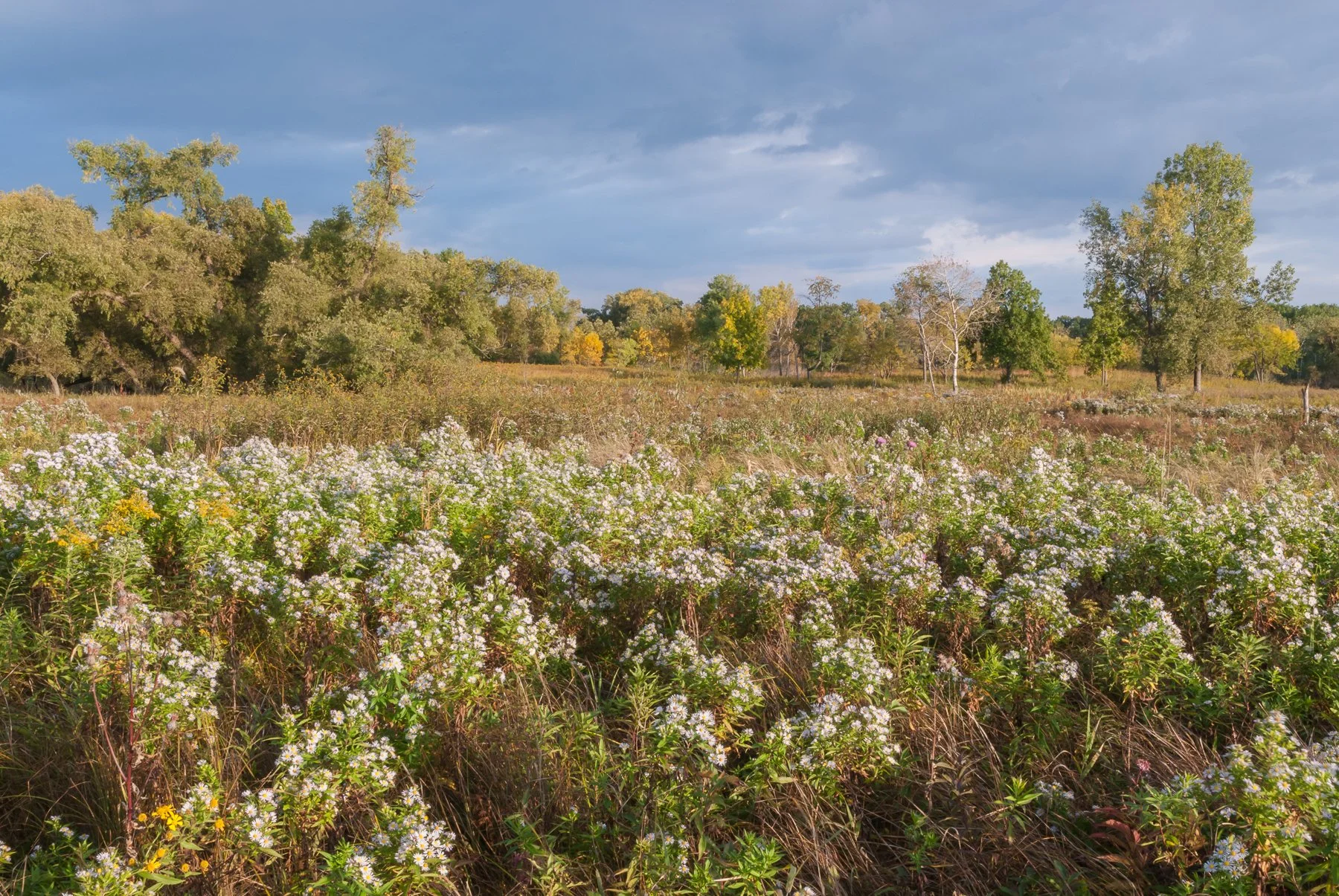
Shining asters in sedge meadow (Gary Shackelford).
Plan your visit
As a reminder, Fair Meadows Sanctuary is open to the public for monthly field trips and events, but not for spontaneous visits. Fall migration at the sanctuary is splendid to behold, as a stroll through the prairies is filled with blooms in shades of gold, rust, purples, and blues.
Be sure to sign up for one (or more) of our birding days in September or October! Please note: there will be no birding days hosted during the month of November, but they will return again in December.
Get involved
We are always looking for volunteer help at Fair Meadows. If you have interest in volunteering on a variety of summer tasks or management projects, please reach out to Penny and Gary at fairmeadows@swibirds.org.
Learn more:
Fair Meadows StoryMap: take a virtual tour
Questions? Contact the team at fairmeadows@swibirds.org
Signs of progress at Hillside Prairie
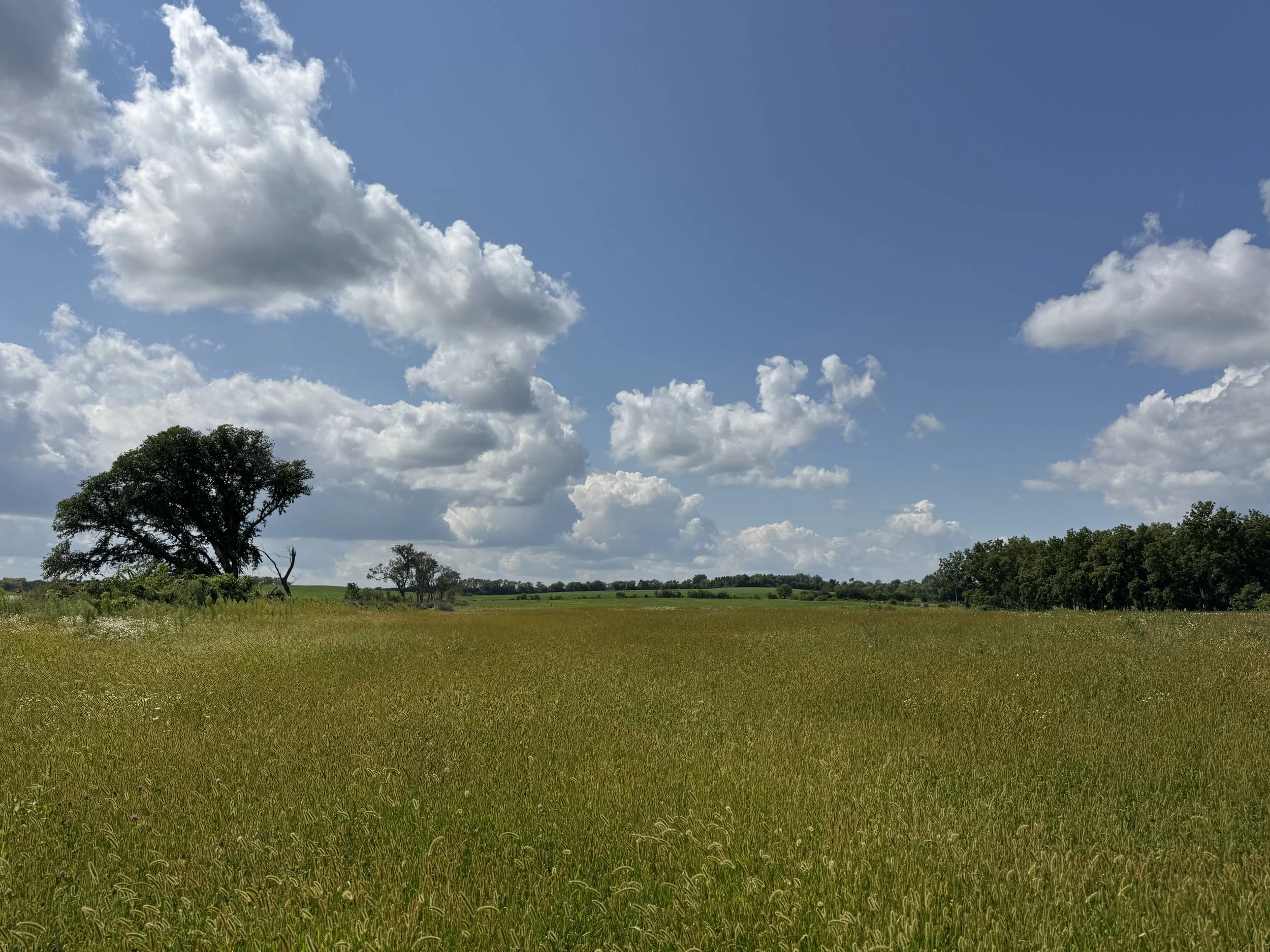
The first growing season of this 12-acre prairie planting (Emma Raasch/SoWBA).
With such a new property, restoration opportunities abound. This winter we will be interseeding 20 acres of previously seeded fields, as well as 3.8 acres that will be restored to open oak savanna. To prepare for planting, we will be conducting prescribed burns this fall. Although much of the interior fenceline has been removed the past two winters, some work remains. We will be continuing to remove trees and shrubs in the interior fencelines, beginning work on exterior fencelines, and removing trees that are encroaching on the planted prairies. With all this brush removal, we will have lots of piles to burn!
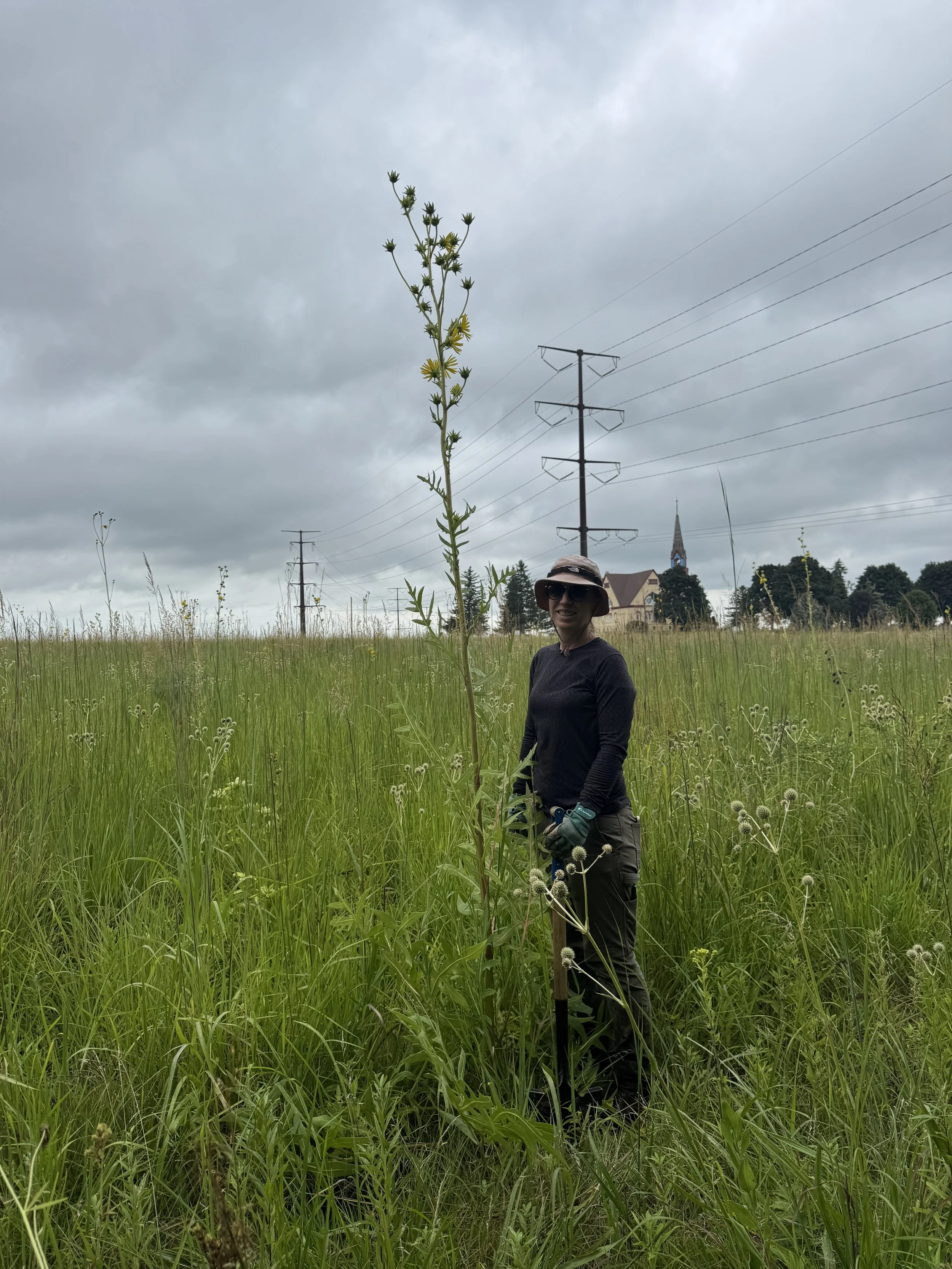
Cayla Matte next to compass plant in Jean’s Prairie (Emma Raasch/SoWBA).
Plan your visit
Enjoy the fall foliage and already-established habitat at Jean’s Prairie this season (visitors can park along the power lines on East Church Road west of the churches). This prairie was burned in spring and has been vigorously growing since! Look for the towering compass plant and prairie dock—their flower production was greatly enhanced by the burn.
Permanent trails are not yet established, but the majority of the grasslands are short and walkable, especially along the edges of what were formerly fencelines. Visitors may park along the driveway for 1813 Hillside Road (or on the open, grassy area next to the hay bales) east of the farm buildings. Explore the 46 acres of newly seeded prairie directly south of the parking area. In a few years, these areas will be unrecognizable.
Get involved
Although volunteers and staff will be busy collecting seed for restorations at Hillside Prairie, most of the collection will occur at Goose Pond where there are more established seed sources—email land steward Emma Raasch at eraasch@swibirds.org to get weekly seed emails (we may have a couple collection events at Hillside Prairie).
We also have several prescribed burns and brush pile burning planned at Hillside Prairie this fall to prepare for winter interseeding mentioned above. If you’d like to be notified of these opportunities, contact Emma at the address above.
Learn more:
General questions? Contact Mark Martin at goosep@swibirds.org
Cover image by SoWBA. A vibrant array of autumn tree colors ringing the wetland complex at Faville Grove Sanctuary.
