

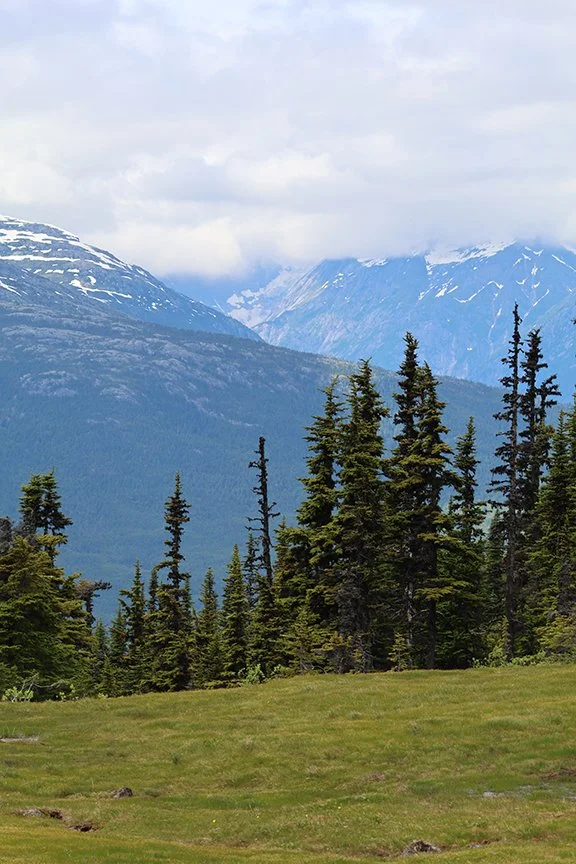
A view of the mountains (Soraya Castle).
This year, I have found myself out west much more than usual. Family visits, celebrations, and wilderness trips have taken me to Colorado, Oregon, and Alaska. The western ecosystems of shortgrass prairie, sagebrush shrubland, tall conifer forests, and alpine lakes offer so much natural beauty and such a striking difference from the landscapes east of the Rocky Mountains. Southern Wisconsin’s rolling prairie, oak savanna, and sandstone bluffs seem to be a world away, but as I spent time in the mountains, I came to appreciate the things they had in common.
Glaciers carved out the valleys of the Rockies just as they formed our moraines, bogs, and lakes. It is also thought that they played a role in the evolution of distinct species across North America. Continuously advancing and receding sheets of ice may have provided a geographical barrier that separated and isolated populations of birds along an east-west divide, resulting in the diversity of birds we have today. On my trips I heard the calls of Western Wood-Pewees, Mountain Chickadees, and Western Flycatchers, feeling an uncanny familiarity. Much of the bird and plant life I encountered were cousins to species I’ve come to know at home. I was comforted to find recognition in life forms I had not been introduced to yet.
In Alaska, I had an incredible chance to see Arctic Terns from the stern of a tour boat. Sighting terns is always exciting, as every species found in Wisconsin is also listed as state endangered. But this species exists in a remote range encircling the north pole, safeguarding their population from human activity and keeping their numbers stable. They were everywhere on the inlet I toured, soaring gracefully on narrow wings overhead and huddled on icebergs to catch some rest. Now that we’ve left the breeding season, so many bird species will take on a great journey—but none will travel as far as the Arctic Tern. Most of their time is spent travelling in open waters because they breed in the Arctic tundra and overwinter off the shores of Antarctica. These elegant seabirds inspire wonderment at the endurance and adaptation of life to all environments.
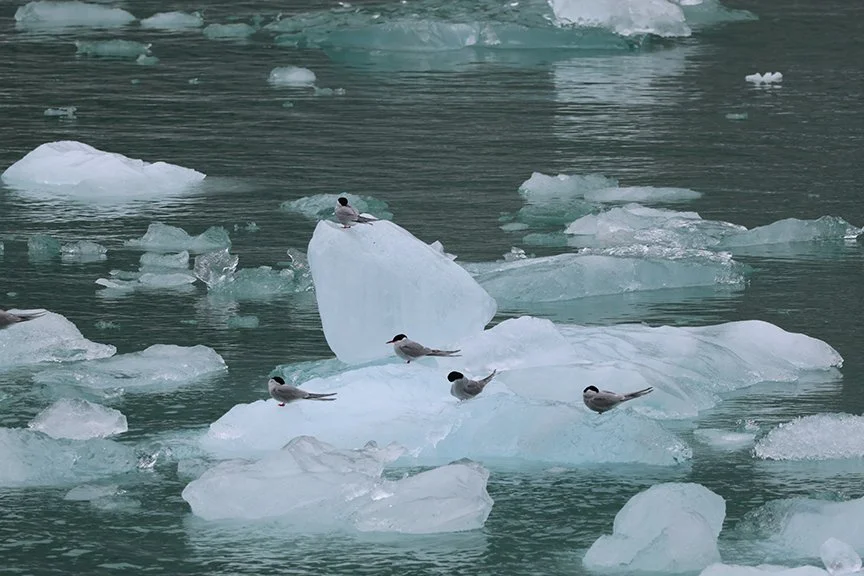
Arctic Terns perched on the ice in Alaska (Soraya Castle).
Driving down the highway towards Mt. Hood in central Oregon, smoke obscured the mountainous vista beyond the pines. We stopped on the road as wildland firefighters thinned trees to temper the ongoing Grasshopper Fire—one of dozens of wildfires across the state in August. Prescribed fires are as important to the ecology of western forests as to the ecosystems here in Wisconsin. Centuries of fire suppression and bureaucratic hurdles in western states that make it challenging to conduct prescribed burns have led to the right conditions for larger and more dangerous wildfires. The stands of burned trees I saw throughout Oregon were initially jarring, but a closer look revealed how this charred habitat was being used by wildlife. Several bird species, including the vibrant Mountain Bluebird, used the burned trees for nests and spots to forage from. The males caught my eye first, being blue all over, while the grayer females have just a splash on their tail. Like their eastern relatives, Mountain Bluebirds enjoy the open space and will nest anywhere where a suitable cavity can be found, especially in nest boxes. Unlike other bluebirds, they sometimes forage by hovering midair like a kestrel and darting for their meal. After seeing them flit through the stands of dead trunks and baby pines, these birds came to be a colorful sign of life replenishing a disturbed ecosystem.
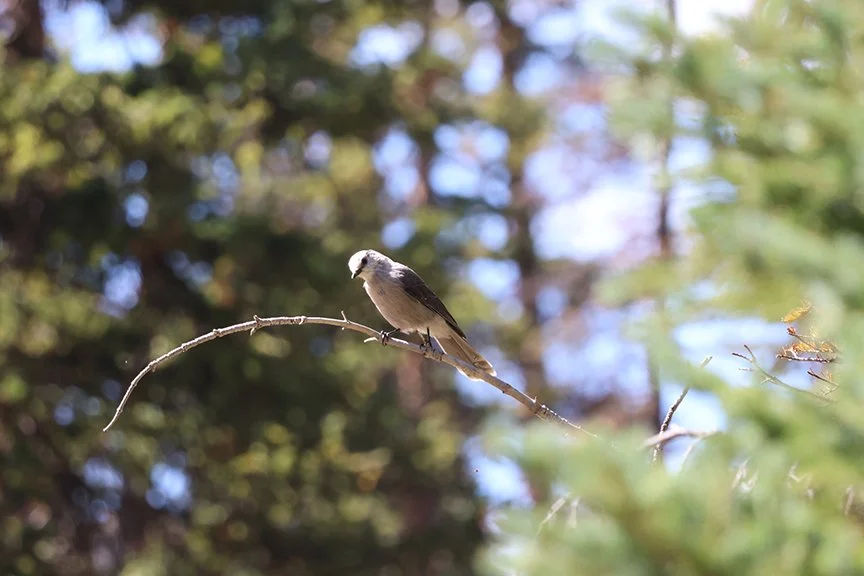
Canada Jay perched on a branch in the Rockies (Soraya Castle)
While backpacking the Rockies in Colorado, a curious white-gray bird seemed to follow my friend and me as we hiked. In one montane meadow, a few tumbled into the open and put on a show for us, hopping and flapping on the ground and bouncing from tree branch to tree branch. Their boisterous and inquisitive nature gave them away as corvids, while their modest coloration confirmed that they were Canada Jays. I find it hard to believe these small and adorable jays could be as hostile as the Blue Jays we know so well, but they’re aggressive enough to have earned the nickname of “camp robber.” These are hardy birds which nest in abundant snow during February or March, strategically nesting southwest of tree trunks for maximal sunshine and utilizing the cocoons of the forest tent caterpillar moth as insulation for the nest. They have even been documented keeping engorged deer ticks in their nest, speculated to supply their young with a heat source. The intelligence that makes them so entertaining to watch has also made them resourceful enough to survive the brutal mountain winters.
These birds were all new to me but reflected the ways that all of the species I know and love occupy ecological niches and solve the problems of life. Every place in this country and across this world has unending potential for exploration, surprise, and beauty that is worth protecting. I am happy to be home and to continue to be a steward for life in this pocket of the world.
Written by Soraya Castle, Faville Grove land steward
