

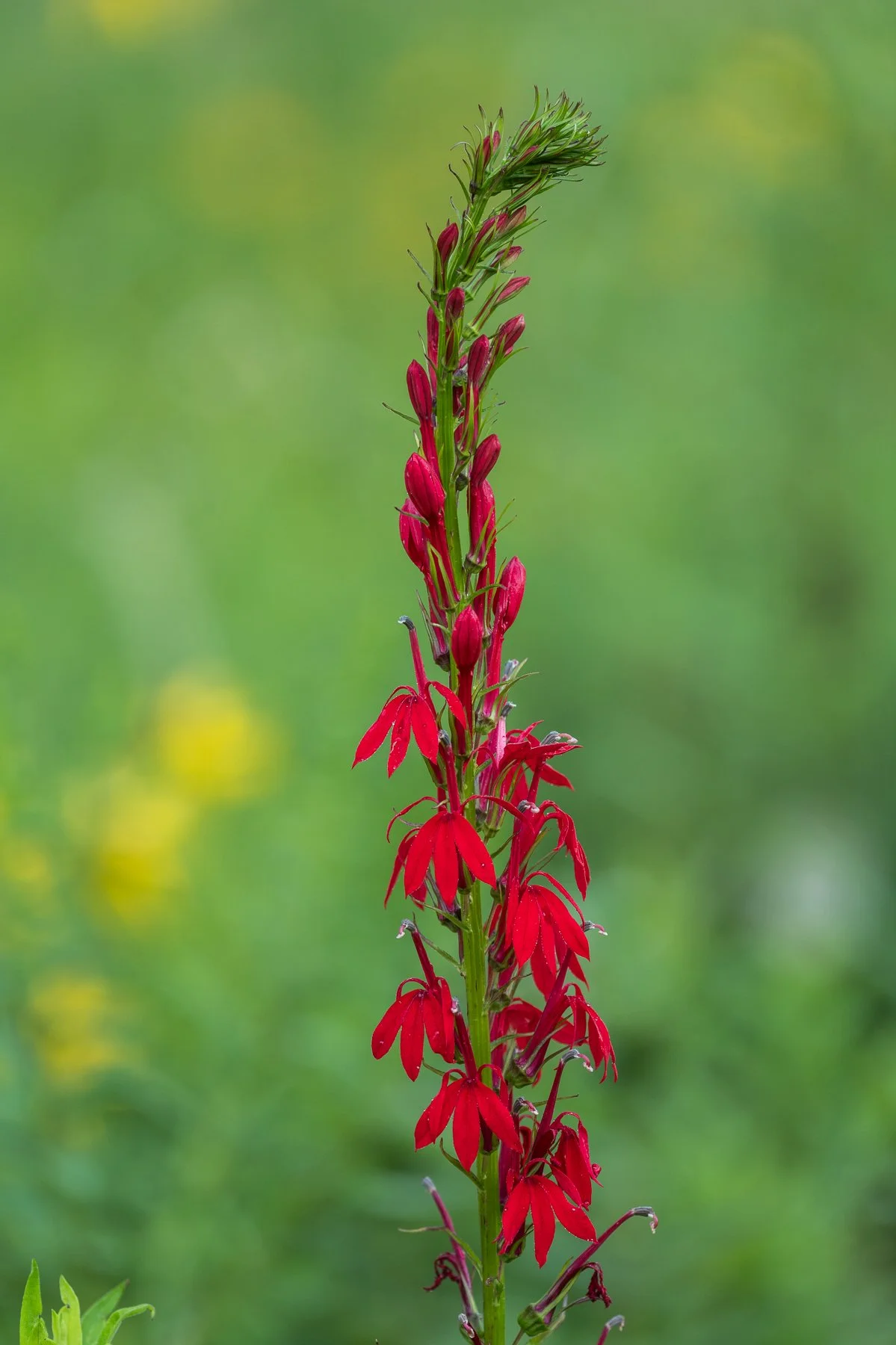
On a cardinal flower stalk, flowers at the bottom bloom first, while those at the top remain closed (photo: Gary Shackelford).
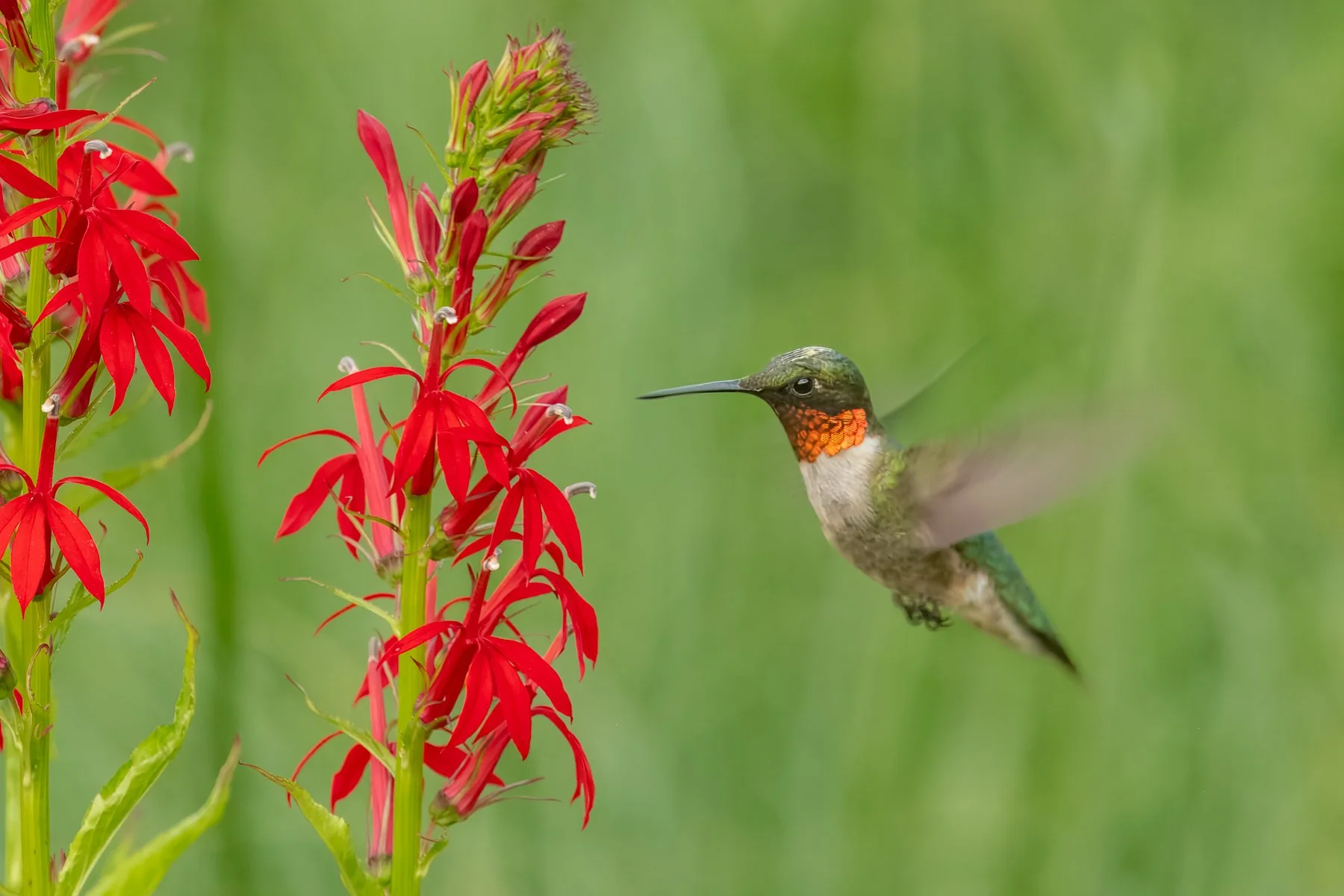
It’s no secret that hummingbirds and red flowers have a special connection. In fact, hummers seem to be attracted to almost anything red. Many times, when I have happened to be wearing something red or orange while outside, I have been startled by a hummingbird suspended in midair with wings whirring, staring me down. In mid and late summer, when cardinal flowers (Lobelia cardinalis) are blooming along stream banks, pond edges, and the edges of wetlands, the Ruby-throated Hummingbird’s affinity for these scarlet gems is on full display.
“Pollination syndrome” is a term that describes how flowers have evolved to fit different niches, possessing combinations of floral traits associated with particular pollinators. For example, bees have good eyesight that extends into the ultraviolet spectrum, they have a good sense of smell, and they need both pollen and nectar. Flowers that have evolved to attract bees are often blue or yellow (colors that bees tend to prefer), they are often scented, and they offer both pollen and nectar as rewards.
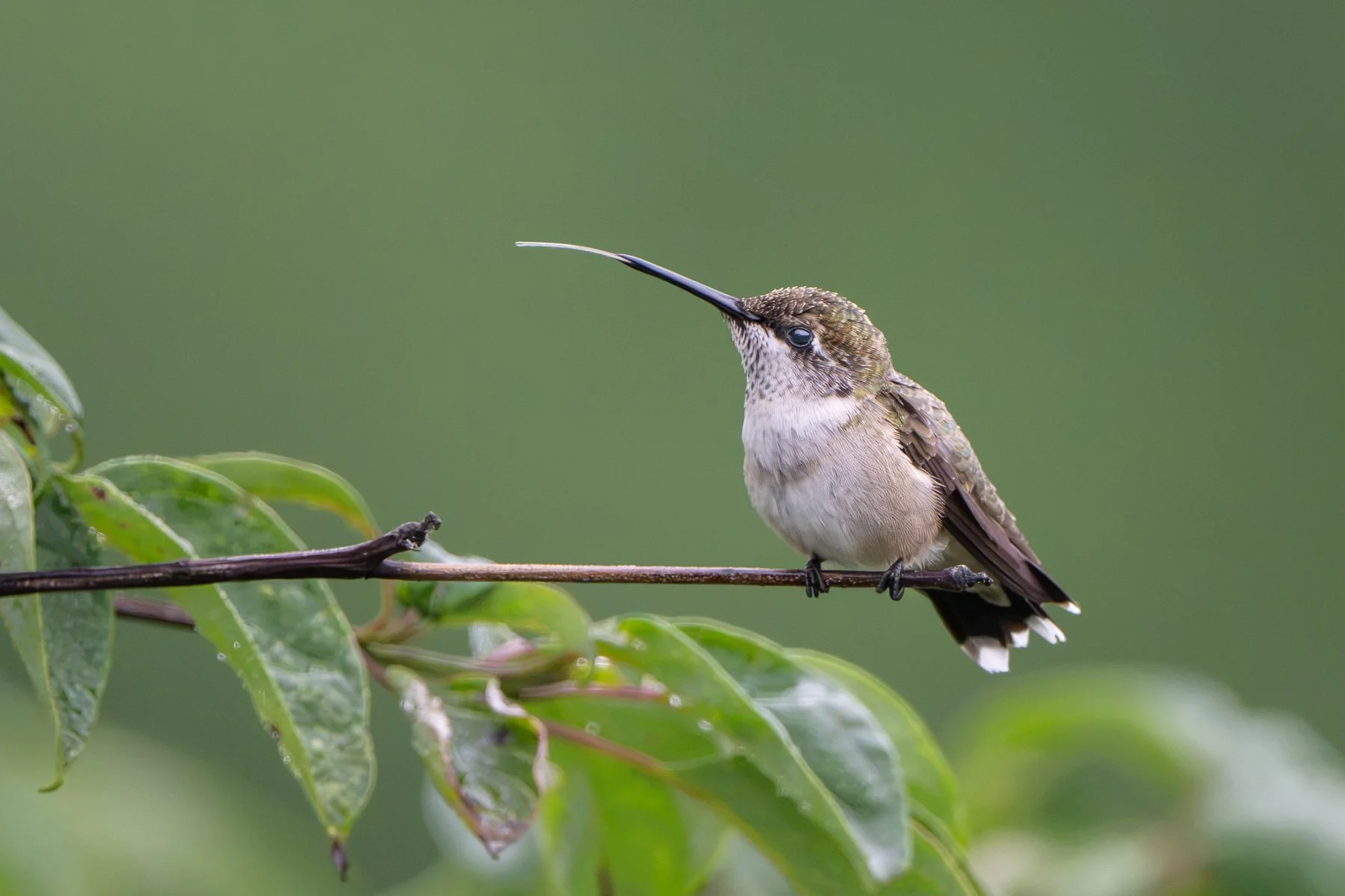
Juvenile hummingbird, showing his long tongue (photo: Gary Shackelford).
Hummingbirds, by contrast, are nectar specialists that have no interest in pollen. They prefer nectar proportionally higher in sucrose, accessible from tubular flowers that they can feed from using their long beak and tongue while hovering. Like most other birds, they have a poor sense of smell but keen eyesight, so they use visual clues to locate preferred flowers that are often bright red, orange, or pink in color.
The cardinal flower’s long flowering stalk and the shape of its individual flowers are no accident. They are components of a combination of specific floral traits known as the “hummingbird pollination syndrome”: bright red color, narrow floral tube, and abundant nectar with high sucrose content that is dilute enough to be sipped by hummingbirds’ specialized tongues. The flower also possesses traits that deter less efficient pollinators, like bees, such as the absence of floral scent and absence of a landing platform.
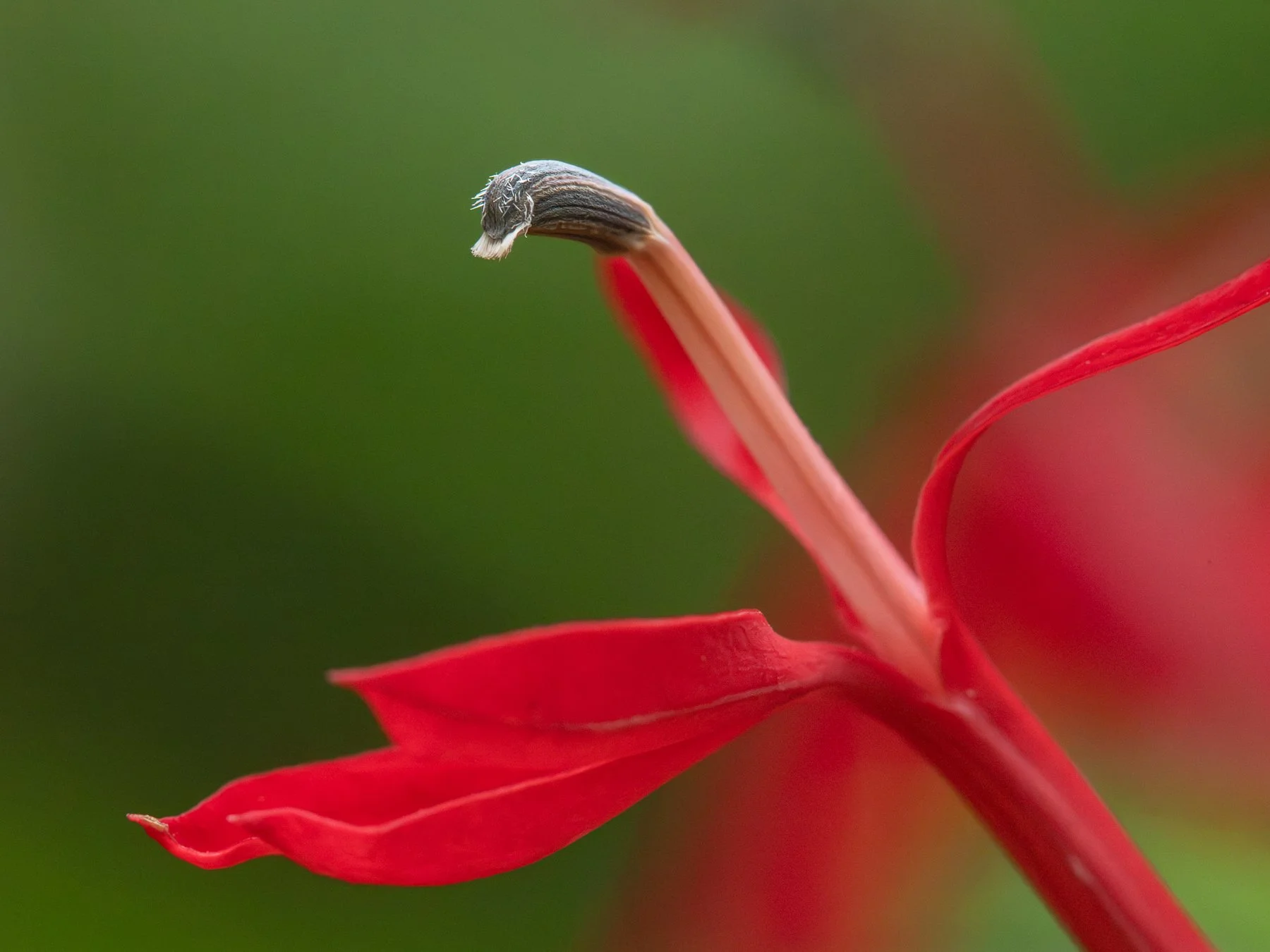
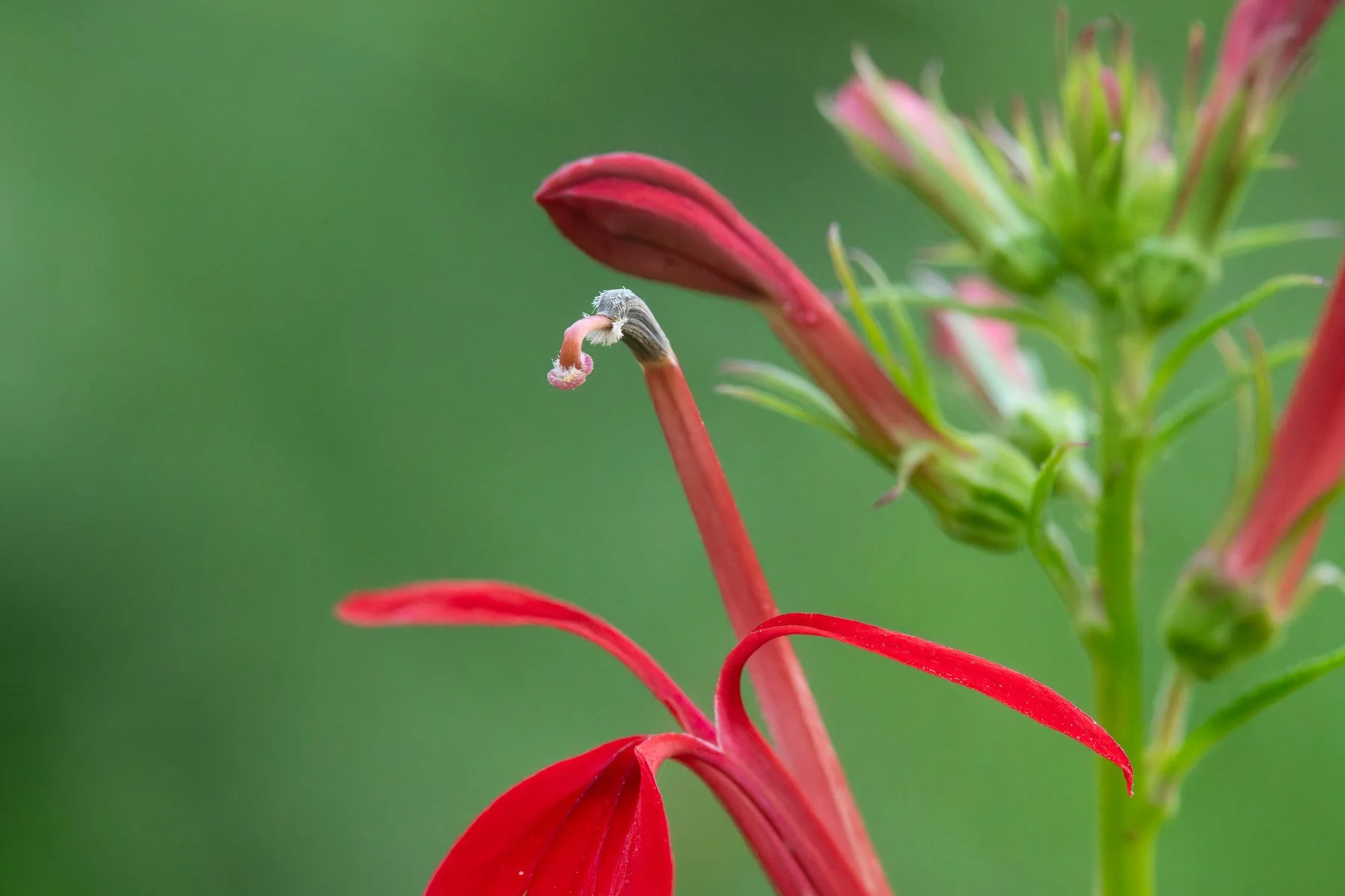
Additional features of the cardinal flower have evolved to optimize fertilization by hummingbirds, their primary pollinator. The reproductive part of the flower is a complex tubular column consisting of both male and female parts, which protrudes from the floral tube and rises above the petals. Early in the first phase (male phase), the pollen lies deep within the reproductive tube. As the female style inside the tube begins to mature, it elongates and pushes the pollen to the tip of the tube, where it is perfectly aligned to dust the top of the hummingbird’s head as it probes for nectar. As the style continues to grow during the female phase, the stigma at its tip extends outside the reproductive tube and becomes receptive to pollen. Because flowering begins at the bottom of the stalk and proceeds upward, a single stalk will typically have female-phase flowers near the bottom and male-phase flowers near the top. When a hummingbird feeds at a flowering stalk, it usually works its way from bottom to top, visiting the pollen-bearing male-phase flowers last. The bird then carries the pollen to the first-visited female-phase flowers on the next flowering stalk, ensuring cross-pollination.
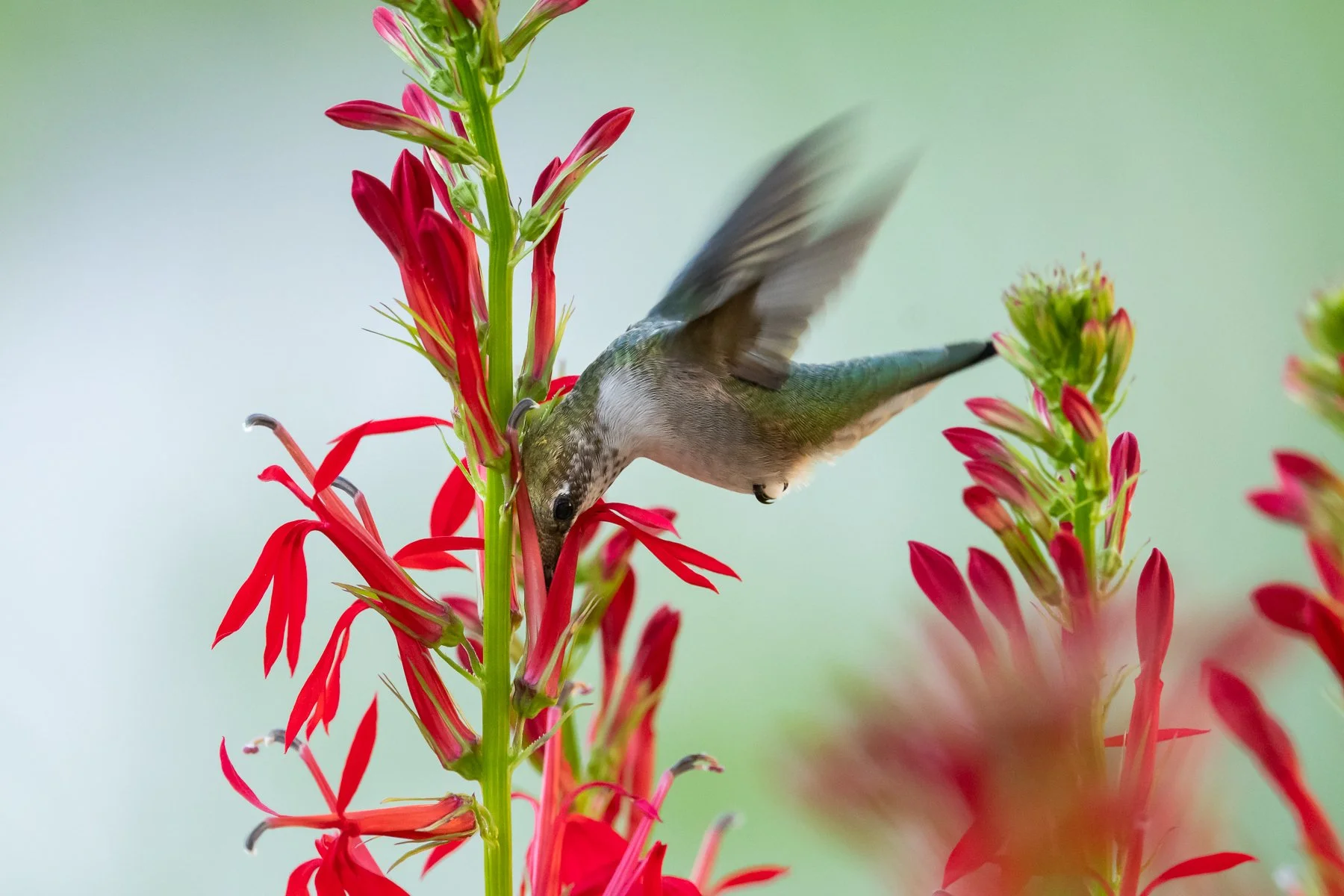
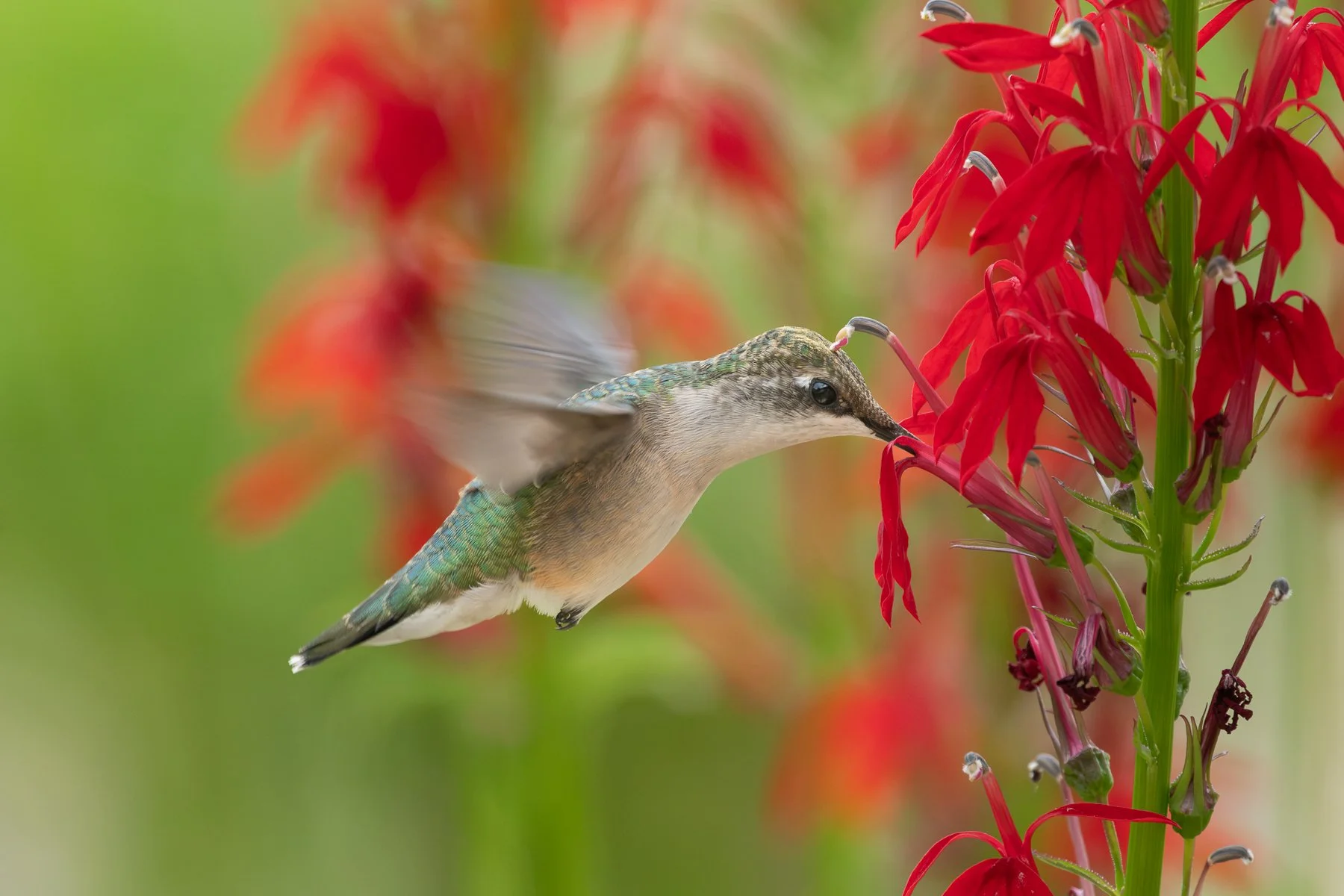
Whenever I spot the uniquely vibrant red of the cardinal flower blooming in the habitats at Fair Meadows, hummingbirds are never far away. The deeply compatible morphological features possessed by both plant and pollinator provide an excellent case study of how highly specialized this relationship can be.
Written by Gary Shackelford, Fair Meadows sanctuary manager
Cover photo by Gary Shackelford. A male Ruby-throated Hummingbird hovers before a cardinal flower.
