
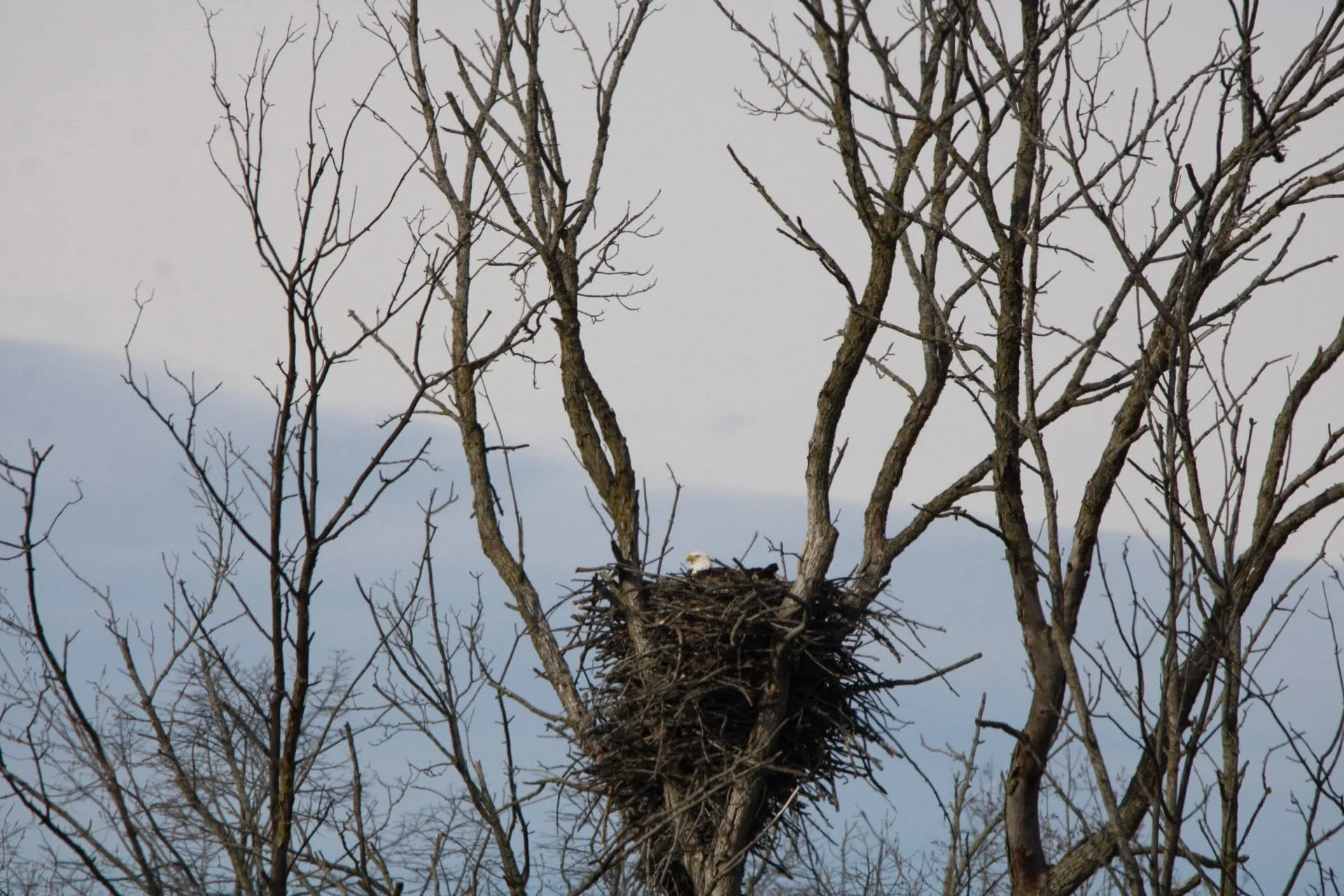
Our Bald Eagle Nest Watch (BENW) season has come and gone for another year. This year was filled with great memories, interesting observations, storm-related tragedies, and heartfelt gratitude for the amazing birds we get to monitor.
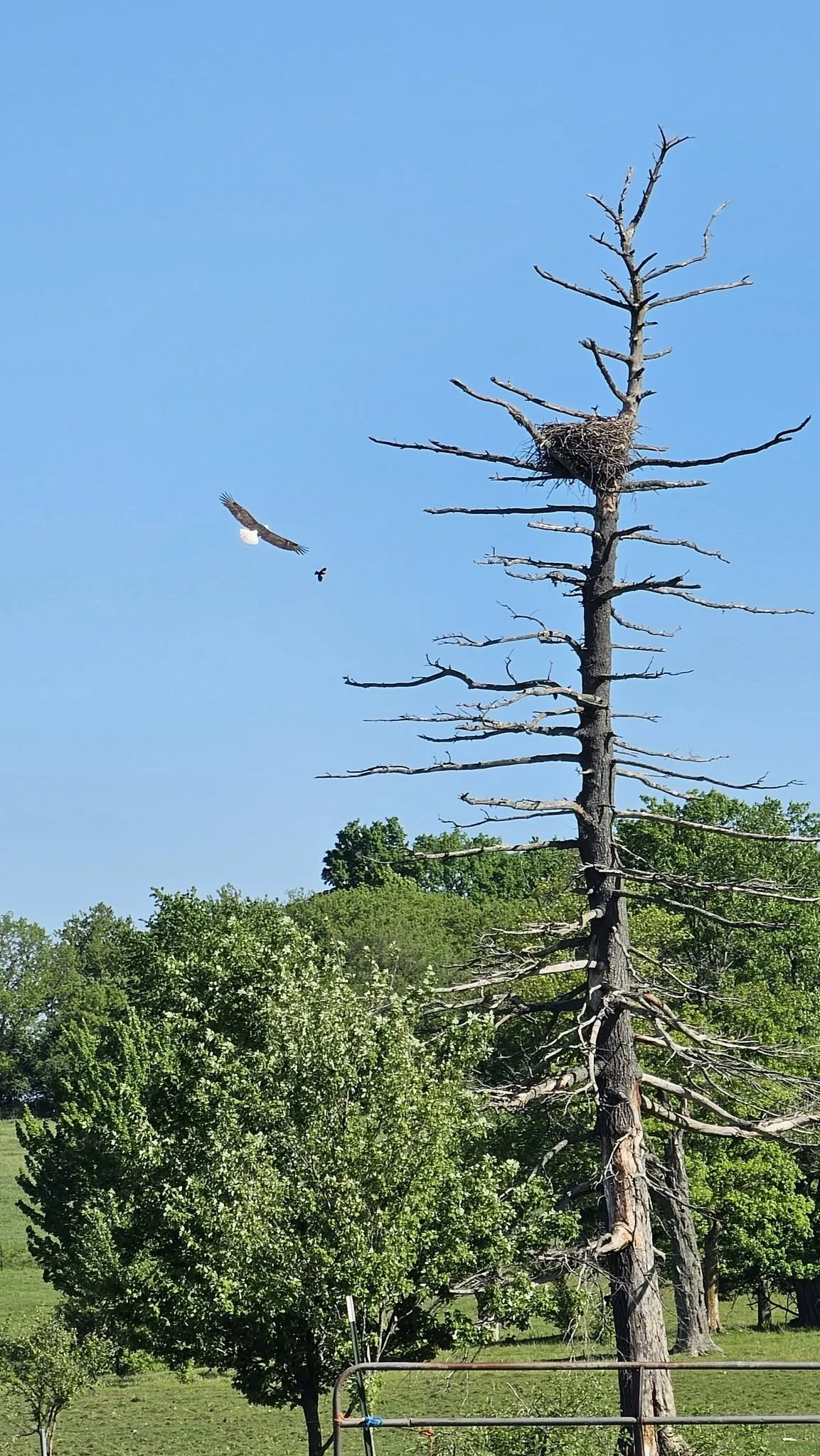
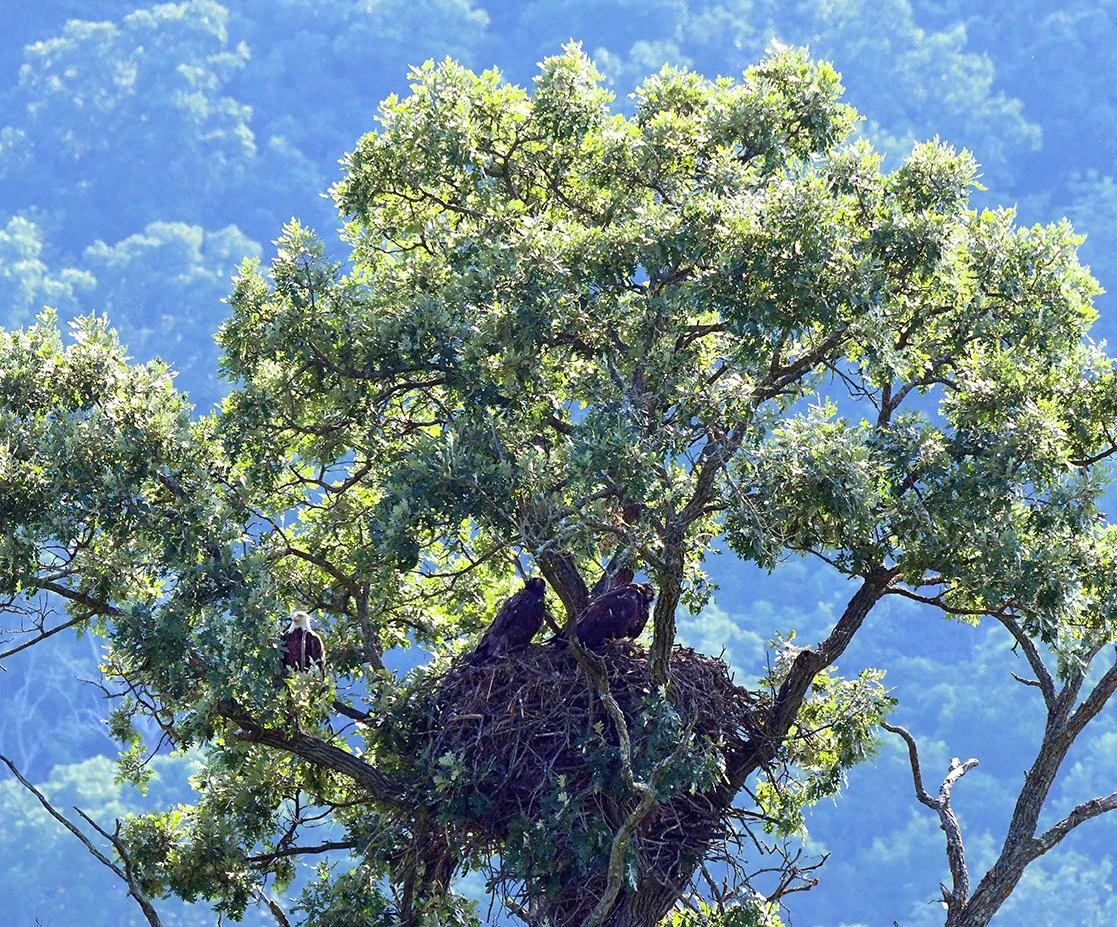
Bald Eagle nest in a rickety tree (photo: Deborah Zilian/BENW volunteer).
We just completed the eighth season of monitoring eagle nests through this program. What started out with 41 volunteers monitoring 15 nests in six counties in 2018 has turned into 575 volunteers monitoring 287 nests in 46 counties in 2026! This incredible growth has come as a result of strong partnerships with other organizations around the state, and the commitment of many eagle-loving Wisconsinites that spend so much time in the field watching these eagle families grow.
Every year comes with some predictability: the eagles typically begin nesting in late February and into March, we can usually see eaglets in late April and into May, and the eaglets typically fledge in June or July. But there are always surprises to spice things up for our volunteers!
This year, you may have heard about the nest in Dane County that was home to four eaglets—a rare occurrence that happens at only 0.1% nests nationwide (and holds true within the BENW program as well). All four of those eaglets fledged, and it is amazing to know that in Dane County, the second most populous county in the state, we can take care of the environment well enough that eagles can raise four eaglets in a nest.
We also had the pleasure of working with a UW–Madison student, Katherine Schuette, this year. Katherine studied what factors best predict more eaglets to fledge from a nest territory, using BENW data from 2018–2025. She found that the more open water and the more undeveloped green space nearby, the more eaglets a pair can support in their nest (read more about her research here).
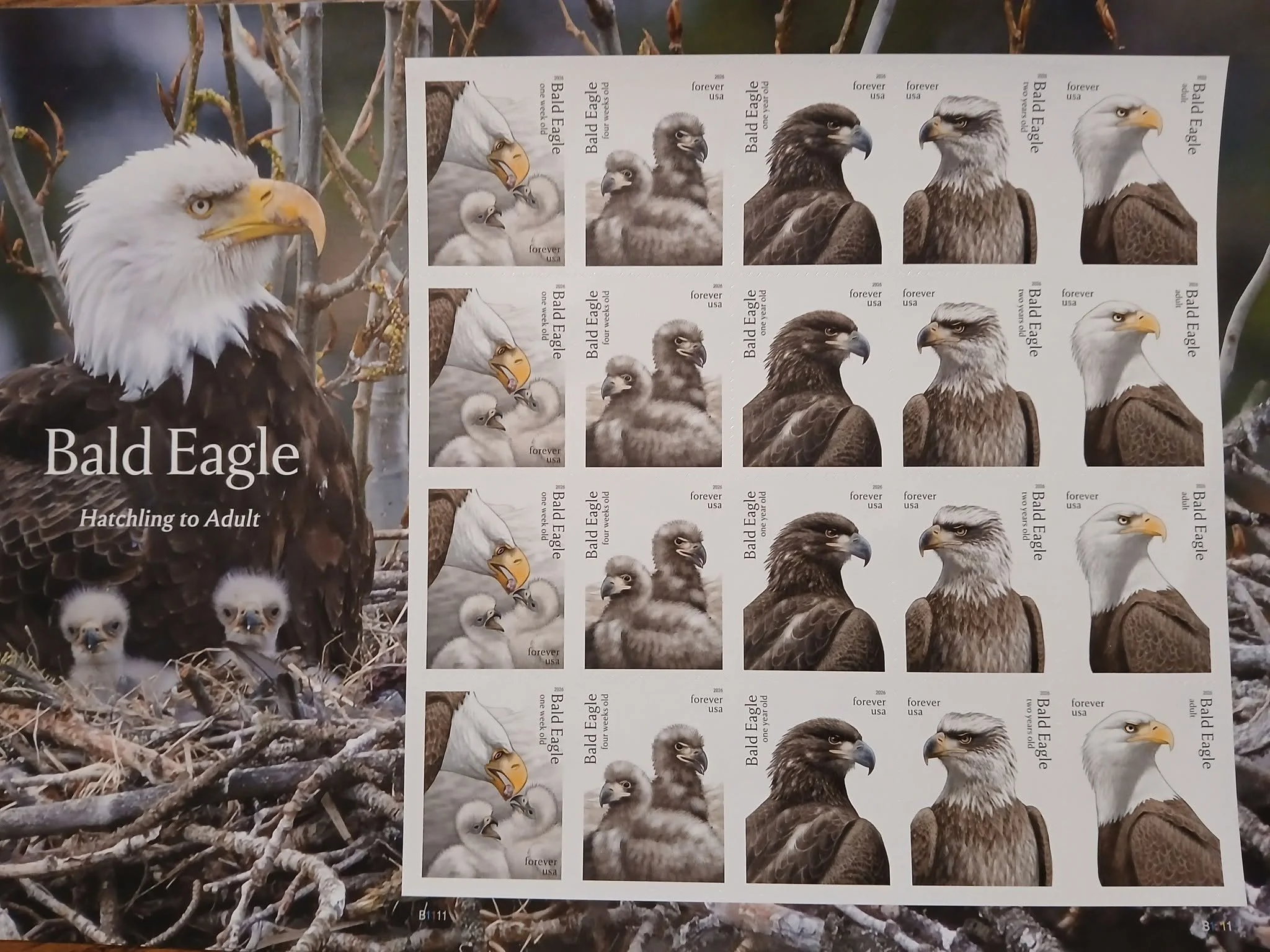
USPS Bald Eagle stamps (photo: Bonnie Lunde).
And although we had nothing to do with this, this year’s release of the Bald Eagle nestlings stamps really tickled our volunteers!
The Bald Eagle Nest Watch program is made up of eight program areas, described at the bottom of this article. We are so grateful to our amazing program partners who make all this work possible!
Overall summary (all programs, combined):
A total of 588 volunteers
At least 6,872 hours of nest monitoring completed in 2026 (!!!)
Nests in 46 counties monitored (over half of WI counties)
294 nests monitored
317 eaglets successfully fledged in 2026
74 nests failed (representing a 25.3% failure rate—yearly average is 19%). We believe this rate was above average due to the number of large, destructive storms in spring (rain + strong winds)
18 nests with unknown outcomes (the nest was completely obscured by leaves by the end of the season, or the volunteer was unable to continue monitoring)
6 nests where eagles were present but no incubation began
196 nests successful with fully fledged young
Number of successful nests that fledged four young: 1 (.52%)
Number of successful nests that fledged three young: 26 (13.54%)
Number of successful nests that fledged two young: 99 (50.52%)
Number of successful nests that fledged one young: 68 (35.42%)
Results from Each program area
1 - Central area:
Includes nests in Marathon, Portage, Sawyer, Waupaca, and Wood Counties. Technically, I am the area lead for this group but they are a hardy, independent bunch of bird lovers (who don’t need much guidance from me!).
34 volunteers
367 hours of monitoring reported
22 active nests monitored
5 nest failures (22.7% failure rate)
0 nests with unknown outcomes
17 successful nests
27 eaglets fledged (1.6 eaglets/successful nest)
2 - Door County area:
Includes nests in Door and Kewaunee Counties. Led by Tony Kiszonas at The Ridges Sanctuary.
29 volunteers
229 hours of monitoring reported
16 active nests monitored
4 nest failures (28.6% failure rate)
0 nests with unknown outcomes
12 successful nests
21 eaglets fledged (1.8 eaglets/successful nest)
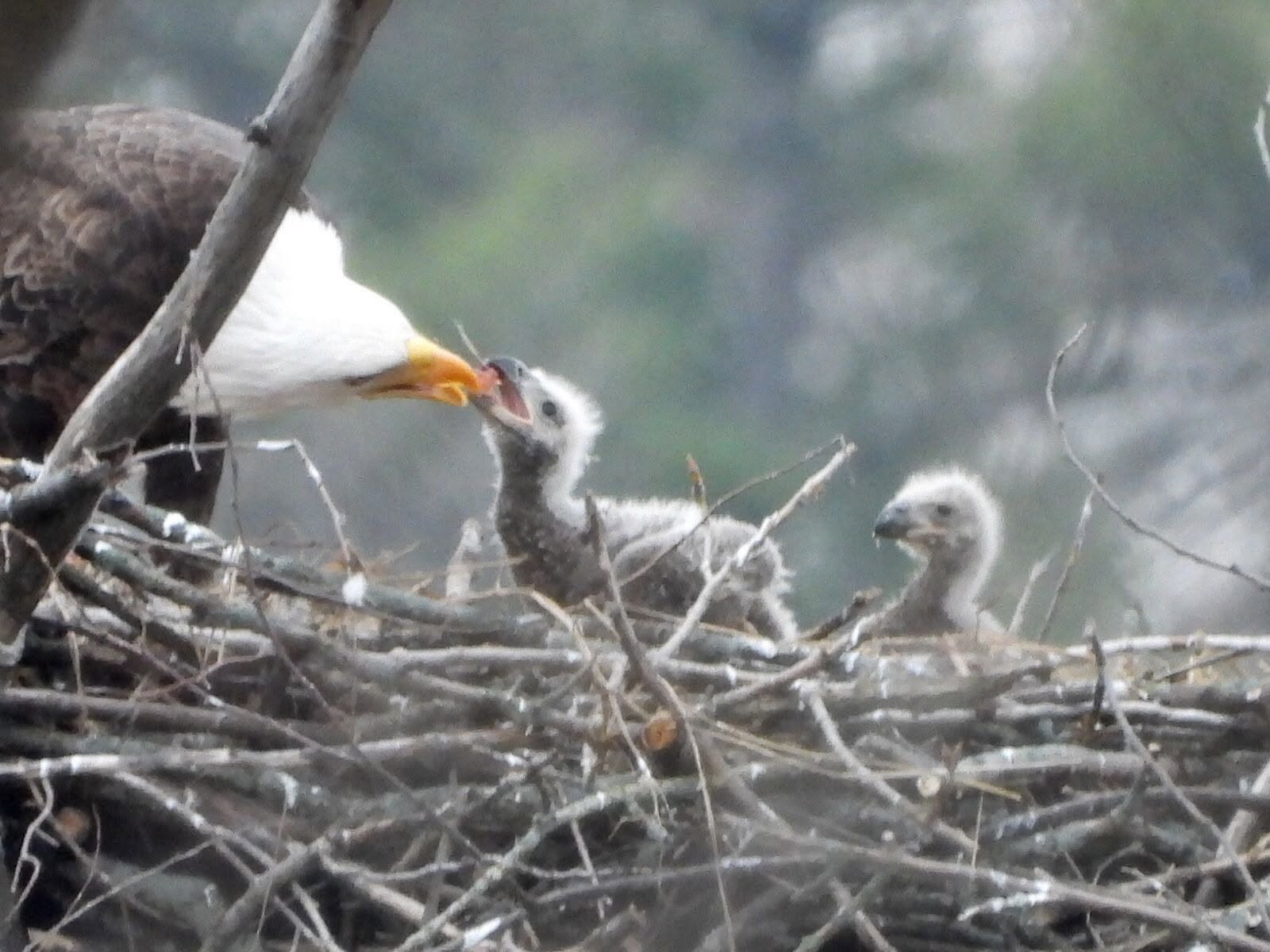
Adult eagle feeding eaglets (photo: Bonnie Lunde/BENW volunteer).
3 - Eau Claire/Chippewa area:
Includes nests in Buffalo, Chippewa, Dunn, Eau Claire, Jackson, and Rusk Counties. Led by Mackenzie Curtis, Breanne Klockzien, and Jeanette Kelley at Beaver Creek Reserve.
44 volunteers
431 hours of monitoring reported
21 active nests monitored
9 nest failures (42.9% failure rate)
0 nests with unknown outcomes
12 successful nests
23 eaglets fledged (1.9 eaglets/successful nest)
4 - Fox Valley area:
Includes nests in part of Calumet, part of Fond du Lac, Outagamie, and Winnebago Counties. Led by Brad Garrity at 1000 Islands Environmental Center.
62 volunteers
634 hours of monitoring reported
23 active nests monitored
5 nest failures (21.7% failure rate)
1 nests with unknown outcomes
18 successful nests
38 eaglets fledged (2.1 eaglets/successful nest)
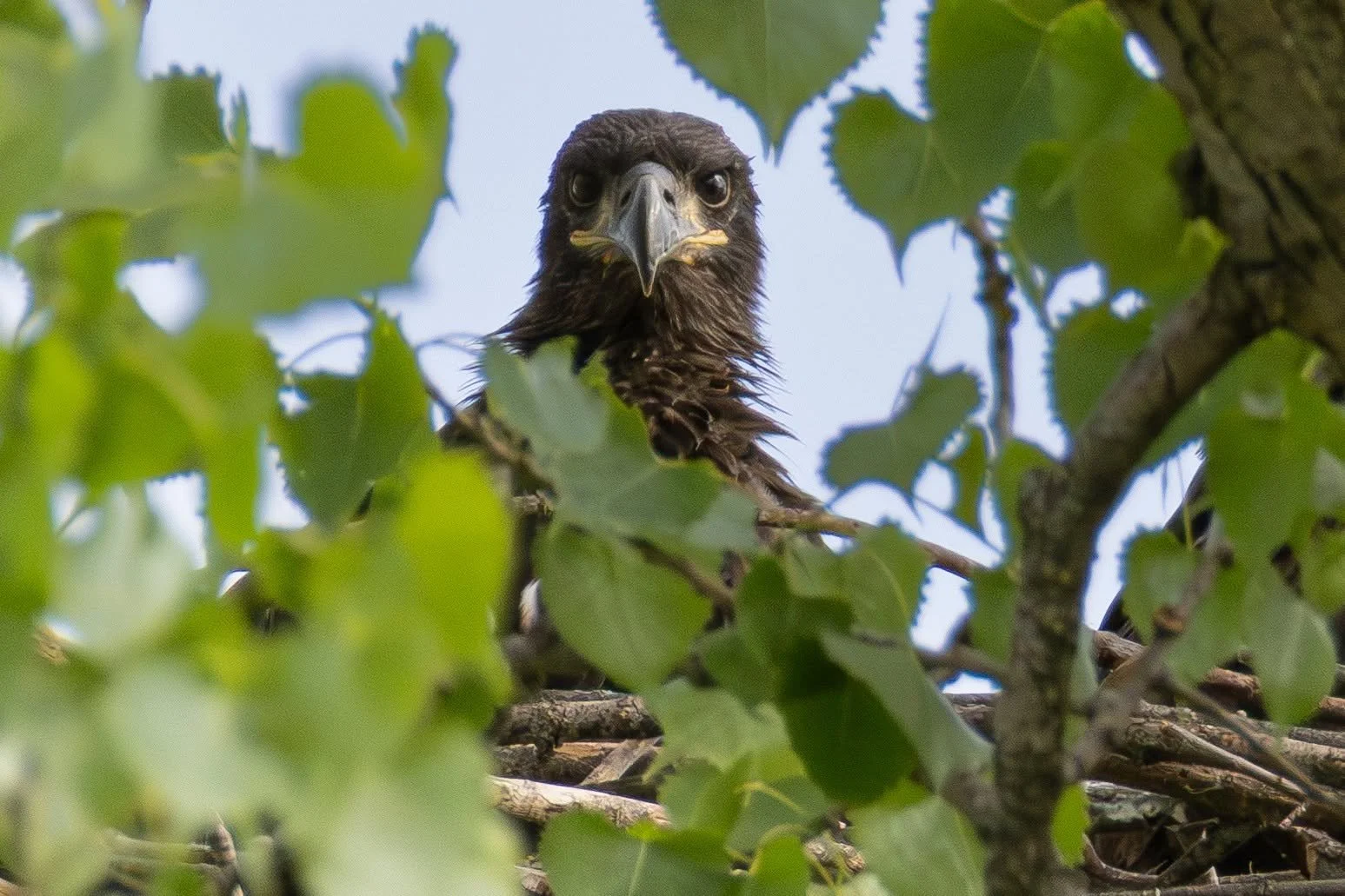
Young eaglet in a nest (photo: Jeff Bentoff/BENW volunteer).
5 - Manitowoc County area:
Includes nests in Manitowoc and part of Calumet Counties. Led by Kennedy Zittel at Woodland Dunes Nature Center.
41 volunteers
548 hours of monitoring reported
9 active nests monitored
3 nest failures (33.3% failure rate)
0 nests with unknown outcomes
6 successful nests
8 eaglets fledged (1.3 eaglets/successful nest)
6 - Northeastern area:
Includes nests in Brown, Oconto, and Shawano Counties. Led by Logan Lasee at Brown County Parks.
30 volunteers
356 hours of monitoring reported
12 active nests monitored
2 nest failures (33.3% failure rate)
1 nest with unknown outcomes (leaf-out obscured the nests, or volunteers dropped out)
9 successful nests
14 eaglets fledged (1.6 eaglets/successful nest)
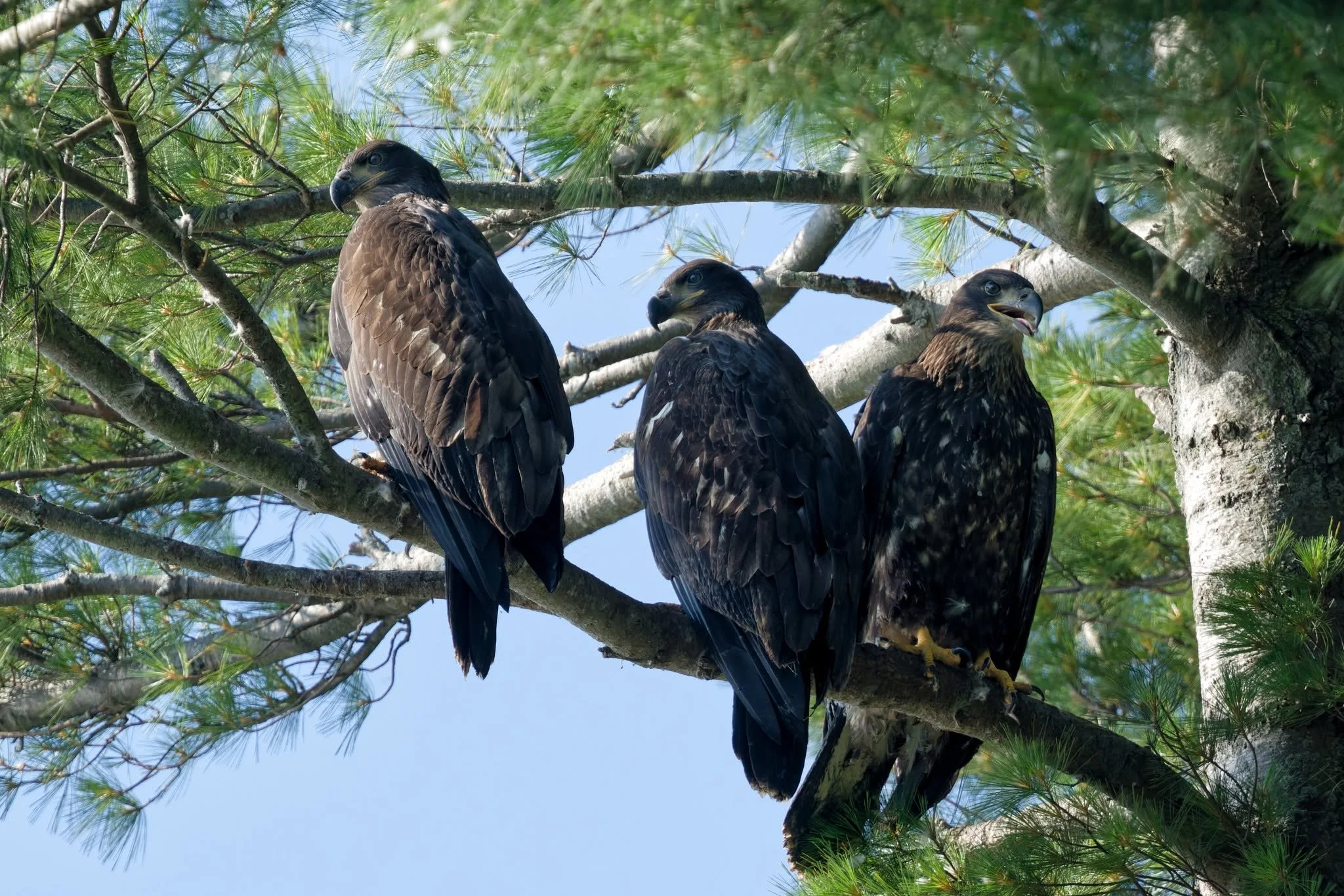
Bald Eagle triplets perched together (photo: Beth Phillips/BENW volunteer).
7 - Southeastern area:
Includes nests in Kenosha, Milwaukee, Ozaukee, Racine, Walworth, Washington, and Waukesha Counties. Led by Beth Martin, volunteer and part of the Bald Eagle Socialites Club.
74 volunteers
1,064 hours of monitoring reported
40 active nests monitored
5 nest failures (12.5% failure rate)
6 nests where adults were at the nest but incubation never began
29 successful nests
52 eaglets fledged (1.8 eaglets/successful nest)
8- Southern area:
Includes nests in Adams, Columbia, Dane, Dodge, part of Fond du Lac, Grant, Green, Green Lake, Iowa, Jefferson, Juneau, Lafayette, Marquette, Richland, Rock, Sauk, Sheboygan, and Vernon Counties. Led by SoWBA volunteer Drew Cashman and me.
274 volunteers
3,243 hours of monitoring reported
148 active nests monitored
40 nest failures (27% failure rate)
11 nests with unknown outcomes (leaf-out obscured the nests, or volunteers dropped out)
97 successful nests
167 eaglets fledged (1.7 eaglets/successful nest)
1 nest with 4 eaglets!
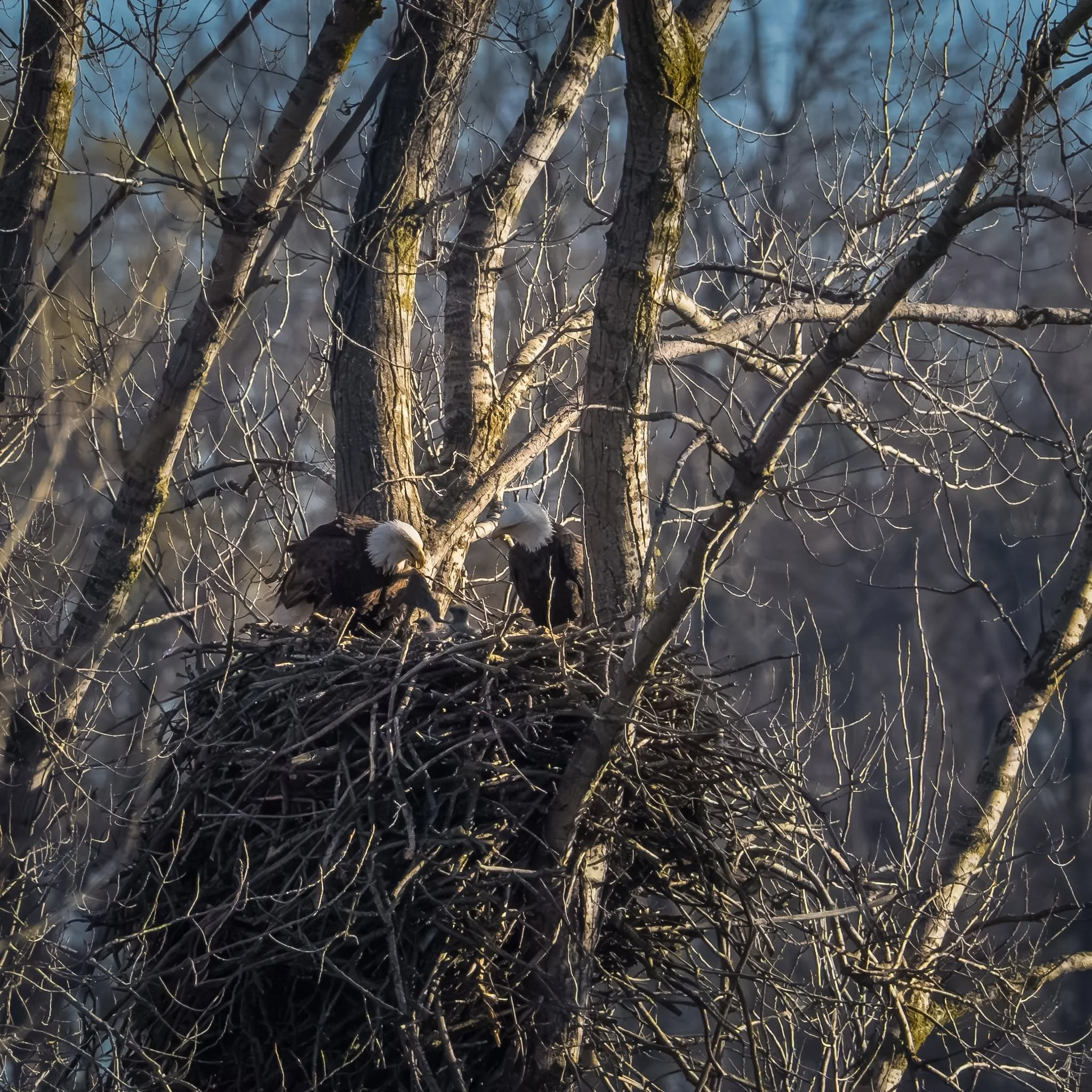
Two adult eagles feeding their eaglets (photo: Lisa A. Frank/BENW volunteer).
This program is completely and utterly impossible without the generosity of our volunteers, who give their time and energy to the eagle families they monitor. We are also incredibly grateful to the property owners and managers we work with who allow us access to their land so we can monitor the nests. And a huge thank you to our area leads and organizational partners who recruit volunteers, manage the program, and provide local help for all of these areas. This is an amazing community to be a part of, all for the love of eagles!
If you are interested in joining Bald Eagle Nest Watch in 2027, we will be opening registration to new volunteers in December. In the meantime, keep your eye out for big, dark brown eagles flying around Wisconsin this season—they are likely ones that recently fledged!
Written by Brenna Marsicek, Southern Wisconsin Bird Alliance director of outreach and statewide coordinator for BENW, serving as the central area lead and southern area co-lead.
Cover image by Beth Phillips/BENW volunteer. Young Bald Eagle triplets are perched together.
