

The northern woods and lakes of Wisconsin are typically referred to as home of the eerie, mournful calls of the Common Loon. In spring and fall, these tuxedoed birds will occupy larger bodies of water as they travel through southern Wisconsin during their migration, such as Lake Mendota in Madison and Rock Lake in Lake Mills.

An adult Common Loon with summer breeding plumage (photo: Arlene Koziol).
Male Common Loons are 25% larger than females; though, because they share the same plumage, it is challenging to tell them apart using sight alone. In summer, adults are boldly patterned in black, coated in an intricate array of white spots, and display an iridescent green band around their necks, with piercing red eyes. Generally, loons are easy to spot, their chorus-like calls echo across the water and carry your attention towards their direction, where you can usually catch them balancing among the waves.
Loons also have other unique characteristics that set them apart from other birds. While most birds have hollow bones for flight, loons are aquatic creatures and have solid, heavy bones that reduce their buoyancy and help them dive over 200 feet deep. Their legs, strategically placed farther back on their bodies to make them incredibly efficient swimmers, limit them to awkward movement on land. In order to take flight, their heavier bodies and leg position mean that they require a water “runway” of between 30 yards to a quarter mile to flap and run across the surface before taking off.
Unfortunately, hidden underneath their loud, and despairing yodels, Common Loons have been found at the mercy of a much more silent and deadly threat: habitat loss and degradation. In recent years, data has linked declining water clarity in Wisconsin bodies of water as being partly responsible for poor feeding conditions for Common Loons, leading to lower survival and breeding success. Findings presented by the Wisconsin Loon Project show that the loon population in northern Wisconsin has declined overall by 22% during the past quarter century. Reports from 2019 echoed statewide surveys that suggest a 6% decrease of the loon population in northern Wisconsin each year. There is much yet unknown about the cause of this declining water clarity. By determining these precise causes, better recommendations can be made to help support our local populations of loons.

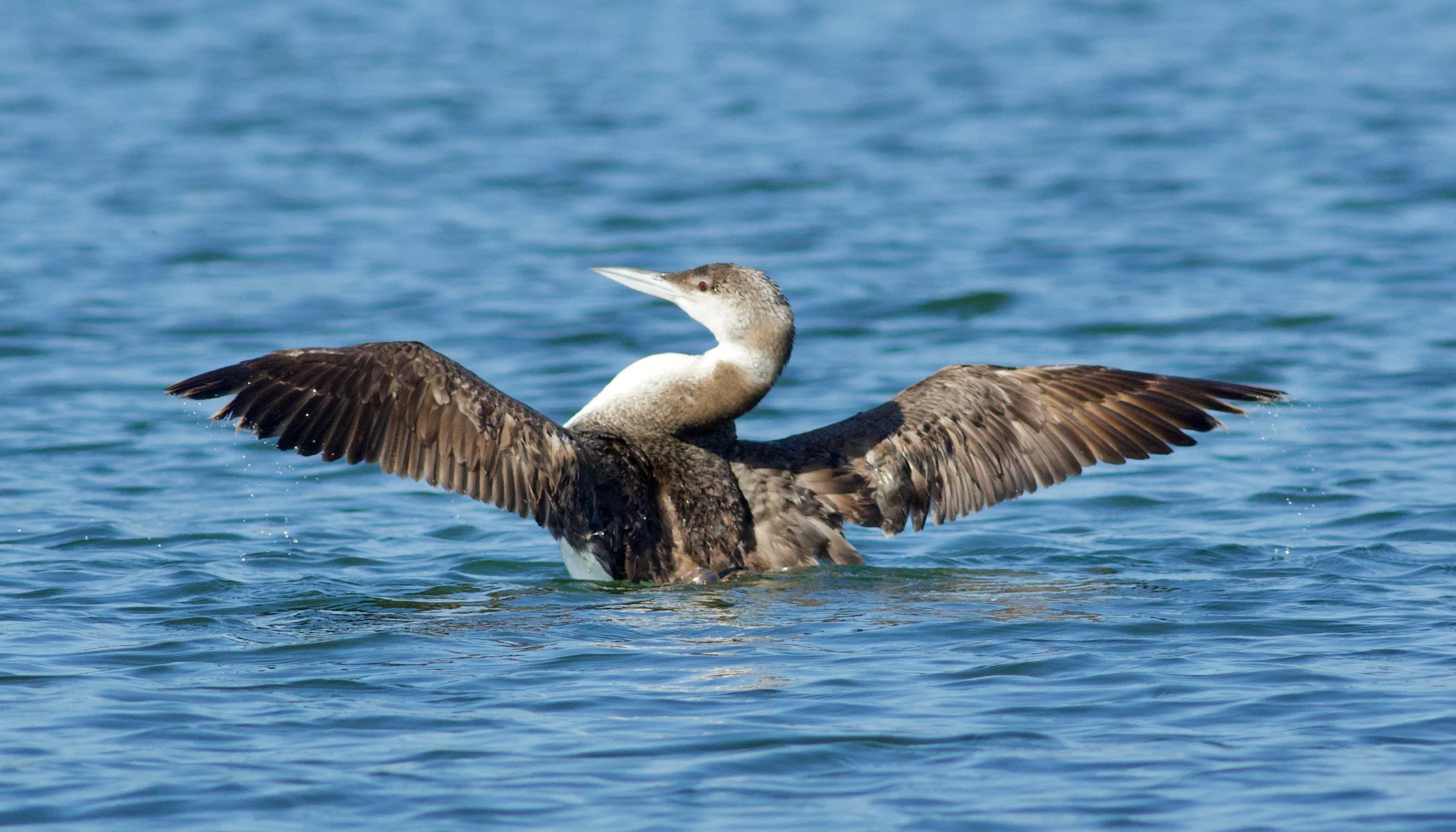
A Common Loon on Lake Mendota in late August of a previous year (photo: Arlene Koziol).
Around late August, adults are usually getting ready to migrate and will be followed by juveniles later in the season. In the fall, adults will begin to molt and return to the drab gray and white plumage they sport in the colder winter months. Loons are magnificent birds and a lot of fun to encounter while you’re out birding—be sure to look and listen for them at a lake near you during the upcoming migration!
Written by Aileena Ilanderage, Southern Wisconsin Bird Alliance Diversity in Conservation Intern
Cover photo by Arlene Koziol. A Common Loon in nonbreeding plumage shaking off water.
