
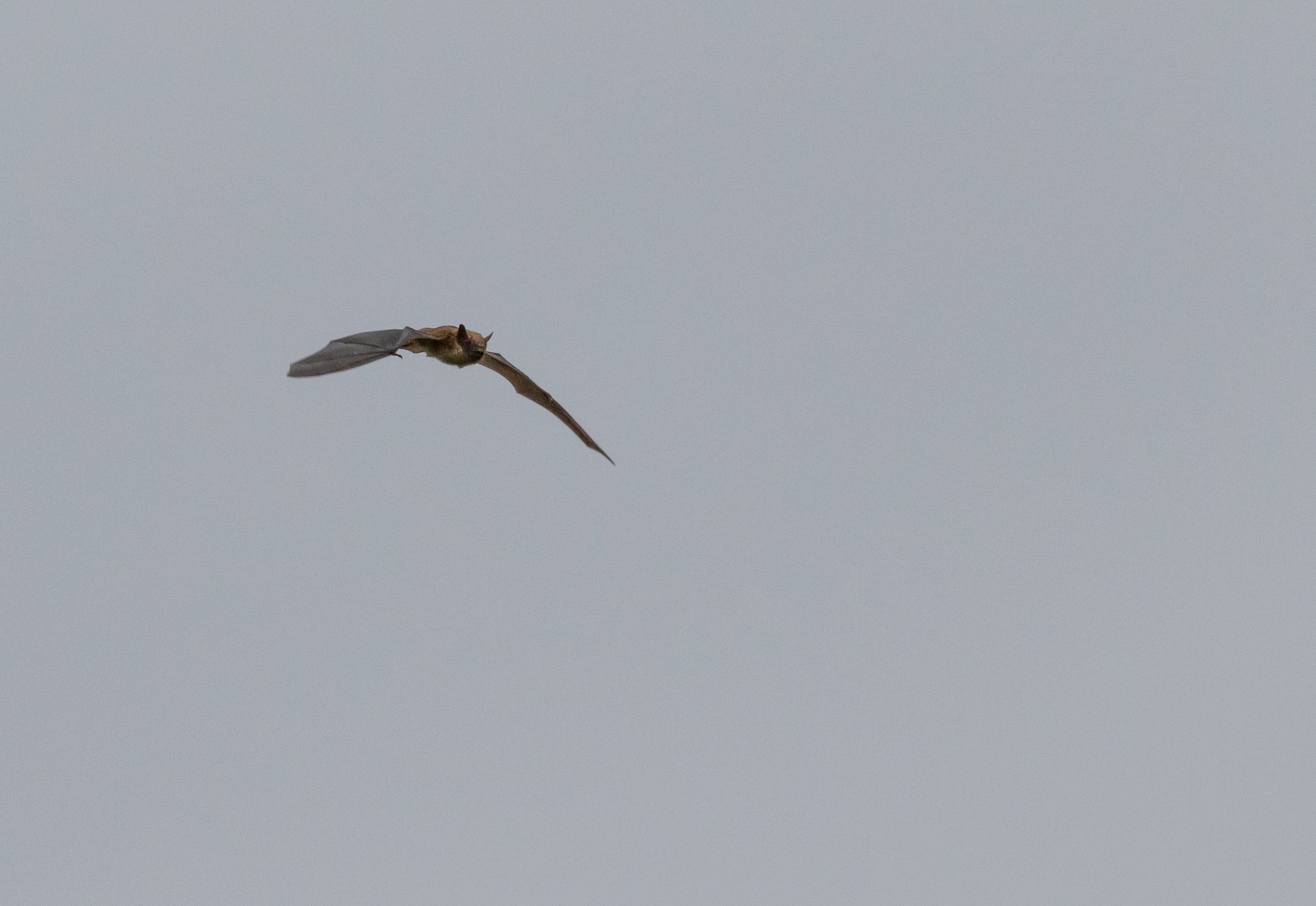

It is no coincidence that Bat Week—an international celebration of the world’s only winged, free-flying mammal—falls on October 24–31 each year. Many of us associate bats with Halloween, and there’s a good reason for that. During Samhain, an end-of-year harvest festival, Celts wore costumes and lit bonfires to keep ghosts at bay. These bonfires would attract moths and other insects, which would in turn attract bats. This association continued as the holiday shifted over time to become our modern Halloween.
Wisconsin is home to eight species of bats, all of which are insectivores that rely on healthy ecosystems, access to water, abundant insects, and safe roosting sites. Four of these species are migratory “tree bats” which travel south in the winter, while the other four species are “cave bats” that spend winter hibernating in caves or similar habitats.
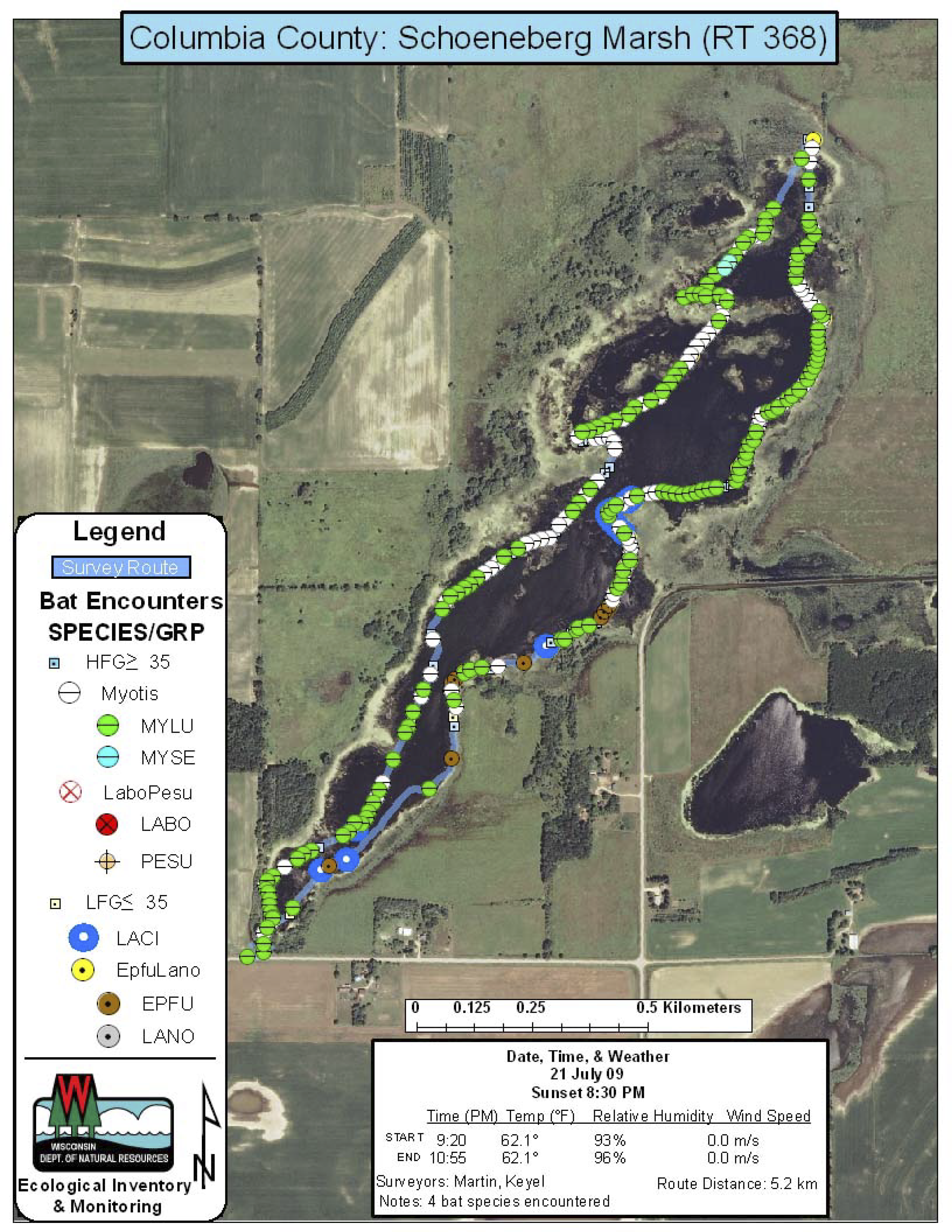
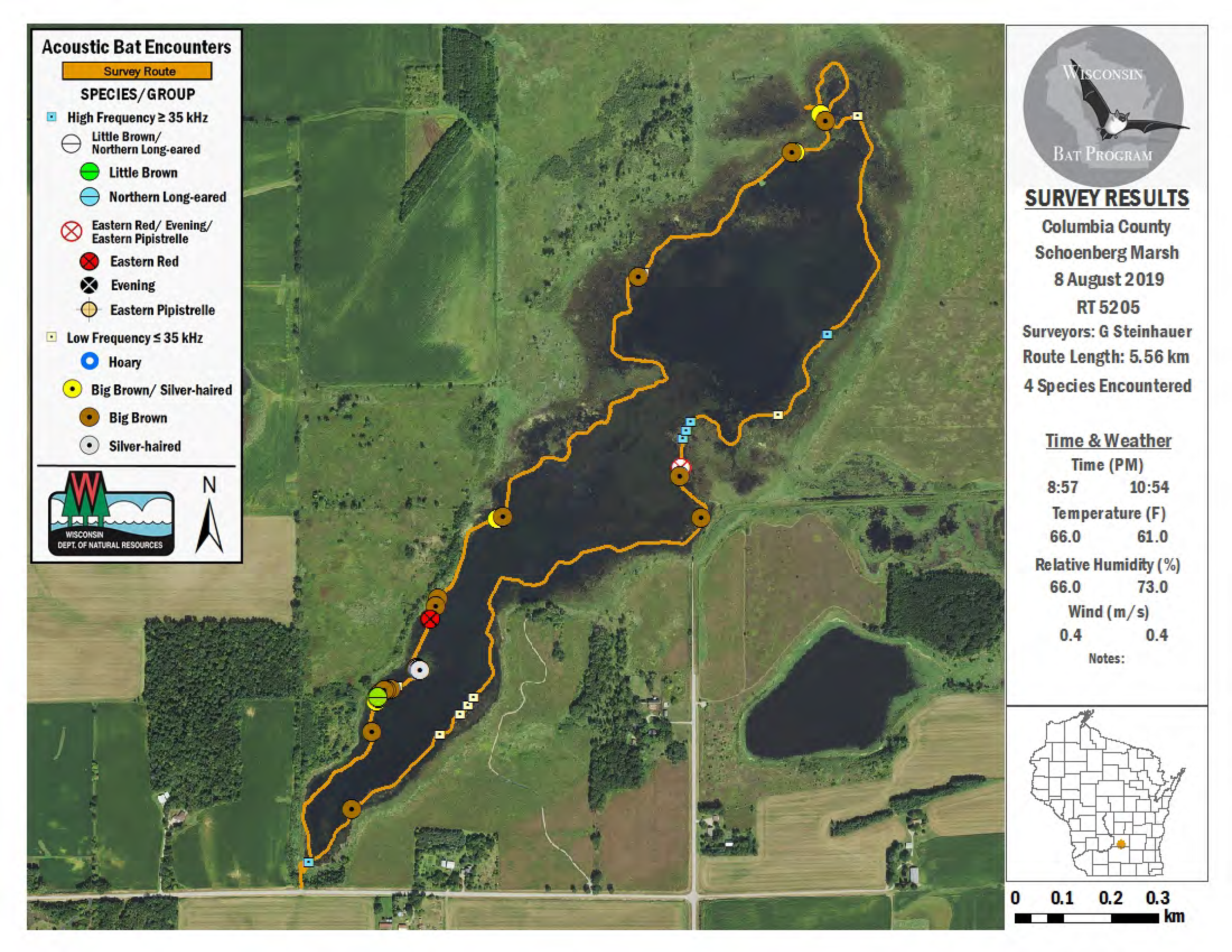
In the early 2000s, Mark worked for the Wisconsin DNR Bureau of Natural Heritage Conservation in the State Natural Area (SNA) section. Around that time, a handheld bat detector with a GPS was developed. The device was able to record calls of different bats allowing researchers to identify individual calls and exact locations of each bat.
A bat survey story
Mark likes exploring nature at night and has many memories of conducting bat counts with friends and DNR staff. One of his many memories was surveying at North Bay SNA with Marilyn Hansotia, a volunteer with the Door County Land Trust that owns the Three Springs Creek unit of the SNA:
“On a warm August night in 2011, Marilyn and I took up positions at the edge of the 1860s barn entrance expecting the bats to come out of the middle of the large open end of the structure. Marilyn was closest to the opening and I was behind her recording numbers. It did not take us long to learn we were wrong in our thinking about where the bats would exit the barn.
The bats made a tight turn at the spot that Marilyn and I stood next to the opening in order to avoid being taken by Great Horned Owls that hunted them at night. The bats were close to us and Marilyn exclaimed, ‘I can feel the air from their wings on my face!’ We counted several hundred that night.
Next Marilyn drove slowly for a few miles to an east boat launch while I held the bat detector out of the window. Wearing hip boots, I walked one mile across North Bay toward the west boat launch in knee deep water hoping that I did not trip and fall. It was a dark night after 10pm, so Marilyn parked in the west boat launch with her headlights facing me, replicating a lighthouse beacon.
Marilyn’s overall high count at the barn which began in 2011 was 803 bats which dropped to 34 bats after white-nose devastated the population. Her last count at the site in 2026 was 87 bats.”
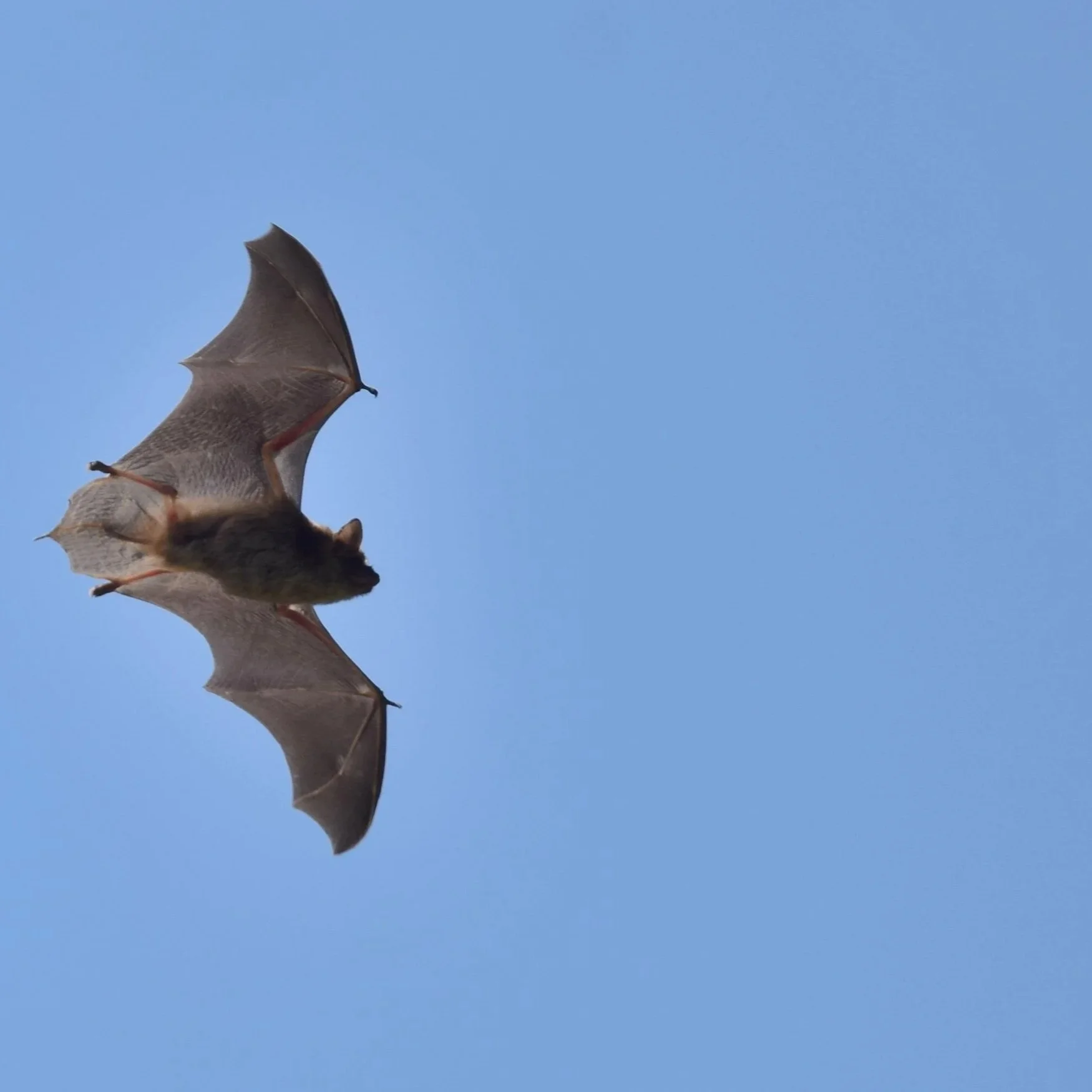
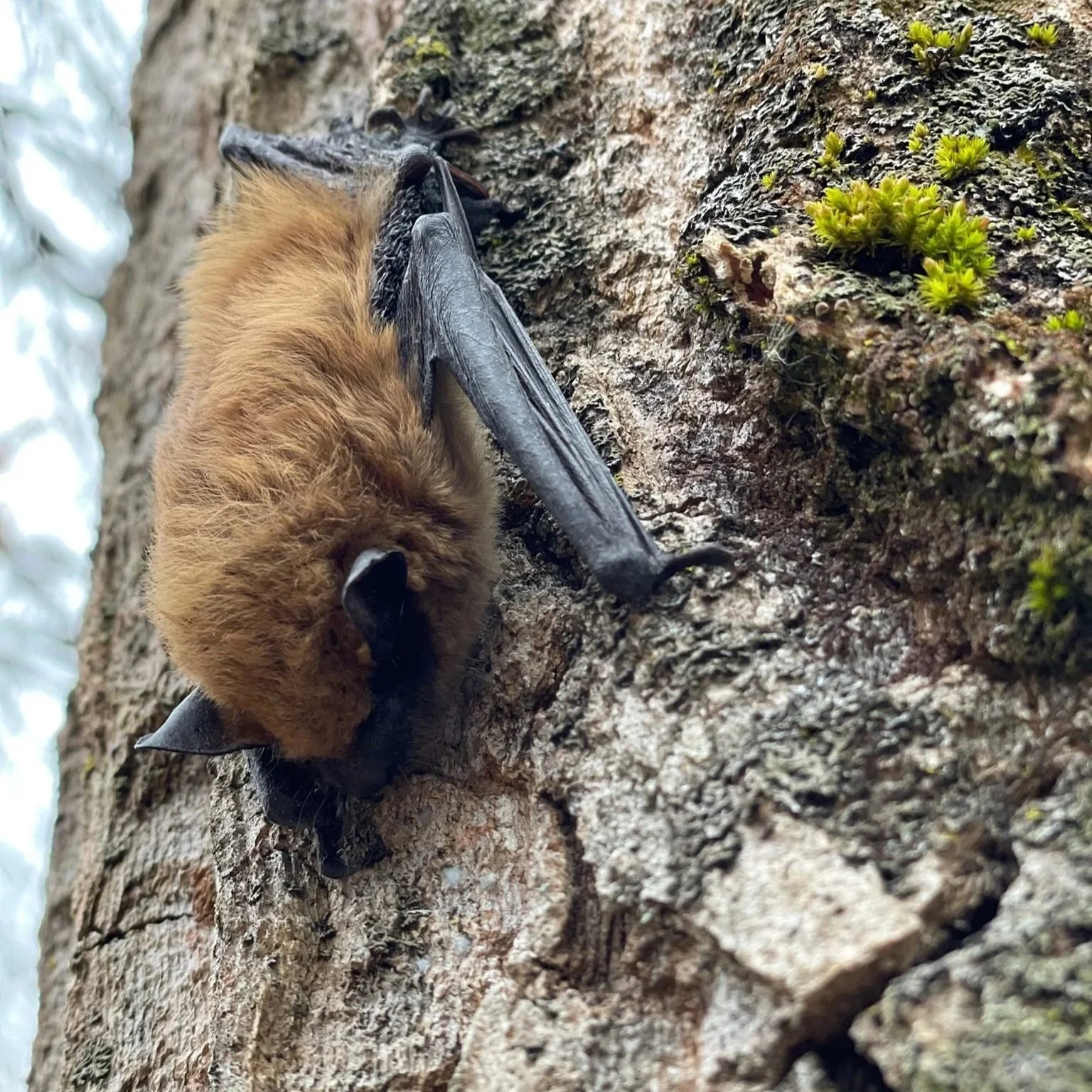
(Big brown bat, photo by Andy Reago & Chrissy McClarren)
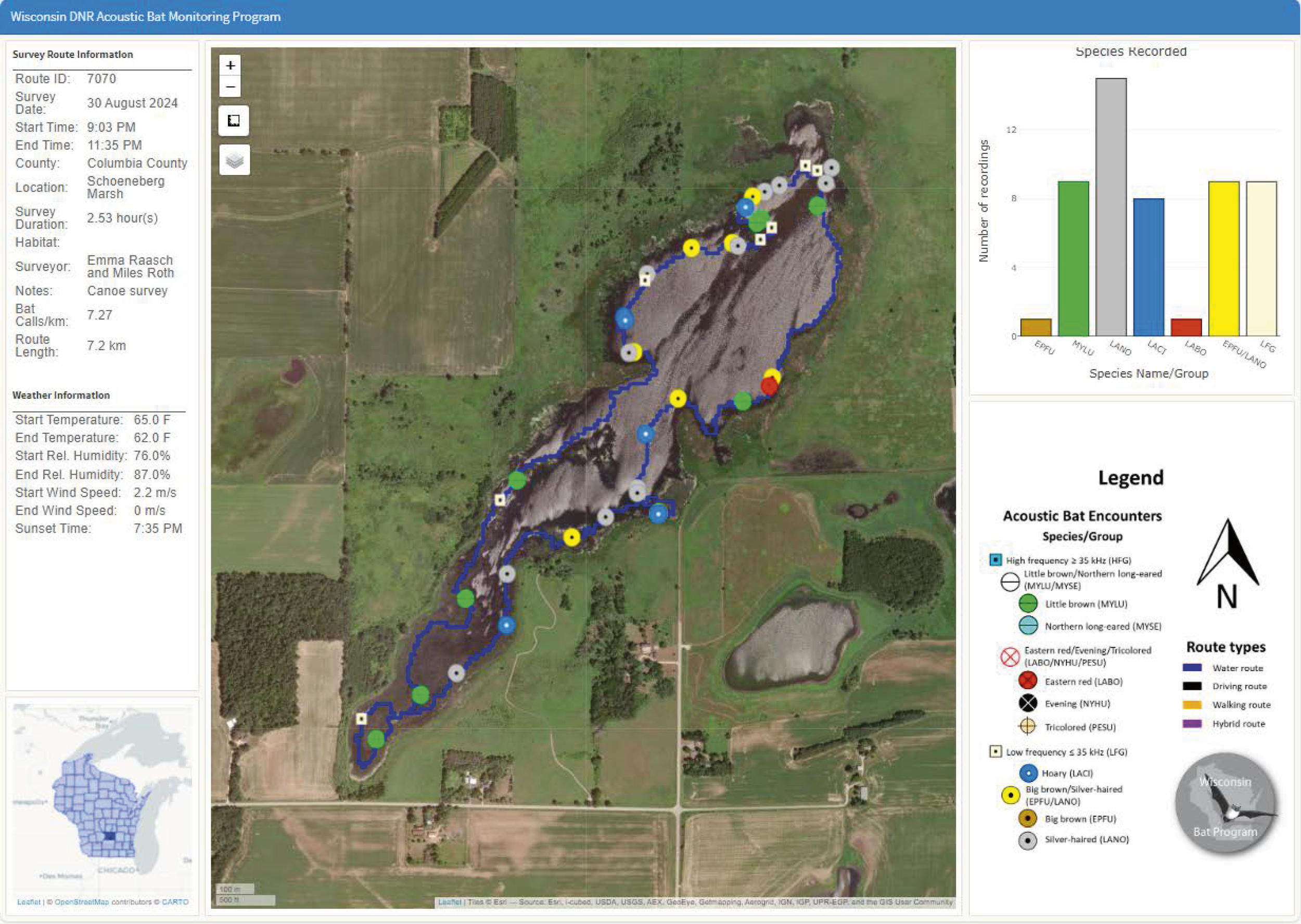
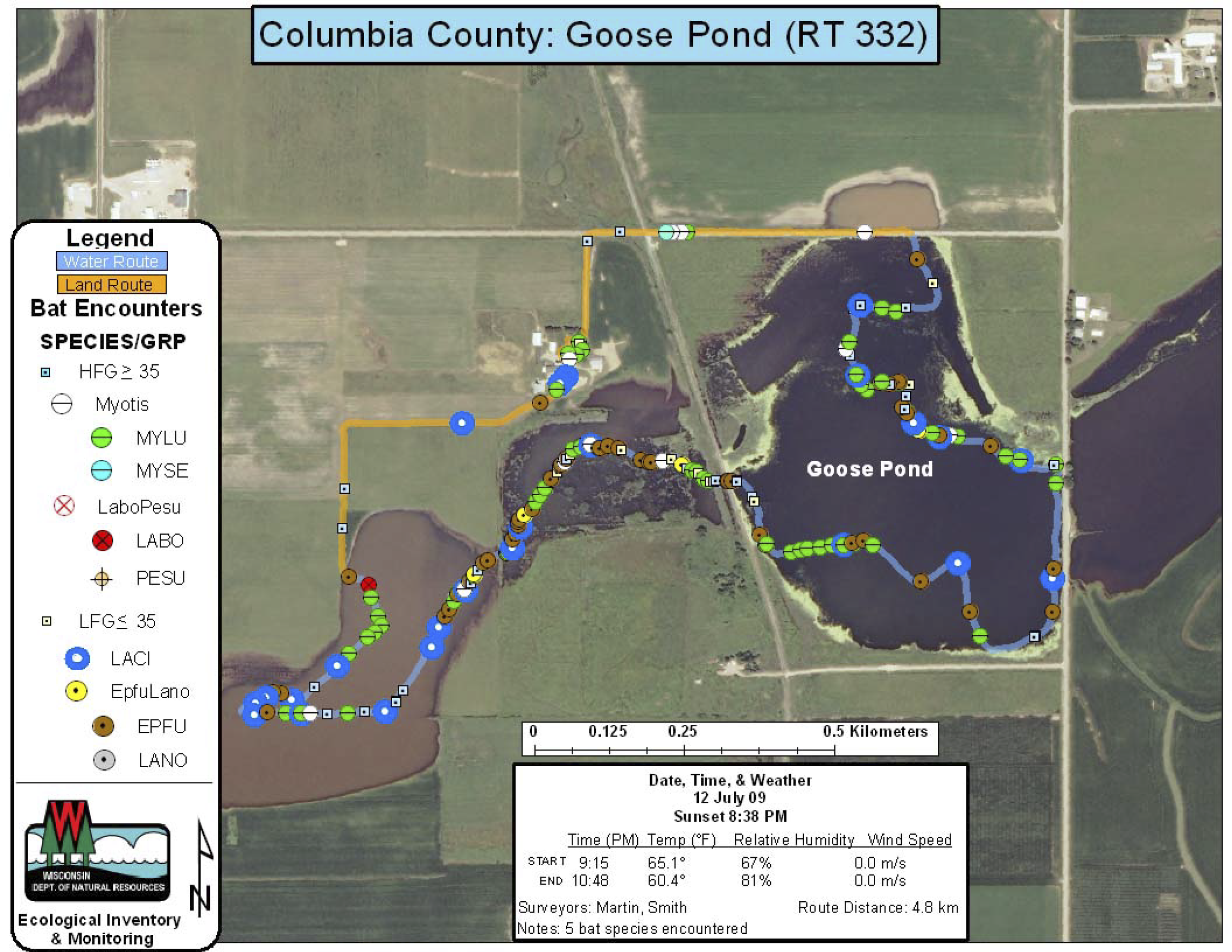
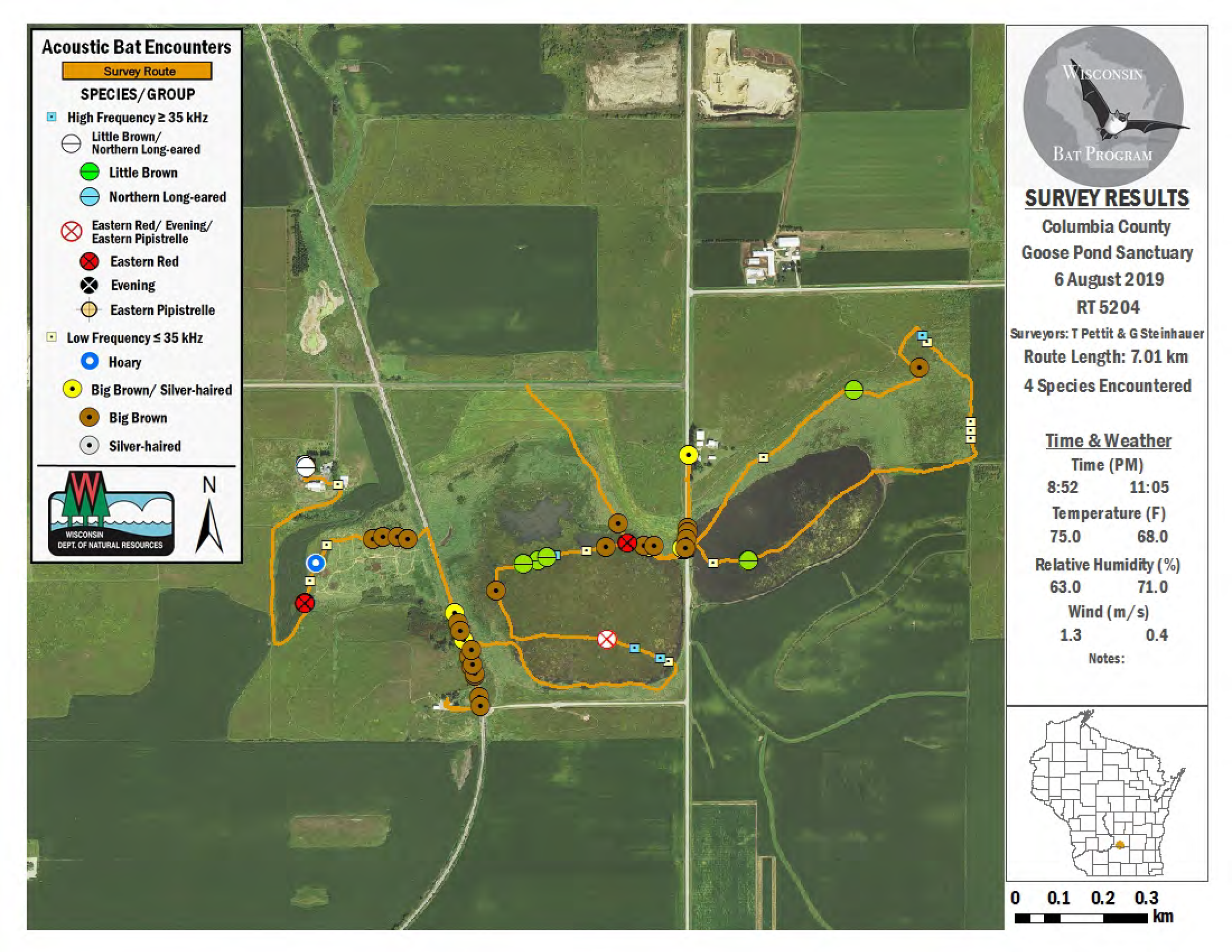
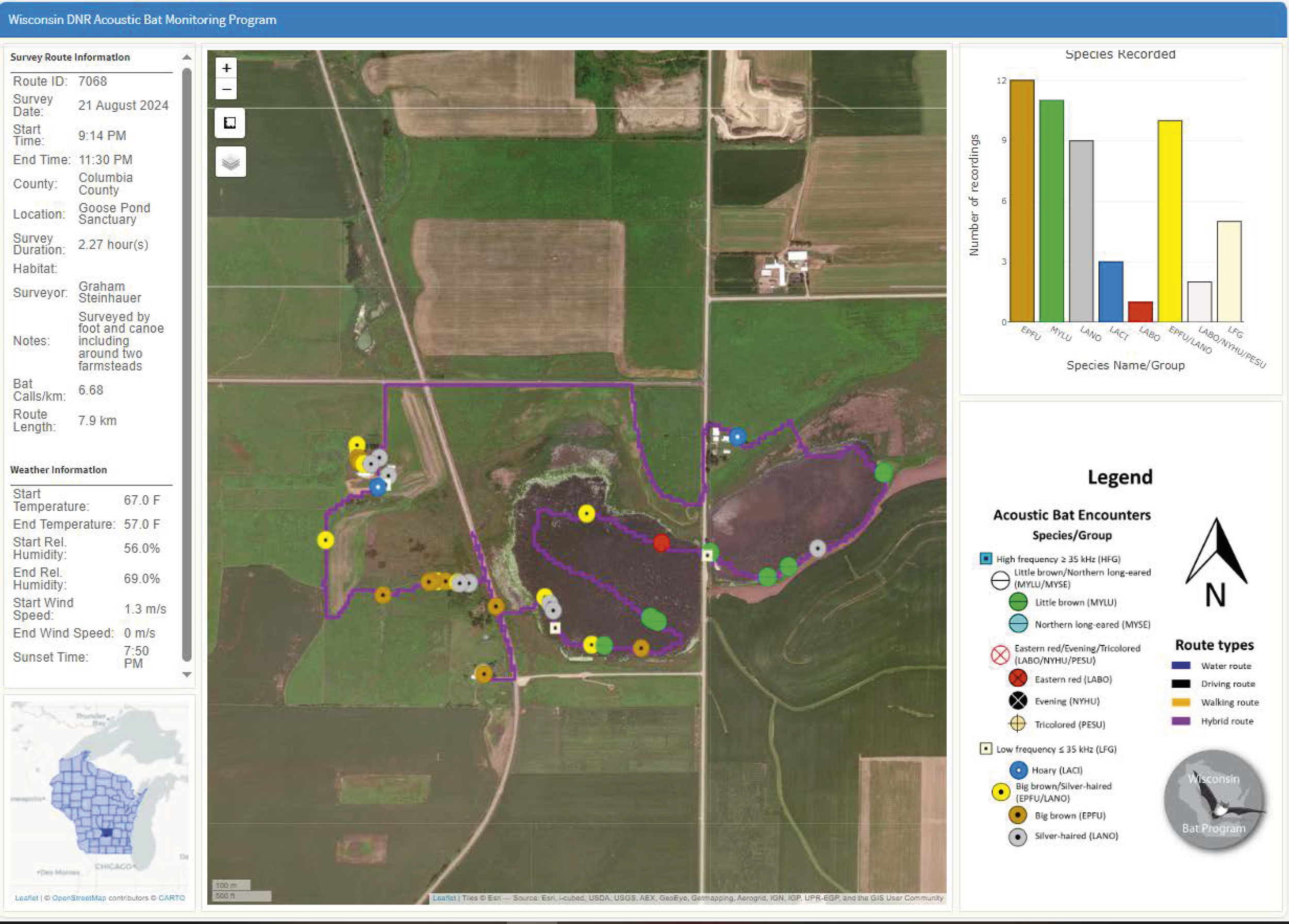
Using a bat detector, DNR staff and volunteers could learn about the ecology of bats, their abundance, and locations through night surveys. Because bats often hunt for insects over open water, these surveys were often conducted by canoe. It did not take long for researchers to learn that bats preferred feeding on moths that were abundant in wetland areas. It was easy to tell when surveyors encountered a high density of moths because the bat detector would begin beeping frequently and bats would fly between the canoe’s occupants at eye level!
These surveys provided excellent baseline monitoring of bat populations in Wisconsin before white-nose syndrome (WNS) arrived in 2014. WNS is a deadly invasive fungus that was probably brought to North America by recreational spelunkers from Europe. It was first reported in the state of New York in 2006. WNS is most deadly for bat species that gather close together in hibernation in caves and mines. The illness spread quickly among the four species of Wisconsin’s cave-dwelling bats, decimating their populations throughout the state.
Following her retirement, Sue returned to the DNR Bureau of Natural Heritage Conservation to play an important role in listing the four species of cave bats as “threatened” on Wisconsin’s Endangered and Threatened Species List. She worked on creating press releases, conducting social media outreach, and producing public service advertisements for radio and television. Working with a team of dedicated conservation biologists with a mission to protect Wisconsin bats was a highlight of her career with the DNR.
Wisconsin’s cave bat species and white-nose syndrome
Northern long-eared bats are one of the most impacted species, having declined by 99% across the state. They are now listed as federally endangered. They winter in natural cavities and abandoned mines. Mark found this forest species on only one night at Muir County Park SNA in Marquette County while surveying along a trail through red oaks which lacked brushy understory.
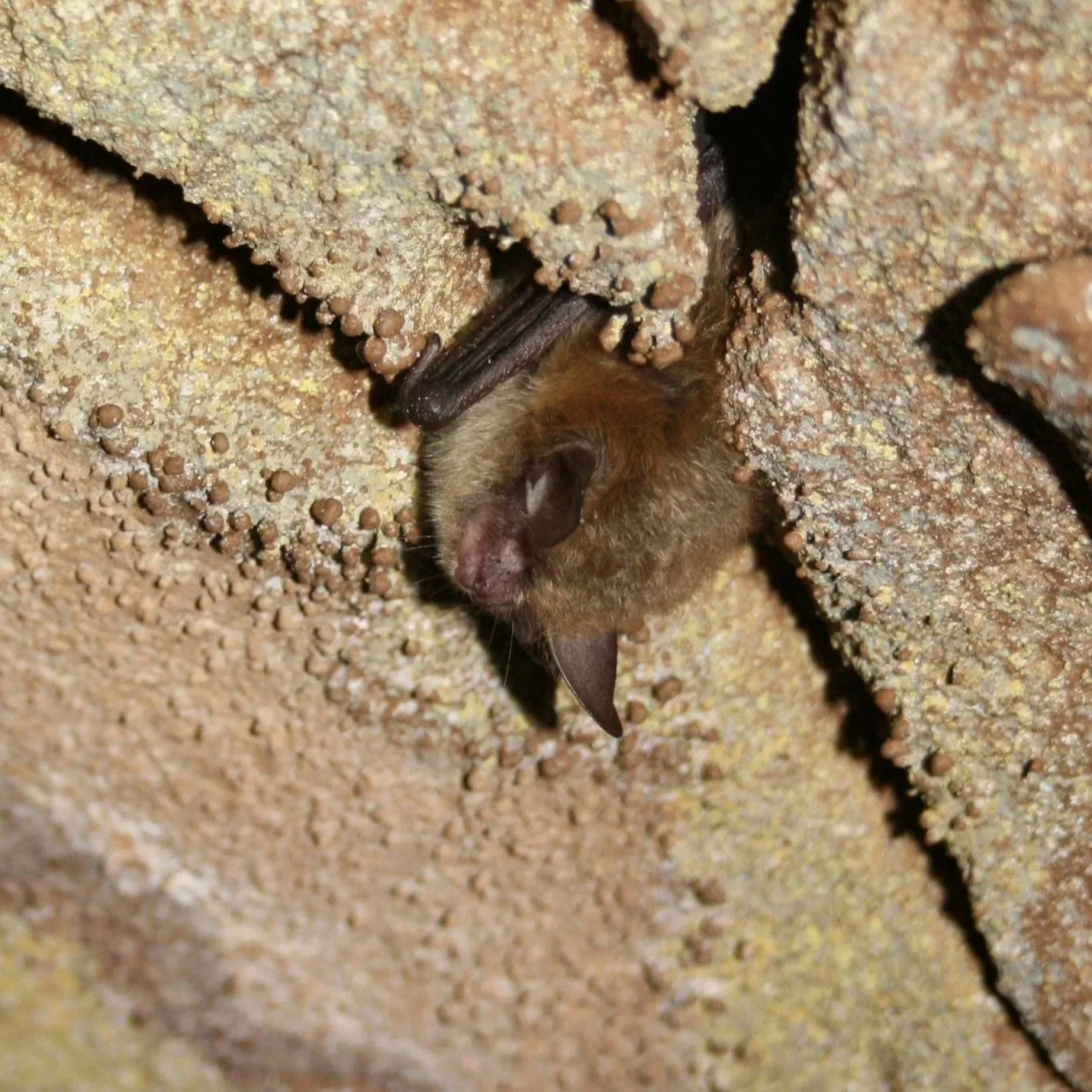
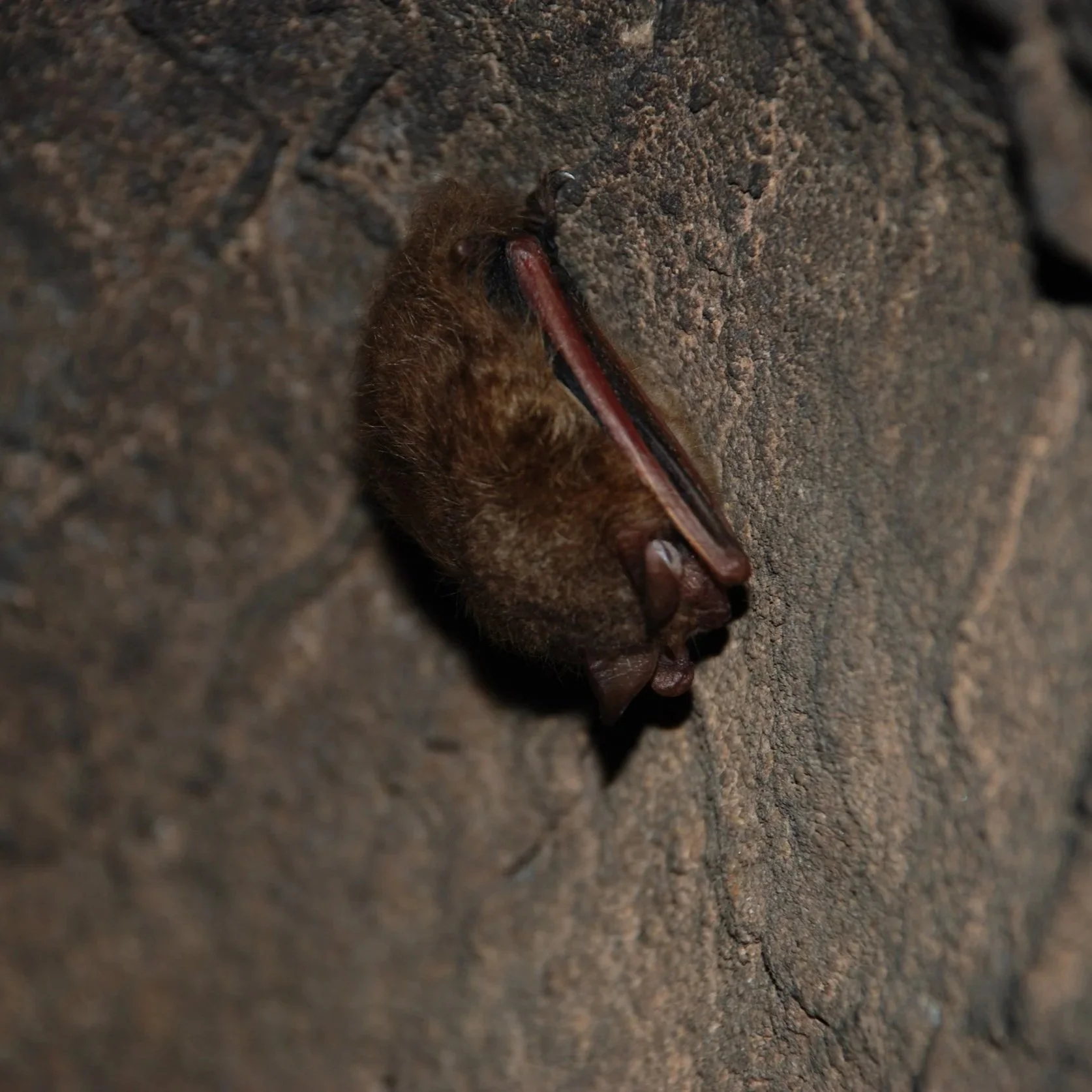
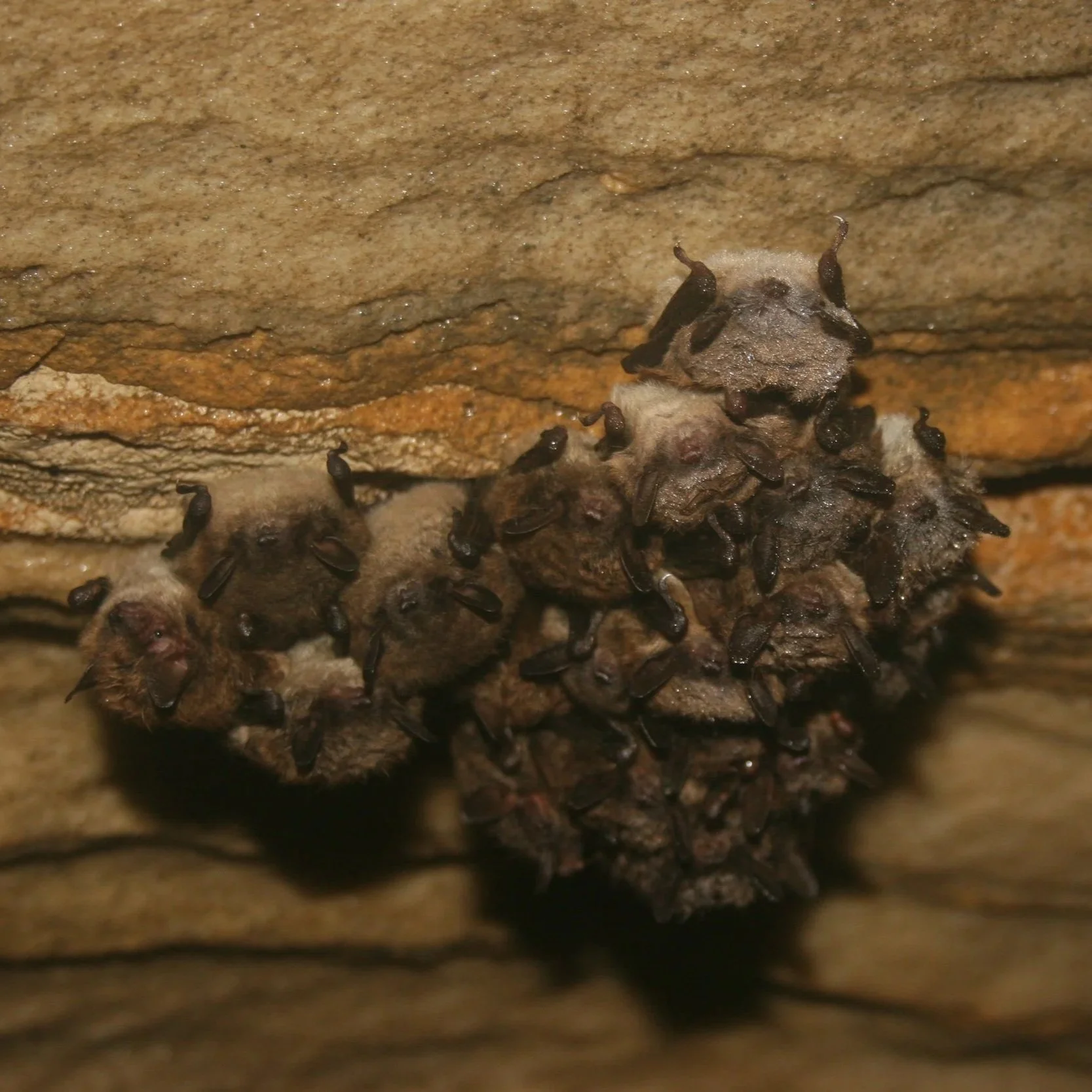
Tricolored bats, formerly known as the eastern pipistrelle, are found in southwestern part of our state. They have been petitioned for inclusion on the federal endangered species list. The DNR estimates their population has decreased by 90% in Wisconsin. Mark found this species only once—on a four-mile canoe bat survey with DNR bat conservation biologist Paul White at the Mud Lake Wildlife/Chub and Mud Lake Riverine Marsh State Natural Area in Dodge County in 2009.
Little brown bat populations declined to 30% a few years after WNS was present statewide, but are now back to 70% of their pre-WNS numbers. In Wisconsin, there are three mines that serve as hibernacula for the majority of the little brown bat population in winter:
One hibernaculum is an abandoned sand mine in western Wisconsin that was donated to the DNR by a mining corporation. Trucks drove miles into the underground mine to remove sand. Minnesota DNR’s staff band little brown bats and believe that the majority that spend their summers in Minnesota hibernate in this Wisconsin mine.
Another mine is privately owned and the company is working with the DNR to protect the entrances to allow bats access while keeping the people out.
The third is a large abandoned mine in southeastern Wisconsin.
The winter hibernacula in Wisconsin provide habitat for about 50% of the little brown bats in America!
Big brown bats hibernate in cool, stable environments like caves, abandoned mines, rock crevices, tree cavities, and human-made structures (such as attics and barns). They prefer cold temperatures—often near or just below freezing—and frequently wedge themselves into tight crevices to protect themselves from temperature swings. According to White, their populations have been found to have the best numbers of any of Wisconsin’s state-threatened bats since they usually do not concentrate in large numbers in only a few places as the other species do.
Protecting and counting Wisconsin’s cave bats
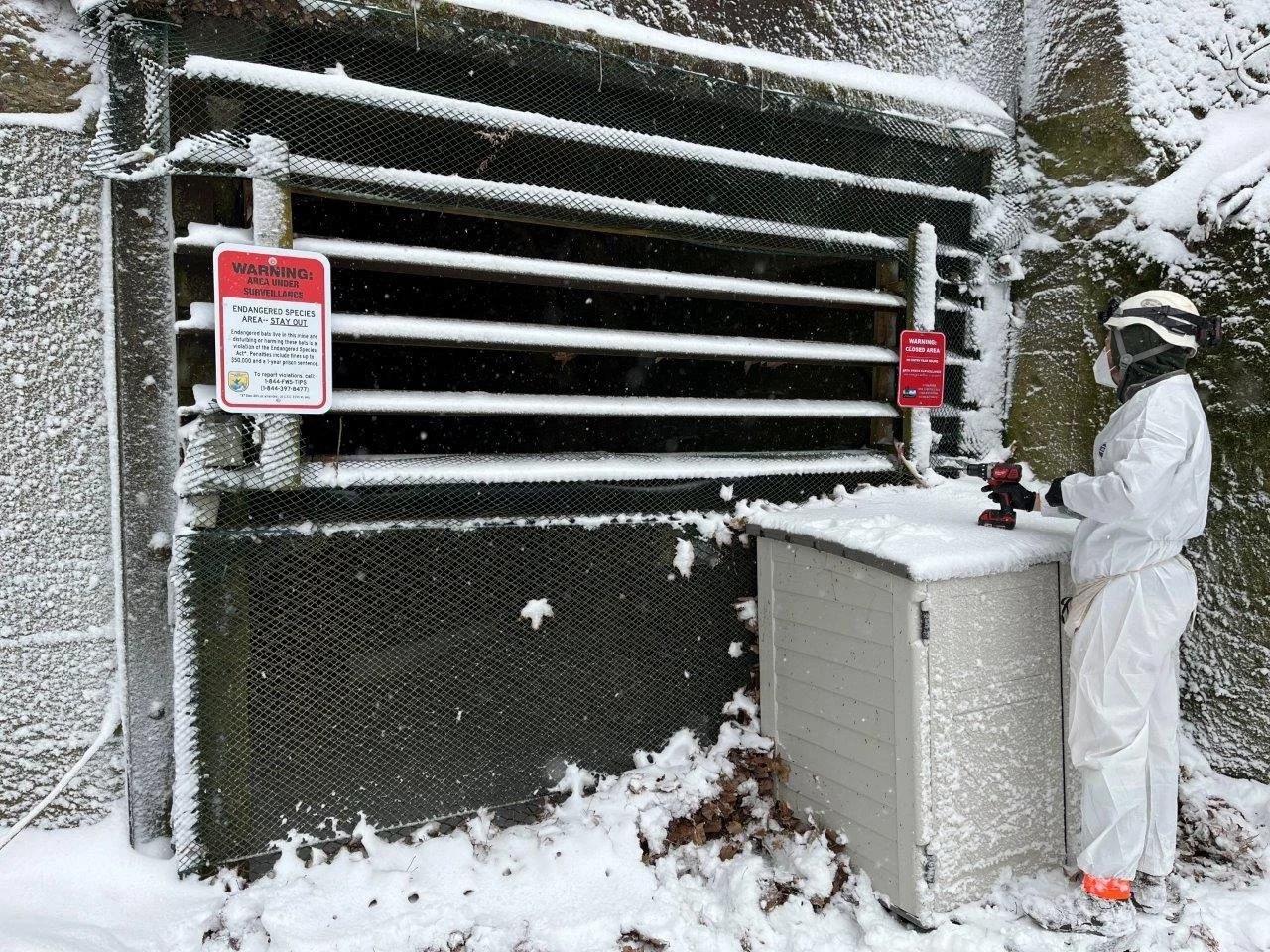
An entryway at a mine has been fortified to prevent human entry while openings between metal bars allow bats to come and go (Wisconsin DNR).
Bat Conservation International, which originated in Milwaukee, and Underground Conservancy have been key partners in helping protect Wisconsin bats.
Mark helped coordinate the work on two mine projects. DNR engineers designed the exclusions at cave entrances, including large metal bars that prevent people from access while allowing bats and researchers to enter. BCI recommended a contractor that was hired to complete both projects.
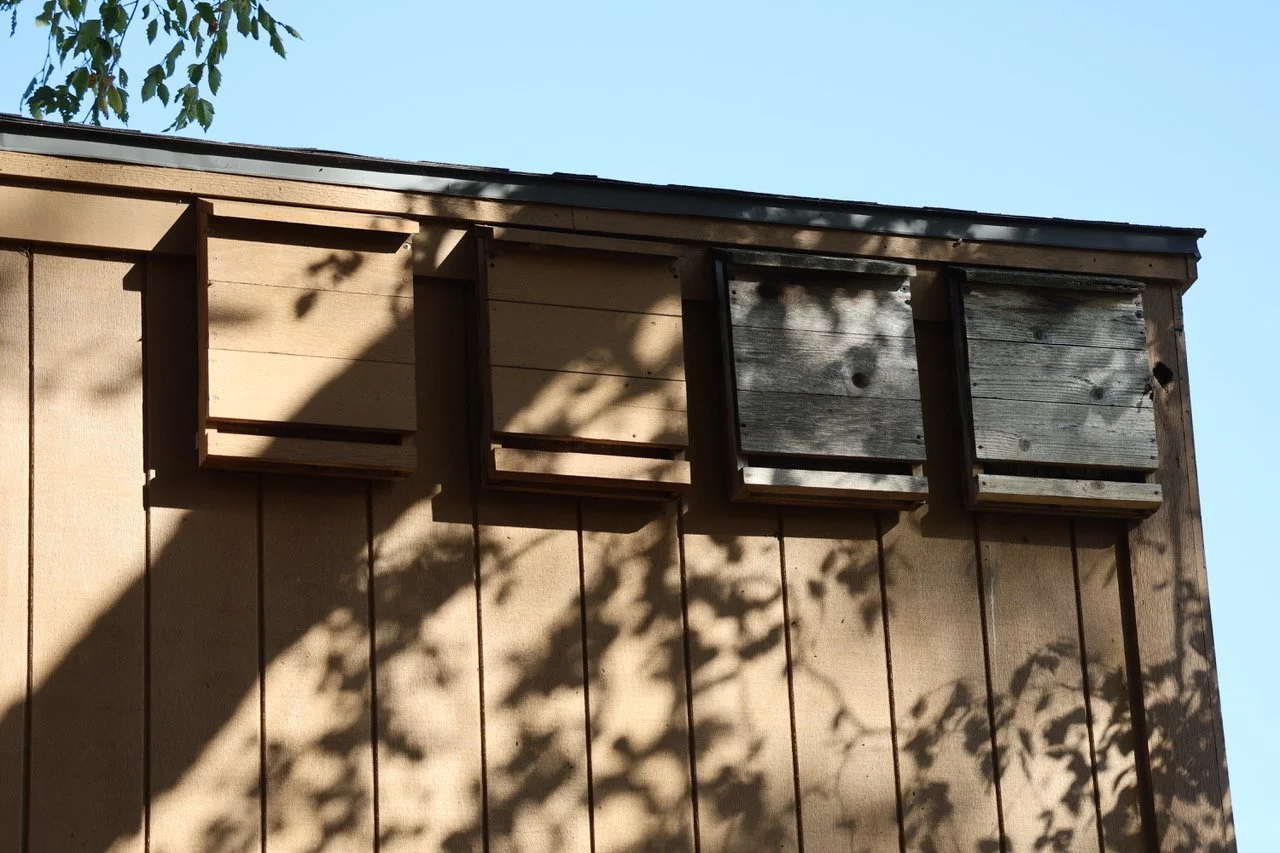
Bat houses at the Caslavka residence (Curt Caslavka).
Another way that people can help support bat populations is to build and erect bat boxes for roosting in the warmer seasons. Curt and Arlys Caslavka have had bats at their home and around their neighborhood for several years. They built one bat house and placed it on a peak of the house facing their back yard. No bats used it, so after a couple of years they moved it to the front porch and a few bats began to roost there. Over time the numbers increased, so they added more bat houses along the roof line near their front porch. In 2023, Heather Kaarakka, a DNR bat conservation biologist, visited their home and asked if they would be willing to complete a bat survey for the big brown bats roosting there. Their first pre-volancy survey in June of that year was 35 bats; in July 2023, the numbers had increased to 55 bats, which included the females and their young. The numbers have increased each year. In early June 2026, the pre-volancy count was 52 adult big brown bats, and the July 2026 post-volancy count was 88 bats.
Beyond cave bats…
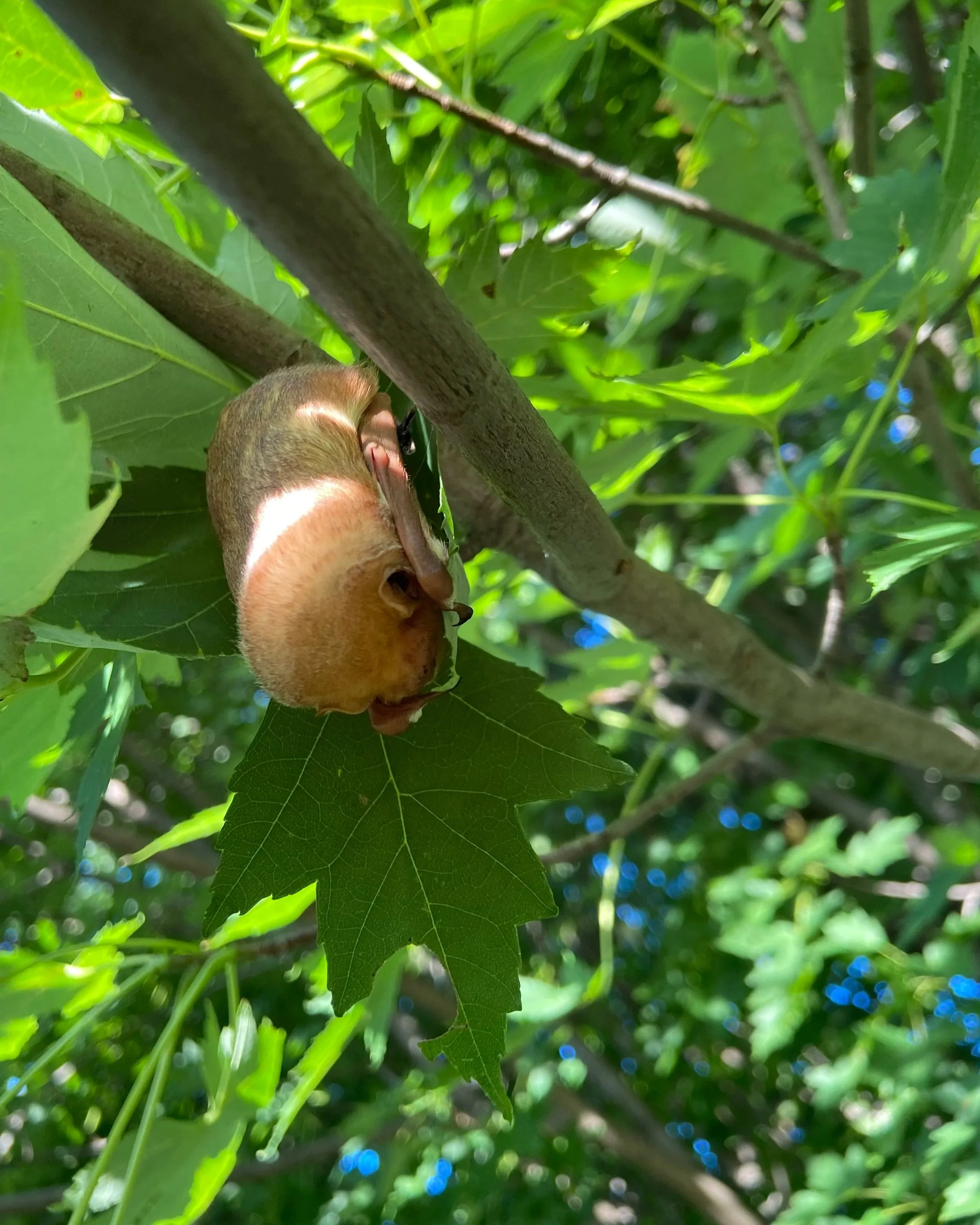
Although most of the roosting bats at Goose Pond are big brown bats, other species use the buildings and trees nearby as well—they are just far more difficult to find! One of Emma’s favorite memories at Goose Pond was finding an eastern red bat in the silver maple at the Kampen Road house. This experience solidified bats as one of her favorite and most awe-inspiring creatures. Click the button below to read her feature. (Eastern red bat, photo: Emma Raasch/SoWBA)
Conducting roost counts and surveys is an important way to monitor populations of Wisconsin’s bat species. Emma Raasch, Goose Pond land steward, has conducted bat roost counts at a couple other locations, but counting the roost at the sanctuary is definitely the most difficult. The majority of the bats roosting at Goose Pond are big brown bats. Unlike little brown bat roosts that tend to have a single exit point, big brown bats roost in loose aggregations in multiple buildings rather than at our bat house. This necessitates monitoring several exit points that may only reveal one bat each—definitely a count best done with multiple people! Although this count doesn’t give us perfect numbers, it still gives us an idea of how big brown bats are doing at Goose Pond. In general, our counts after WNS were around five and now numbers are around 15, suggesting that our numbers are growing. Emma has also observed an anecdotal indicator of their improvement—she knew that bats roosted in the barn, but could never spot one; this year, she consistently found roosting bats in the barn during summer and early fall.
When you think of Halloween, think also of bats, the organizations that work very hard to protect them and their habitats, and the staff and volunteers doing the research, especially those working to learn more about WNS and what can be done to increase bat numbers. Of all the conservation and wildlife biologist positions in the DNR, one of the most difficult is that of the bat conservation biologists, who crawl or squeeze through tight spaces in caves searching for bats.
This year, Southern Wisconsin Bird Alliance is partnering with the UW Bat Brigade and the Natural Resources Foundation of Wisconsin to host a series of bat-related events in Madison. Please join us to learn more about these awesome species and how you can help support them!
Written by Mark Martin & Susan Foote-Martin, Goose Pond sanctuary managers, with thanks to DNR bat conservation biologist Paul White for his contributions
Header photo by Mike Budd/USFWS. A single bat flies through the evening air.
