
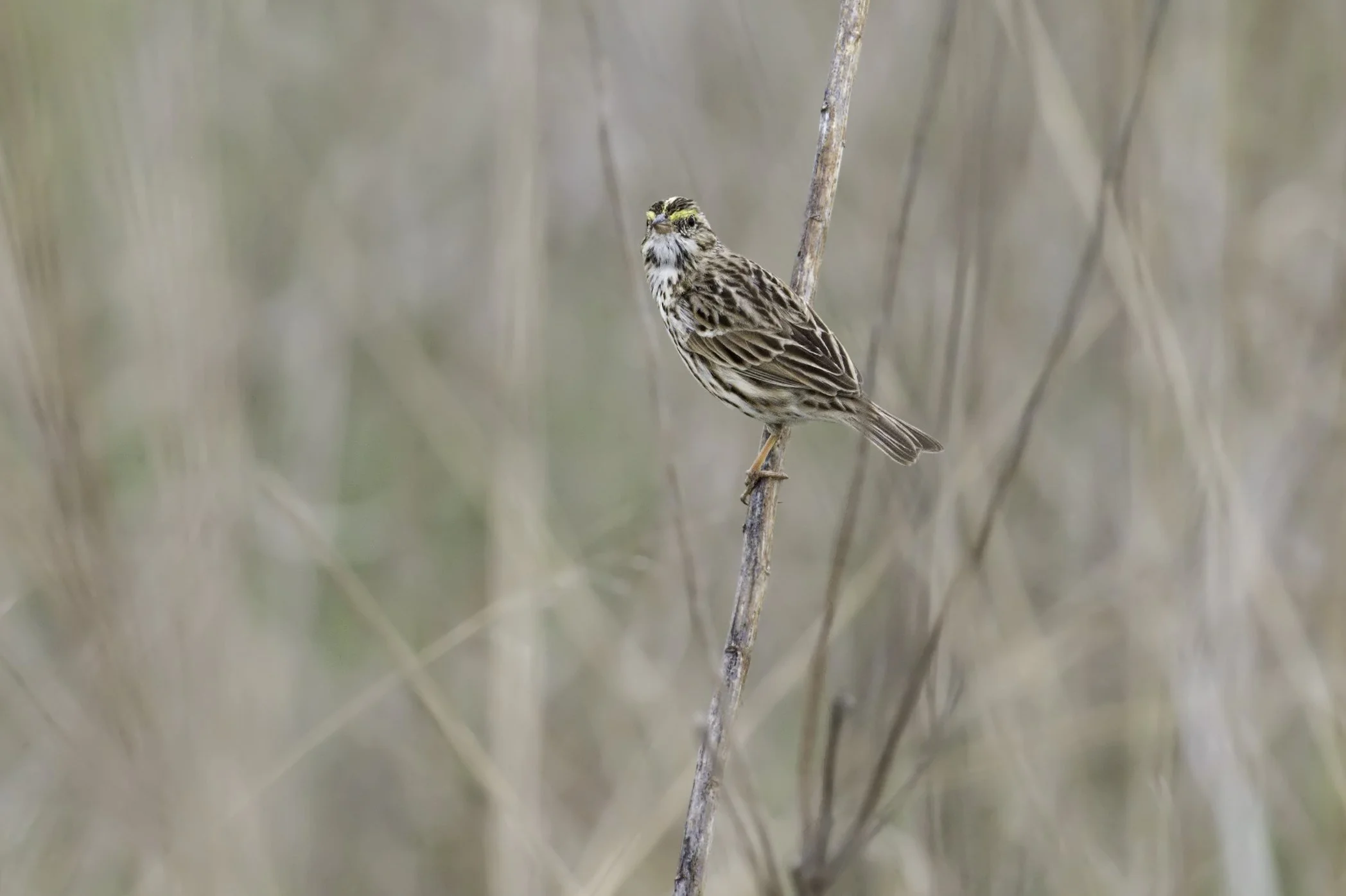

Faville Grove’s newest prairie planting is beginning to take shape. Seeded just nine months ago, about 14 acres of old farm fields now host dozens of native species like partridge pea, New England aster, and black-eyed Susan. The remaining 41 acres of farmland will be planted in the coming months using seeds recently collected at the sanctuary. While seed collecting in the newly planted section last week, I realized this may become one of the best birding spots in the sanctuary once the remaining acres have been established. Standing in a spot with an overlapping view of the Faville Grove Relict Bog, restored prairie, and mesic woods, visitors will be able to observe the varied species that inhabit these unique ecosystems. Those with an affinity for sparrows will certainly enjoy this spot; already this fall there are Lincoln’s Sparrows, White-crowned Sparrows, and Swamp Sparrows making this section of the sanctuary home, alongside Savannah Sparrows.
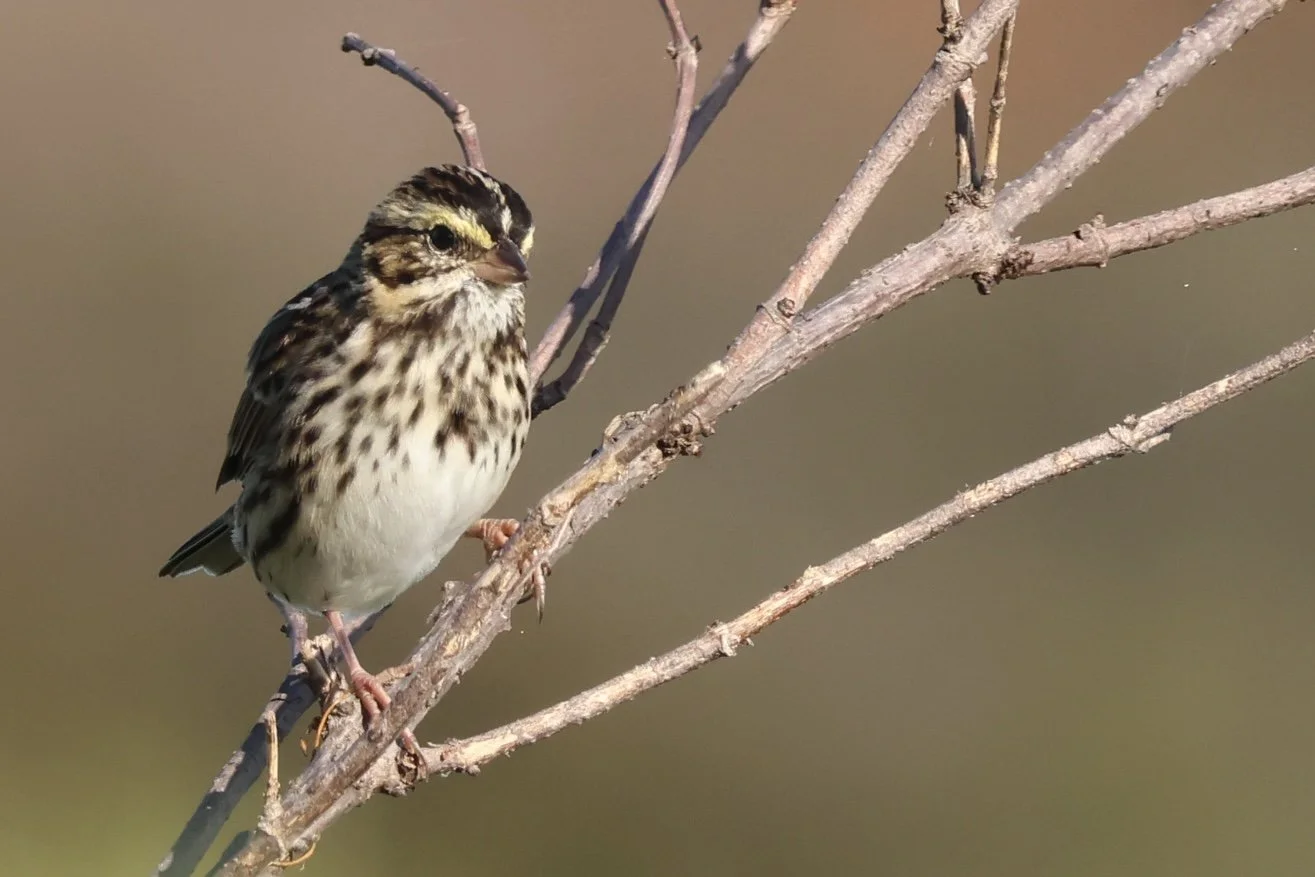
Savannah Sparrow at Faville Grove (Soraya Castle/SoWBA).
First, we need to clear up some confusion about the Savannah Sparrow’s name. I was puzzled when I first saw one along the edge of the bog and the new prairie—there is no savanna there. Indeed, Savannah Sparrows are usually found in grasslands, near farm fields, or shrubby areas near wetlands. Savannah refers to Savannah, Georgia where the ornithologist Alexander Wilson first saw the bird in the 1800s. Many of the places this bird calls home bear little resemblance to the familiar oak savannas of Wisconsin. Savannah Sparrows can be found in the far north of Alaska within the arctic circle, down to the coastal jungles of the Yucatán Peninsula.
The widespread distribution of the Savannah Sparrow and their behavior of returning to the location of their birth (natal philiopatry) has led to the development of 17 recognized subspecies. For example, the Ipswich Sparrow, a subspecies which is slightly larger and lighter in color, only breeds on Sable Island in Nova Scotia. Visitors to Faville Grove will most likely see the “eastern” Savannah Sparrow (Passerculus sandwichensis savanna).
Between all the variations among subspecies and how similar different species of sparrows look, identifying a Savannah Sparrow might seem daunting. Savannah Sparrows have brown feathers streaked with black on the top of their body with white feathers on the bottom. They have a short notched tail, and often their crown of feathers will flare up. While these features are quite similar to other sparrows, certain behaviors and physical features make it relatively easy to identify these birds when you see them. Compared to other sparrow species, Savannah Sparrows are more likely to perch conspicuously on brush or tree limbs. This exposed position allows a viewing of their most distinctive feature, a patch of yellow in front of and over their eyes. While observing a Savannah Sparrow perched on a branch, listen for its song: a quick series of high pitched notes, followed by an insect-like buzz, and finishing with a trill.
Savannah Sparrows call Faville Grove home from early spring to late fall, breeding here in the summer. Males attract mates with their song and by fluttering over the grass with their tails raised. Female Savannah Sparrows construct cup nests under prairie vegetation, into which they lay two to six eggs (white, tan, or green with brown spots).
Come to the sanctuary to catch Savannah Sparrows as they make their migration south for the winter. Visitors can find them in most areas, but they will have better luck along the edges of Faville Bog or at Snapper Prairie State Natural Area in the flood plain of the Crawfish River.
Written by Parker Gimbel, Faville Grove land steward
Cover photo: Kelly Colgan Azar. A Savannah Sparrow perches conspicuously on a branch.
