
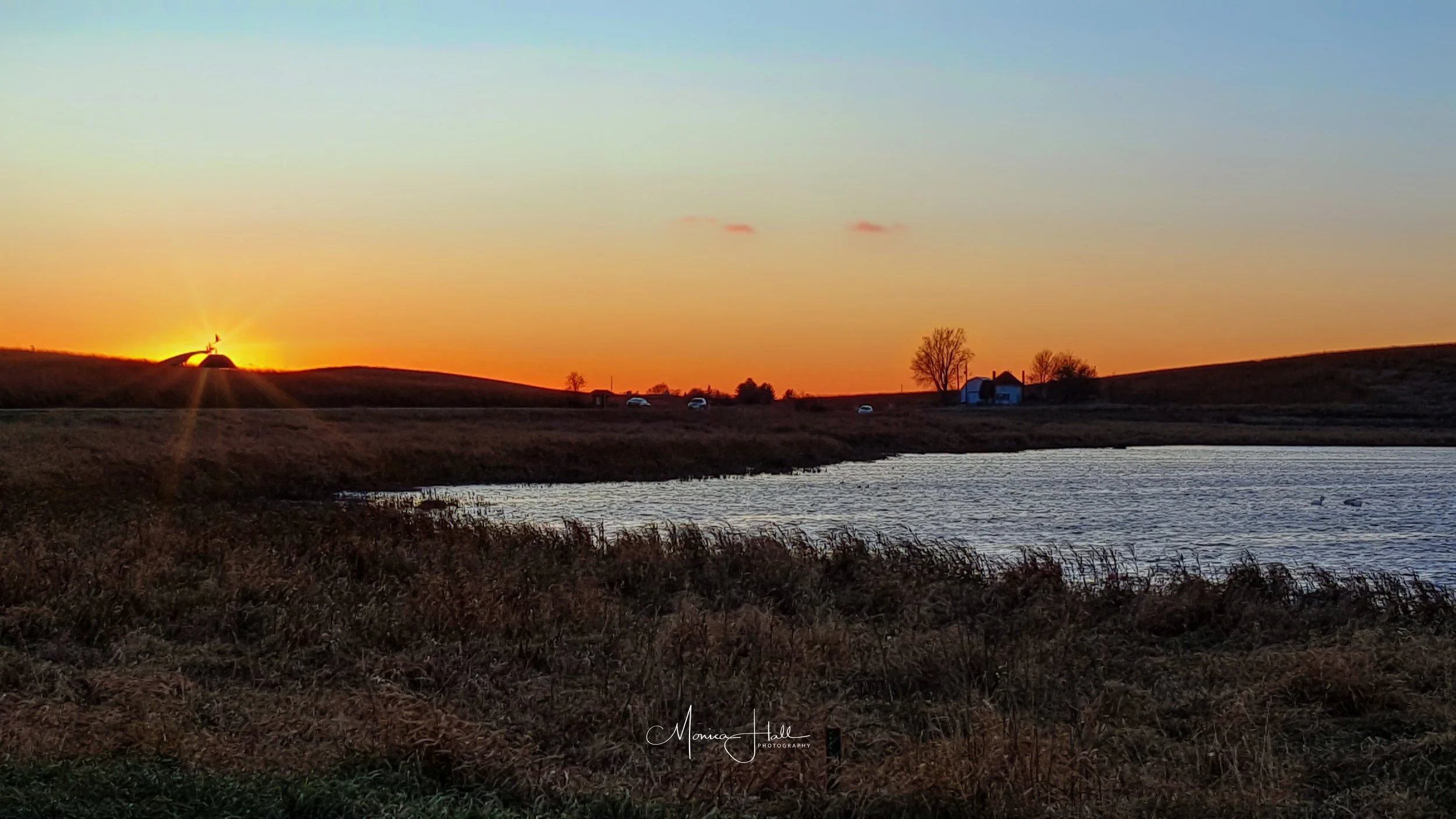

In southern Wisconsin, this is the time of year is usually when we start thinking about the approaching winter. The days have grown shorter and much colder. Sometimes, we will see a bit of snow. The “gales of November” are called that because the conditions are right for atmospheric instability that can lead to powerful storms.
However, the climate is changing. The past three Novembers have been warmer than usual, according to the NOAA. This year, their Climate Prediction Center forecasted another warmer-than-average November in Wisconsin and across the continental US.
Since we began managing Goose Pond Sanctuary in 1979, we have paid attention to the numbers and species of birds. Over the years, we have seen many different ways that weather in November can change the landscape and the patterns of birds that are migrating through.
A look back at the Armistice Day Storm and migrating ducks
I have read and heard bits and pieces about the Armistice Day Storm, which began as a powerful system in the Pacific Northwest before moving quickly across the continent. Across the Midwest, unseasonably warm temperatures unexpectedly dropped as low as the single digits very quickly as cold winds picked up and snow fell. In Wisconsin, many were caught unaware, leading to 13 deaths, many being duck hunters who were stranded in the dangerous conditions.

Fritz Kaiser with decoy ducks (courtesy of Tim Eisele, used with permission).
Recently, I learned more about that day in Tim Eisele’s new book, My Wisconsin. Tim interviewed duck hunters about their memories, including Fred “Fritz” Kaiser, who I met in the early 1980s when he and his son John would visit Goose Pond just to watch the waterfowl after hunting nearby.
In talking with Tim about the storm, Fritz recalled, “It was a holiday back then, but it wasn’t duck hunting weather. Instead it was real warm, but there was something in the air that didn’t feel right.” He continued:
“The ducks flew and we shot, and I thought what a day this was going to be. . . . But we soon realized that we were going to have trouble getting the boat out to retrieve our ducks. Then we noticed that our decoys were breaking loose as the winds grew stronger and colder. I bet it was 50 mph and we lost all of our decoys and ducks that day. It got so cold, so quick. . . . I’ve never seen a duck flight like that day. They were all over, high and low.”
Several of the hunters Tim interviewed mentioned large flocks of ducks filling the sky as they flew south from the incoming storm. I also wonder what it was like at Goose Pond that day. Fritz had been hunting in part at a pond at Springfield Corners, not too far away from the site of where the sanctuary would be.
Fall migration Canada Geese numbers, 1979–2026
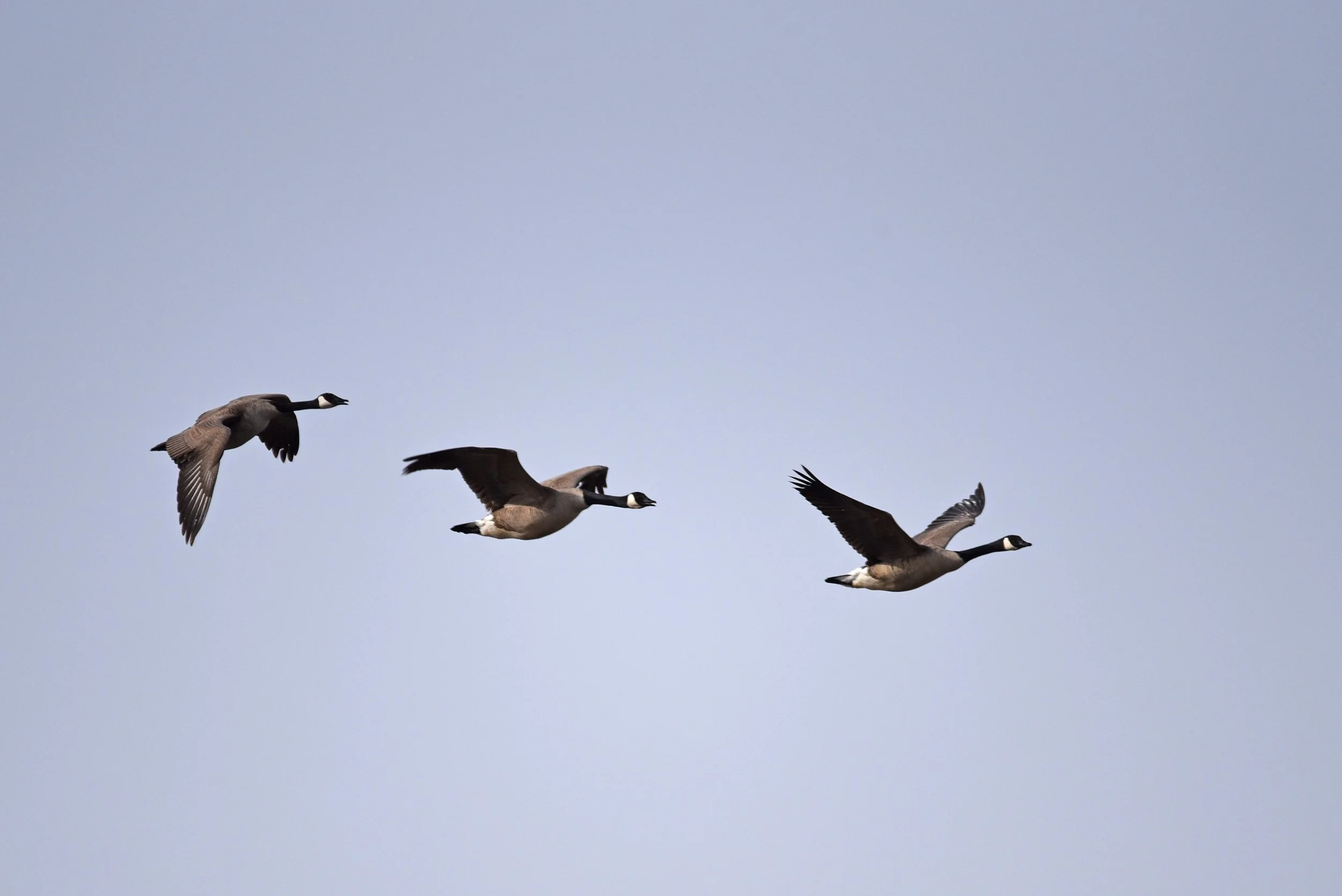
Canada Geese in flight (Courtney Celley/USFWS).
In the past 50 years, the high count of Canada Geese averages around 2,500. The majority of these birds nest in the James and Hudson Bay area—mostly the giant subspecies that has wintered in Wisconsin for the past hundred years. When winter comes to their nesting grounds and the water freezes, they head south, with many stopping at Goose Pond. They then stay as long as they have access to harvested cornfields and water to roost on at night. When the pond freezes over or snow covers the cornfield, they once again head south. With warmer fall weather, their migration from Goose Pond is also beginning later, and many now only go as far as southern Illinois.
High counts show up later and later
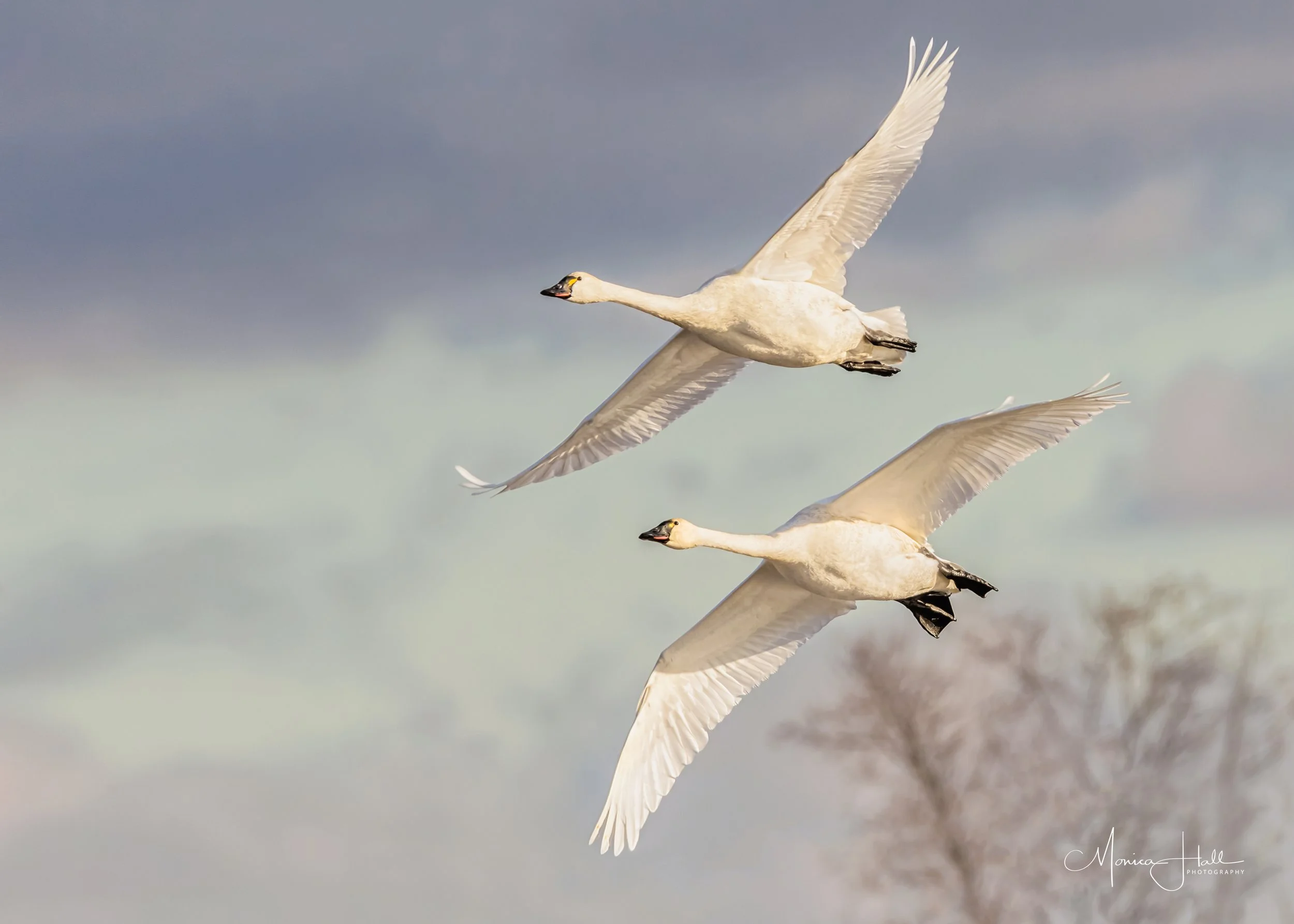
Tundra Swans fly over Goose Pond (Monica Hall).
Fall migration in November at Goose Pond can be spectacular. Tundra Swans are a focal species and hundreds of people have asked us over the years, “Are there swans at Goose Pond?” or “When do you think they will arrive?” It is impressive to see Tundra Swan numbers increase from maybe a small flock to hundreds the next day. The weather in North Dakota impacts when Tundra Swans migrate to Goose Pond. When a cold front hits North Dakota in late October or early November and the wetlands freeze up, they basically all head southeast over southern Wisconsin. In many years 500–1,250 stop at Goose Pond. From Goose Pond, Tundra Swans will migrate east to Chesapeake Bay and the Carolinas. Fifty years ago, the swans would leave Goose Pond by November 15, when the pond would be ice covered. With climate change, migration times are changing. Our highest count of Tundra Swans was 2,610 on December 2, 2019 (along with a high count of 12,500 Mallards). Waterfowl are tough birds and can take 33-degree water as long as their food is not covered with snow—those birds migrated when Goose Pond finally froze over later in December.
Sandhill Cranes are a conservation success story, having greatly increased in numbers over the past 50 years. They also migrate in large numbers over Goose Pond. Graham Steinhauer counted 2,240 cranes flying over the sanctuary on December 2, 2022. This was an impressive sighting. In fall, many cranes roost on islands in the Wisconsin River and feed in harvested cornfields. They are also hardy birds and head southeast when snow covers the waste corn—a time frame which is impacted more and more by climate change.
We look forward to seeing how the weather unfolds this month, and continuing to track our observations of birds and other wildlife as the seasons continue to change.
Written by Mark Martin and Susan Foote-Martin, Goose Pond sanctuary managers
Header photo by Monica Hall. The sun sets over Goose Pond in mid-November 2017.
