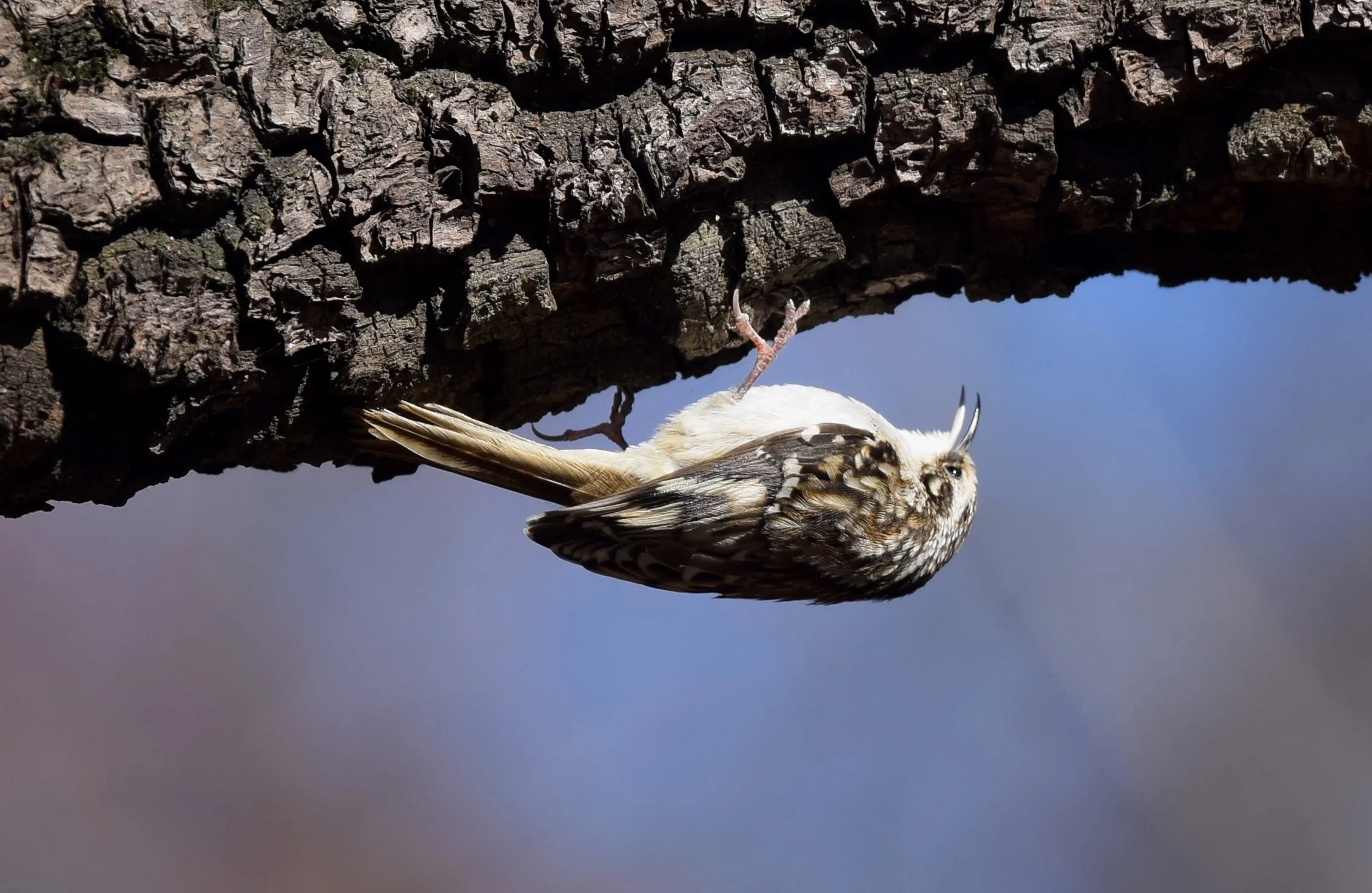
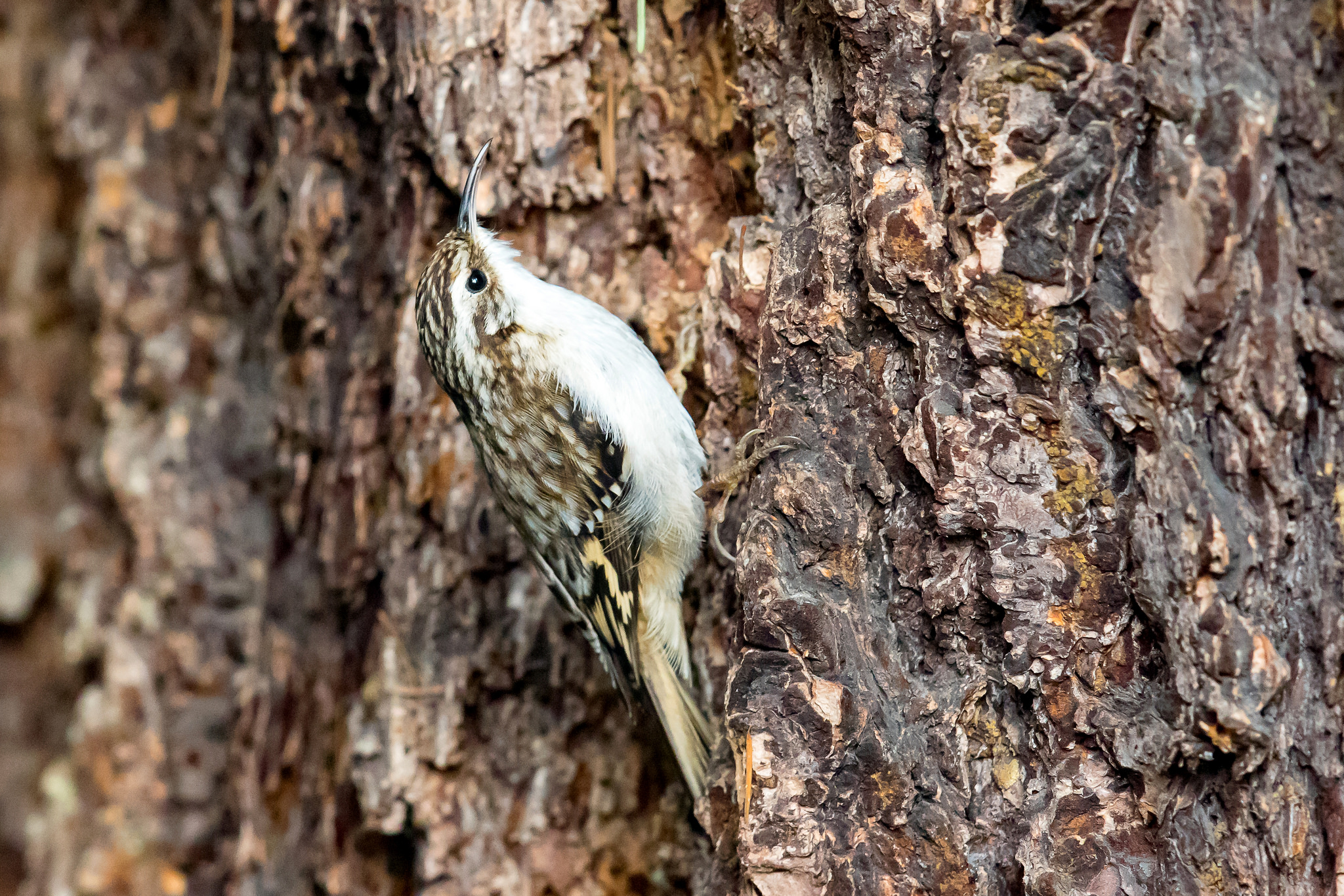
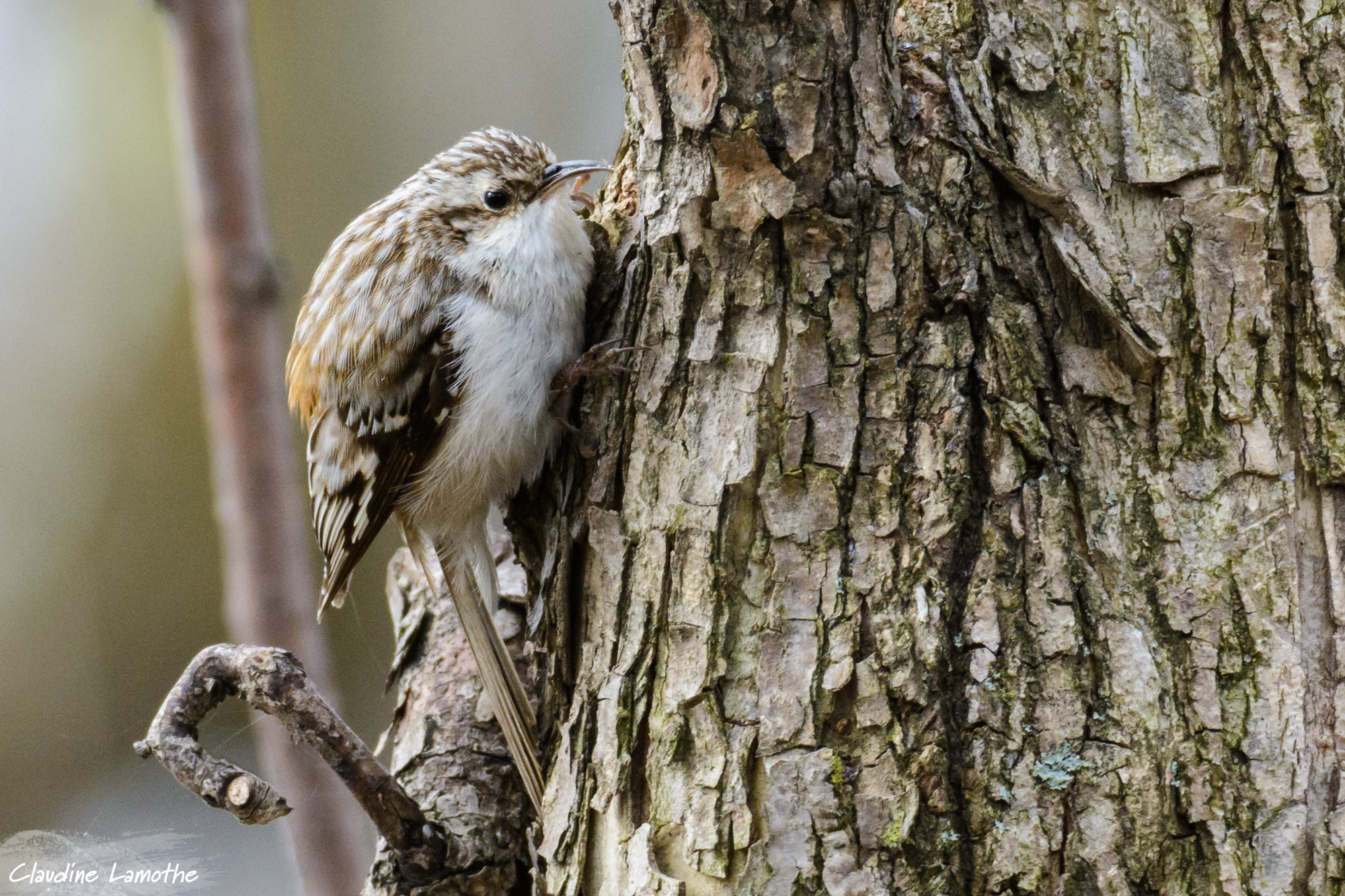
Brown creepers construct nests in a unique way; they layer cocoons and spider egg cases together with twigs and strips of bark, and almost all records have the placement of the nest behind a strip of bark hanging off a tree. Because of this habit, creepers need forests with old growth characteristics, with plenty of standing dead wood to provide excellent foraging and nesting opportunities. In fact, in western US forests, brown creepers are considered an indicator species of old growth forest because they prefer a dense upper canopy and tall trees—almost 50% taller at occupied versus unoccupied sites.
Using their long bills to pry away strands of bark is a favorite activity of creepers, and their process of foraging involves starting at the base of the tree and moving upward, then diving to the bottom of the next tree.
Some research suggests that brown creepers exhibit habitat partitioning with co-occurring birds like nuthatches. Creepers will forage lower on trees and on thicker branches while nuthatches prefer slimmer branches and higher points of the tree. However, in areas where forest has been fragmented or logged, the brown creeper has been shown to be in competition with these other species. Thus, large blocks of forest with large diameter trees are important to both overwintering and breeding grounds.