
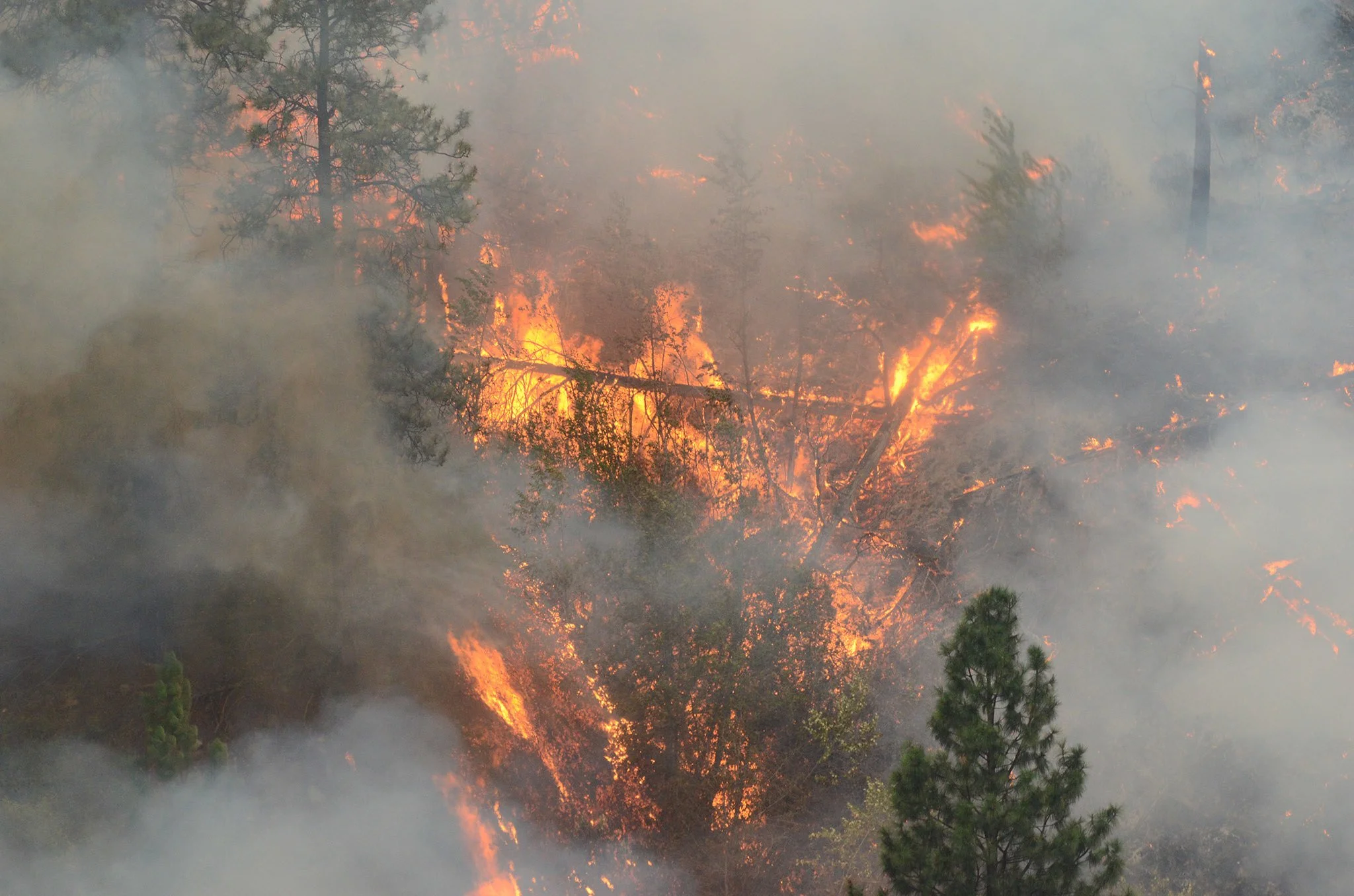
Wildfire activity is intensifying globally, exposing people and wildlife to more frequent and intense smoke pollution. Here in Wisconsin, wildfire smoke from megafires burning in the boreal forest has contributed to hazardous air quality conditions in the spring and summer. Birds are likely to be especially vulnerable to increased smoke disturbance due to their sensitive respiratory systems.
Yet, we have so much more to learn about how wildfire smoke is impacting birds and the ways in which smoke could be contributing to the decline of our feathered friends. In this talk, Dr. Sanderfoot will share what we know so far about how smoke impacts avian physiology, behavior, and reproductive success and highlight opportunities for you to get involved in critical research on this urgent conservation topic.
This engaging presentation will be followed by a Q&A session with Dr. Sanderfoot.
Co-hosted by Southern Wisconsin Bird Alliance, Northeastern Wisconsin Bird Alliance, Wisconsin Society for Ornithology, Chequamegon Audubon Society, SOS Save Our Songbirds, Audubon Society-UW Madison, and UW Green Bay Bird Alliance.
About the Speaker:

Dr. Olivia Sanderfoot (she/her) is the leader of Project FeederWatch at the Cornell Lab of Ornithology. She recently completed a postdoctoral fellowship at the UCLA La Kretz Center for California Conservation Science and the Natural History Museum of Los Angeles County. She is also the founder and director of Project Phoenix, a community science program monitoring birds during the wildfire season. Olivia’s research is focused on effects of air pollution, particularly wildfire smoke, on birds and other wildlife. Olivia is currently exploring how wildfire smoke impacts bird behavior and shapes species distributions.
Olivia was born and raised in Madison, Wisconsin and is proud of her Midwest roots. Olivia is driven by her passion for environmental policy and conservation, her love for birds, and her strong belief in the Wisconsin Idea – the philosophy that a university’s research should be applied to solve problems and improve the health, well-being, and environment of the community it serves.
Photo by Tom Magliery FCC
