
During the recent extremely cold weather in Wisconsin, a group of Eastern Bluebirds has been roosting nightly in our front yard Peterson bird house. We first noticed their presence early on Jan 21st about 7AM while looking out a front window and were completely surprised to see seven bluebirds fly out of our bluebird house. It was still fairly dark at that time on a cloudy day. The bluebirds were gone all day, presumably feeding somewhere in the neighborhood. At this time of year our property has no shrubs bearing winter fruits for them to feed on.
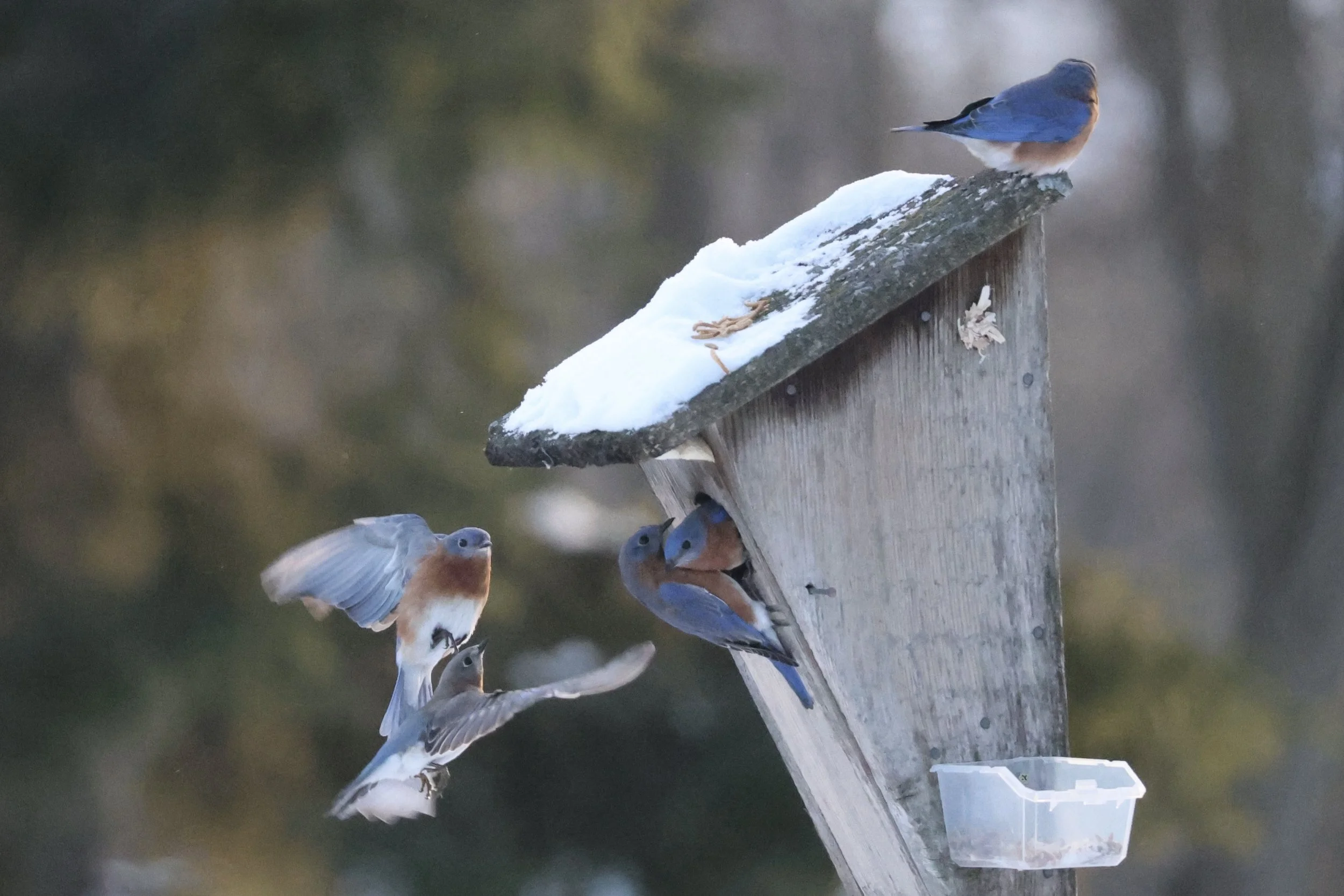
A band of bluebirds at a nest box in Curt’s yard. Photo by Curt Caslavka
At approximately 4PM that same day, several bluebirds had returned to our yard. For the next forty-five minutes, they repeatedly flew into and then back out of the nest box before finally settling into the nest box for the night just before it got dark. We were unable to get an accurate count.
(Day two, Jan 22nd) Our intentions were to observe the bluebirds leaving their roost but we misjudged the time and missed their departure. Later that afternoon around 4PM the birds returned and Curt was ready with his camera. Again we were not certain how many birds were roosting that evening in the bird house and were concerned they might be in trouble with the extremely cold temperatures that night.
(Day three, Jan 23rd) The low was -19 degrees with a wind chill of about -40 degrees—VERY COLD! We started observations at 6:45 AM and shortly thereafter eight bluebirds flew out of the box. They had survived the night and were off again. During the day, Curt bought some dried meal worms and attached a feeder to the side of the bird house. He also plugged all of the air vents on the box and put a couple handfuls of pine shavings inside the box. Later when the bluebirds returned some of them started feeding on the meal worms before entering their roost for the night.
(Day four, Jan 24th) The low that morning was minus 15 degrees and calm. Between 7:00 AM and 7:10AM six bluebirds exited the nesting box but returned several times to feed on the meal worms. Later, Curt checked to see if there were any casualties in the box and fortunately there were none.
Written by Curt Caslavka, SoWBA member and volunteer
