
There’s a lot going on in the world right now. We are all working hard to balance being informed with maintaining our mental health. Balancing taking action with rest. This is a long road we’re on, hoping to get to a place where maybe the pauses between action can be longer. Where the number of fires to put out will be smaller. Until then, we need to remember to take care of ourselves, and each other, so we can keep on fighting for things that matter deeply to us.
None of us have the mental health balance perfected, but we’re working on it! Our office staff enjoy sharing podcast recommendations with each other, and we wanted to share a recommendation with all of you: an episode of Ologies called “Salugenology (WHY HUMANS REQUIRE HOBBIES)”. It’s an amazingly uplifting resource for building your own mental reset. Julia Hotz is the guest expert and author of The Connection Cure.
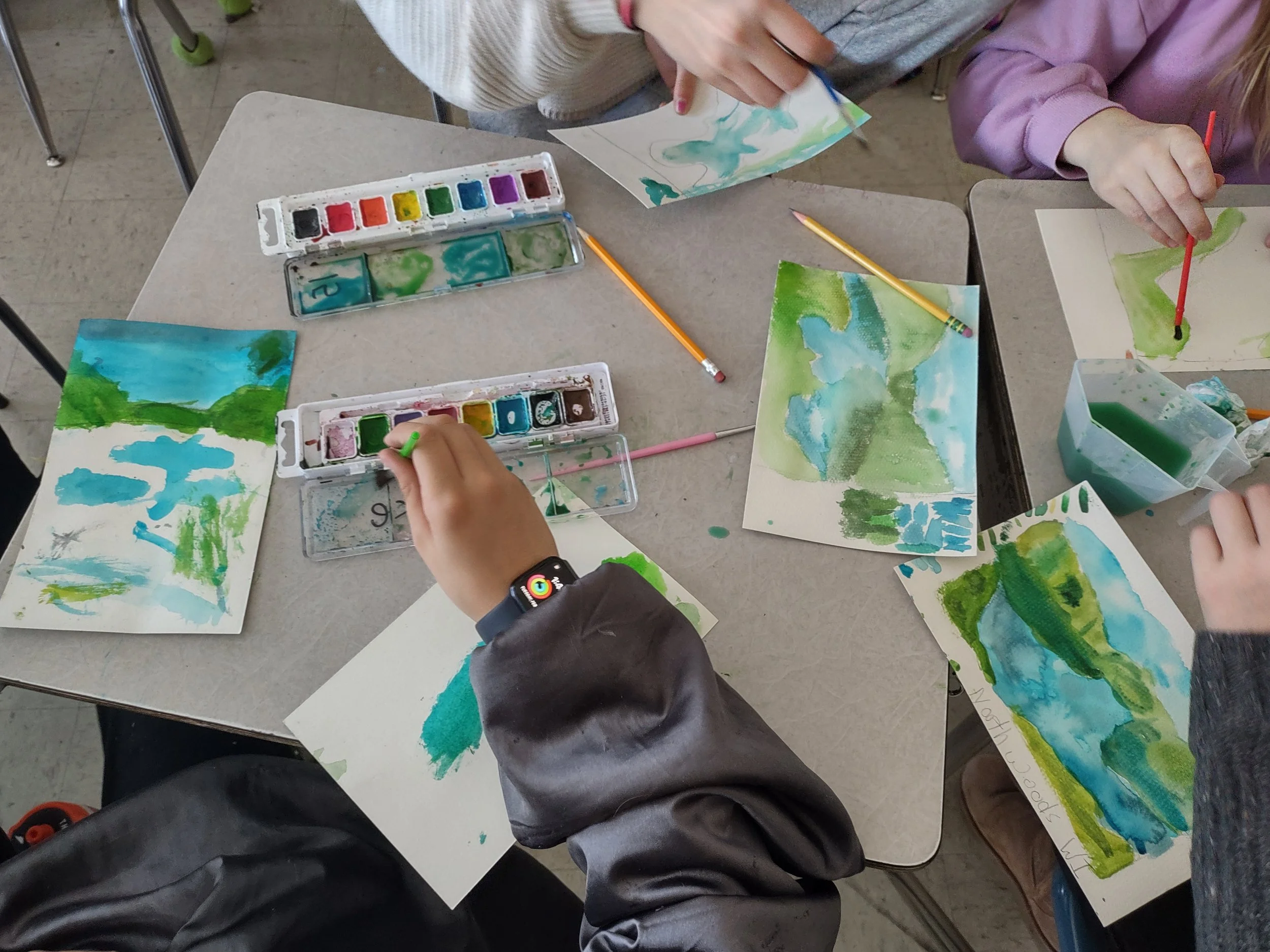
Kids use watercolor paint to illustrate scenes of nature (photo by Carolyn Byers/SoWBA).
Hotz describes our healthcare system as typically focused on pathogenesis, or the study of disease. It’s about fixing something that’s wrong to bring you back to a baseline. Lately, there has been a shift in ideology towards defining “being healthy” as something different than just the absence of illness. This episode is all about social prescribing, which Hotz describes as finding what matters to you, or what brings you a unique sense of joy and purpose. Doctors in 30 countries around the world, including the US, are starting to prescribe things like ukulele lessons or walking clubs to their patients. Of course, ukulele lessons cannot simply replace any medication, but they can work together to create a healthier person.
Though we encourage you to listen to the podcast episode (or read the extensive resources they cite!) on your own, here’s the basic gist. There are five main categories of activities that can help you maintain mental health, which in turn, has a positive impact on your physical health. These categories are movement, nature, art, service, and belonging. The episode discusses lots of examples of how each category can impact your physical wellbeing. Time in nature increases endorphins and serotonin, making you happier. It also reduces rumination, or overthinking, which reduces anxiety. Nature makes us feel calm, restored, and like we’re better at focusing. Spending time on creative pursuits can reduce cortisol (or stress) levels. You don’t even have to be good at the art you’re doing, it’s just the act of being creative that helps! Even if this isn’t new information for you, listening to this podcast episode might light a spark within you to revisit old favorites.
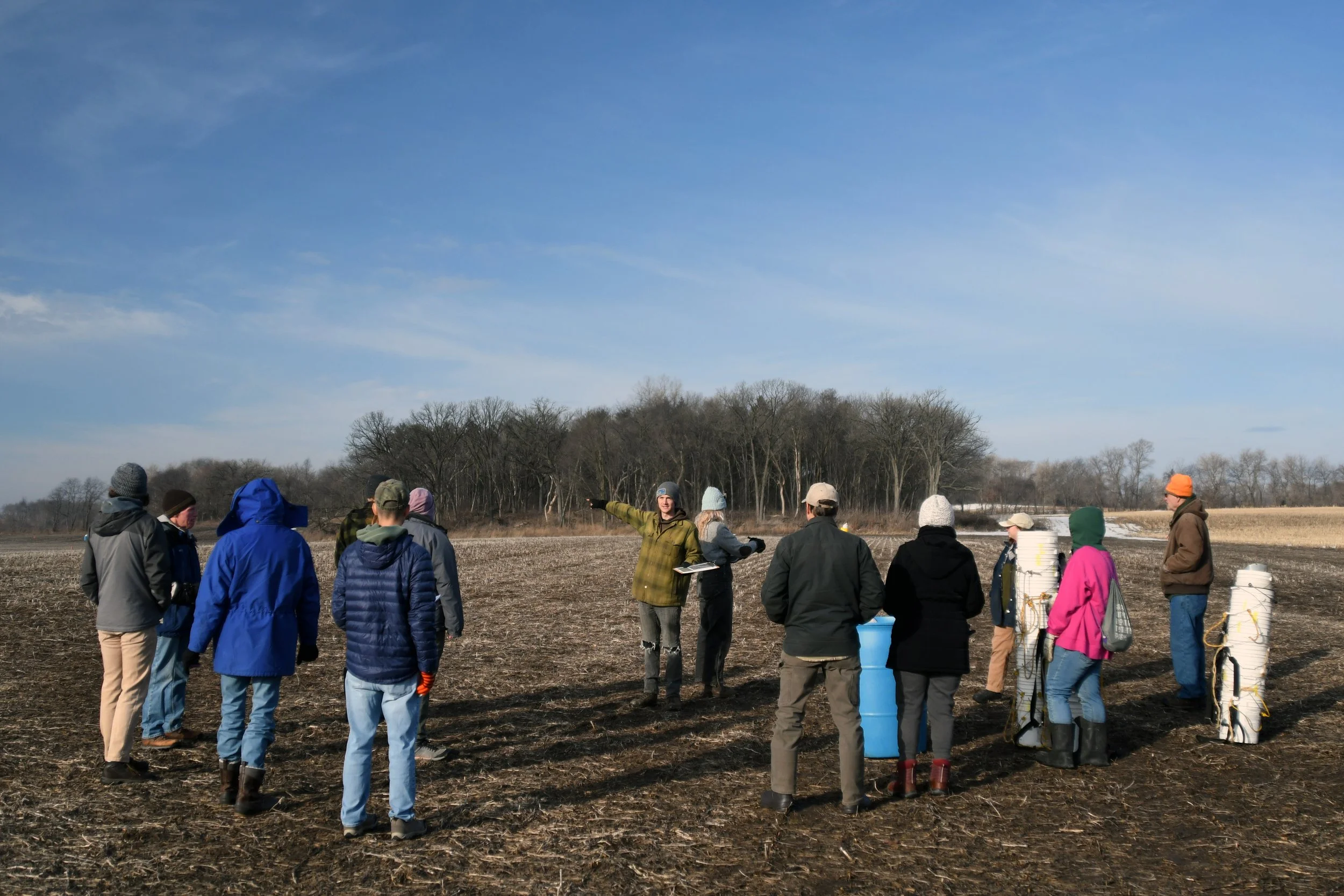
Volunteers work together to sow native plant seed at Otsego Marsh during a previous spring (photo by Kaitlin Svabek/SoWBA).
We were quick to connect the dots between movement, nature, art, service, and belonging with our work here at Southern Wisconsin Bird Alliance. All of our events and programs involve some combination of connecting you with the land, with other people, with wildlife. We offer opportunities to move your body, to give back and volunteer, and to explore your creative sides.
Folks who attend a field trip are easily able to check off movement, nature, and belonging. Most of our events are free and open to the public (sign up for one coming up here). If it’s a volunteer event like seed collecting at a sanctuary or participating in one of our citizen science programs, that also ticks the service box. Maybe you want to join a drawing class, and check off that art box. Visiting a sanctuary on your own can be movement, nature, and even belonging—depending on how connected you feel with the land and wildlife.
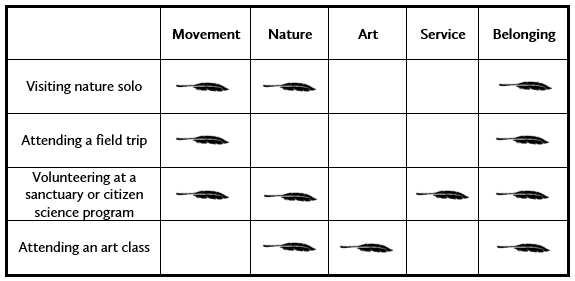
A table showing how each activity (visiting nature solo, attending a field trip, volunteering, and attending an art class) fit with the five categories of movement, nature, art, service, and belonging (graph courtesy of Carolyn Byers/SoWBA).
We’d love for you to join us at one of our events, but as long as you’re soaking up some nature, we’re happy. Invite friends out on a neighborhood walk or go view the sunset. Sip some tea while watching your bird feeder. Take some kids on a hike to look for animal tracks in the snow. Pause the things that feel “productive” and have a mental reset.
Everyone here at SoWBA is wishing you safety, comfort, warmth, and community. Take care of your mental and physical health as best you can, because our world needs you. Whether we’re talking about wetlands, prairies, big cities, or small towns, diverse communities are stronger. Flock together, take care of each other, and return to nature when you need to rest.
Written by Carolyn Byers, Southern Wisconsin Bird Alliance director of education
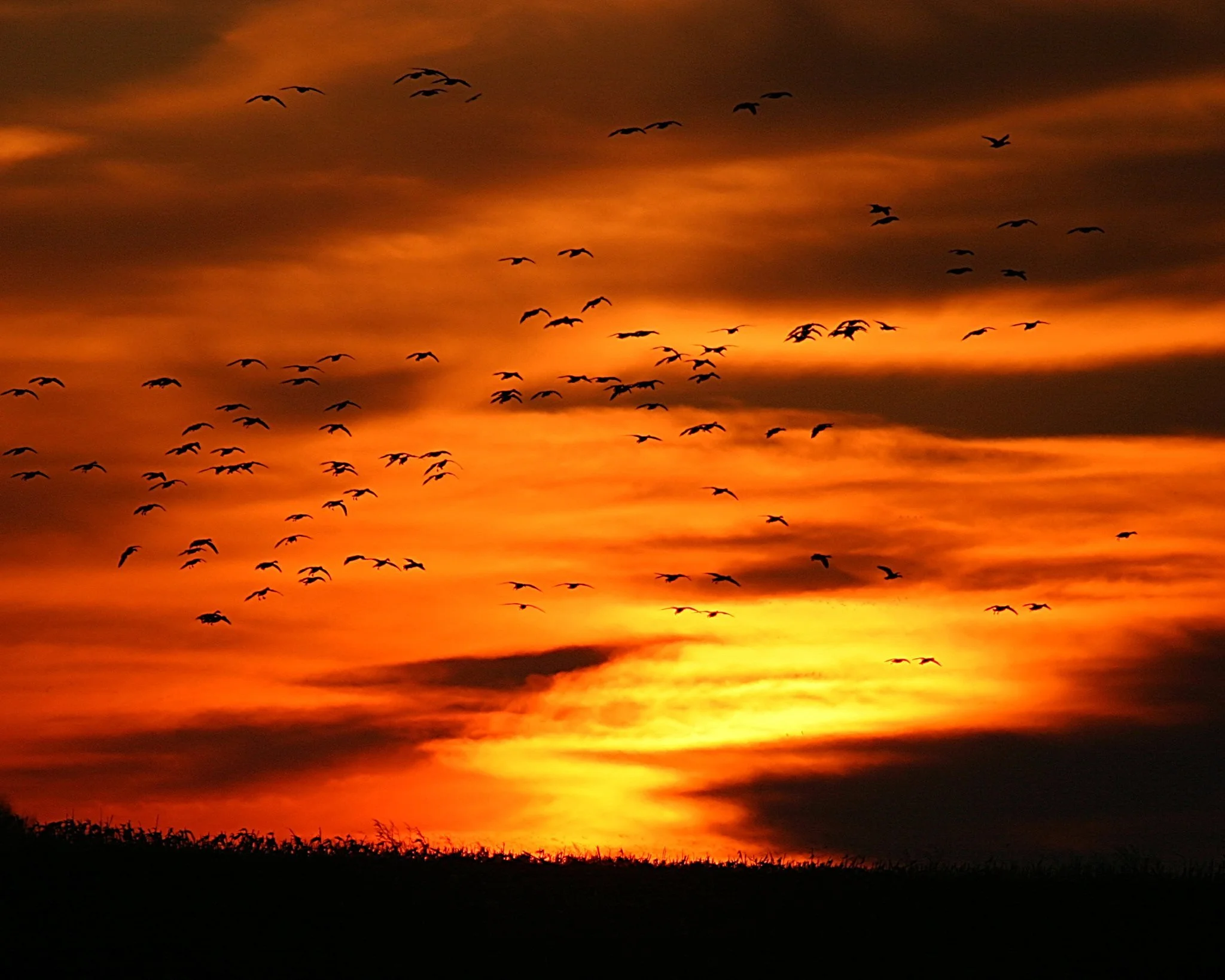
Cover photo: Scott Ralston/USFWS. A flock of geese at sunset.
