
Solving bird-window collisions at
UW-Madison’s Microbial Sciences Building
We need YOUR help in making Microbial Sciences safer for birds by reducing bird-window collisions.
When filling out the donation page, do not enter a “Cause” — scroll down to where it says Green Fund 112200270 to enter your donation.
The Microbial Sciences building at the University of Wisconsin-Madison campus is a beautiful 330,000 square foot building that opened in 2007. The building houses the departments of Bacteriology, Food Microbiology & Toxicology, Medical Microbiology & Immunology, and the Food Research Institute.
When the Bird Collision Corps community science program launched in 2018, coordinators immediately identified Microbial Sciences as a possible hot-spot for bird-window collisions. Nationwide, bird-window collisions kills over 1 billion birds every year in just the US, making it a leading bird conservation concern.
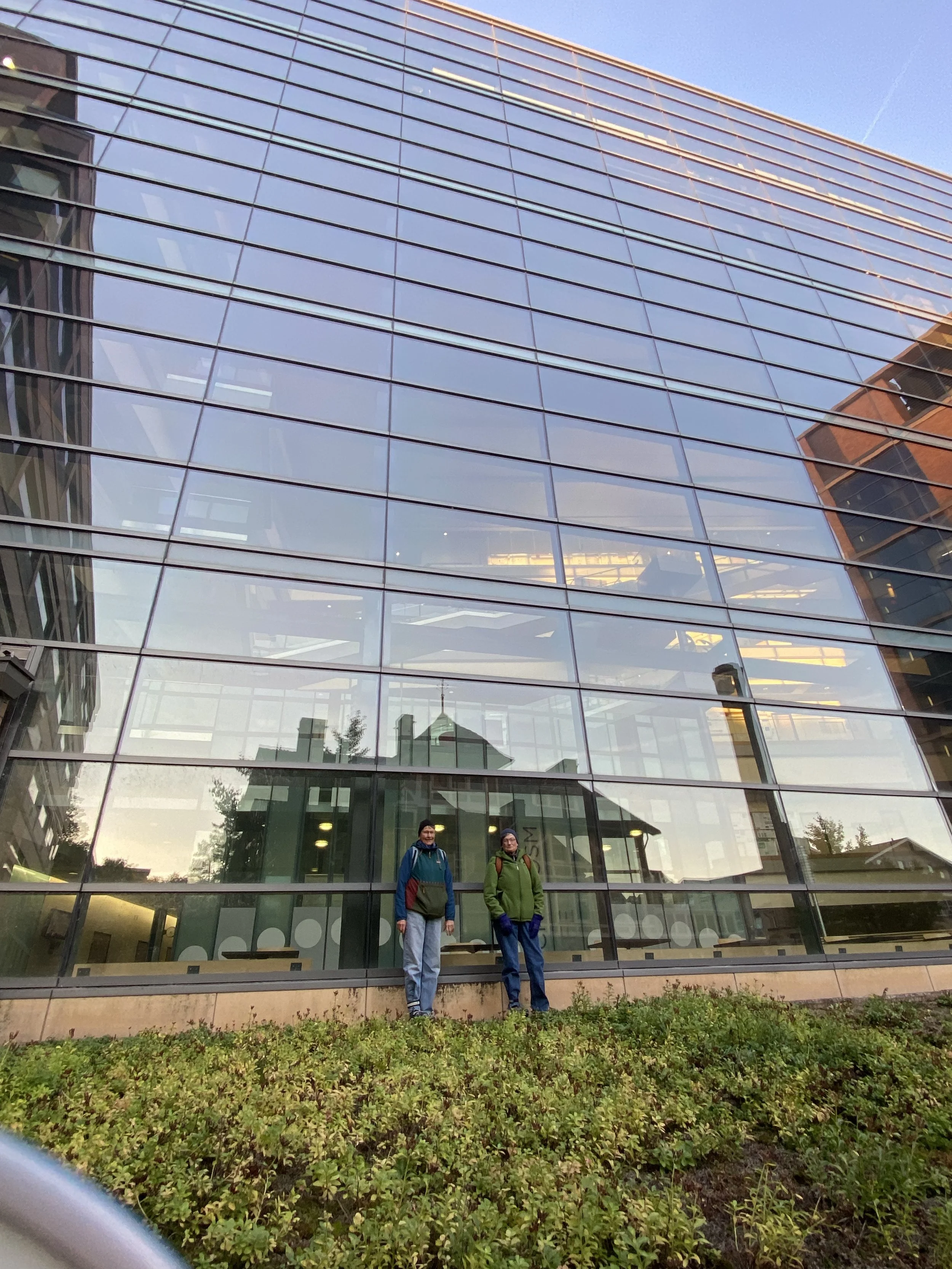
BCC volunteers have regularly surveyed and monitored Microbial Sciences most days during spring and fall migration since 2018 and have confirmed that the building is indeed very dangerous for birds — in fact, the most dangerous building on campus — particularly the five-story wall of windows that face east (Microcosm Cafe) and the two curtain walls near the Linden Drive/Babcock Drive intersection.
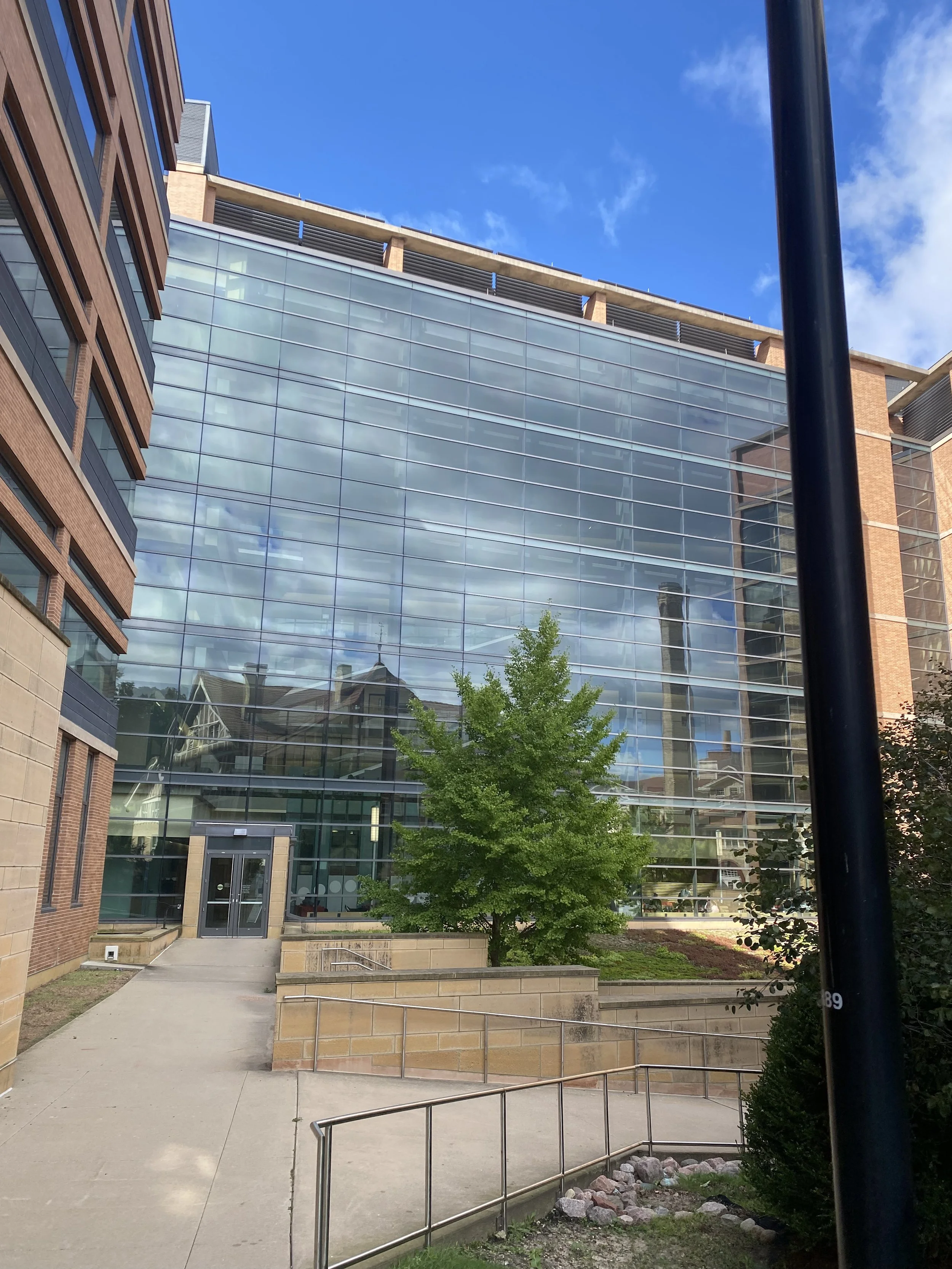
East-facing windows (SoWBA photo)
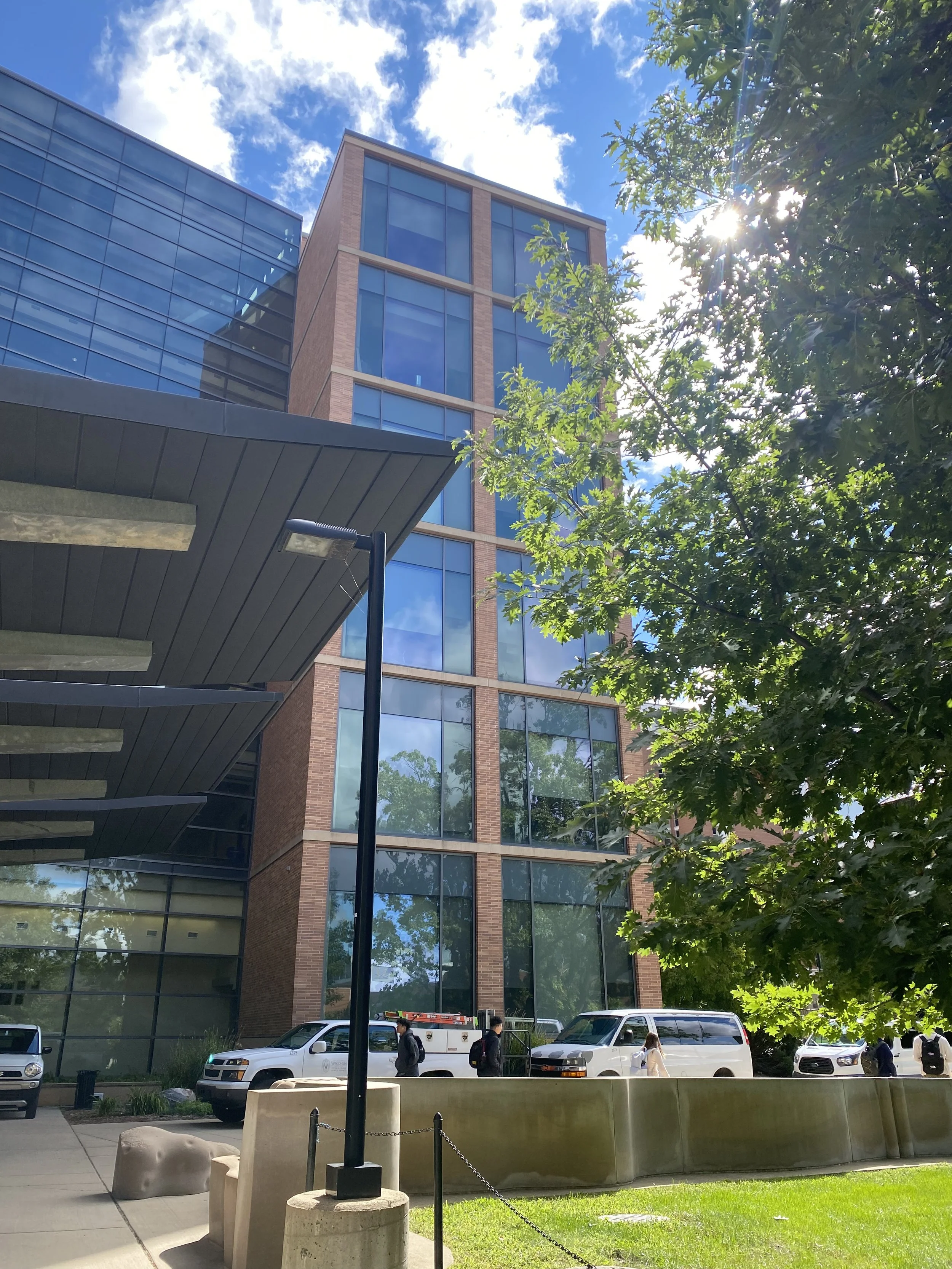
West-facing windows (SoWBA photo)
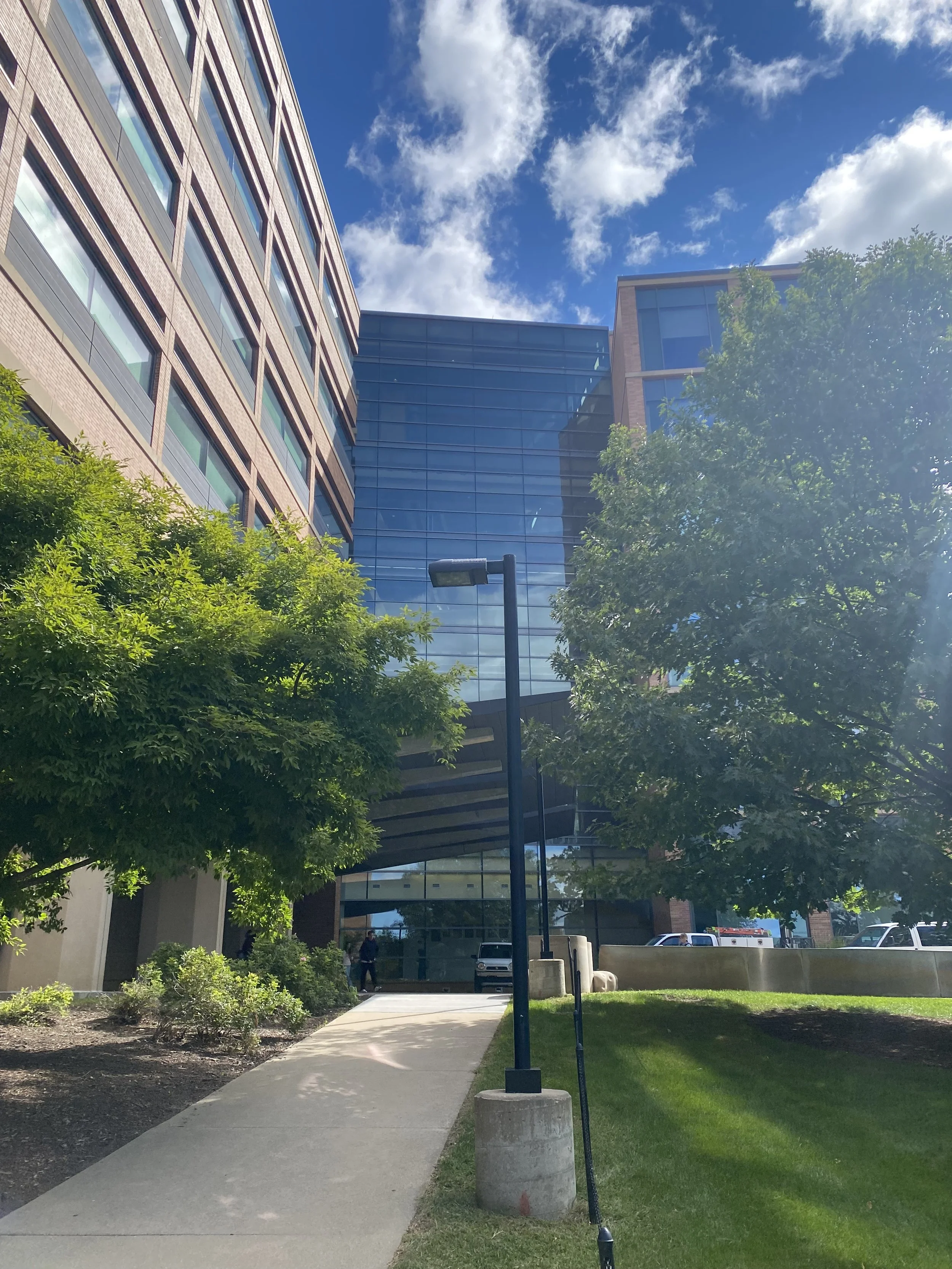
West-facing windows (SoWBA photo)
We are working to change that! Through a collaboration between the Southern Wisconsin Bird Alliance, UW Department of Forest and Wildlife Ecology, Audubon Society UW-Madison, the UW Office of Sustainability, and UW Facilities Planning & Management, there are two life-saving techniques in the works for these collisions hot-spots.
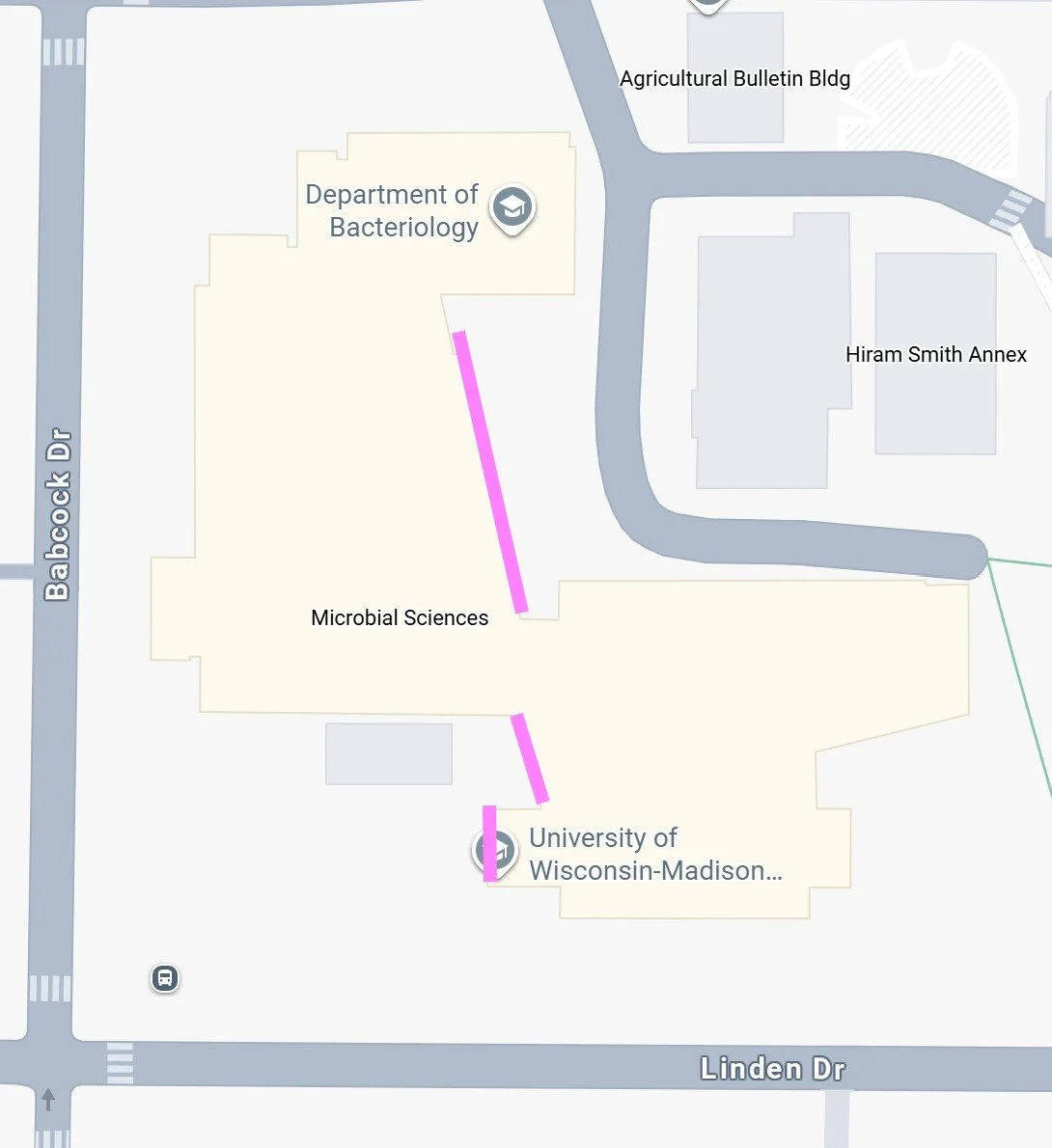
Collisions hotspots that will be treated with mitigation techniques to prevent bird-window collisions are marked in pink.
For the west-facing windows near the main entrance, bird-safe glass dots will be added to the exterior of the glass. These have been proven to be 95%+ effective at reducing window collisions, and have been applied to similarly dangerous-for-birds locations at UW-Madison’s Ogg and Dejope Residence Halls.
For the east-facing windows near the Microcosm Cafe, an emerging and innovative sound-deterrent technology will be used to reduce bird activity generally near that location. By playing predatory bird sounds during limited, strategic times of the morning when migratory birds are foraging, and only during migration periods when birds are most likely to hit windows, we can prevent birds from getting close to and hitting those windows.
Effort coordinated through Southern Wisconsin Bird Alliance, UW Department of Forest and Wildlife Ecology, Audubon Society UW-Madison, the UW Office of Sustainability, and UW Facilities Planning & Management.
Banner photo by Brenna Marsicek/SoWBA
