
This season at the sanctuaries: summer 2026
Southern Wisconsin Bird Alliance’s lands are permanently protected and conserved habitat for birds, plants, and other wildlife. They are stewarded, restored, and managed by our sanctuary teams. Learn more here.
A season of growth at goose pond
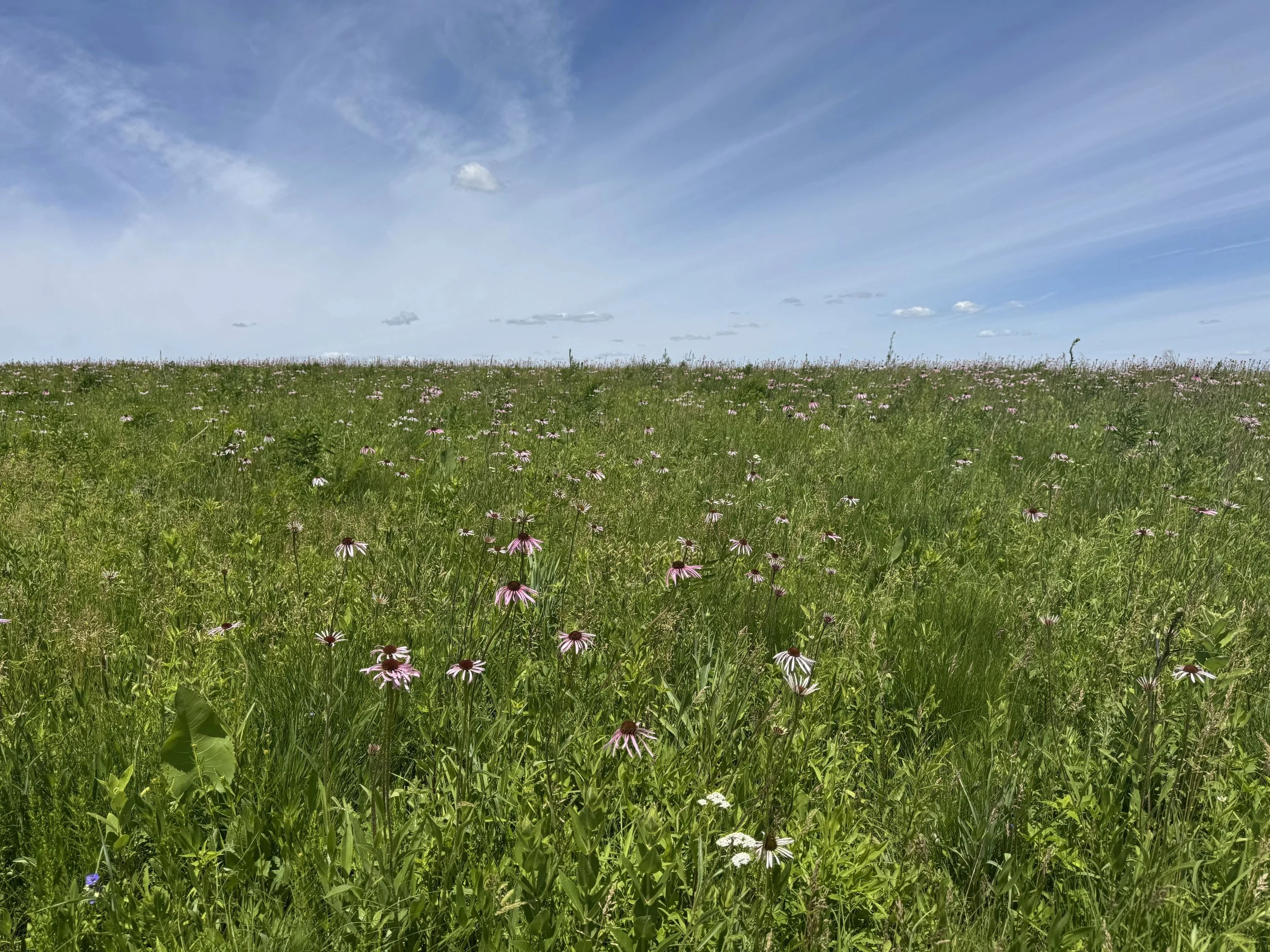
Goose Pond’s Browne Prairie filled with pale purple coneflower in June 2026 (Emma Raasch/SoWBA).
Summer is here, which means birds are nesting and plants are growing. With these changes comes the opportunity and responsibility to care for the land and the creatures inhabiting it. To help us along the way are two summer interns, a point-count intern, two returning seasonal employees, and our volunteers. The Goose Pond team has been hard at work removing invasive plants in the prairies and savannas, while volunteers have been dutifully monitoring our 150+ songbird boxes.
In between cutting brush and pulling weeds, we incorporate as many learning opportunities for our interns as possible. From the principles of ecological restoration to plant and bird identification, we ensure they’ll leave their summer at Goose Pond with more prairie knowledge than they started with!
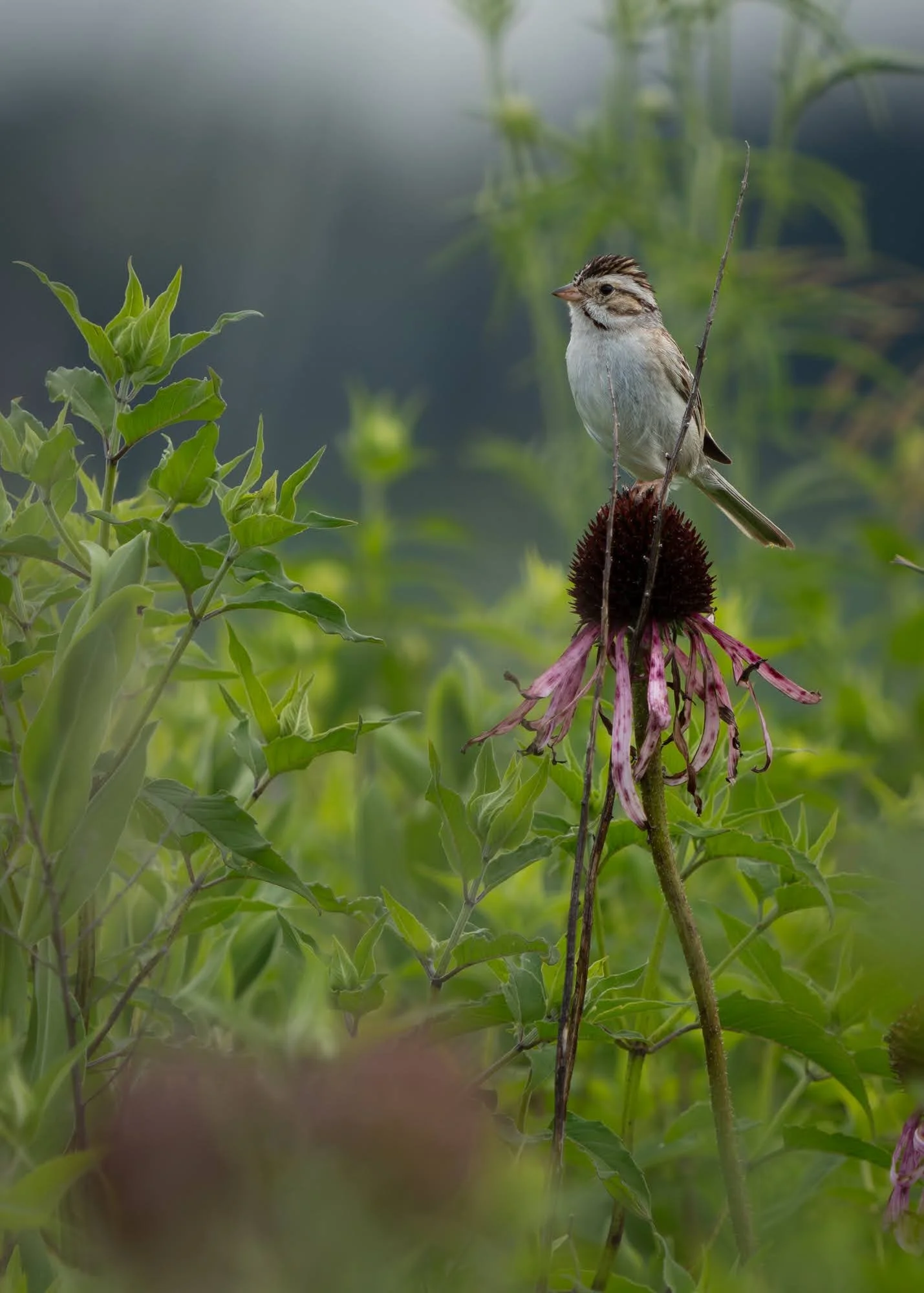
Clay-colored Sparrow at Goose Pond (Ralph Russo).
Plan your visit
June and July are excellent months to admire the diverse plant life at Goose Pond Sanctuary. With plants like pale purple coneflower, spiderwort, white baptisia, and butterfly milkweed in flower, the prairies are a mosaic of purples, whites, and oranges. Park in the Browne Prairie parking lot on Kampen Road (0.25 miles east of County Rd I) or the Hopkin’s Prairie parking lot on Hopkin’s Road (0.4 miles south of Kampen Road) to witness the effects of fire on the prairies. With burned and unburned areas adjacent to each other, the abundance of blooms in the burned areas is undeniable!
And of course, enjoy the birds! Grassland birds like Dickcissels, Eastern Meadowlarks, Clay-colored Sparrows, and Tree Swallows have been busy nesting (read more in our recent Friday Feathered Features). It’s an optimal time of year to learn and listen to their songs and to spot them singing from a nearby perch.
Get involved
Although the bulk of our seed collection days are during the fall, there are a few summer-ripening species we will collect in the coming months. If you’d like to receive email notifications for seed collection events, reach out to land steward Emma Raasch at eraasch@swibirds.org.
If you prefer a moving target, join us on Tuesday, June 30 to identify and tally butterflies at our Columbia County properties during the annual Mud Lake Butterfly Count.
Learn more:
Goose Pond StoryMap: take a virtual tour
If you have questions, or would like to receive more detailed updates from the team, email goosep@swibirds.org
Blooms aplenty at Faville Grove
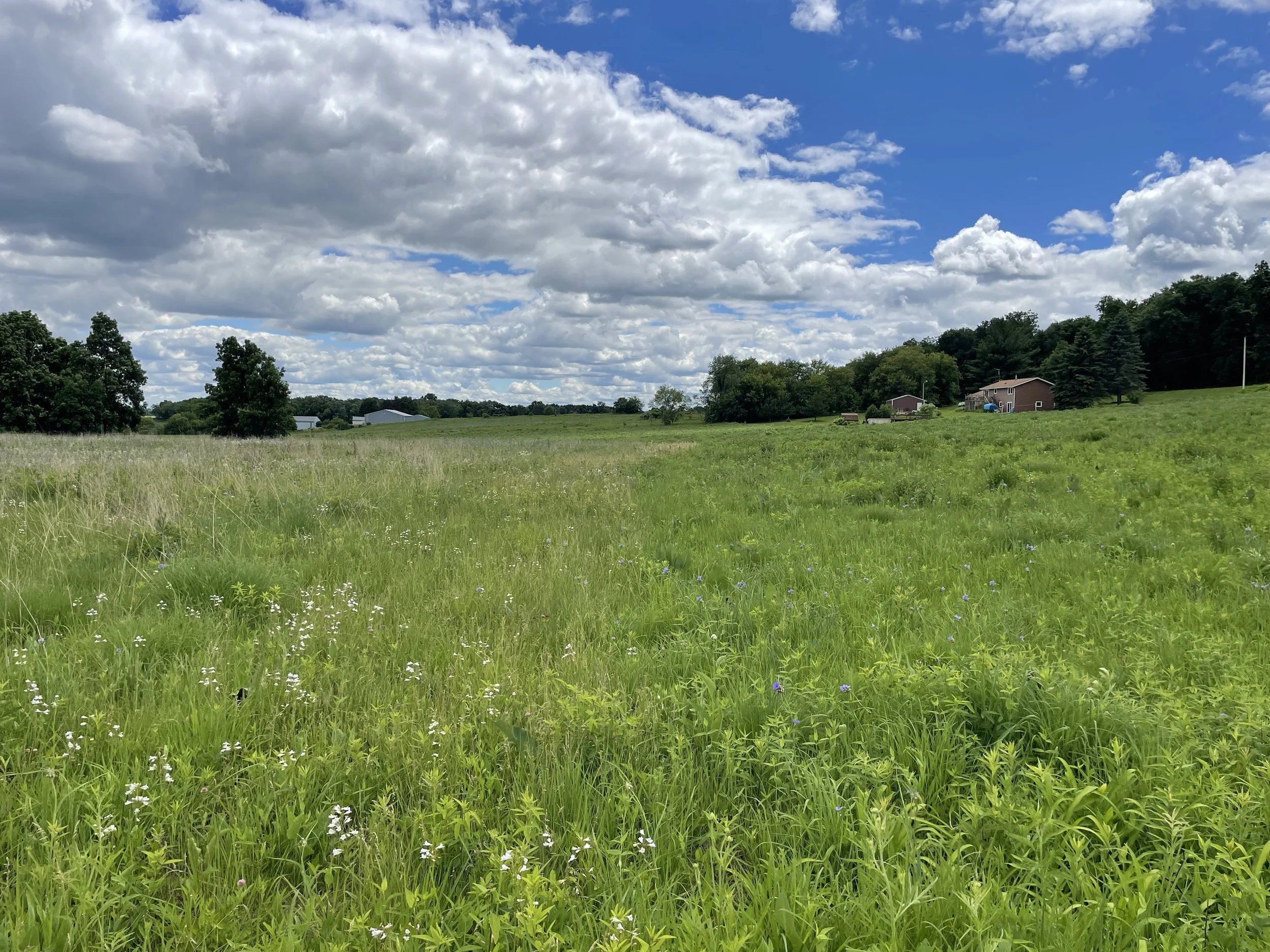
Sections of the burned and unburned prairie can be seen in the presence of certain plants (SoWBA).
Premature warming in March and a dry spell in May shifted the phenology of Faville Grove’s plant communities. But June showers rejuvenated the prairies and replenished the wetlands. These verdant landscapes are now revealing their colors in acts, letting each flower bask on the summer stage before modestly retreating for the next in queue. Variety in the species composition tells a narrative of its own.
The unburned uplands at Lake Mills Ledge are awash in blooming foxglove beardtongue amidst the cover of last seasons’ Indiangrass. But at the break, where a prescribed burn took place this spring, not a dot of white beardtongue can be seen. Instead, knee-high Silphium species such as compass plant and prairie dock take advantage of the recycled nutrients and open ground. Each species has its part to play: beardtongue provides a reliable place for pollinators at the end of spring, while Silphium seeds will fuel many migrating bird species in the fall. Ohio spiderwort has no such prejudices and spreads its rich indigo over all of our uplands. Now in mid-June, oxeye sunflower, black-eyed susan, wild garlic, wild white indigo, and pale purple coneflower are all starting to bloom.
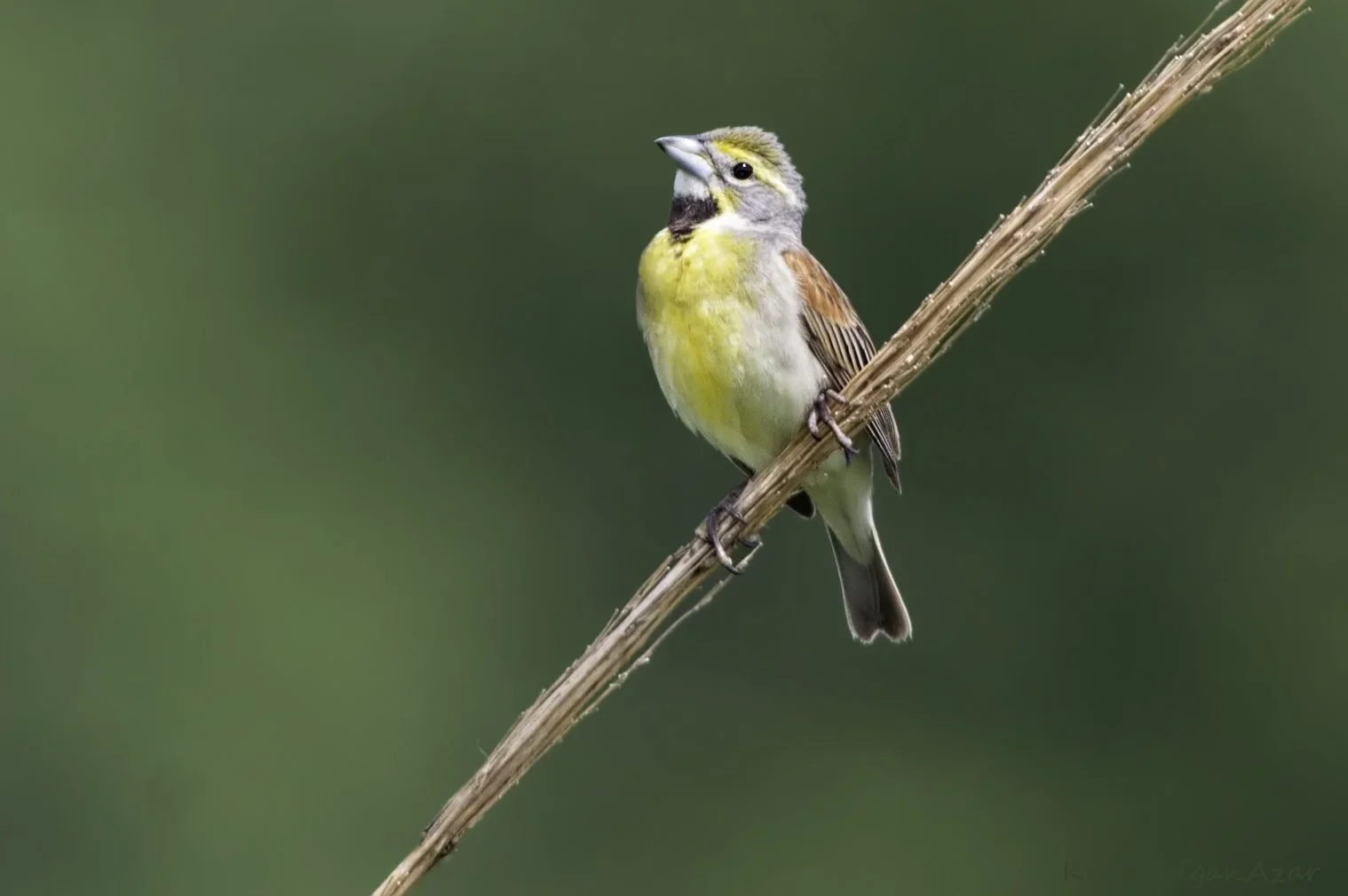
Dickcissel perched on a branch (Kelly Colgan Azar).
Plan your visit
While enjoying the native flowers, visitors can spot dozens of different bird species. Down in the floodplain prairies, Bobolinks, Willow Flycatchers, and Dickcissels can be heard (read more in our recent Friday Feathered Features). Red-winged Blackbirds have woven their nests into the prairie foliage, so if you hear one right above your head, a nest might be close by. As you drive down Prairie Lane, Tree Swallows peek their heads out of nest boxes or fly overhead catching insects. Faville Woods is home to Baltimore Orioles, Scarlet Tanagers, Gray Catbirds, and Yellow-throated Vireos. The woods north of Highway 89 is great for birders to find woodland birds and wetland birds, like Sandhill Cranes, from one spot.
Although Faville Grove has much to offer during the day, there is also much to see and hear at night. Fireflies have emerged and now hundreds of them spend the evening lighting up Prairie Lane. Bullfrogs and five species of bats populate evenings at Kettle Pond.
Get involved
Although garlic mustard has been beaten back (for now), other invasive species occupy our team’s time. In the coming months, we will be working to control invasive white and yellow sweet clover. If you would like to assist us in keeping the sanctuary beautiful, contact land stewards Soraya Castle and Parker Gimbel at faville@swibirds.org.
Learn more:
Faville Grove StoryMap: take a virtual tour
Questions? Contact faville@swibirds.org
“Tour”-IFIC times at FaIR MEADOWS
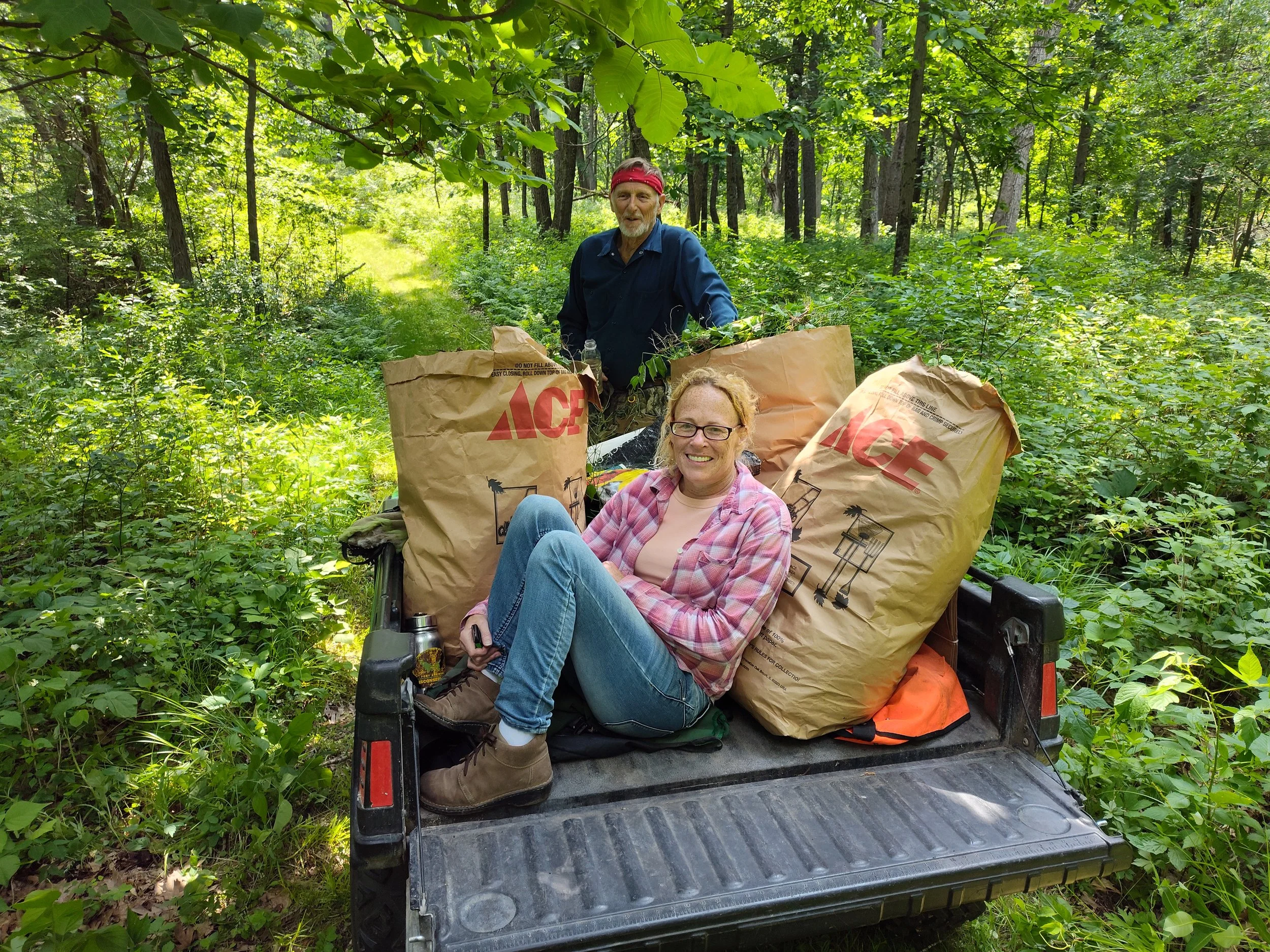
Bob Nickel and Meaghan Jude with a load of recently pulled garlic mustard (Chris Kaplan/SoWBA).
This spring and early summer has brought a record number of tours and visitors to Fair Meadows Sanctuary over the past seven weeks! In addition to many SoWBA events, we hosted many tours for local conservation groups and partners, including the Wisconsin Wetlands Association, the Natural Resources Foundation of Wisconsin, and the Natural Resources Conservation Service. We even had a visit from state senator Mark Spreitzer, who came to learn more and discuss the importance of the Knowles-Nelson Stewardship Program.
In addition to all of the tours, the important sanctuary work must go on! Recent tasks have included approximately 118 acres of prescribed burning; no-till drill seeding of seven acres of prairie; selectively treating over 60 acres of reed canary grass; hand pulling invasive species, like dame’s rocket and garlic mustard, over 85 acres; and the planting and caging of over 100 native trees and shrubs to protect them from being over-browsed by deer. And that’s before including the bird-ier side of things: monitoring 20+ bluebird boxes, two kestrel boxes, and one active eagle nest (read about sanctuary birds in our recent Friday Feathered Features)!
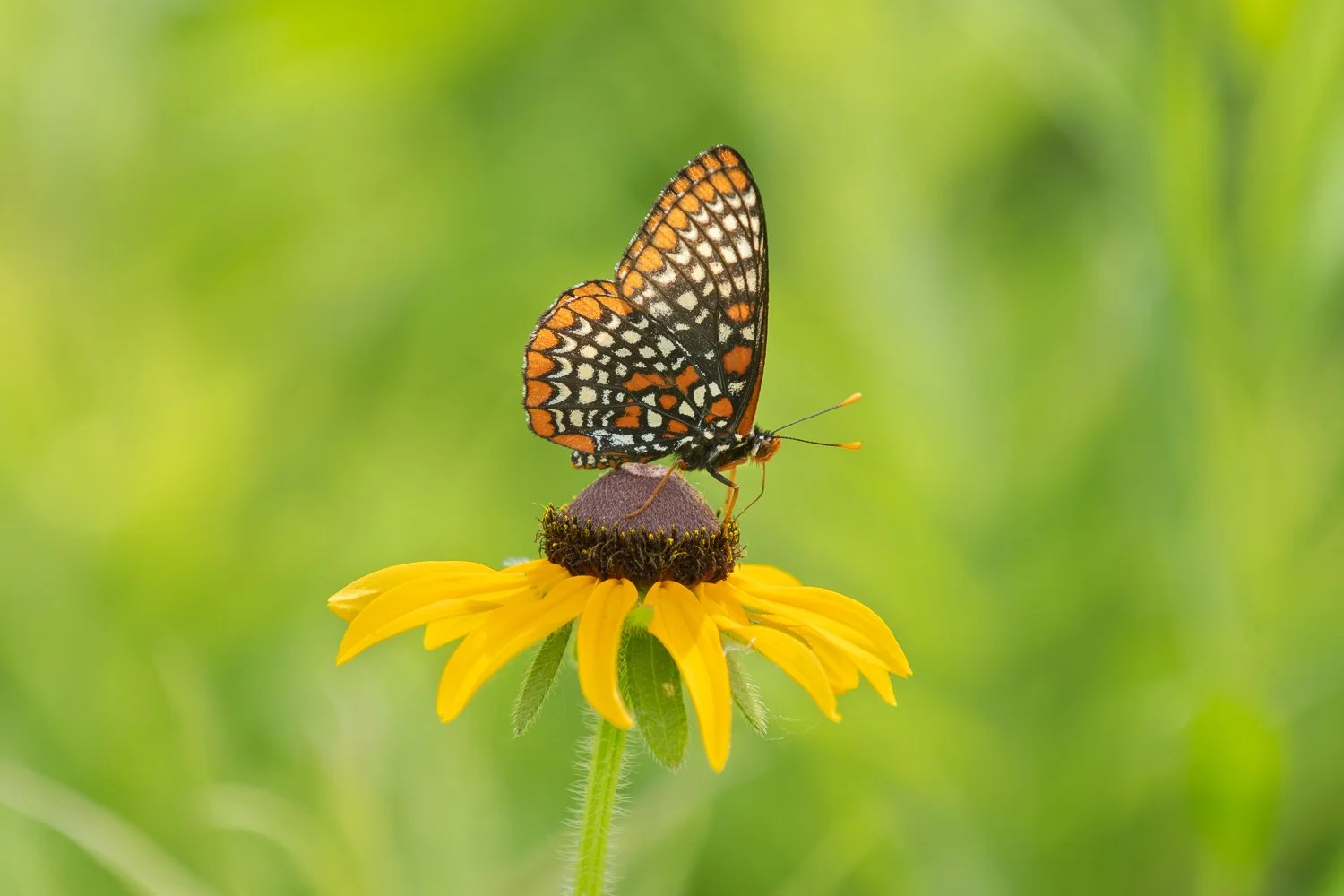
Baltimore checkerspot (Gary Shackelford).
Plan your visit
As a reminder, Fair Meadows Sanctuary is open to the public for monthly field trips and events, but not for spontaneous visits. So come and see the fruits of our labor at one (or more) of our birding days this summer!
Or, if you’re looking for an opportunity for a guided tour experience, join one of our many summer outings to learn more about the sanctuary and the species that thrive here. Intrigued by how the prairie is alive with pollinators like monarchs and tiger swallowtails? Sign up for Summer Prairies & Birds on June 27. Enjoy watching Barn Swallows and bats zip overhead in search of insects? Register for Bats & Barn Swallows on July 11. Fascinated by the green darner dragonflies swooping low over the wetlands? Experience Dragonfly Diversity on July 12.
Get involved
We are always looking for volunteer help at Fair Meadows. If you have interest in volunteering on a variety of summer tasks or management projects, please reach out to Penny and Gary at fairmeadows@swibirds.org.
Learn more:
Fair Meadows StoryMap: take a virtual tour
Questions? Contact the team at fairmeadows@swibirds.org
Changes underway at Hillside Prairie
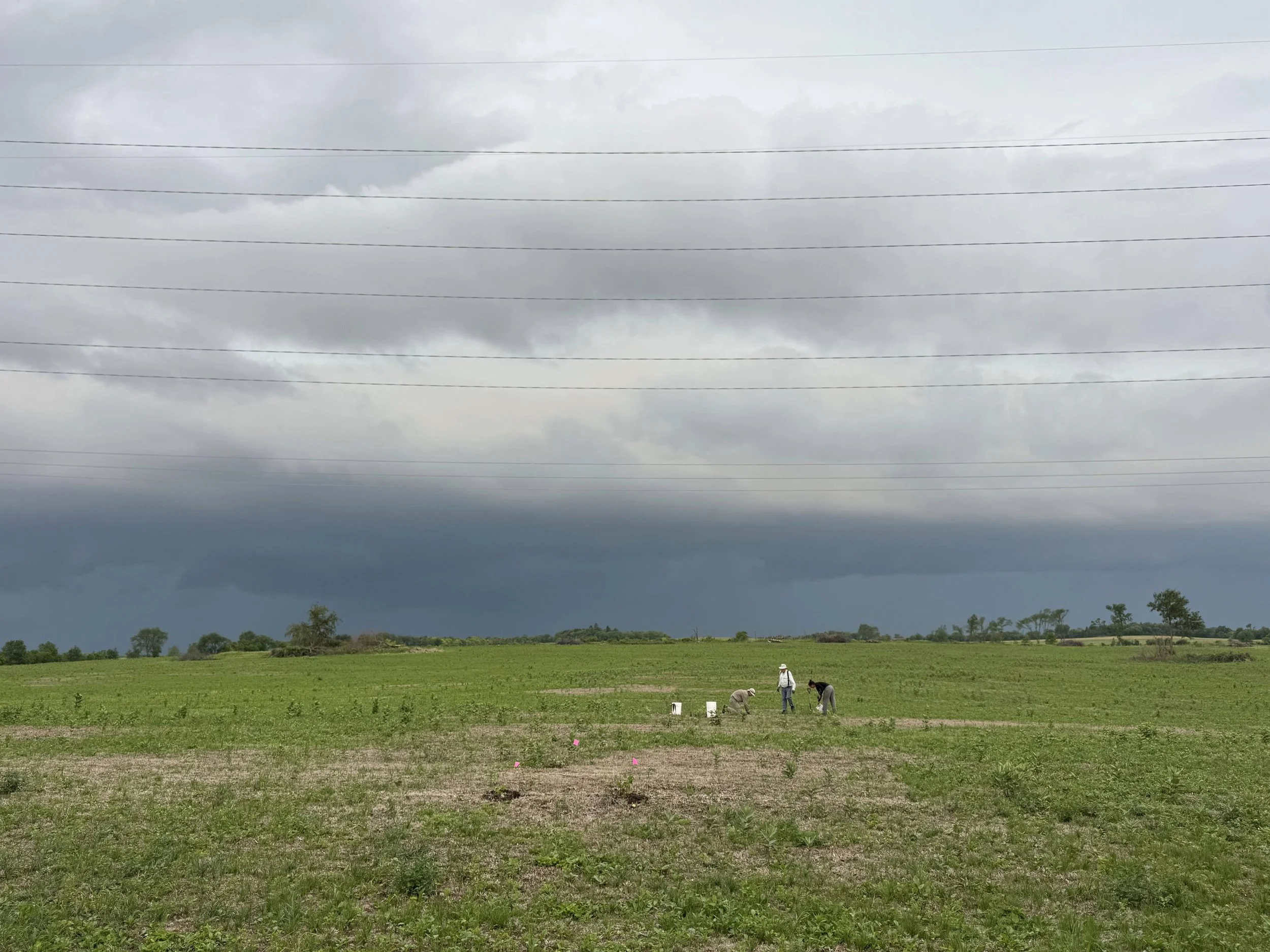
Planting wild strawberries at Hillside Prairie Sanctuary in June (Emma Raasch/SoWBA).
Last winter, we seeded 46 acres of hay fields with native forbs and grasses. Slowly but surely, those seeds are germinating and small (but mighty!) prairie plants are popping up amongst the brome grass. It will take a long time before these plantings look like a bustling, healthy prairie, but they will continue to provide open habitat for grassland birds in the meantime. To supplement these plantings, the Goose Pond team also transplanted about a hundred wild strawberry plants—historically, one of the most common species in mesic prairies.
If you haven’t visited Hillside Prairie since last summer, you’ll be shocked to see that the fencelines—once dense with trees and fragmenting the grasslands—are now completely gone or greatly reduced. Remaining trees are being assessed: some, like the bur oaks, have been marked to stay, while others will be cut and removed by The Wood Cycle. Since then, our team has been diligently pulling and spraying invasive species that moved into the disturbed fencelines, like garlic mustard, wild burdock, and dames rocket.
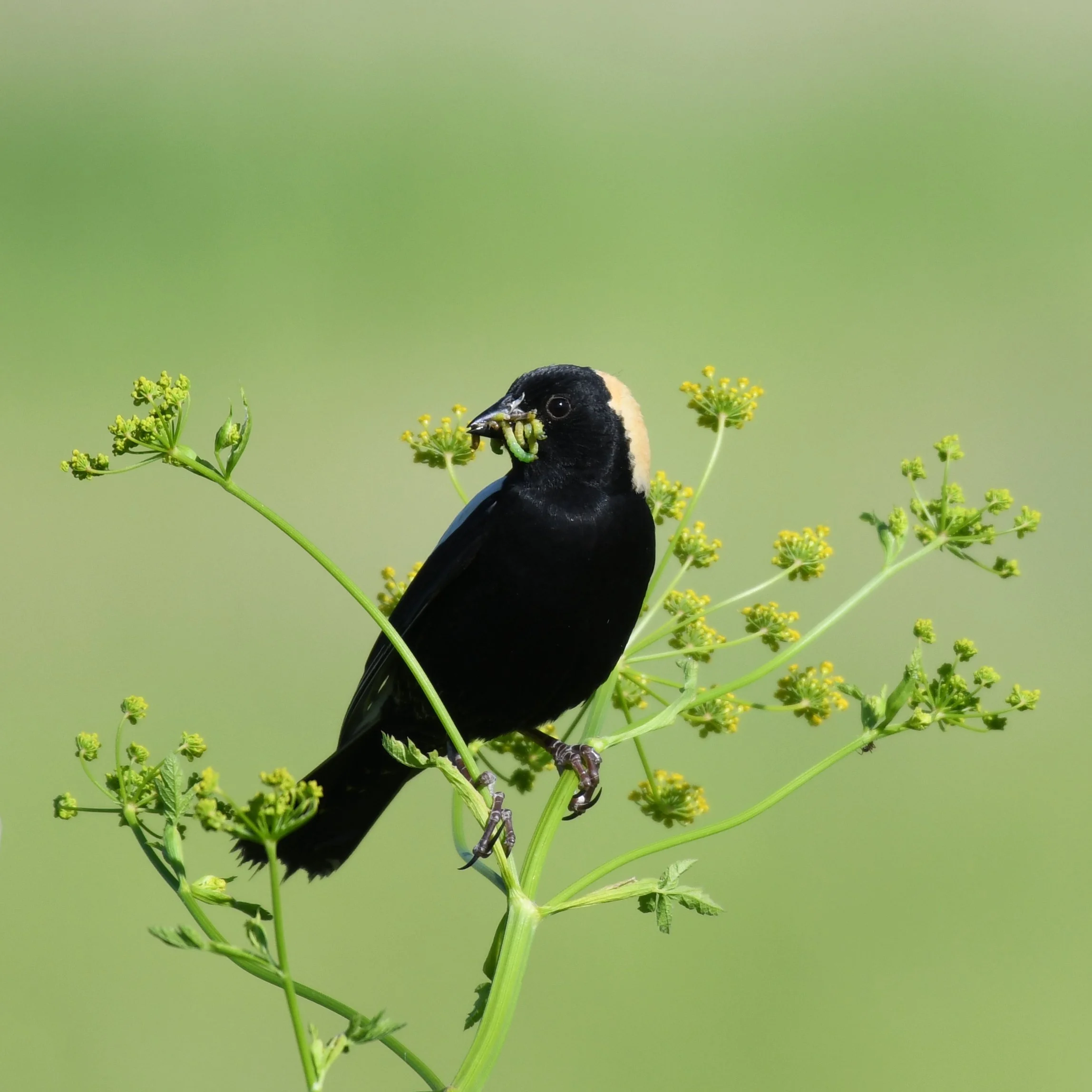
Bobolink with a mouthful of bugs (USFWS).
Plan your visit
Bobolinks abound! Come explore the open grassy fields to listen and watch for them, in addition to Eastern Meadowlarks and Song Sparrows. Permanent trails are not yet established, but the majority of the grasslands are short and walkable, especially along the edges of what were formerly fencelines. The parking lot will be coming soon! Until then, visitors may park along the driveway for 1813 Hillside Road (or on the open, grassy area next to the hay bales) east of the farm buildings.
For a shorter walk, visit Jean’s Prairie to enjoy the vigorously growing prairie vegetation. This prairie was planted in 2016 and burned for the first time this spring, so it will be looking the best it ever has this summer! For access, visitors can park along the power lines on East Church Road west of the churches.
Get involved
Calling all community scientists—we could use your help! Hillside Prairie Sanctuary now has its own iNaturalist Project and eBird Hotspot. As a newer SoWBA property, the species present have not yet been extensively documented. Whether you’re birding, hiking, looking for insects, or practicing plant identification skills, we’d love for you to submit an eBird checklist or document your findings on iNaturalist.
Learn more:
General questions? Contact Mark Martin at goosep@swibirds.org
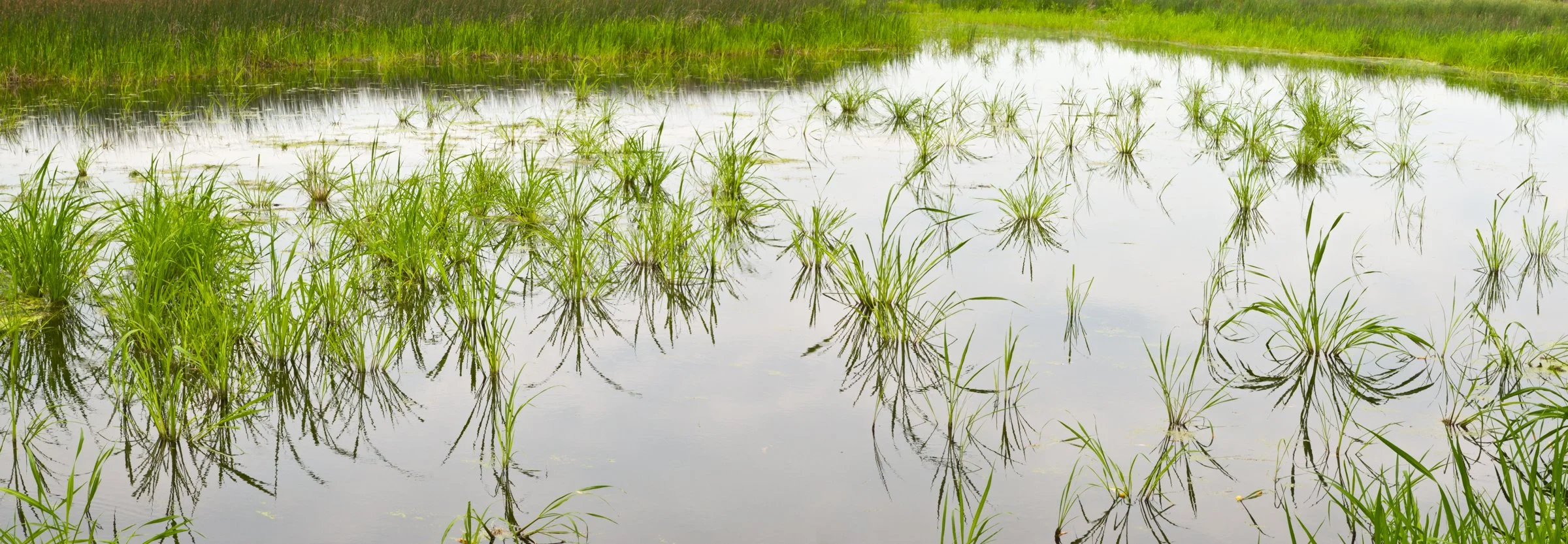
Cover image by Gary Shackelford. Vibrant green plants reflect on the surface of Crane Pond at Fair Meadows Sanctuary.
