
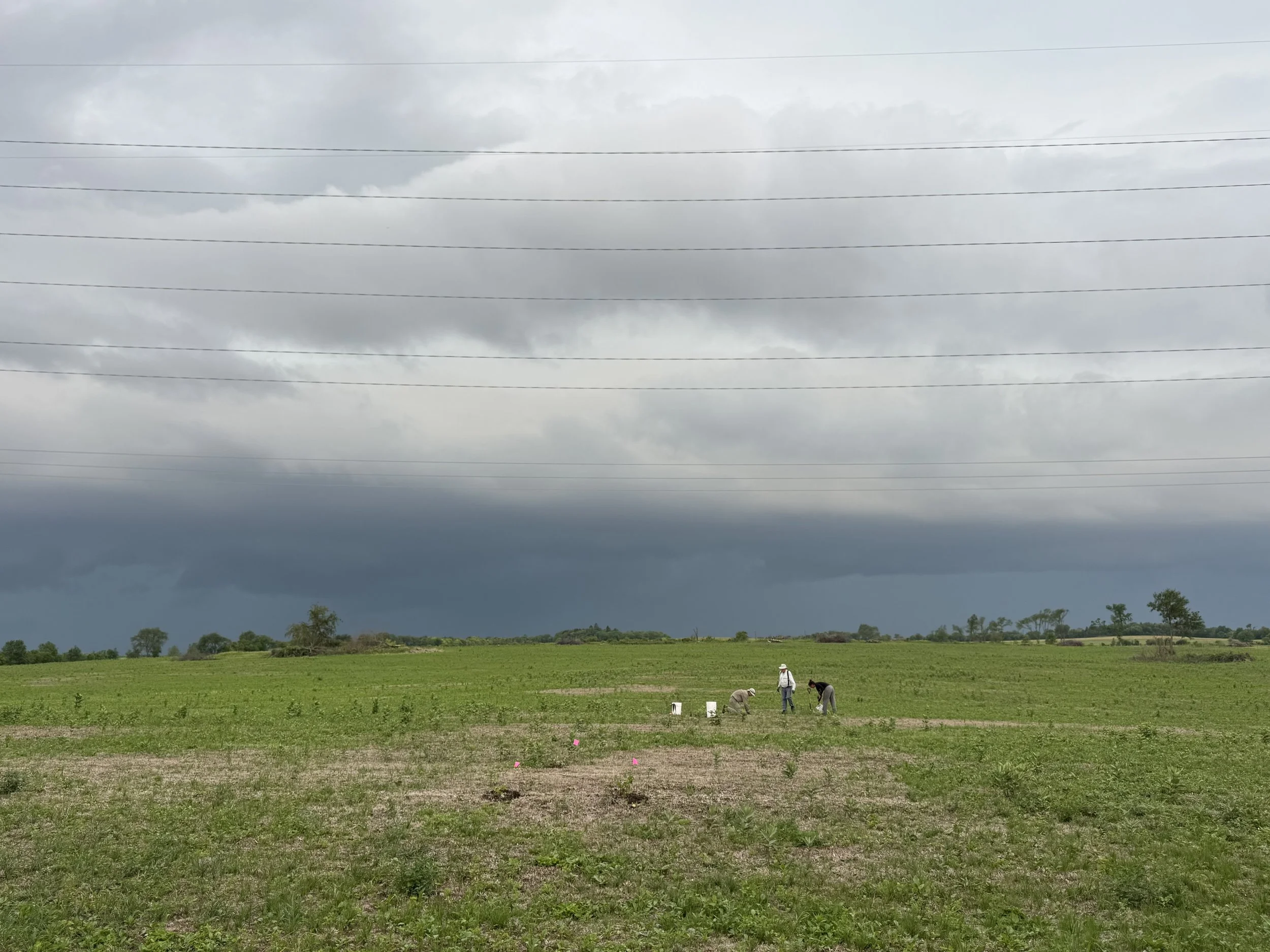
Goose Pond Sanctuary Update: June 23, 2026
Southern Wisconsin Bird Alliance’s Goose Pond Sanctuary always has a ton going on. Bird conservation, habitat restoration, research, and outreach are always in season here. Learn more about Goose Pond through the update below, by visiting the Goose Pond webpage, or by exploring the Goose Pond StoryMap.
Cover photo by Emma Raasch/SoWBA. Planting wild strawberries at Hillside Prairie in June 2026.
New Technology for Monarch Tracking
Since 2012, Goose Pond Sanctuary staff, volunteers, field trip attendees, and partners have carefully netted and tagged a remarkable 12,193 migrating monarch butterflies with small, sticker tags provided by Monarch Watch. Despite our impressive efforts, only 61 of our tagged monarchs have been recovered on their wintering grounds in Mexico. We’re going to amp up our usual sticker tagging program this year with a new, exciting technology: BluMorpho cellular tracking tags.
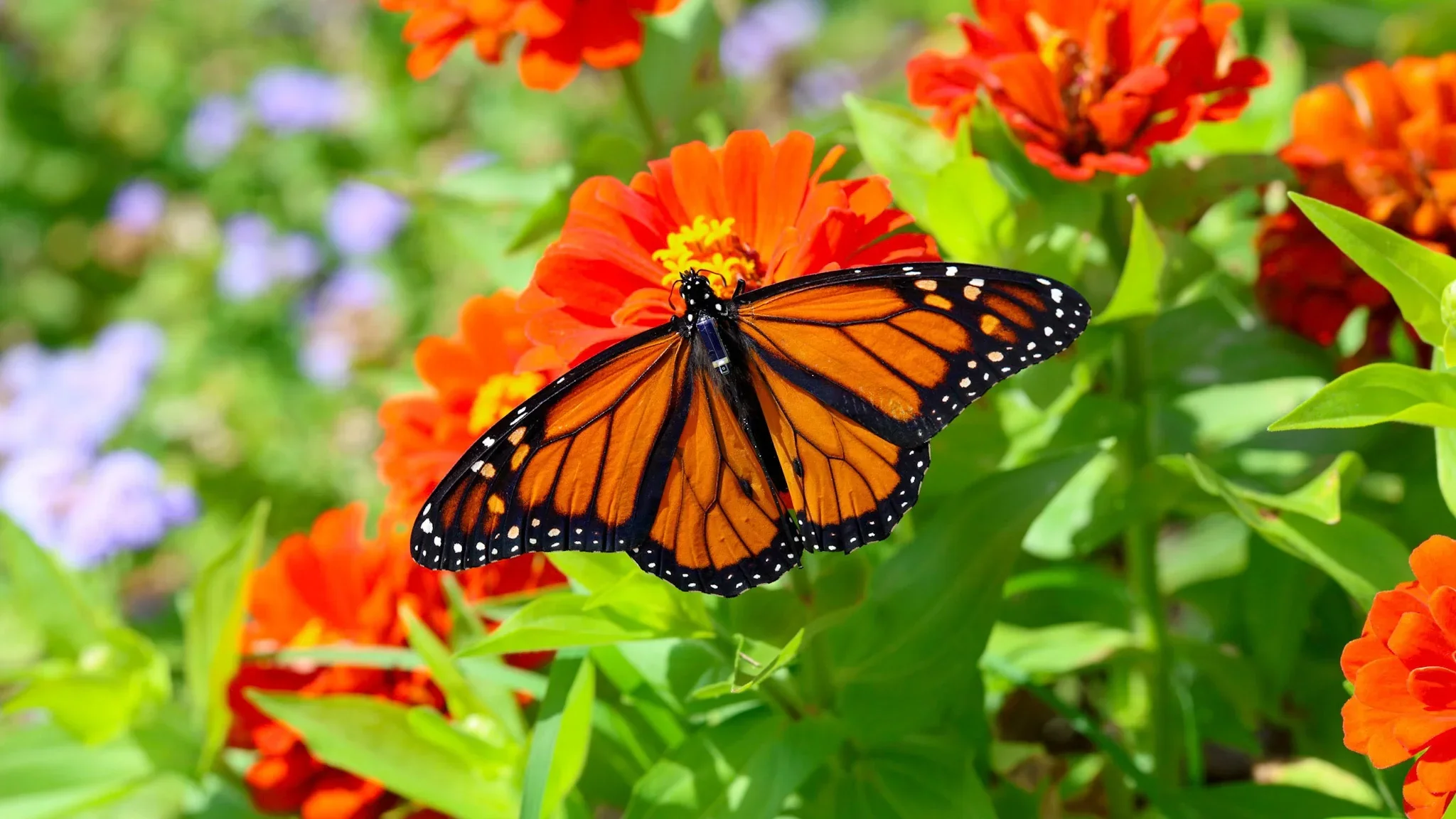
BluMorpho tag on monarch butterfly (courtesy of Cellular Tracking Technologies).
Unlike the sticker tags, BluMorpho tags do not require the physical recovery of the tagged butterfly to collect data. So, how do they work? These solar-powered tags use the 2.4 GHz frequency range and communicate through nodes, sensor-stations, and the IoT (Internet of Things) network. This means we can track the monarch butterflies we equip with BluMorpho tags on our smart phones in real time! Although these new tags are larger than the sticker tags we’ve been using, they are the lightest weight cellular tracking tags on the market—weighing 60 milligrams (about the weight of a half-grain of rice!), making them ideal for small birds, butterflies, bees, and other insects. Each tag costs about $200 and our goal is to place 20 BluMorpho tags on monarchs this fall.
2026 Reckless Wrens Birdathon
Another year, another Great Wisconsin Birdathon! Half of the funds raised by our team will go to SoWBA, while the other half will go to the Natural Resource Foundation to support their Bird Protection Fund. The Reckless Wrens team 24-hour count began on May 8 at 5 PM and ended at 4:59 PM on May 9. The team counted at SoWBA’s Columbia County properties (and surrounding areas), Hillside Prairie Sanctuary, Mud Lake State Wildlife Area, Rocky Run Oak Savanna State Natural Area, and private wetlands near Portage. The team tallied 147 species. Highlights included: 19 species of warblers, 15 species of shorebirds (including American Avocet and Wilson’s Phalarope), 11 species of sparrows (including Lark Sparrow), 10 species of ducks, seven species of woodpeckers, Common Raven (in three locations), Common Gallinule, Caspian Tern, Red-shouldered Hawk, Ruby-crowned Kinglet, Yellow-headed Blackbird, Bobolink, American and Least Bitterns.
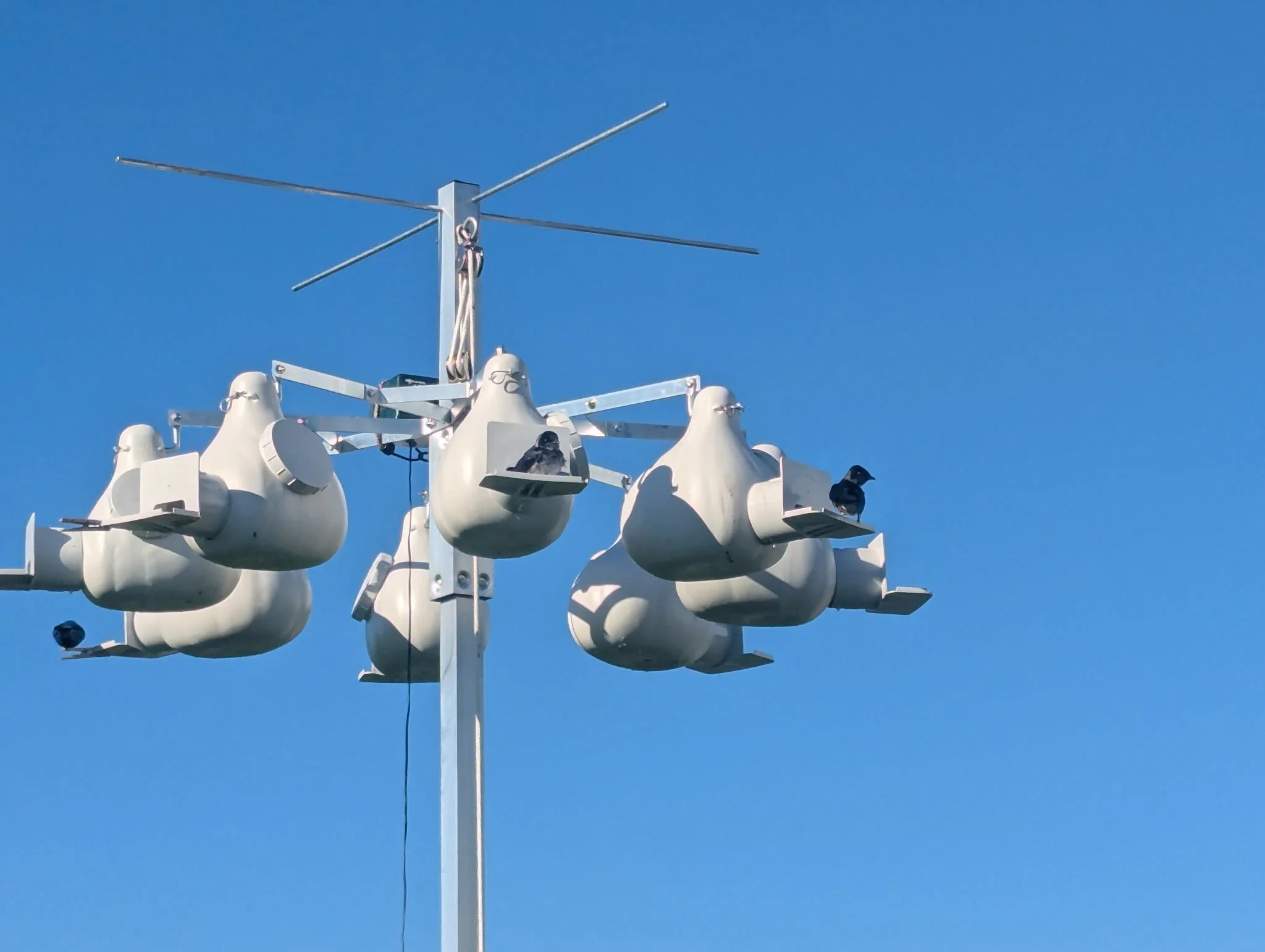
Purple Martins on the Goose Pond gourd rack (Logan Bahr/SoWBA).
This year, 50% of the funds raised by the Reckless Wrens will go towards purchasing Purple Martin houses and gourd racks. Thanks to everyone who donated to our team last year, we were able to purchase an eight-unit Purple Martin gourd rack for Goose Pond Sanctuary. And great news—we have counted a high of six Purple Martins there so far! We are looking forward to conducting weekly nest checks. Check out the Purple Martin Conservation Association’s website to read why Purple Martins need our help.
You can still donate to our team through June 30: donate here.
Spring burns bring Summer blooms
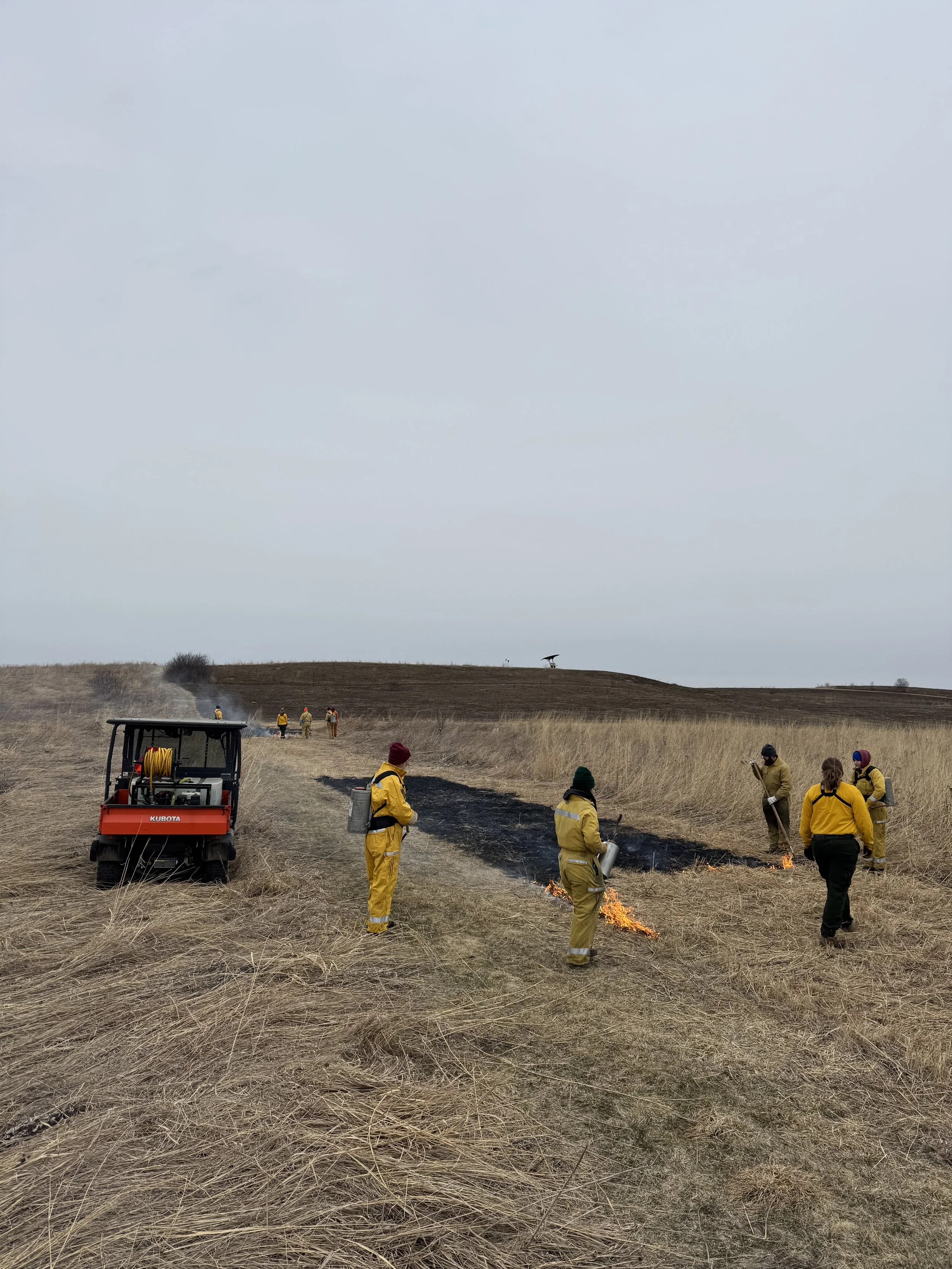
Burning breaks at Goose Pond during the March 2026 volunteer prescribed fire training (Emma Raasch/SoWBA).
Just about everything we do at Goose Pond requires the support and dedication of our volunteers, but prescribed fire may take the cake. From students and other first-time burners to multi-year returning volunteers, dozens of people helped us conduct prescribed burns on our restored prairies.
This spring we burned 11 units, totaling 186 acres. While some units were burned to prepare for invasive species removal, others were routine, maintenance burns. On average, we try to burn each unit once every three to four years. Prairies that require burning for general maintenance typically have well-established native vegetation with few invasives and are particularly showy during the growing season. Park in the Browne Prairie parking lot on Kampen Road (0.25 miles east of County Rd I) or the Hopkin’s Prairie parking lot on Hopkin’s Road (0.4 miles south of Kampen Road) to witness the effects of fire on the prairies. With burned and unburned areas adjacent to each other, the abundance of blooms in the burned areas is undeniable!
The Goose Pond team also prioritizes prescribed fire training and education. On March 14, we held the third annual volunteer prescribed fire training for 14 trainees. Extra thanks to instructors Matt Switzler, Cayla Matte, Tucker Sanborn, and Miles Roth for sharing their knowledge and passion for prescribed fire! And extra, extra thanks to trainees who returned to help on burns this spring!
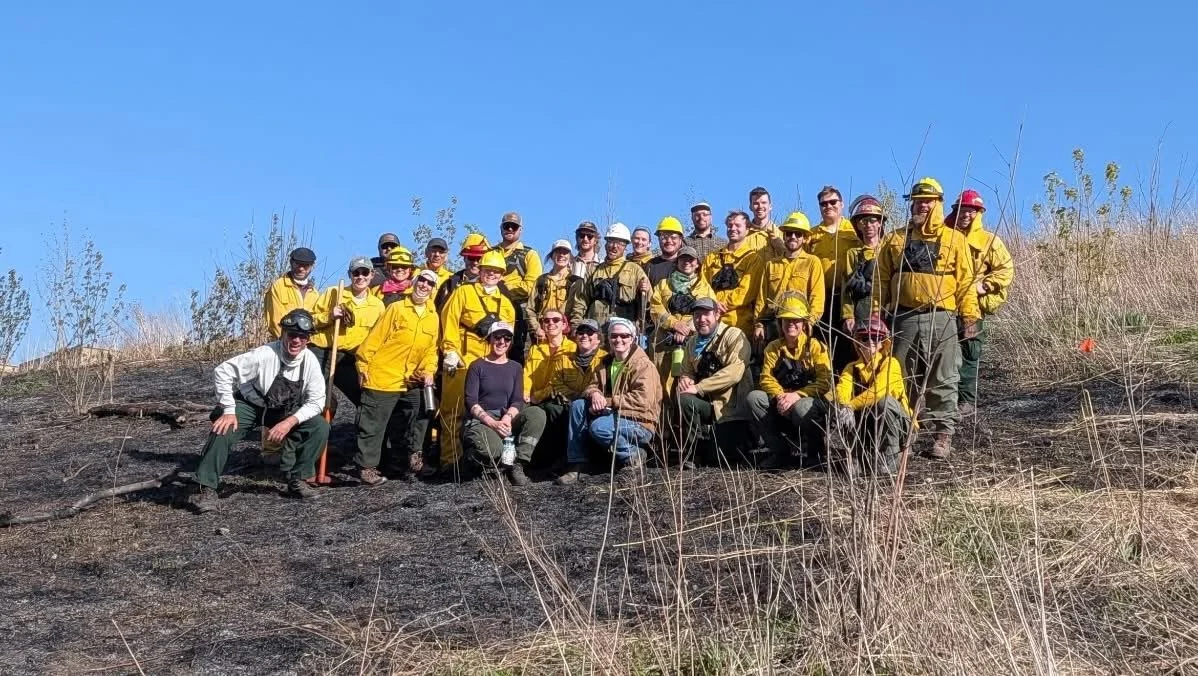
Squad Boss Training (courtesy of the Wisconsin Prescribed Fire Council).
To improve our leadership skills, land steward Emma Raasch and Logan Bahr (seasonal employee) also attended the Wisconsin Prescribed Fire Council’s second-ever Squad Boss Training, where Emma was an instructor and Logan was a trainee.
Thanks to everyone who helped make our spring burn season a productive one!
New and Returning faces to Goose Pond
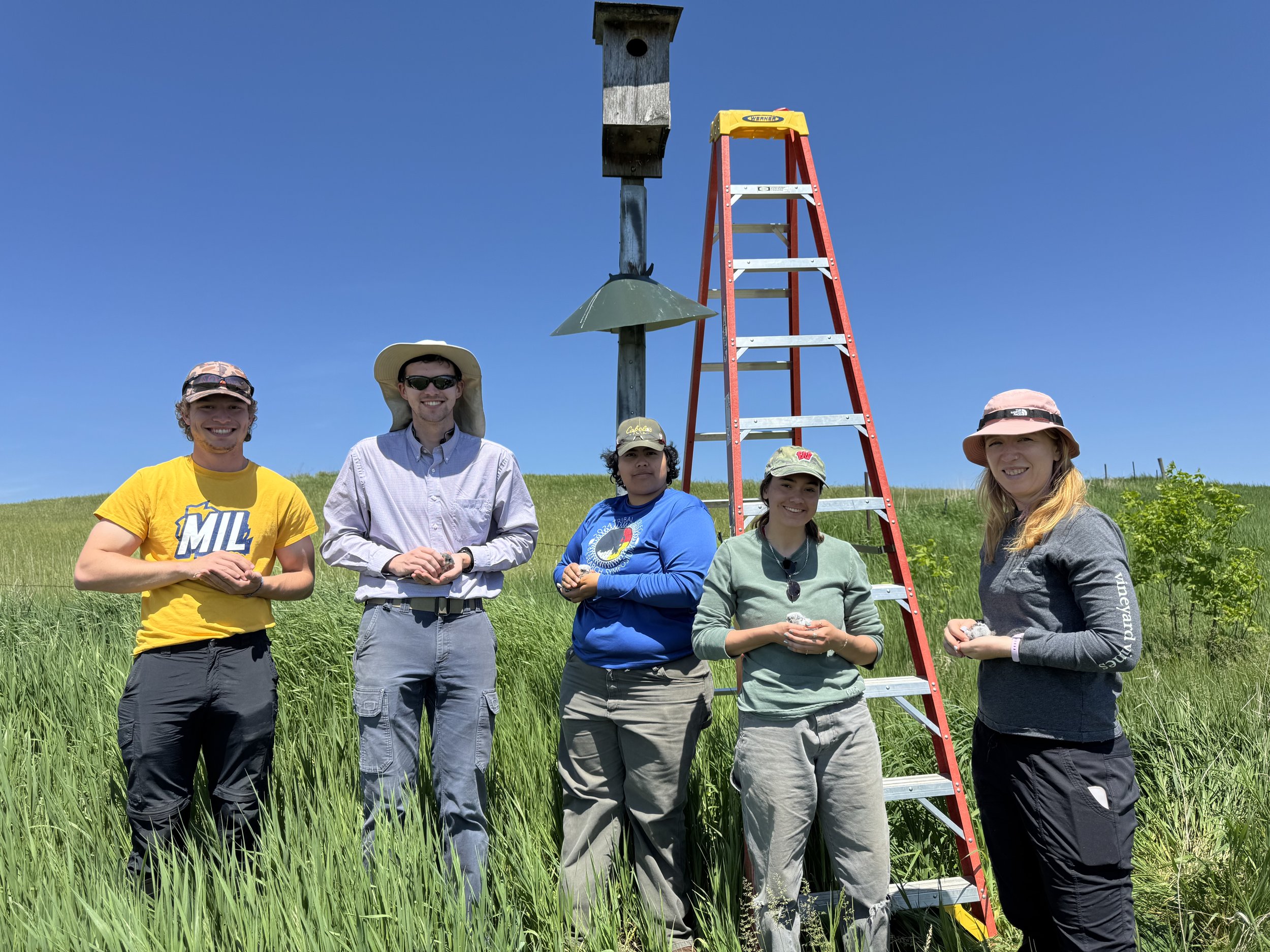
Left to right: Andy Smith, Logan Bahr, Eva Weddell, Raquel Bello, and Cayla Matte (Emma Raasch/SoWBA).
Each year, Goose Pond staff mentors people early in their natural resources career during a summer internship. This summer we are happy to have Raquel Bello and Eva Weddell join us to learn the art and science of ecological restoration. Andy Smith, who has been an intern the last two summers, returned this summer with a new objective: to conduct point counts at all SoWBA’s Columbia County properties as well as Hillside Prairie Sanctuary. We look forward to seeing what he finds! Also returning are seasonal employees, Logan Bahr (previously a summer intern and fall seasonal employee) and Cayla Matte (fall seasonal employee the last two years). Many hands make light(er) work, and we’re grateful to have them!
Hillside Prairie Sanctuary Updates
On May 31, SoWBA hosted an open house at Hillside Prairie Sanctuary with guided birding, history tours, wagon rides, and naturalist talks. It was a great opportunity to connect with neighbors, members, and volunteers, to show off the work we’ve been doing at the property.

iNaturalist Walk at Jean’s Prairie during the open house in May 2026 (Emma Raasch/SoWBA).
If you haven’t been to Hillside Prairie since last summer, you’d be in awe of the expansive views resulting from the wooded fenceline removal. Nearly the entire 1.25 miles of interior fencelines have been removed (besides two bur oaks which will remain, and 20 other trees that will be removed by this fall by The Wood Cycle). The dozens of Bobolinks flitting through the fields gave their official stamp of approval.
The 46 acres that were removed from hay production and planted to prairie this past winter are slowly (but surely!) hosting thousands of new prairie plants. We’ll be crossing our fingers that the recent rains are supporting germination of the seeds and that these plants are on their way to establishing hearty roots. The Goose Pond team also planted around a hundred wild strawberry plants in the new prairies. Although strawberries aren’t typically planted in restored prairies, they were one of the most abundant plants in historic mesic prairies, which is why it’s a top priority to incorporate them into our plantings.
Rare plants in the Greenhouse
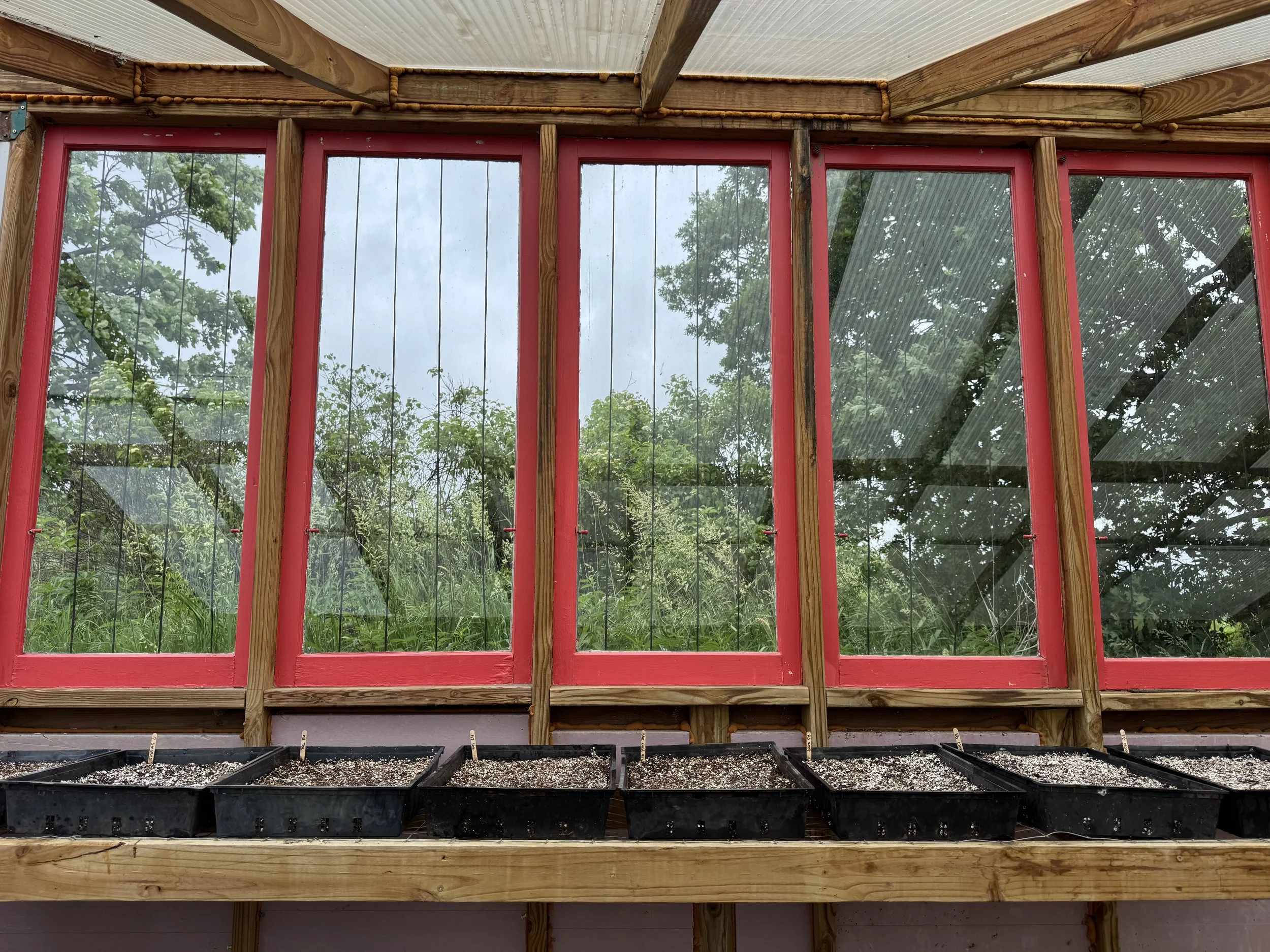
Greenhouse flats (Emma Raasch/SoWBA).
We are fortunate to have excellent seed sources for most plants in our restored prairies. However, there are a few species that may have been common in mesic prairies historically, but are not well represented in most restorations. To make as many seeds count as possible and to give these rare plants a head start, we grow them in the greenhouse before transplanting them into the prairies. This year’s lineup includes: New Jersey tea (Ceanothus americanus), prairie smoke (Geum triflorum), blue-eyed grass (Sisyrinchium albidum), prairie bush clover (Lespedeza leptostachya) and purple rattlesnake root (Prenanthes racemosa).
For now, we are crossing our fingers that the seeds will germinate, and come early fall, we will transplant them into the prairies and wish them well.
Education on the Prairie
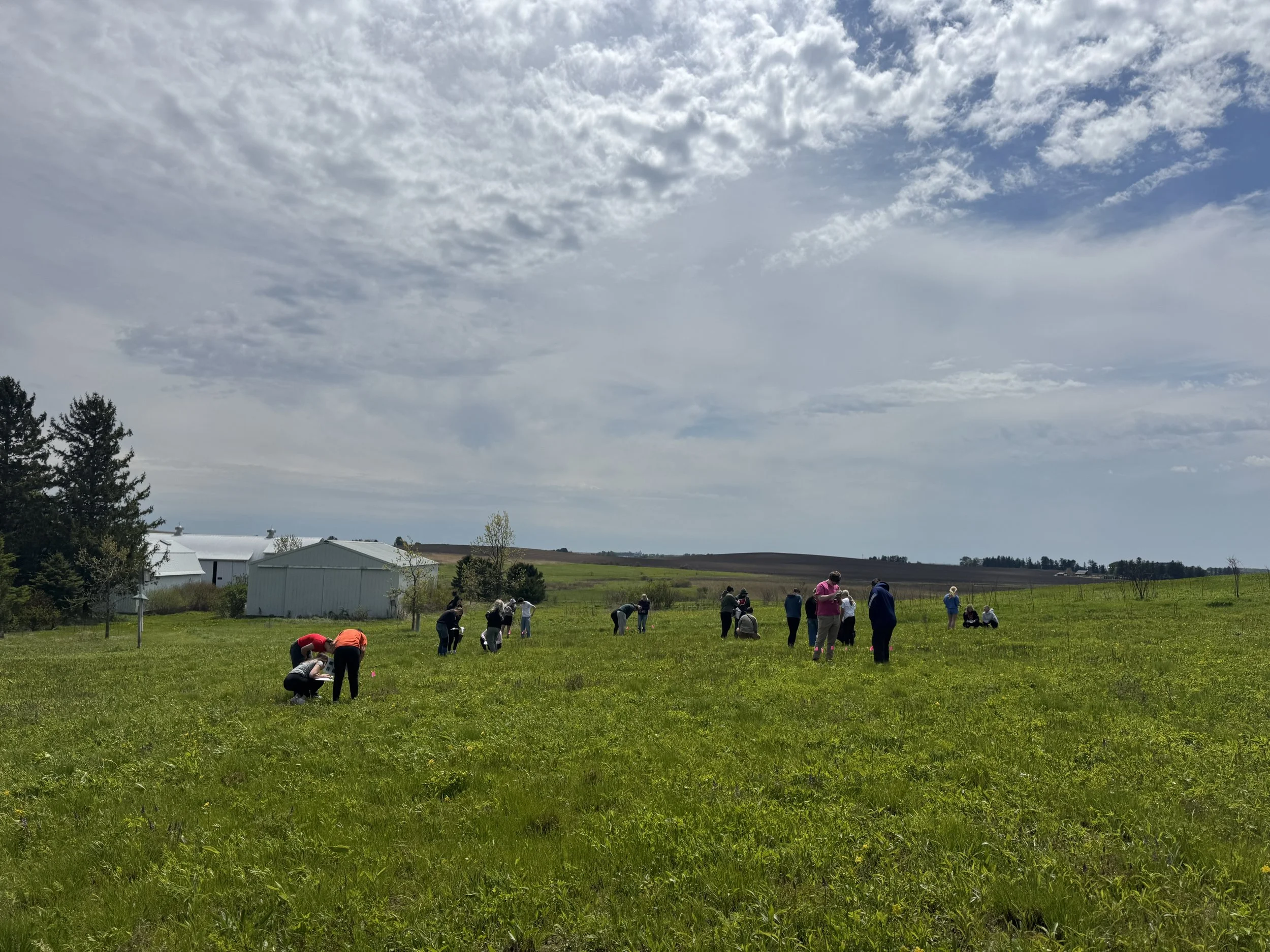
Poynette High School students visit Goose Pond in May 2026 (Emma Raasch/SoWBA).
Each year, Goose Pond hosts several school groups. On May 12, thirty Poynette High School students visited Goose Pond to learn about biodiversity on the prairie. After a presentation on Goose Pond and its wildlife, the students headed to a recently burned unit in Browne Prairie and learned to identify fifteen plants by conducting practice quadrant surveys.
Articles, Opportunities, and More
Join us on Tuesday, June 30 for the annual Mud Lake Butterfly Count! If you’d like to participate or receive email updates on events like this, contact land steward Emma Raasch at eraasch@swibirds.org.
Volunteer seed collection days will begin soon! If you’d like to be on the seed collection email list, reach out to Emma at eraasch@swibirds.org.
We will also be banding Purple Martins in early July. Look for information on Purple Martin banding coming soon on SoWBA’s website calendar.
Check out Goose Pond’s recent Friday Feathered Features: Winter Raptor Survey: Goose Pond to the Wisconsin River (Mar. 20), Biodiversity on our Columbia County Lands: iNaturalist Project Update (Apr. 10), Brown Thrasher (May 1), Birds and Restoration at Hillside Prairie (May 29).
Thanks to Tom and Mary Lou Nicholls eNature Report 289 on May 17 and 299 on June 9.
Thanks also to Chuck Henrikson for his Bird Report for the Arboretum June 16–22.
Written by Emma Raasch, Goose Pond land steward; with contributions from Mark Martin and Susan Foote-Martin, Goose Pond sanctuary managers
