Apply for a Restoration Ecology Internship with Madison Audubon!

We are hiring for two teams of Restoration Ecology interns for next summer! Want to get your hands dirty, learn about local prairies and wildlife, and see some of the most beautiful (and endangered) landscapes around -- all while making an income and building your resume?

Check out the job announcement here. Applications are due Monday, February 6, 2017.

The Restoration Ecology Interns spend much of their time on our two sanctuaries, Faville Grove (top right) and Goose Pond (bottom right), as well as other locations. Michigan lilies (left; photo by Roger Packard) are just one of the many beautiful s…

The Restoration Ecology Interns spend much of their time on our two sanctuaries, Faville Grove (top right) and Goose Pond (bottom right), as well as other locations. Michigan lilies (left; photo by Roger Packard) are just one of the many beautiful species interns will work with during the internship.

Coordinated by Madison Audubon Society, in partnership with Friends of Lakeshore Nature Preserve, The Friends of Pheasant Branch Conservancy, Natural Heritage Land Trust, Friends of Pope Farm Conservancy, and the UW Arboretum

Prairies of Southern Wisconsin to feature Goose Pond Sanctuary in Photography Exhibit.

Photography by Rich Armstrong, featuring Goose Pond

Photography by Rich Armstrong, featuring Goose Pond

What: Photography Exhibit

Where: Fitchburg Library, 5530 Lacy Road, Fitchburg, WI

When: November 28-December 28, 2016  

"Land extreemly fertile;  consisting of a happy mixture of praries and groves, exhibiting one of the most beautifull and picteresk seens that I ever beheld."    Meriwether Lewis

Prairies have meant different things to different peoples throughout their existence.  To the native peoples of the plains, prairies were the wellspring of their way of life,  following the immense herds of bison that were at the center of that existence - both brought to near extinction by the advent of a new wave of immigrants.  To these new immigrants the prairies were either a scourge to travel towards lands further west , or a plague to plow in order to reach the incredibly black and rich soil lying beneath.  Soil, that after much abuse, was then simply blown towards the Atlantic Ocean during the Dust Bowl.  Most of what was once prairie has now become a monoculture of corn and soy, grown mostly for the immense livestock industry that feeds a growing world population.  Less than 5% of the original tall-grass prairie still exists, and in Wisconsin, it is less than 1% that has survived the plow.

So, is the prairie doomed?  Thankfully, there has been a relatively recent resurgence of interest in the preservation and restoration of former prairie lands through the efforts of private, public, governmental, and environmental groups.  The sight that Meriwether Lewis and all the previous inhabitants saw is something none of us will ever see again.  But through the efforts of all the people involved in its preservation and restorations, perhaps we can get a glimpse of the majesty that once existed.  And for that we should all be grateful and give thanks to all those involved.  And even though these fragments are small in comparison, we can still see far if we only look close.

The photographers of this exhibit all share a passion for the natural world.  It is our hope that the photographs in this exhibit convey the same sense of wonder to you as we felt when composing them.  We also hope that these photographs will inspire you to visit a prairie, either natural or restored.  And, equally important, to inspire within you a commitment towards their preservation.  We hope that you enjoy this exhibit and we thank you for your time in viewing it.

The Photographers:  

Rich Armstrong- www.richarmstrongphotography.com/

Bob Jaeger- rjaegf@hotmail.com

Don Julie

Tom Klingele- www.tomklingele.smugmug.com/  

Update: MAS continues to advocate for the appropriate use of the SPRA land

Madison Audubon has been working extensively with the DNR to create a master plan for the appropriate use of the Sauk Prairie Recreation Area (SPRA). The SPRA was founded in deep historic roots. Over the years, the land was cultivated for various activities. Currently, Madison Audubon is working with the DNR to utilize this land for conservation purposes. The idea is to provide a natural habitat for various bird and wildlife species. In order to fullfill this vision, we're trying to reach a mutual agreement on the best practices for the land. Please read our latest report to the DNR: November 28th Report: Advocacy Letter

To view the full revised Master Plan: Sauk Prairie Recreation Area Master Plan and Environmental Impact Statement (draft) 

If you're interested in becoming an advocate, the Natural Resources Board will be meeting at December 14, 2016 in Madison: DNR Board Meeting Info

Photography by DNR

Photography by DNR

MAS Board Nominees Selected

Madison Audubon members recently approved changes to the MAS bylaws to allow for a larger board of directors, which expands the board from nine to 12 directors in 2017. A six-member nominating committee has considered the many candidates you have suggested and has recommended a slate of six outstanding candidates, which the board has approved, to fill three expiring positions and three new positions.

The slate currently includes directors Galen Hasler, Joanne Jones, and Jim Shurts, and new director candidates Pat Eagan, Dave Rihn, and John Shillinglaw. Candidate statements are below.

Watch for ballots to appear in the spring newsletter, due out in early February, and please vote!

Returning director candidates:

Galen Hasler

Galen was introduced to field science by his father, a UW zoology professor, who helped him identify backyard birds, waterfowl on Lake Mendota, and pileated woodpecker in the northwoods. Galen's own birding adventures began with 17 spring warblers that he identified at the UW Arboretum. Since then he has traveled to six continents and five oceans to see birds! Galen practiced medical oncology in Maine and Missouri where he served the Missouri Prairie Foundation and privately converted a 250-acre Osage River watershed to the Wetland Reserve Program. Moving to his Madison home in 2007, Galen directed Hospice for five years and has since joined the boards of MAS and the Friends of the Lakeshore Nature Preserve.

Joanne Jones

Joanne is recently retired from the University of Wisconsin-Madison where she spent the vast majority of her career after graduating from UW-Madison School of Business with degrees in Accounting and Information Systems and passing the CPA exam. Before retirement, she served as the chief financial officer for the Division of Information Technology at UW, overseeing a large budget with multiple technology enterprises.  Joanne and Terry, her retired school teacher husband, live on 18 acres in Deerfield.  They are proud parents to two grown and successful children and currently care for horses, cats and a yellow Labrador puppy named Miss Molly.

Jim Shurts

Jim Shurts has been birding since the time his mother pointed out a cardinal at the backyard feeder many, many years ago.  That love of birds lead him to become an ardent conservationist, active with several non-profit conservation groups.  After retiring from the University of Wisconsin he joined the Madison Audubon board.  “Madison Audubon’s sanctuaries and educational efforts really do lift my spirits.  It is a true pleasure to work with the Madison Audubon's staff and volunteers.  And as I’ll tell anyone who listens, Goose Pond rocks!”  Jim is the chair of the Sanctuaries Committee and loves to burn...er...manage prairies.


New Director Candidates:

pat2.jpg

Pat Eagan

Patrick is a grandfather, photographer and emeritus professor at UW-Madison, where he taught classes on both sustainability and engineering.  His last two positions at UW were as an educational fellow in UW-Madison’s Office of Sustainability and as chair of the Environment and Resources degree program in the Nelson Institute for Environmental Studies.  His wife, Lloyd, is retired from the Wisconsin Department of Natural Resources and is also active in environmental endeavors.


Dave Rihn

David is currently employed as the Safety Coordinator for the City of Madison and has been in occupational safety for 30 plus years.   He has a BS in Education and a completed his course work for a Master's degree in Business.   In his spare time, he is an avid year round outdoor person who loves hiking, birding and photography.  He is a regular contributor of nature photography to the Wisconsin Birding and Naturalist websites. Dave has a passion for learning about the natural world, whether geology, astronomy, plants, birds or animals. His wife, Valerie, shares his enthusiasm for the outdoors and they are often found at Goose Pond looking for snowy owls in the winter and ducks in the spring and fall.  They are known for their flying squirrels who nightly show up to raid their bird feeders.

John Shillinglaw

John Shillinglaw is a retired ophthalmologist and moved to Madison four years ago. He has been an Audubon member for 45 years and was active with the Fox River Valley Audubon Society. He is a restoration biologist with a special interest in dry prairies.  Hobbies include birdwatching, paddling, biking, fly fishing and hiking. He is especially interested in Madison Audubon's education programs.


MAS reviews Badger Army Ammo Plant master plan

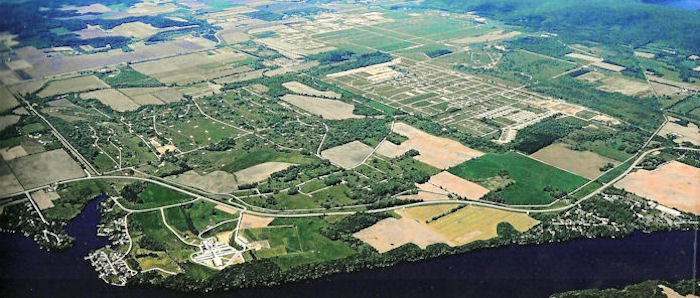
A view of the Badger Army Ammunition Plant grounds from the southeast. Photo from WI DNR webpage.

A view of the Badger Army Ammunition Plant grounds from the southeast. Photo from WI DNR webpage.

The Badger Army Ammunition Plant, located just south of Devil's Lake State Park in south central Wisconsin, was the largest munitions plant in the world during World War II. It was decommissioned in 1997, the buildings since then demolished and the land remediated for its new owners. Much of the land is now restored prairie.

The 7,000+ acres is now part of the Sauk Prairie Recreation Area, and will be maintained by three owners: the Wisconsin Department of Natural Resources, Ho-Chunk Nation, and Dairy Forage Research Center. A master plan for DNR-designated land has been drafted, revised, and is now available for public review.

Madison Audubon Society's Advocacy Committee is reviewing the draft master plan and will provide the DNR with feedback on best management practices for protecting grassland birds and the opportunities and challenges facing a restoration of critical habitats (oak openings and prairies). The DNR Board meets on December 14, 2016 in Madison to discuss the plan and gather feedback - public participation is welcome.

Access the Sauk Prairie Recreation Area Master Plan and Environmental Impact Statement here.