
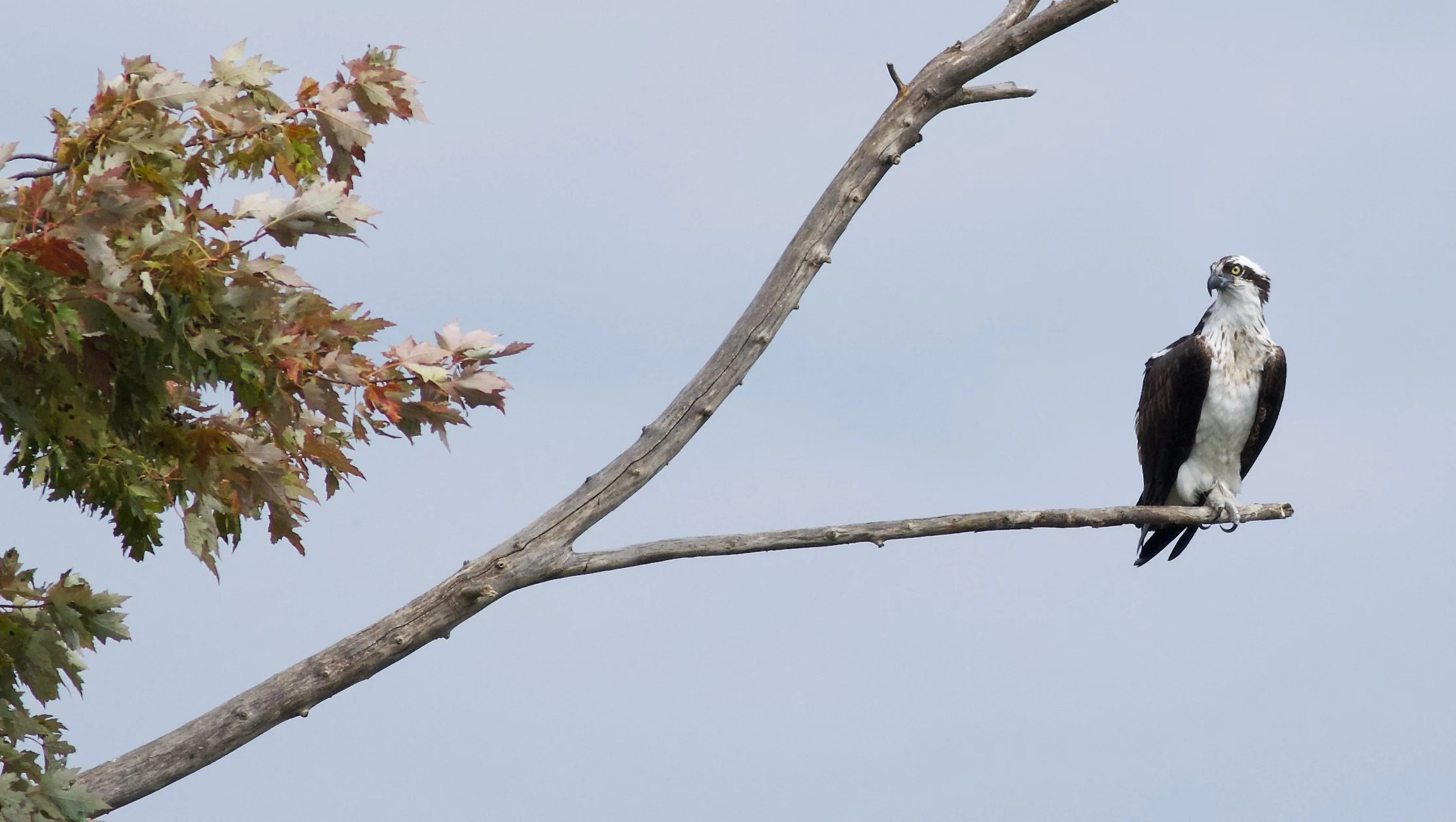

After April’s severe storms, the Crawfish River at Faville Grove flooded. While it was not enough to impact any of the sanctuary’s restorations, the floodwater did cover a portion of land along the river. Floodplain prairies are adapted to periodic flooding—dormant prairie plants can survive when inundated in water. An avian visitor to the flooded prairies is the Osprey.
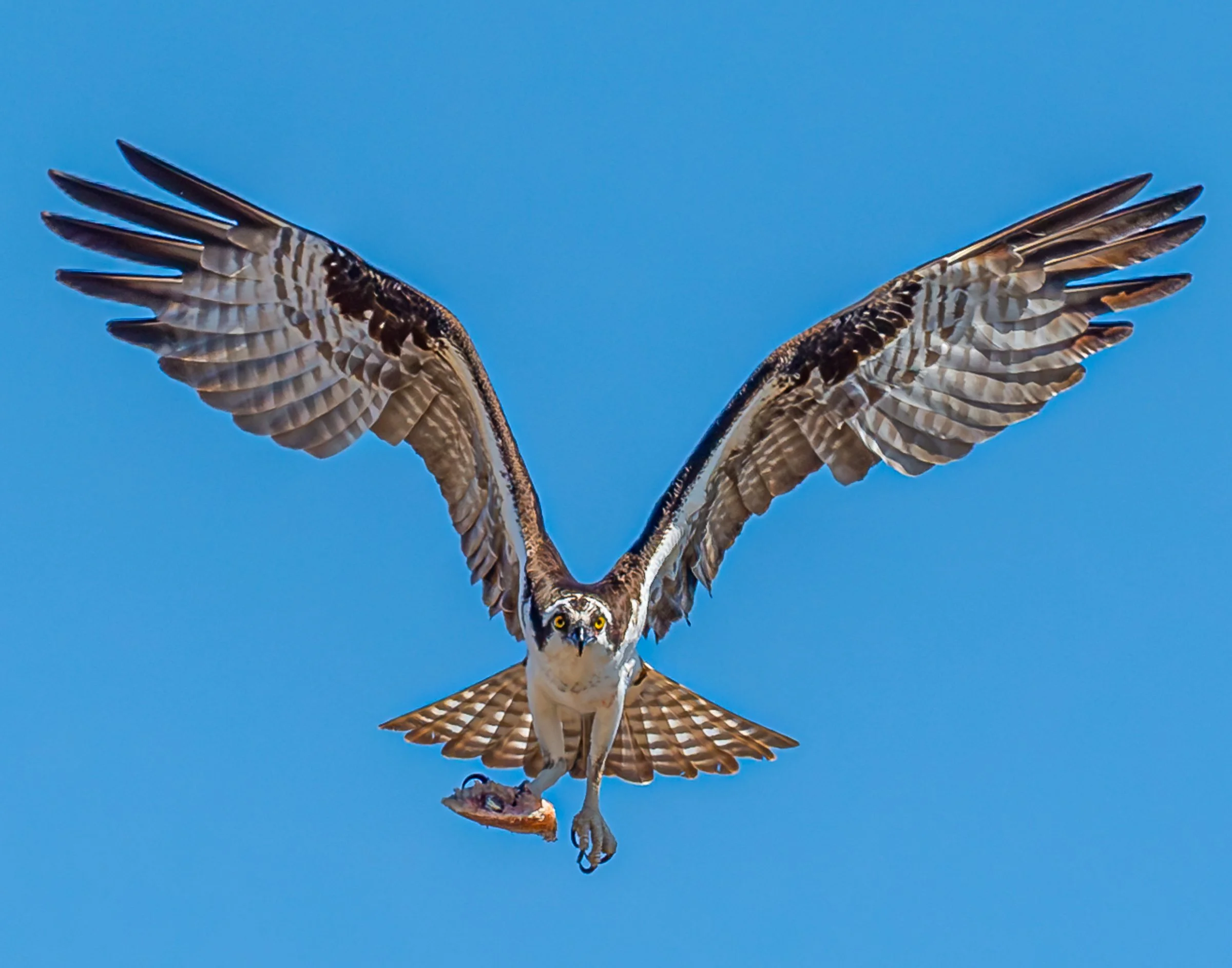
Osprey with fish prey (Jeff Galligan).
Also known as the seahawk, riverhawk, and fishhawk, Ospreys are found on every continent except Antarctica, and have a diet of up to 99% fish. Ospreys have a white body, yellow eyes, black feathers on their outer wings and white and brown feathers on the underside of their wings. A crest on the back of their head and stripes of black running from their eyes to their back are good features to identify an Osprey. There are 4 subspecies of Osprey—the Indian, American, Eurasian, and Caribbean—which vary in coloration but are generally similar in appearance.
Flooded lands are ideal fishing grounds for the Osprey, bringing fish closer to the surface and into the bird’s sights. The only extant member of the family Pandionidae, Ospreys have several adaptations to facilitate catching fish. Like many hawks, Ospreys have powerful vision to locate their prey. Ospreys can close their nostrils when plunging in water, and their oily feathers prevent them from getting wet. When an Osprey plunges into the water, one of the bird’s front talons flips to the back to allow for a better grip on prey. After rising with their catch, Ospreys hold the fish head forward in the most aerodynamic position to reduce drag. With these adaptations, Ospreys catch a fish about 25% of the time, with some skilled birds having a 70% success rate.
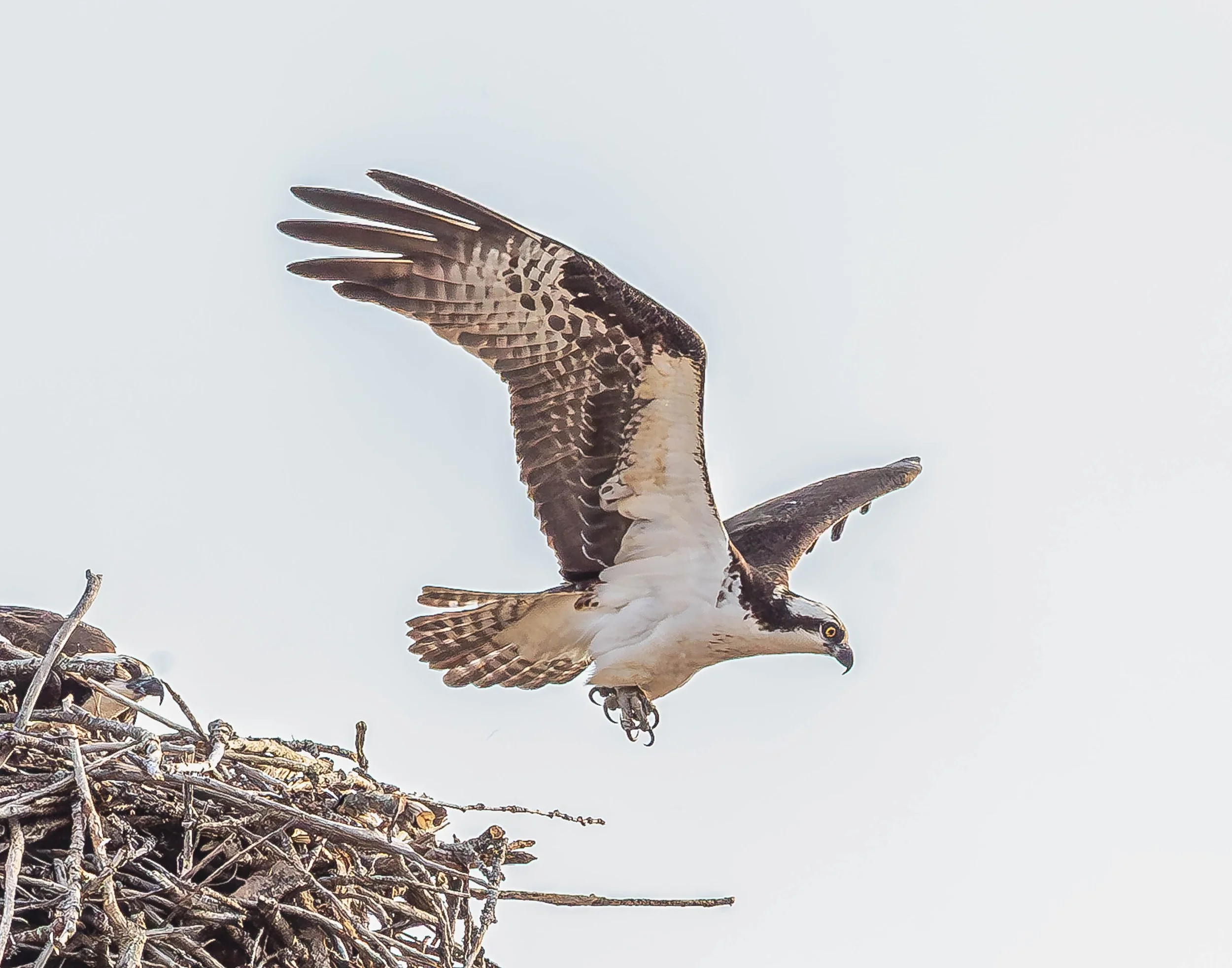
Pair of Osprey at a nest (Jeff Galligan).
Ospreys build large platform nests typically on live trees, snags, or artificial platforms high up out of reach from any potential predators. Constructed over many years, nests can grow from 2.5 feet in diameter the first year to 6 feet in diameter and 10 feet deep after multiple years of additions. Ospreys mate for life, with breeding pairs returning to the same nest each year. Typically clutches of 1–4 eggs are laid in April or early May. With an incubation period of a little over a month, the first Ospreys should be hatching around this time. Nestling Ospreys remain in the nest for about two months and are fed a diet of fish by their parents. After fledging, young Ospreys learn to fish for themselves until they migrate south in September to October.
The best locations to see Ospreys at Faville Grove are in the vicinity of the Crawfish River. Faville, Martin, and Tillotson Prairies as well as Snapper State Natural Area are all close enough to the river to offer a good chance of seeing Osprey. Korth Park on the west side of Rock Lake near Lake Mills has an Osprey nest platform, as does Zeloski Marsh, part of the Lake Mills State Wildlife Area.
Written by Parker Gimbel, Faville Grove land steward
Cover photo by Arlene Koziol. An Osprey is perched out on the branch of a big tree.
