
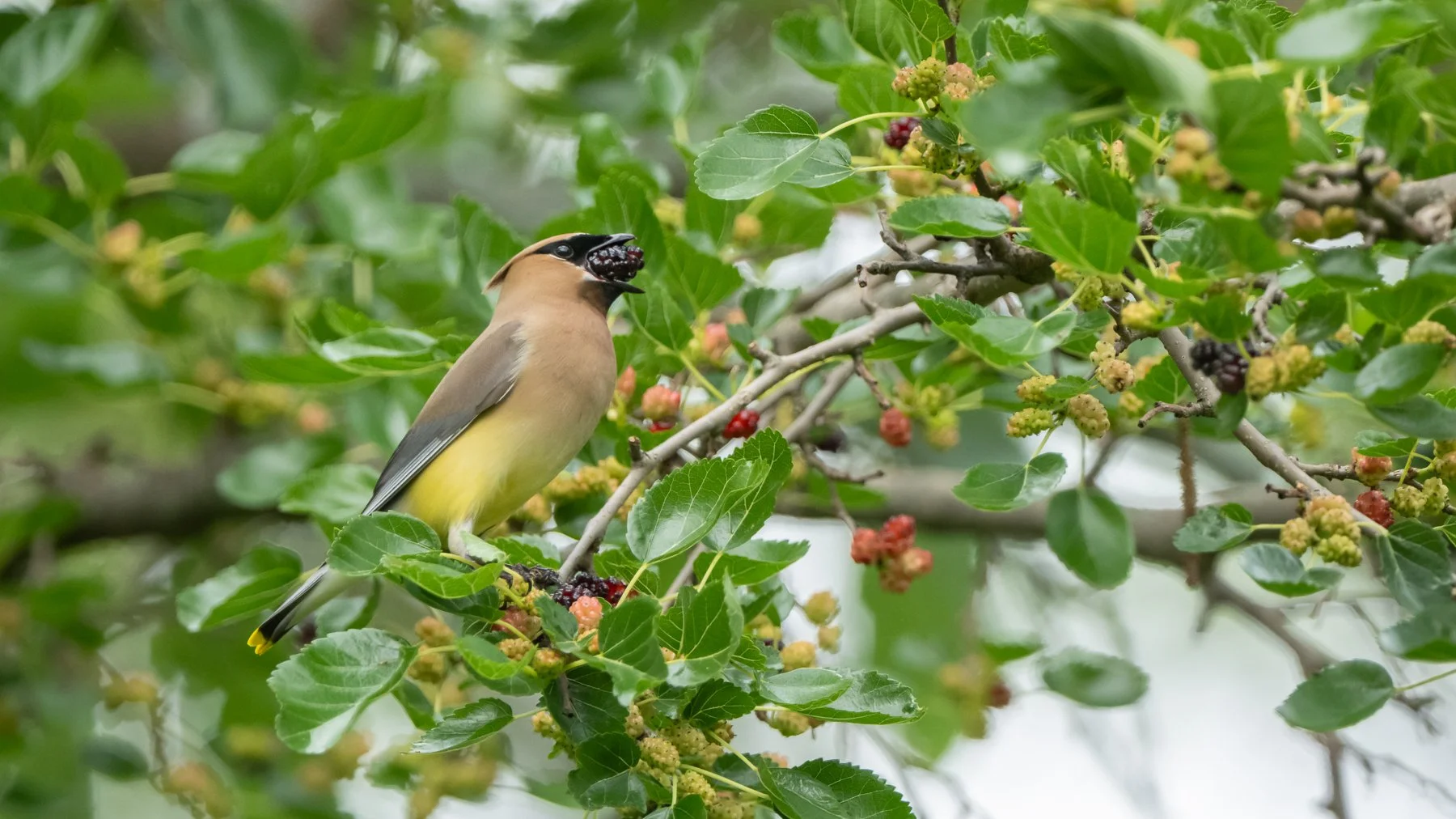

Cedar Waxwings are among the most specialized frugivorous birds in North America. We see them most commonly at Fair Meadows Sanctuary when they forage in fruiting trees and shrubs. A reliable location to observe waxwings in June is a large mulberry tree that bears a heavy crop of fleshy aggregate fruits (syncarps). The tree is a magnet for many species of birds in addition to chipmunks and fox squirrels, which enjoy its bountiful gift for a few weeks every year.
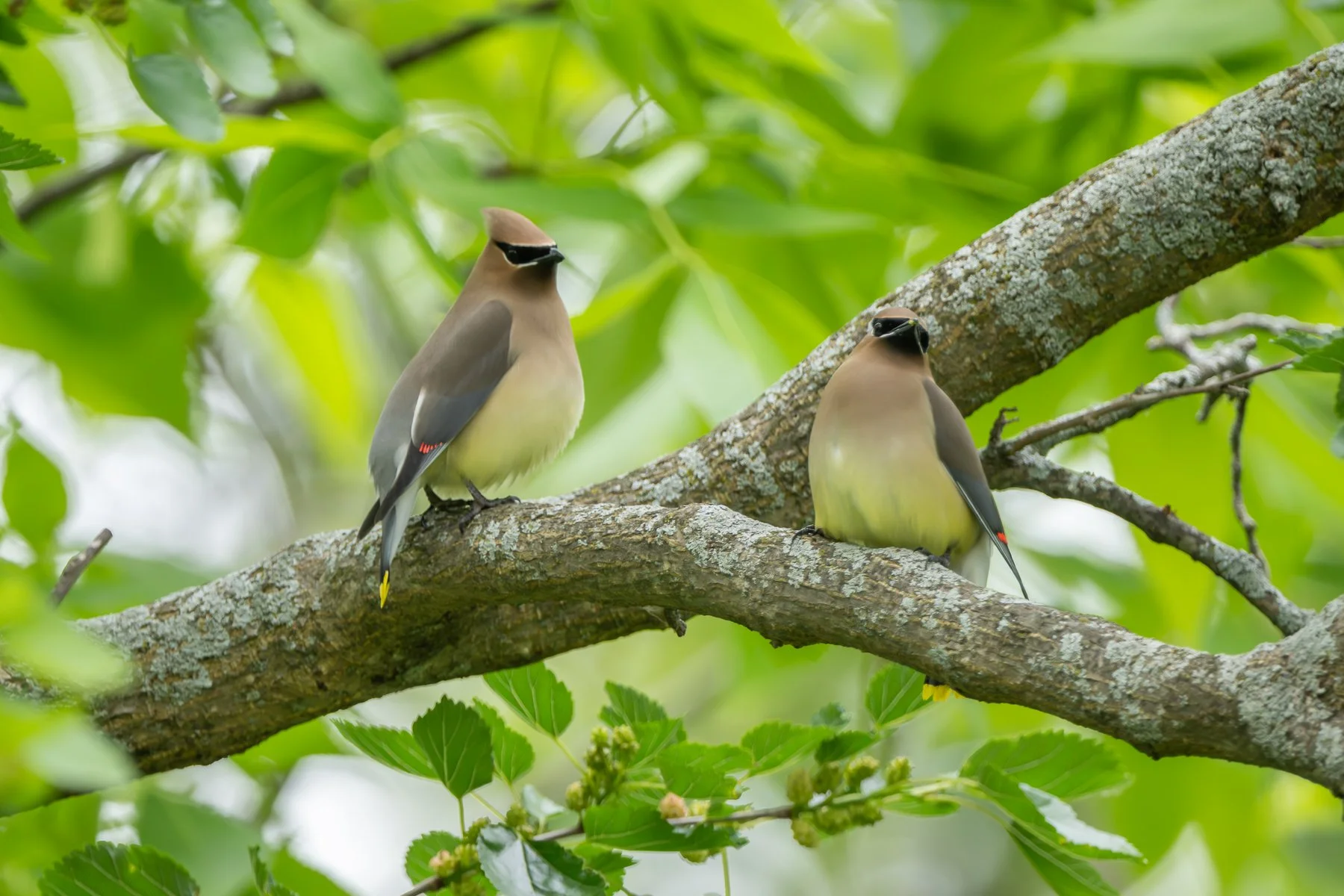
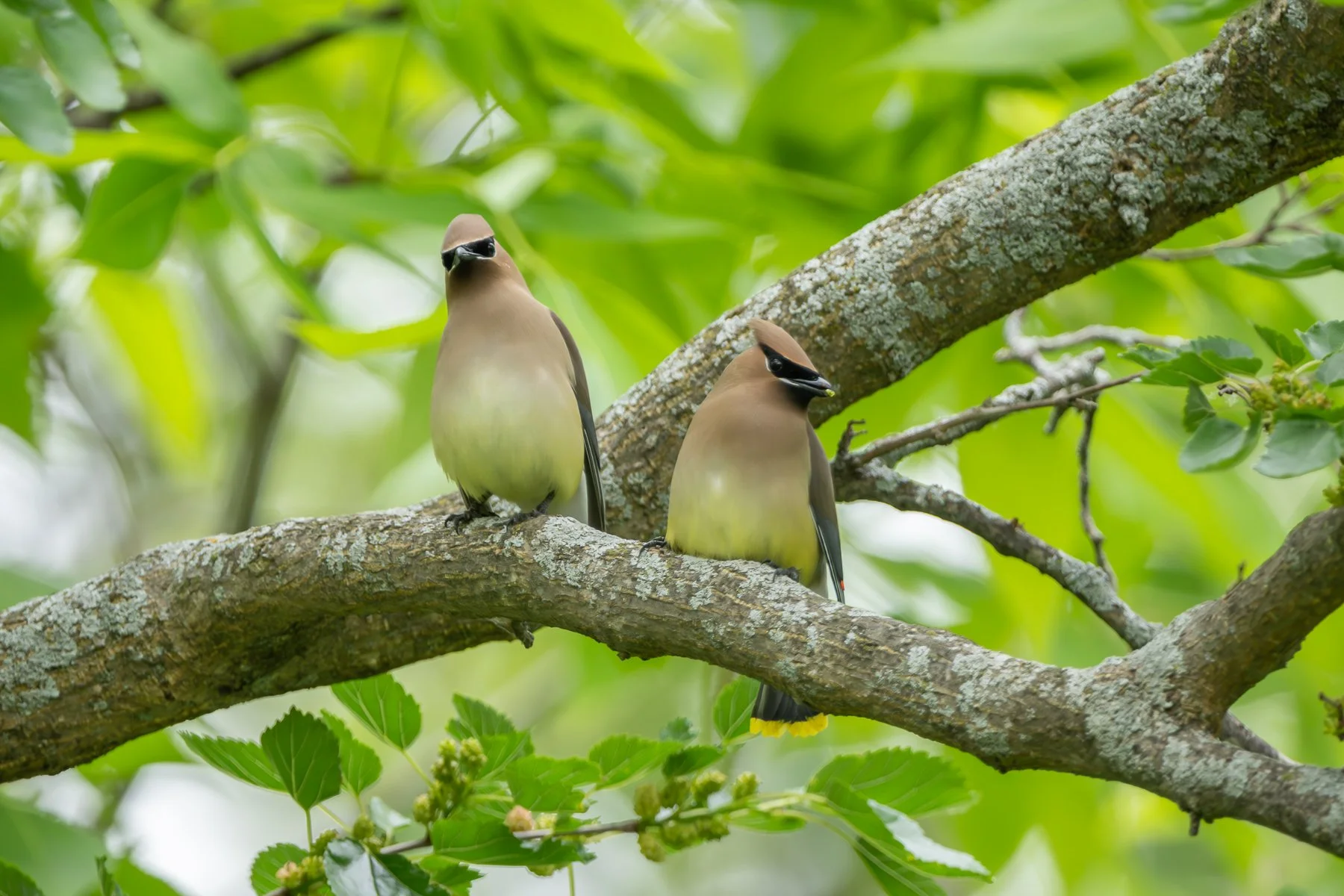
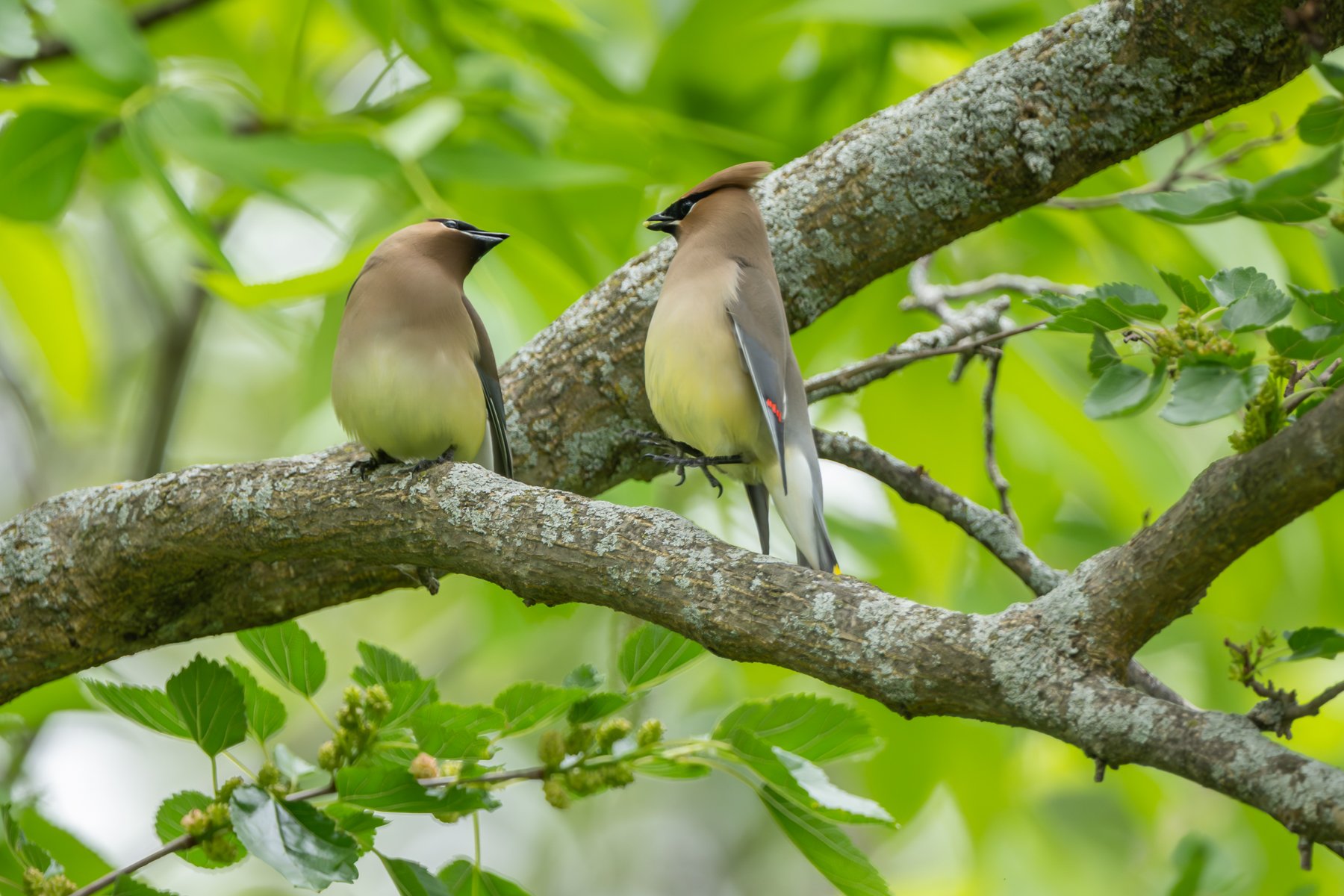
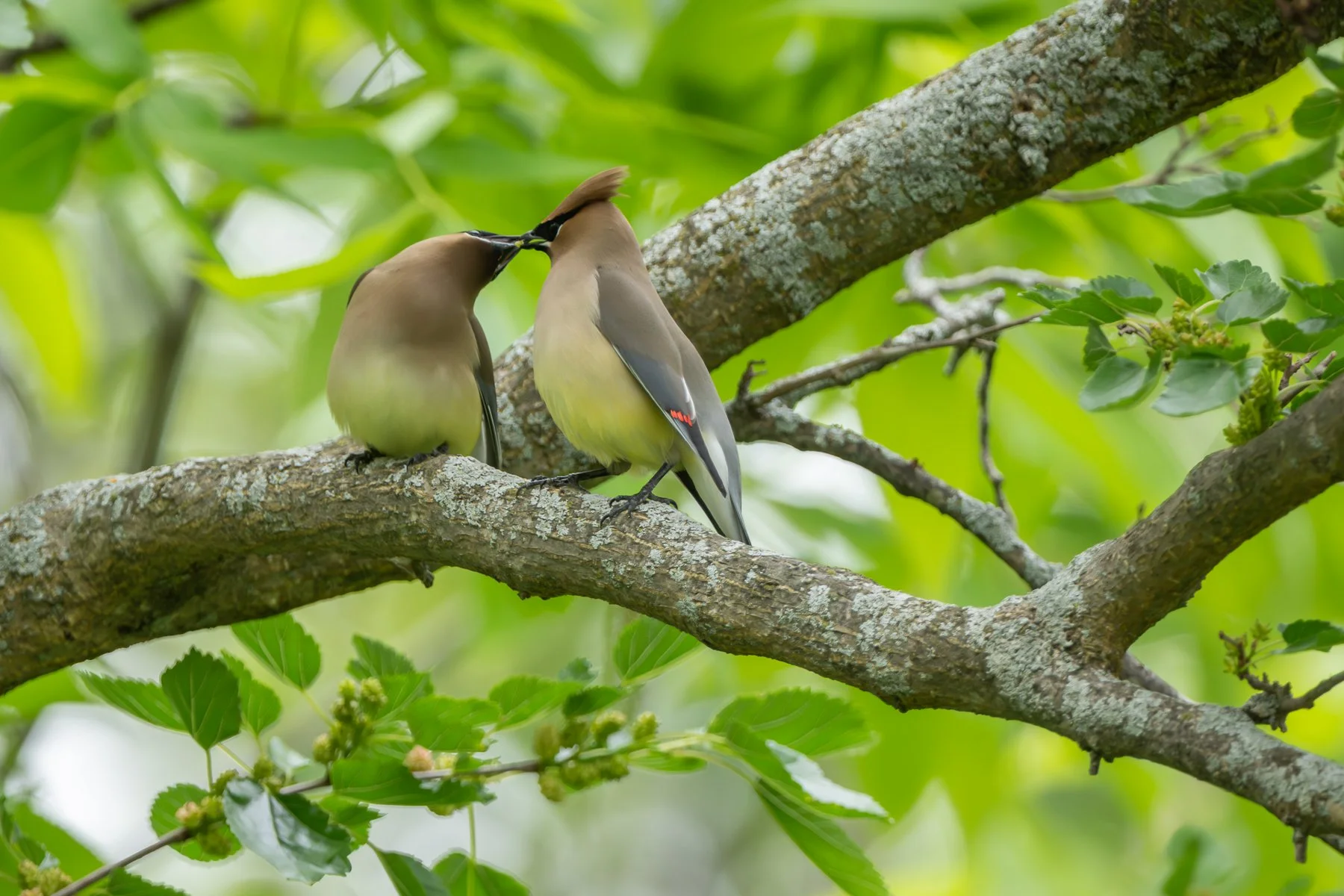
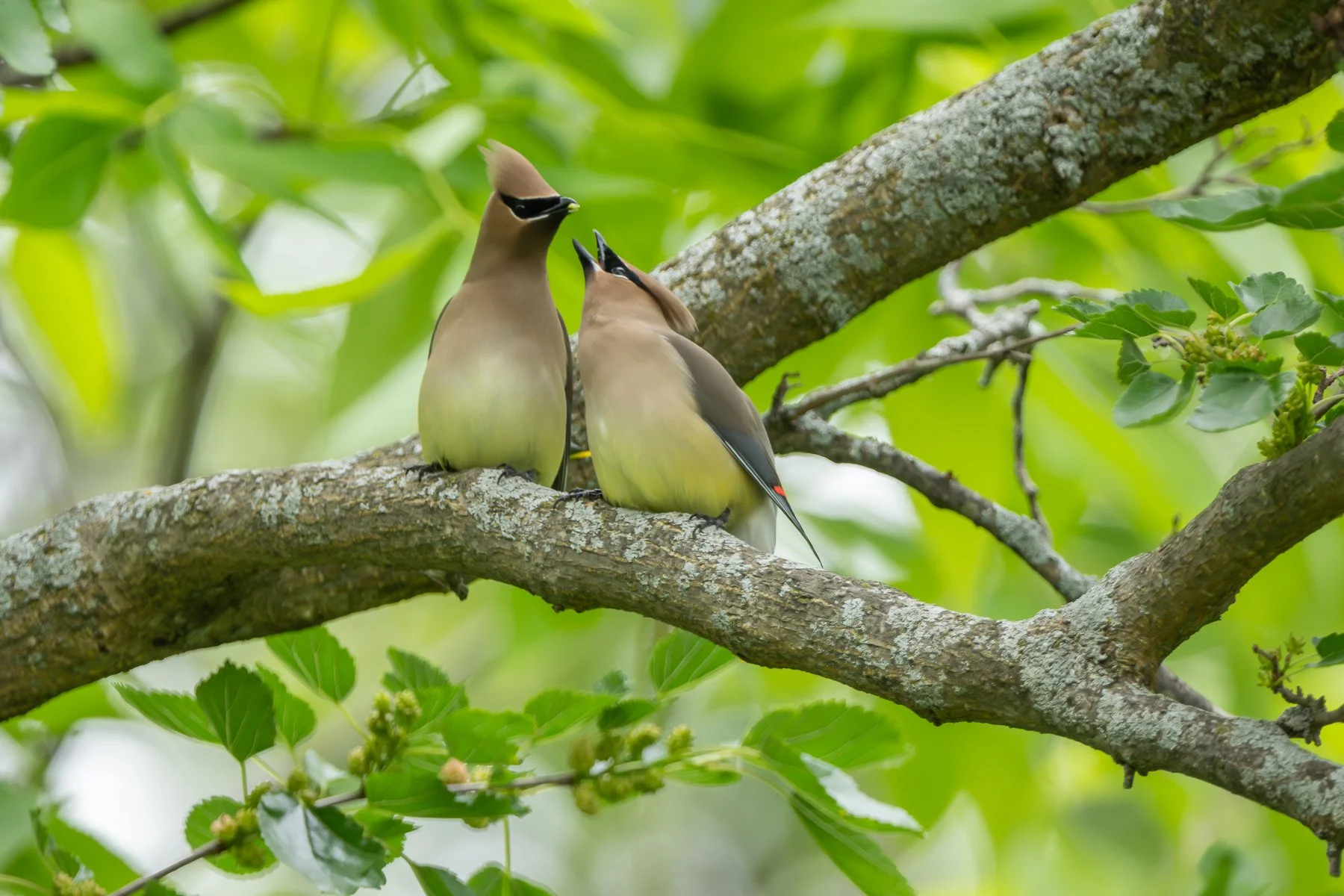
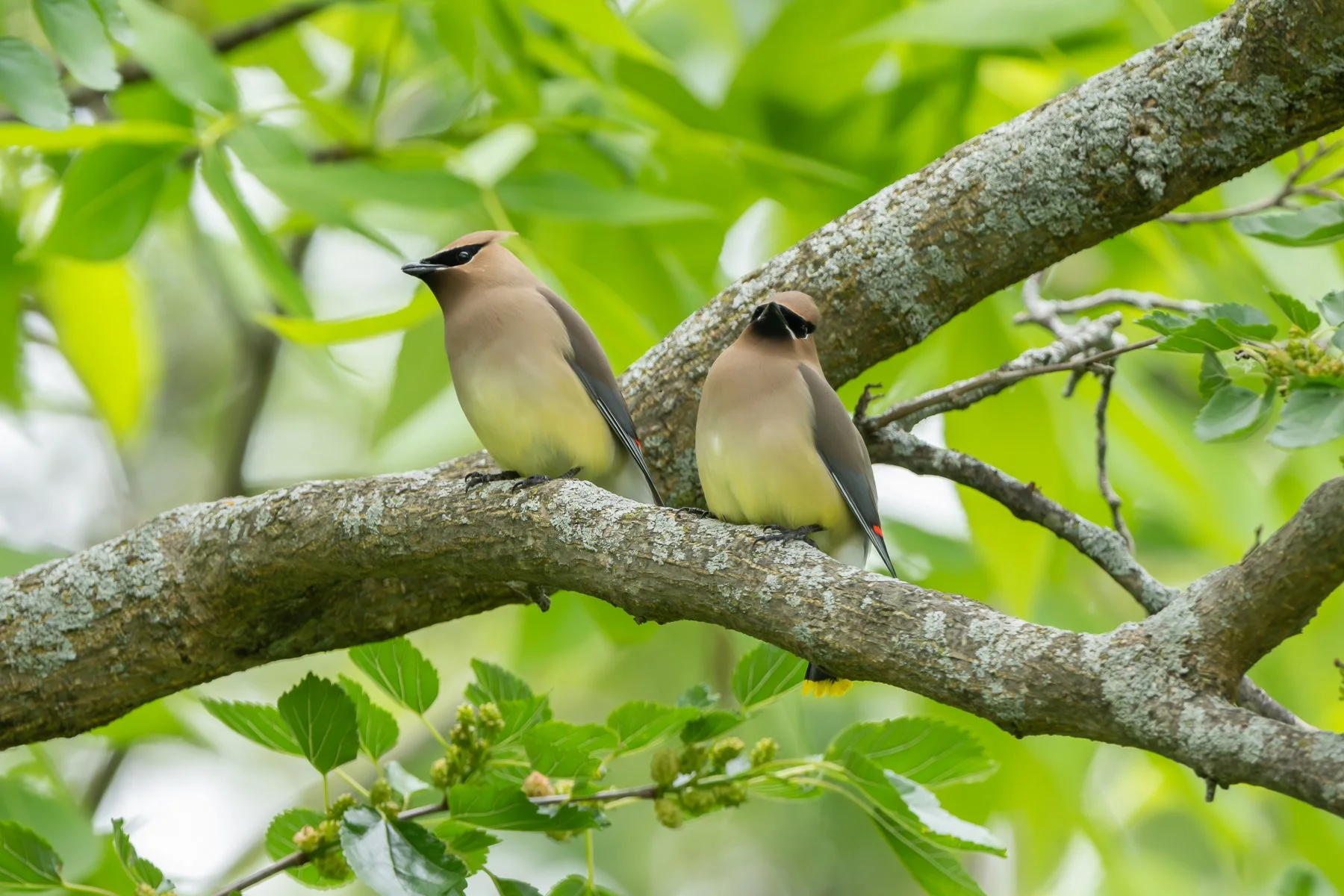
In early June this year, I observed fascinating behavior of a pair of waxwings that flew into the mulberry when its fruits were developing but not yet ripe. I watched the pair engage in a highly choreographed ritual known as “courtship dance” or “courtship-hopping.” The behavior, which is believed to help solidify the pair bond, was described as early as 1904 and is well known, but this was the first time that I had witnessed it. Cornell Lab of Ornithology’s Birds of the World describes the pair-bonding ritual as such:
“Typical courtship display in which mates alternately approach one another on a perch with hopping movements, sometimes touching bills. Usually initiated by the male; successful when the female reciprocates. This display is termed the Courtship Dance or Courtship-Hopping. Courtship-Hopping often includes passing a small item (usually food item such as a fruit, insect, or flower petal, but sometimes inedible items, and occasionally object-passing may be merely simulated, with no object actually passed) between male and female, interspersed with short hops away from and back toward the mate.”
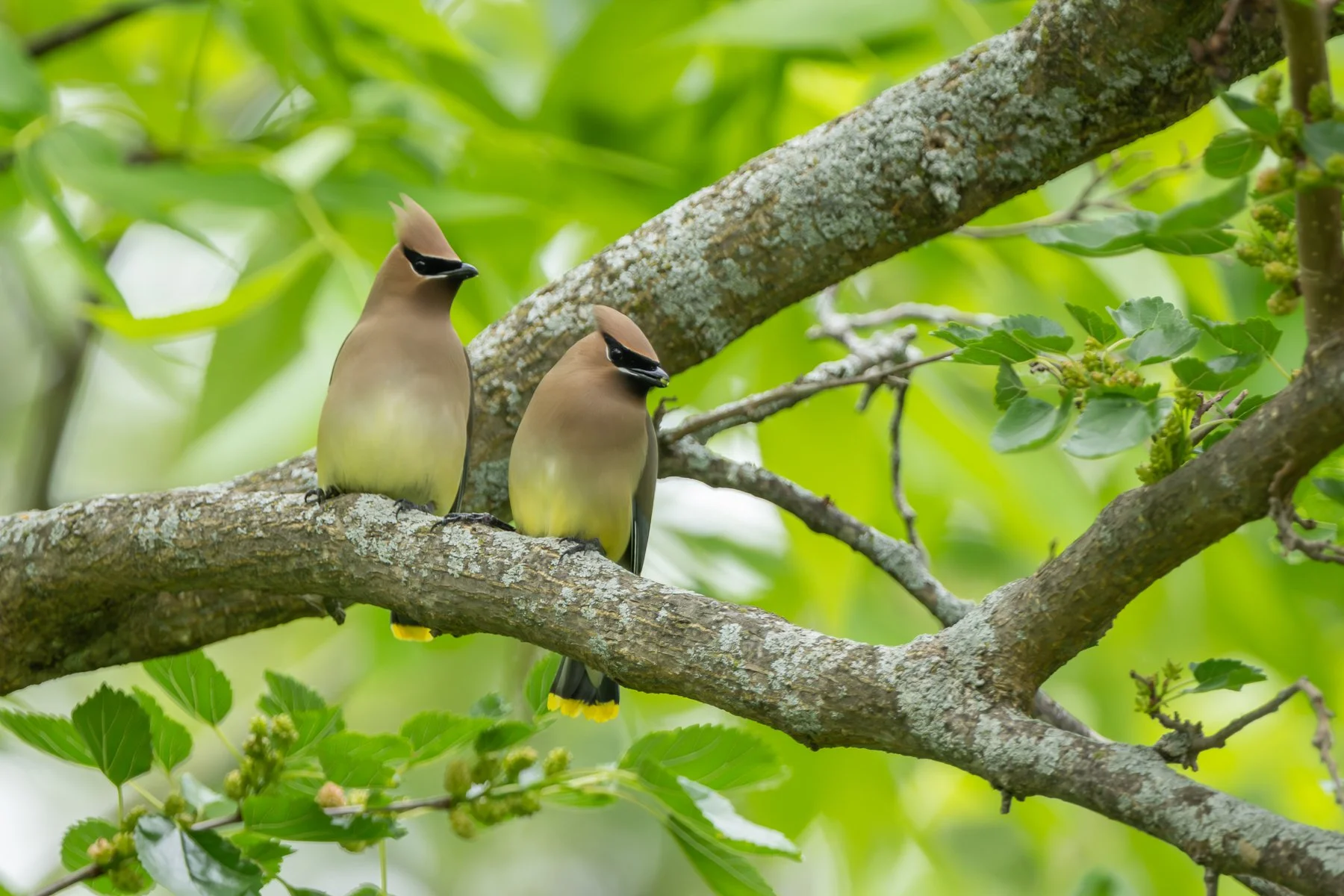
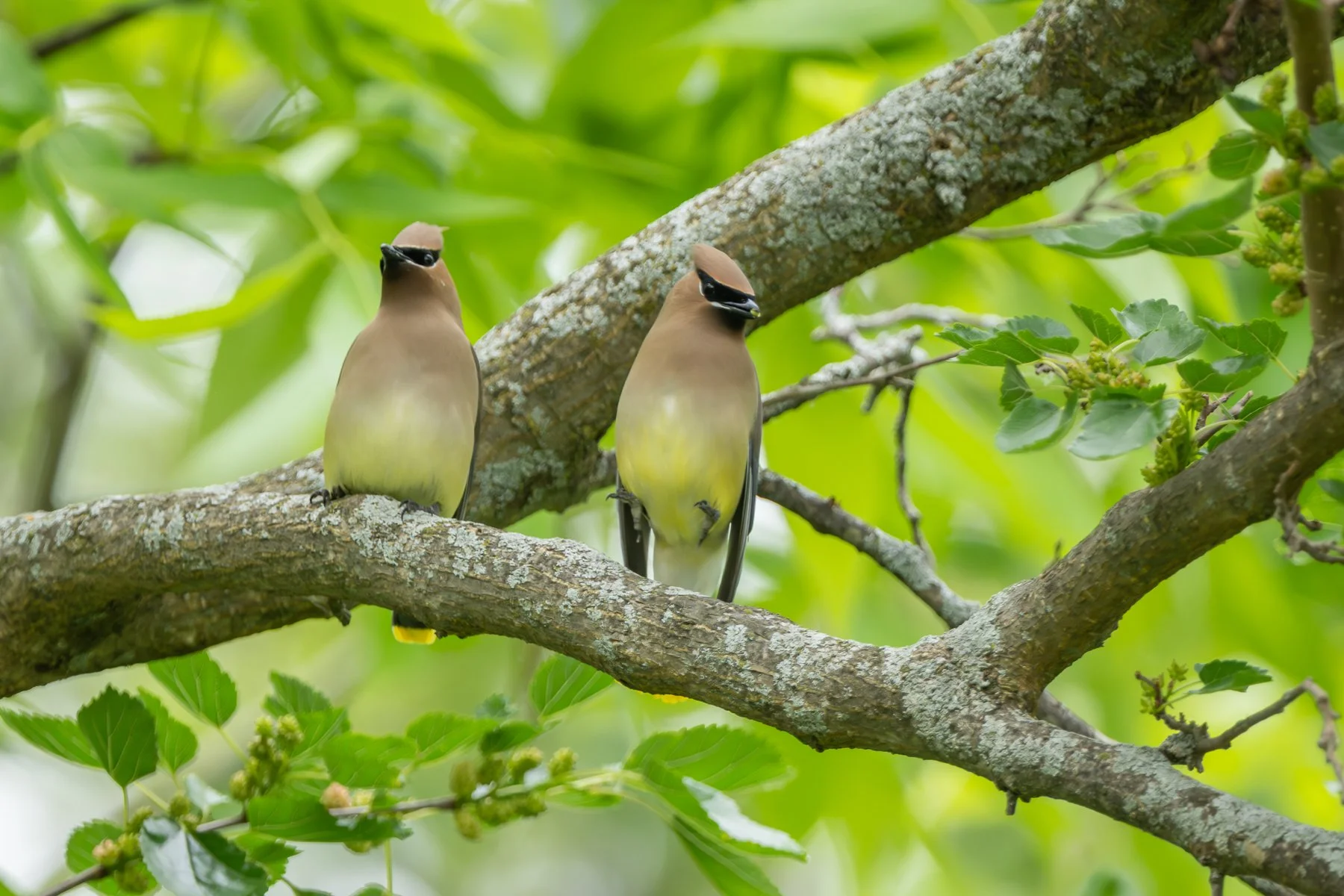
Both birds in the mulberry tree had several bright red waxy tips on their secondary wing feathers, indicating that they were older individuals. When they first alighted on the branch, they were approximately 15 cm apart. One member of the pair (presumably the male) held a small, unidentifiable item in his bill. After the female seemed to acknowledge his presence, she moved closer to him. The male then abruptly hopped and landed next to the female, touching her bill and passing the item from his bill to hers. Shortly thereafter, the female returned the favor and passed the object back to her mate. The male then hopped, moving a few centimeters away from her. This behavior of hopping and transfer of the item back and forth continued for approximately 40 seconds before the female finally consumed the morsel, after which the male flew off. The birds did not copulate during the encounter.
Summer is now well upon us, the mulberry fruits have all been consumed, and the birds and squirrels are now feeding on other gifts of the land. But my memory of the brief ritual of the pair of waxwings lingers. I am thankful that I was privileged to observe and photograph it.
Written by Gary Shackelford, Fair Meadows sanctuary manager
Cover photo by Gary Shackelford. Cedar Waxwing eating a ripe mulberry at Fair Meadows in June.
