Friday Feathered Feature

Ruffed Grouse

Print Friendly and PDF

Wisconsin hosts many of the finest capitals of the world. Waunaukee is the only Wanaukee in the world. Mercer is the loon capital of the world. Racine is the kringle capital of the word. Milwaukee is the beer capital of the world. Boulder Junction, Stockbridge, and Presque Isle? The musky, sturgeon, and walleye capitals of the world. Bonus points if you can guess what Park Falls, Wisconsin claims as its capital of the world.

Ruffed grouse would be the answer. And if you're looking for reasons why Park Falls might hold so many grouse, look no further than the elegant aspen tree. Characteristic of the ruffed grouse is its iconic drumming, where breeding males display for nearby females. Males choose to drum in young and regenerating stands of aspen. They especially love trees aged 6-15 years, with an open understory, likely better for displaying purposes. Aspen, when cut, readily resprouts, often sending off thousands of shoots from its complex root system. Grouse prefer areas with about 10,000 woody stems per acre, a  massive clone of aspen! It may seem, then, that grouse need clearcut areas of regenerating aspen, but they prefer a more complicated arrangement than a simple clearcut.

A ruffed grouse perches in an aspen tree. Photo by Michael Klotz

A ruffed grouse perches in an aspen tree. Photo by Michael Klotz

As a non-migratory bird, grouse need enough resources to overwinter in a cold climate. Unlike blue jays which cache acorns, or woodpeckers which dine on bug buffets in rotting trees, grouse rely on a largely vegetarian diet of twigs, leaves, fruits, acorns, and buds. Thus, in order to overwinter successfully, grouse need access to mature trees which provide male flower buds. Small tree harvests of about five acres within a forest matrix yield excellent grouse habitat, according to research conducted in Wisconsin. Approximately three mature trees per acre in a clearcut can provide enough food resources for overwintering grouse.

The population dynamics of ruffed grouse obviously depend upon their habitat and food source, but there are higher effects concerning the grouse. Aspen is a short-lived species and cannot reproduce in its own shade, thus becoming quickly replaced by other tree species. The forest then shifts from early successional and young aspen sprouts to a less dense forest filled with larger diameter trees. While this situation may benefit many forest species like black-throated green warblers or pine martens, it is detrimental to the ruffed grouse because they need the dense cover of thousands of aspen sprouts to hide from predators. This forest succession has been occurring in northern Wisconsin for many decades, and grouse habitat and populations have decreased as Wisconsin forests have aged.

Ruffed grouse drums in the woods. Photo by Claudine Lamothe

Ruffed grouse drums in the woods. Photo by Claudine Lamothe

Predators also influence population numbers. Goshawks and great horned owls will prey on ruffed grouse in lean snowshoe hare years, and these predators contribute to a cyclical decline in the grouse population. That cyclic nature of ruffed grouse populations is an interesting phenomenon. Due to DNR surveys conducted by wildlife professionals and volunteers, Wisconsin has grouse survey numbers for every year since 1964. You can find that information and the Wisconsin Department of Natural Resource's most recent report here. According to these drumming surveys, populations spike every ten years or so, almost always in a year ending in 9, 0, or 1.

According to statewide numbers from this survey, 2017 saw an increasing population, setting the stage for a climb to a peak in 2019, 2020, or 2021. However, 2018's survey found a rather sharp decline on these drumming routes. As of yet, it's unclear what caused this decline.

A ruffed grouse struts through a woodland with oak leaves and moss covering the ground. Photo by Tim Lenz

A ruffed grouse struts through a woodland with oak leaves and moss covering the ground. Photo by Tim Lenz

Today, ruffed grouse can be found in most of Wisconsin with the exception of the southeastern portion of the state. Faville Grove Sanctuary lacks ruffed grouse but they did historically occur here. Art Hawkins, a graduate student of Aldo Leopold, published “A Wildlife History of Favile Grove” in 1940 and according to his research and interviews with the previous generation, ruffed grouse were common in 1838. By the winter of 1936-37 the last “wandering” ruffed grouse was seen leaving Faville Grove, not to be seen again.

Written by Drew Harry, Faville Grove Sanctuary land steward

Cover photo by Nicole Beaulac
Red-winged Blackbird

Print Friendly and PDF

You know them. They’re found everywhere from marshes to roadsides to drier meadows and crop fields. They have that distinct conk-la-ree! song that plays on repeat all spring and summer. And their bright red wing patch (called an epaulet) makes them easy to identify when you’re out in the field. Though red-winged blackbirds are extremely common here in Wisconsin, they are anything but ordinary.  

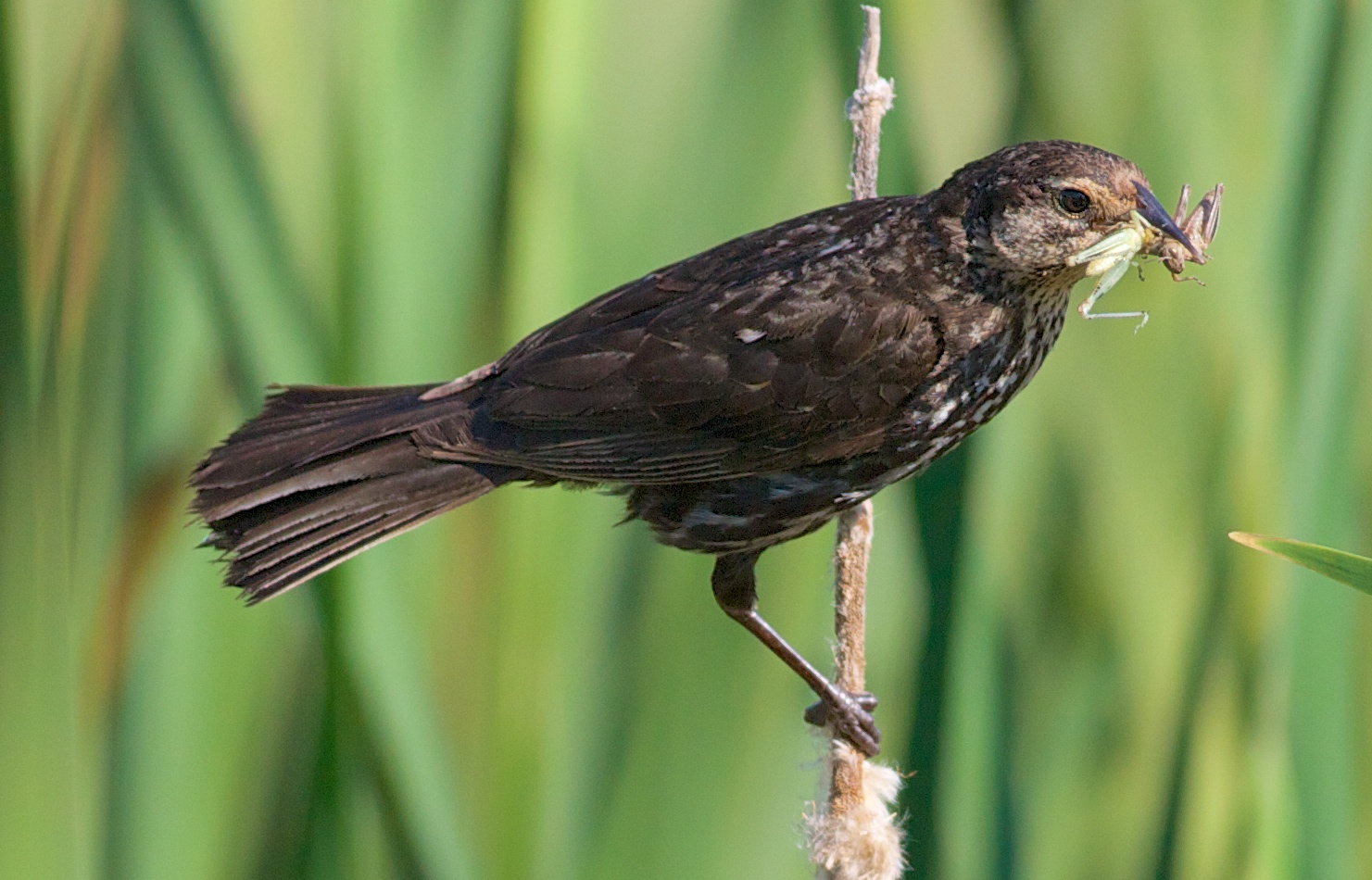
A female red-winged blackbird scores lunch in the form of grasshoppers. Photo by Arlene Koziol

A female red-winged blackbird scores lunch in the form of grasshoppers. Photo by Arlene Koziol

Here at Goose Pond, red-winged blackbirds are the most abundant grassland bird we have. Often, in the summer, they are foraging on the ground for insects like beetles, caterpillars, and grasshoppers. In the fall, they are usually foraging for seeds in huge flocks around our food plots. Sometimes these flocks can have a hundred birds or more in them and they are often comprised of more than just blackbirds. To avoid provoking aggressive responses from each other, males will hide most of their bright wing plumage. Instead of seeing the bright red, you will most likely see just a thin line of yellow. This allows everyone to eat peacefully.

Red-winged blackbird range map. By Cornell Lab of Ornithology

Red-winged blackbird range map. By Cornell Lab of Ornithology

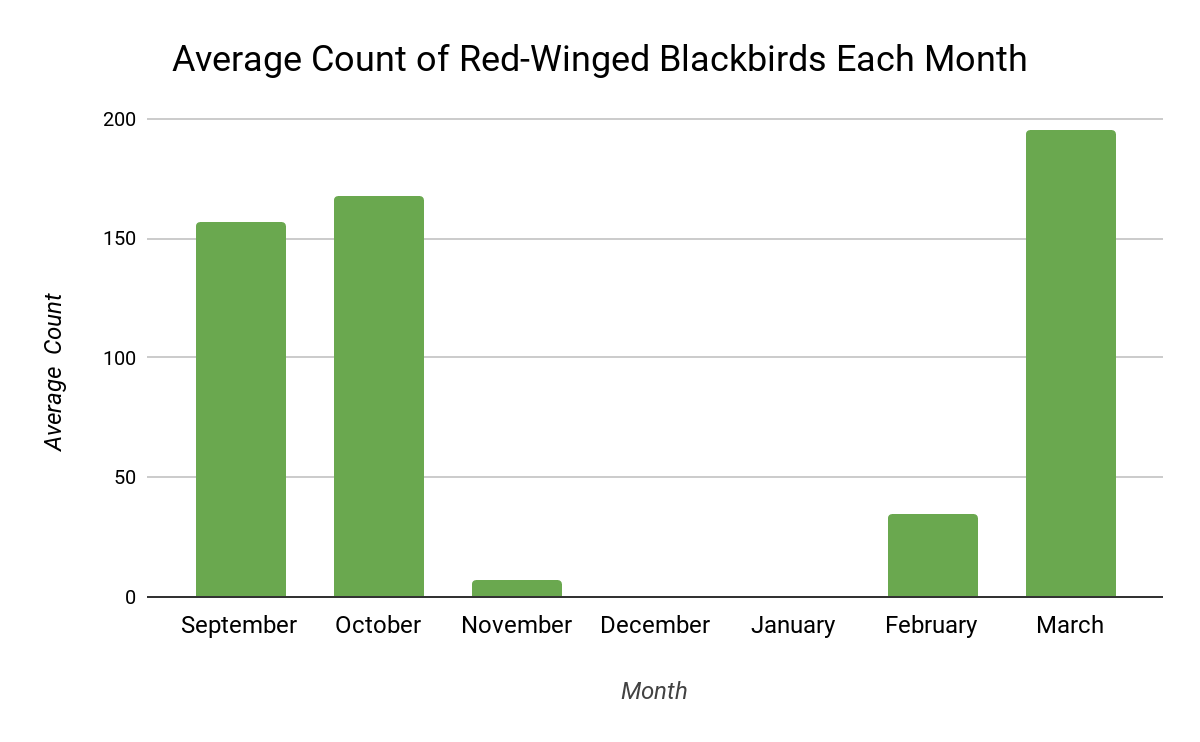
Red-winged blackbirds have a wide range that spans across the country and are year-round residents in most states. In 2017, Maia Persche, with assistance of Jim Otto, conducted counts of red-winged blackbirds seen at the seven-acre food plot from August-April. The data they collected is consistent with what we know about red-winged blackbird migrations. Fall migration for these birds starts in mid-September and goes until early November. At Goose Pond, we saw our red-winged blackbird numbers drop significantly in early November as they  headed south. Spring migration starts in early March and goes until mid-May. At Goose Pond, we saw our numbers jump significantly as the red-winged blackbirds came in, ready to establish their territories. As is common in southern Wisconsin, no red-winged blackbirds were seen during the cold winter months.

Goose Pond Sanctuary’ is host to many red-winged blackbirds for much of the year… until winter!

Goose Pond Sanctuary’ is host to many red-winged blackbirds for much of the year… until winter!

Migration flocks are a sight to see. In Samuel D. Robbins Jr.’s book Wisconsin Birdlife, he quotes a detailed recording of W.E. Synder from Beaver Dam, WI:

“On November 9, 1924, there occurred here, about 4 p.m., a flight of blackbirds, the like of which no local resident ever saw before. The procession, passing from due north to due south, was of such length that those in the lead as well as those in the rear, faded out into mere specks...the flight lasted for a full half hour. The flight was at a great height, a solid column, unbroken by any bunched formation.”

Though red-winged blackbird populations have actually declined by over 30% throughout most of their range between 1966 and 2014, you can still see them fly in huge droves along their migratory routes. In 2014, Partners in Flight estimated their global breeding population was still around 130 million. Be on the look-out for them for the rest of November because pretty soon they’ll be gone for the winter season!

A red-winged blackbird does his best at shooing this sandhill crane from his nearby nest. Photo by Arlene Koziol

A red-winged blackbird does his best at shooing this sandhill crane from his nearby nest. Photo by Arlene Koziol

Their numbers aren’t the only thing impressive about this species either. As many of you may know, red-winged blackbirds, particularly males, are outright bold and aggressive to anyone who steps, scuttles, or soars into their territory. You can often see males perched above their territories singing, puffing out their wings, and displaying their epaulets. I have many recollections at Goose Pond this summer watching red-winged blackbirds chase out northern harriers and sandhill cranes (who actually prey upon their nests). Mobs will quickly fly out, staying above and behind their predator in order to drive them away. Red-winged blackbirds even managed to gain the attention of the Milwaukee Journal Sentinel this summer after several maintenance workers and joggers complained about being pecked in the head while minding their own business!

I’ve had similar experiences myself. While out digging parsnip in our Jill’s south prairie this summer, I was around a red-winged blackbird nest. Both the male and female zoomed around above me demanding that I leave at once. If only I could speak to them and tell them I was trying to help! I cannot blame them for being so territorial; they are just being good parents and protecting their home, after all. There’s no need to be afraid of these guys — you just need to give them the space and respect they deserve.

A male red-winged blackbird sings his heart out. Photo by Kelly Colgan Azar

A male red-winged blackbird sings his heart out. Photo by Kelly Colgan Azar

In 2016, Heather Inzalaco conducted breeding pair surveys and found 365 pairs of red-wings at the Goose Pond prairies. Between Sue Ames, Ankenbrandt, Hopkins, and Wood Family Prairies, she counted a total of 166 breeding pairs of red-winged blackbirds in 219 acres! Wood Family had the highest abundance with 57 breeding pairs over 60 acres; that’s almost one breeding pair per acre! Those are numbers we like to see here and we’re quite thankful to have the habitat and resources to support these blackbirds and their young.

These birds will hold a special place in my memory this year -- I started my internship at Goose Pond when the blackbirds arrived and soon it will end as all the blackbirds leave. I am looking forward to seeing them return next spring.

A flock of red-winged blackbirds move through Goose Pond Prairie. Photo taken by Goose Pond’s DNR Project Snapshot trail camera.

A flock of red-winged blackbirds move through Goose Pond Prairie. Photo taken by Goose Pond’s DNR Project Snapshot trail camera.

Written by Jacqueline Komada, Goose Pond Sanctuary intern

Cedar Grove Ornithological Research Station

Print Friendly and PDF

It doesn’t look like much when you first walk up to it -- just a small green shack adjacent to a footpath through the woods. It’s only open for four months (August-November) during the year and public access is limited. If you want a tour of this place, you need special permission. I was lucky enough to be a part of a Natural Resources Foundation of Wisconsin field trip group, led by Mark Martin, to experience what goes on at the Cedar Grove Ornithological Research Station. Though it doesn’t look like there’s a lot going on from the outside, trust me, there is.

Cedar Grove Ornithological Research Station lies just off the shore of Lake Michigan outside of Cedar Grove. It’s an operation that began in the 1930s when the Milwaukee Public Museum began banding hawks there. Operations ceased in the 1940s due to the war. In 1950, Dan Berger and Helmut Mueller started banding all species of raptors that flew by on their migratory routes, and that is still the primary purpose of the station today. It is the most well-known banding station with the longest continuous history of banding, and is strictly run by volunteers who have a deep, sustaining passion for birds-of-prey research. Since it started, the research station has captured, banded, and released more than 43,000 hawks and owls.

The moment you walk into the shack, you’re a little overwhelmed with everything around you. Off to the right is a small office fit for a small gathering of people, a desktop cycling through pictures of volunteers holding raptors, and many raptor books. Ahead of you is a small stove and a few end tables and shelves with personal volunteer items and tools. There is also a larger table where the banding takes place. If you step just past the banding table, you see multiple shelves filled with many cans that have raptor tails sticking out of them - a bizarre site to see. Plastered all over the walls are amusing quotes, cartoons, jokes, and newspaper headlines that keep the mood light. You could spend an hour just wandering around reading them all, and a few are sure to put a smile on your face. Tom Meyer, master bander and co-manager of operations, sat all of us down for a bit and told us about the work he does, the history of the center, and what to expect for the day. Within the first few minutes of chatting with Tom, his enthusiasm for the work became obvious.

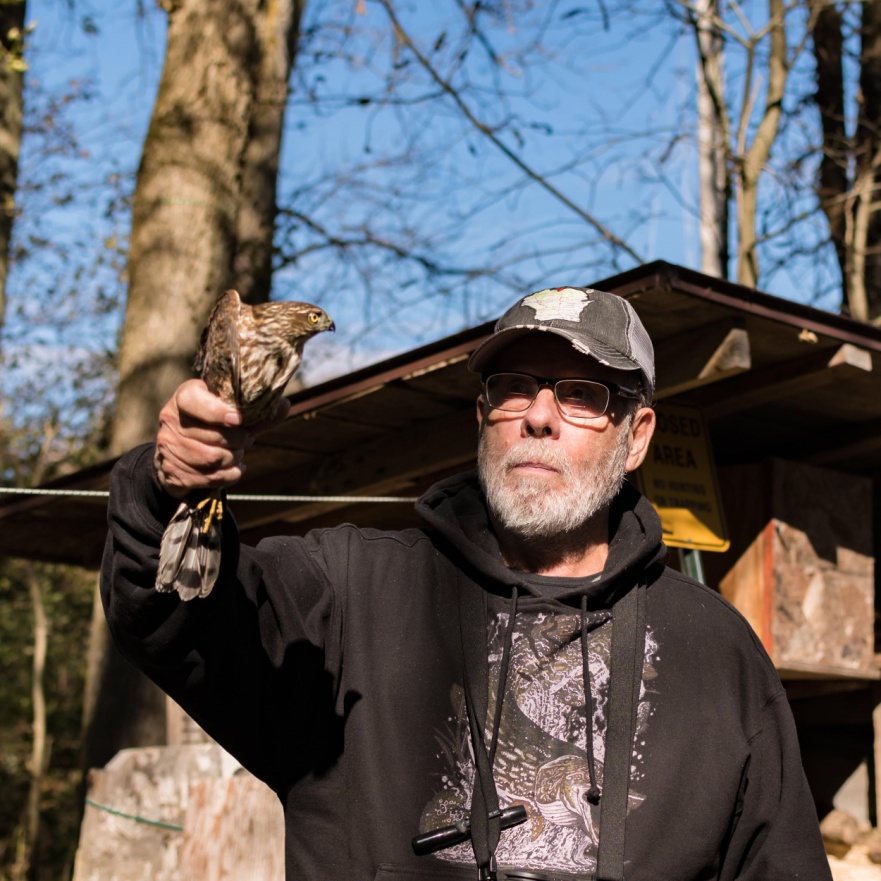
Mark Smith and Rick Hill (co-manager of operations) with a sharp-shinned hawk. Photo by Nydia Kien

Mark Smith and Rick Hill (co-manager of operations) with a sharp-shinned hawk. Photo by Nydia Kien

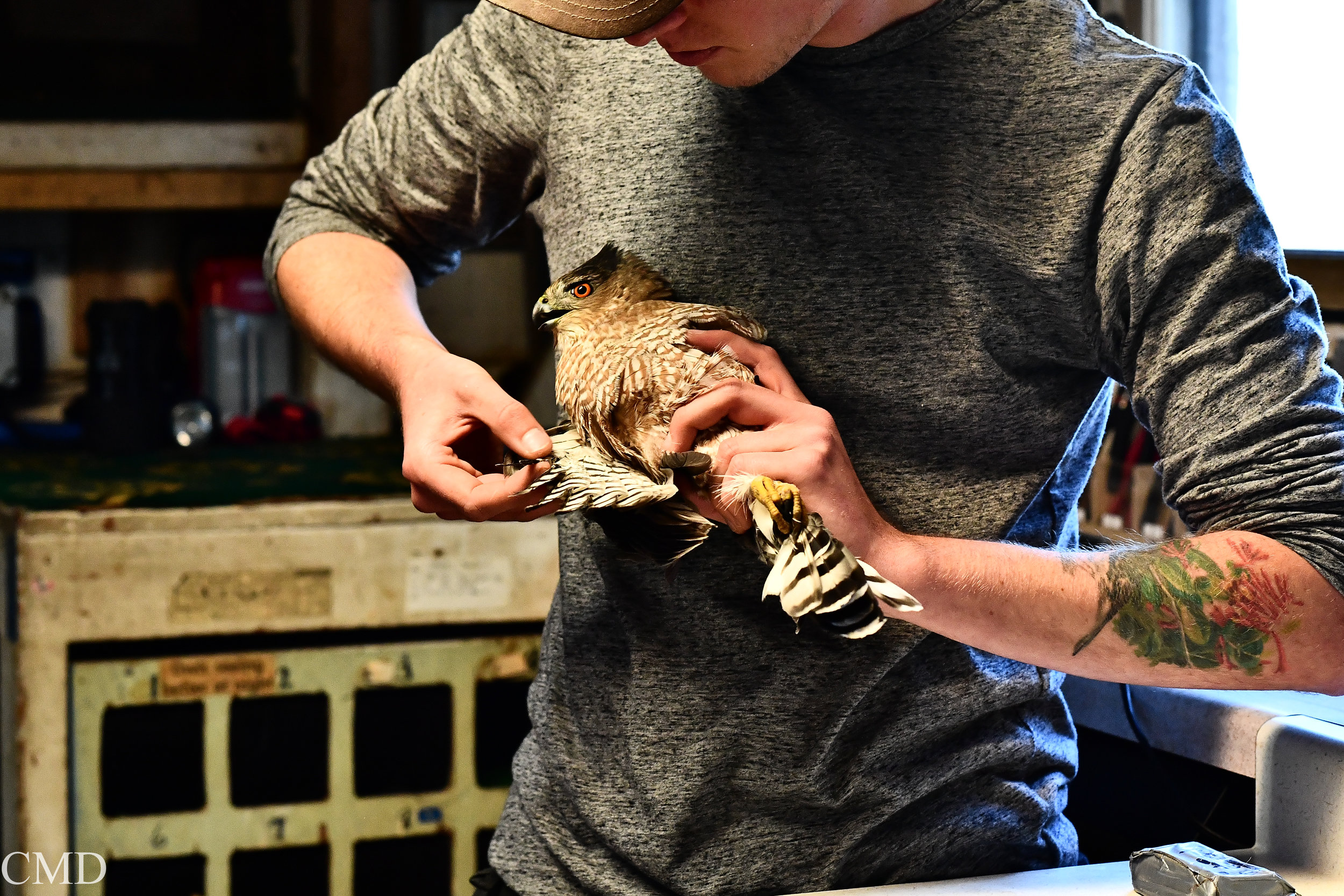
At the end of the room is a door leading to the observation room. This is where the group met the two interns for this year, Andrew and Frances, and Lisa and Steve, a couple from Oregon that take an annual vacation to volunteer at the field station. They were sitting on stools staring intently at the sky through a long, narrow viewing window. Soon, someone yelled “bird over the hump!” and Andrew immediately began pulling a rope which, if you glanced through the viewing window, could see was causing a starling to continually bounce up and down. As desired, that moving bait caught the sharp-shinned hawk’s eye and it flew in at top speed ready to grab its next meal with outstretched talons. Unknown to the hawk, however, was a hard-to-see mist net strung up carefully just before the bait. As that sharp-shinned came in for a landing, it got caught in the mist net and Frances quickly ran out to untangle it and bring it in for banding. Once they had dozen or so birds ready to be banded, the process began.

John Bowers, a 29-year volunteer with a knack for telling jokes, and Mark did the recording while Andrew took the measurements. Andrew noted the species, sex, and age as well as, molting characteristics, tail feather length, count of primary and secondary feathers, wing length, presence of fat, and presence of food in the crop. A small, silver band with a specific set of numbers was carefully placed on the birds leg and just like that, the bird was ready to be released. Banding gives us essential insights into bird migratory movements and ranges, survival rates, longevity, and changes in migration patterns and numbers.  Their banding operation documented the great decline in numbers due to DDT and then the recovery after DDT was banned.

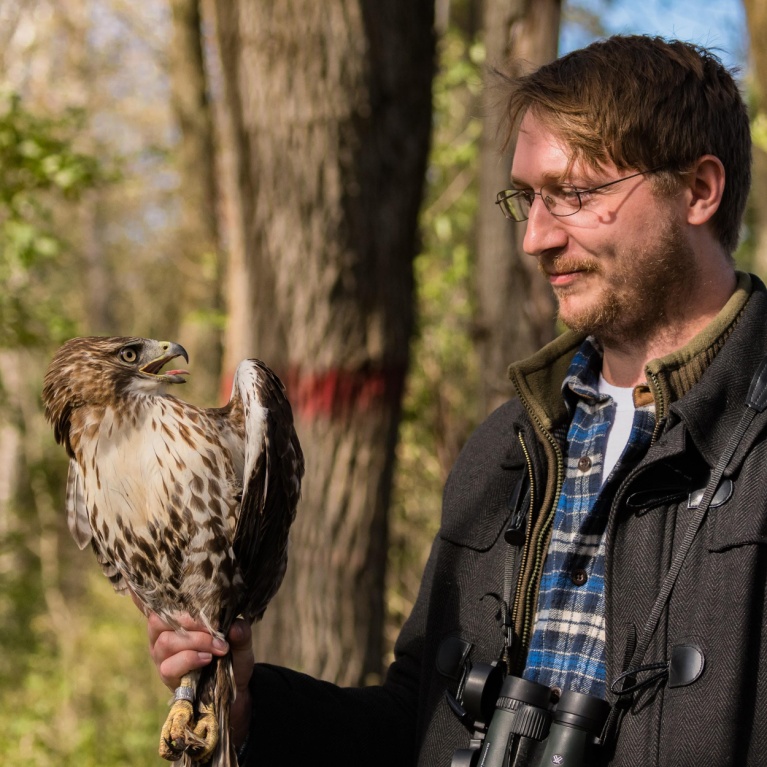
Doug Steege observing Andrew, intern, counting primary and secondary feathers on a cooper’s hawk. Photo by Catherine Drexler

Doug Steege observing Andrew, intern, counting primary and secondary feathers on a cooper’s hawk. Photo by Catherine Drexler

The Wisconsin Natural Resources Foundation group couldn’t have come on a better day. It was a clear, sunny day with northwest winds pushing the birds towards Lake Michigan and down along the shoreline right to where Cedar Grove Ornithological Research Station is posted. The day was filled with good spirits and joking around while we completed meaningful work. At several, random times throughout the day you could hear Tom yell, “FREEZE!” When he yelled this, anyone who was outside the building had to be incredibly still so a bird flying in wouldn’t be distracted by human movement. It was a record day for this year and Tom Meyer noted that “it was the best day for banding since I’ve been here.” When we left at 5:00 p.m. they had seen 312 hawks and banded 56 of them: northern harriers 4 seen (0 banded); bald eagle 1 (0); sharp-shinned hawk 160 (42); Cooper’s hawk 9 (2); red-tailed hawk 7 (1); merlins 128 (11) and peregrine falcon 1.

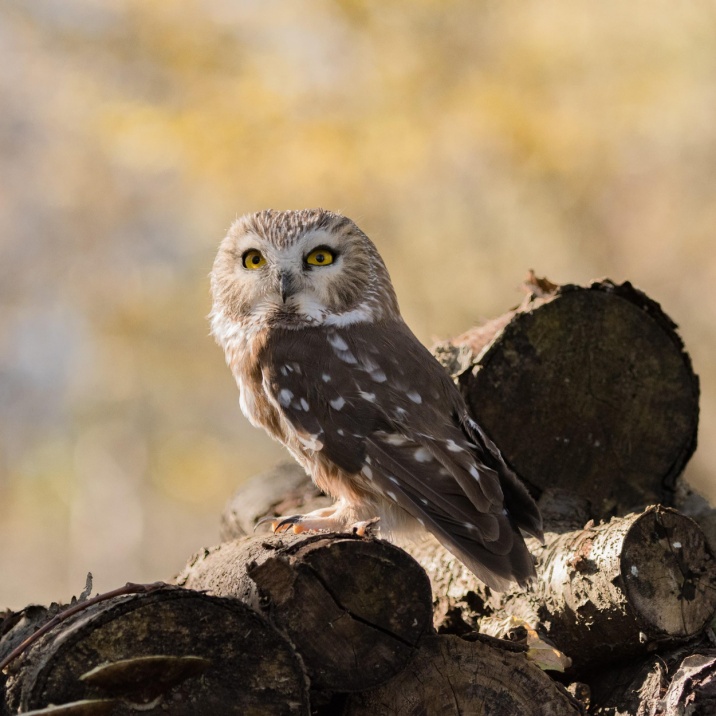
Goose Pond intern Jacqueline Komada and a saw-whet owl lock eyes during the field trip. Photo by Catherine Drexler

Goose Pond intern Jacqueline Komada and a saw-whet owl lock eyes during the field trip. Photo by Catherine Drexler

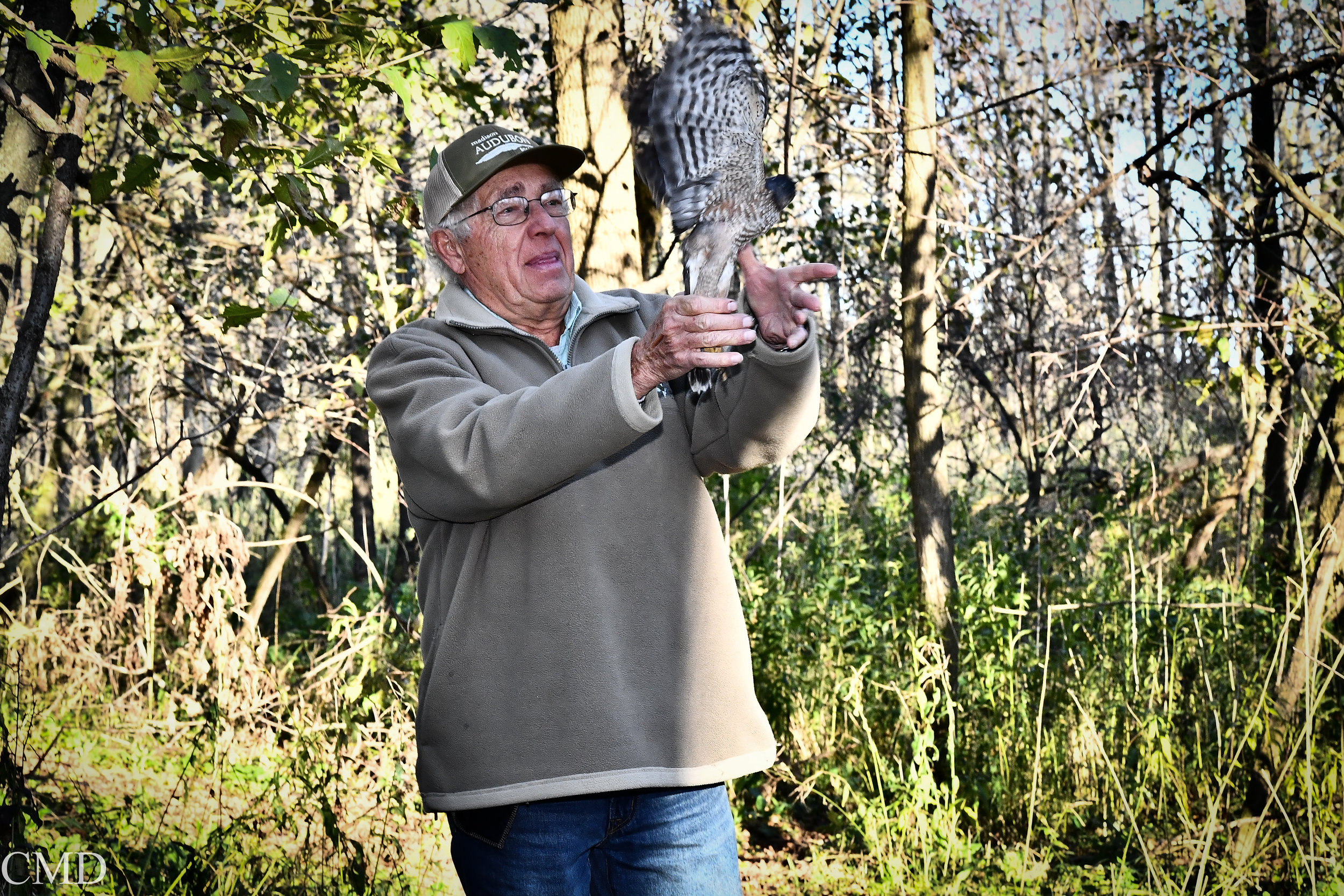
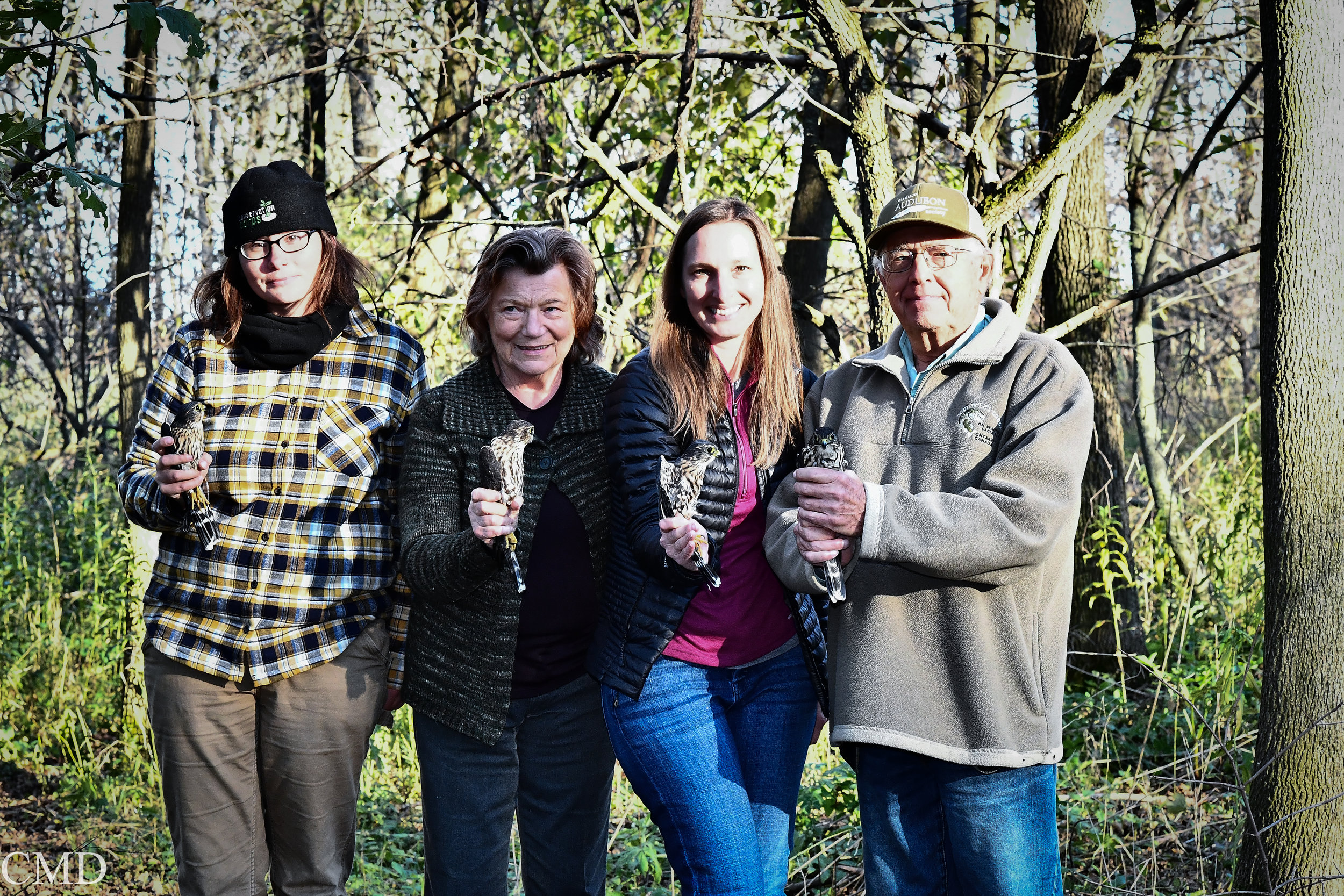
Everyone who came on the field trip was able to get up close and personal with a bird-of-prey and release it. Some of us even got release two tiny saw-whet owls! I think that was the most memorable experience for me, personally. Here I was, holding this beautiful creature in my hand and we were both staring at each other, completely aware of the others presence. There are a thousand other circumstances where this moment wouldn’t have occurred and I actually got be a part of it. I am beyond thankful. Together, at the end of the day before we left, we all released four sharp-shinned hawks and four merlins. It was the perfect ending to a remarkable day.

On October 21, Brand Smith also took over six kestrel box monitoring volunteers to the Cedar Grove Station.  They had southwest winds and while the day wasn’t quite as busy as when I went, they still caught 10 hawks: two red-tails, a Cooper’s, a goshawk, and six sharp-shins. Earlier this week I was chatting with Nydia Kien, a volunteer, about the experience she had. She told me how incredible it was to hold a sharp-shinned hawk in her hand and how she couldn’t believe how fast the hawks fly when they narrow in on their prey! She mentioned how attentive the staff and interns are when searching for hawks through the observation window. “I don’t know how they keep track of them when they fly in!” she exclaimed. Nydia had a positive, insightful time on Sunday and is very glad she went.

Photos in the slideshow below, from left to right (click on the photos to advance the slideshow): 1) Bill Forest with a sharp-shinned hawk. Photo by Nydia Kien. 2) JD Arnston with a red-tailed hawk. Photo by Nydia Kien. 3) Recently released saw-whet owl. Photo by Nydia Kien. 4) Intern Andrew banding a Cooper’s hawk. Photo by Catherine Drexler. 5) Mark Martin releasing a merlin. Photo by Catherine Drexler. 6) Jacqueline, Helen Drexler, Lisa, and Mark about to release four merlins. Photo by Catherine Drexler.

If reading this has got you itching to do some bird watching -- don’t worry! You don’t have to travel all the way to Lake Michigan to see hawks and falcons on their migratory routes. At Goose Pond Sanctuary, Sue Foote-Martin sighted a peregrine falcon flying over the house on October 23. Other raptors observed this fall at Goose Pond include Cooper’s, northern harriers, red-tails, American kestrels, a merlin and an occasional bald eagle. Come out in this brisk fall weather and and see who’s out and about!

Written by Jacqueline Komada, Goose Pond Sanctuary intern

Cover photo shows Jacqueline, Helen Drexler, Lisa, and Mark about to release four merlins. Photo by Catherine Drexler


Project Snapshot: One Year Photo Documentary of Birds at Goose Pond Sanctuary

Print Friendly and PDF

Last October, we installed a DNR Project Snapshot wildlife trail camera at Goose Pond Sanctuary as part of a DNR program that includes assisting organizations with their education efforts. Our camera is located south of the Kampen Road residence, where three mowed trails meet adjacent to prairie, cropland and a food plot.

Project Snapshot Camera 01138, sited at Goose Pond Sanctuary. Photo by Mark Martin

Project Snapshot Camera 01138, sited at Goose Pond Sanctuary. Photo by Mark Martin

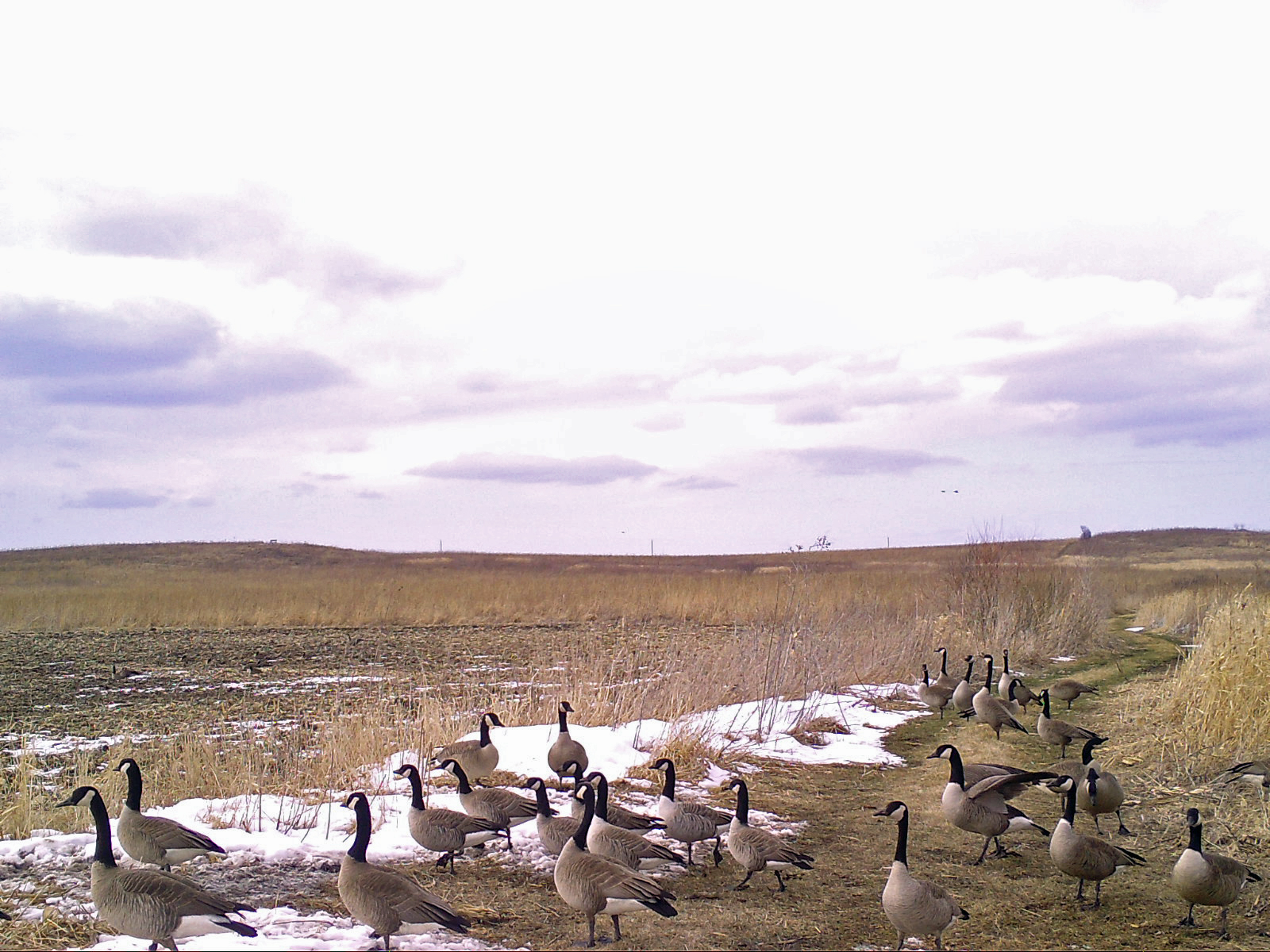
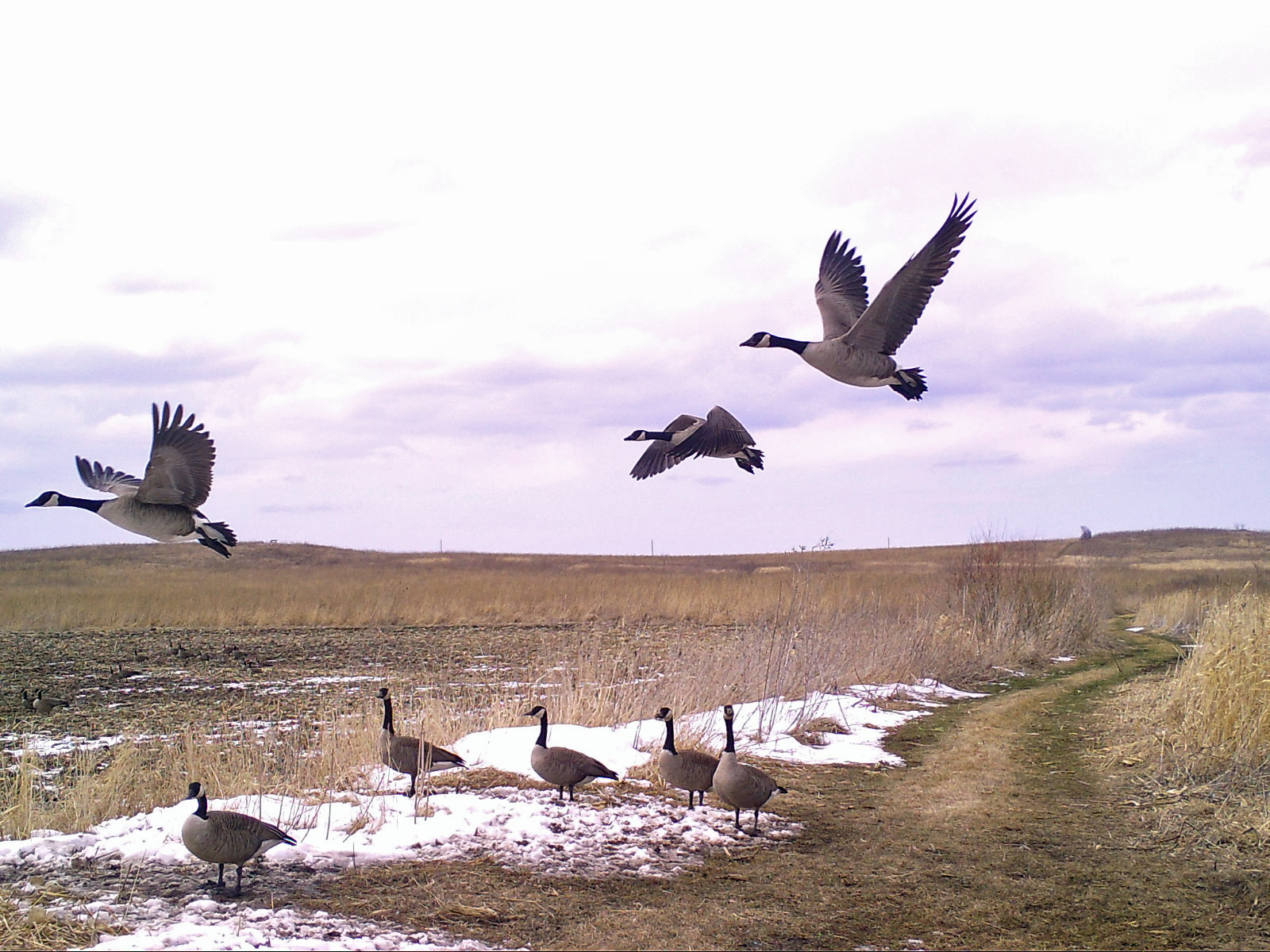
When there is motion in front of the camera, a series of three quick-burst shots are taken. On April 5, the camera worked overtime when it took 80 (240 in the series) photos of Canada geese!

We check the camera once a month and use a DNR software program to classify the photos by species and number of individuals. Blank photos (vegetation moving with high winds) and human photos are deleted.

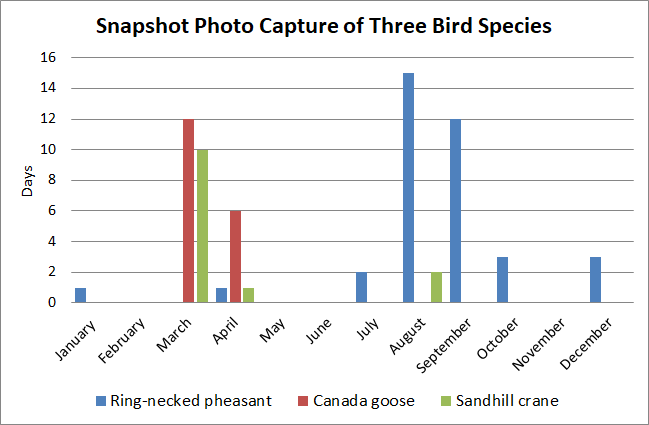
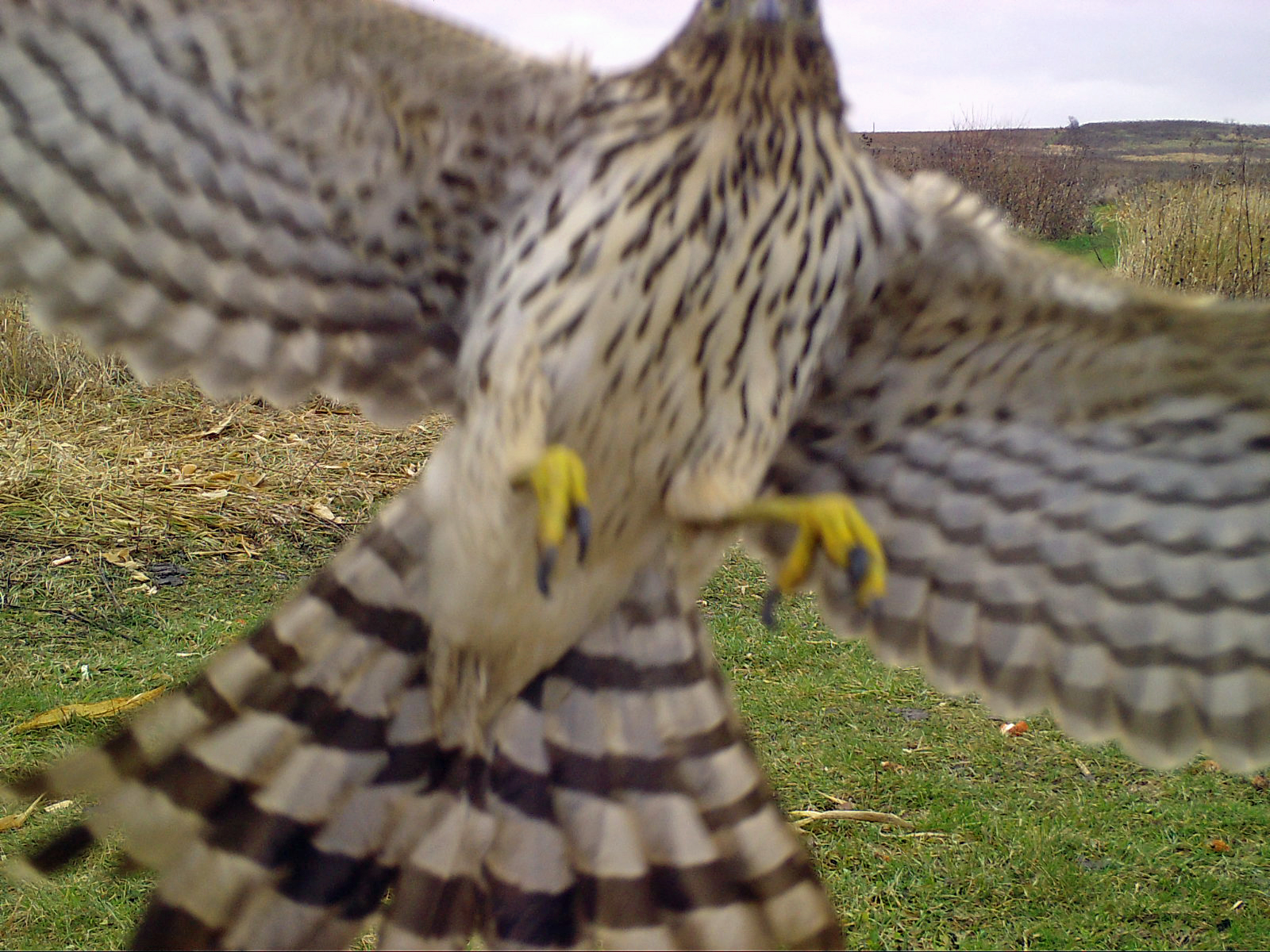
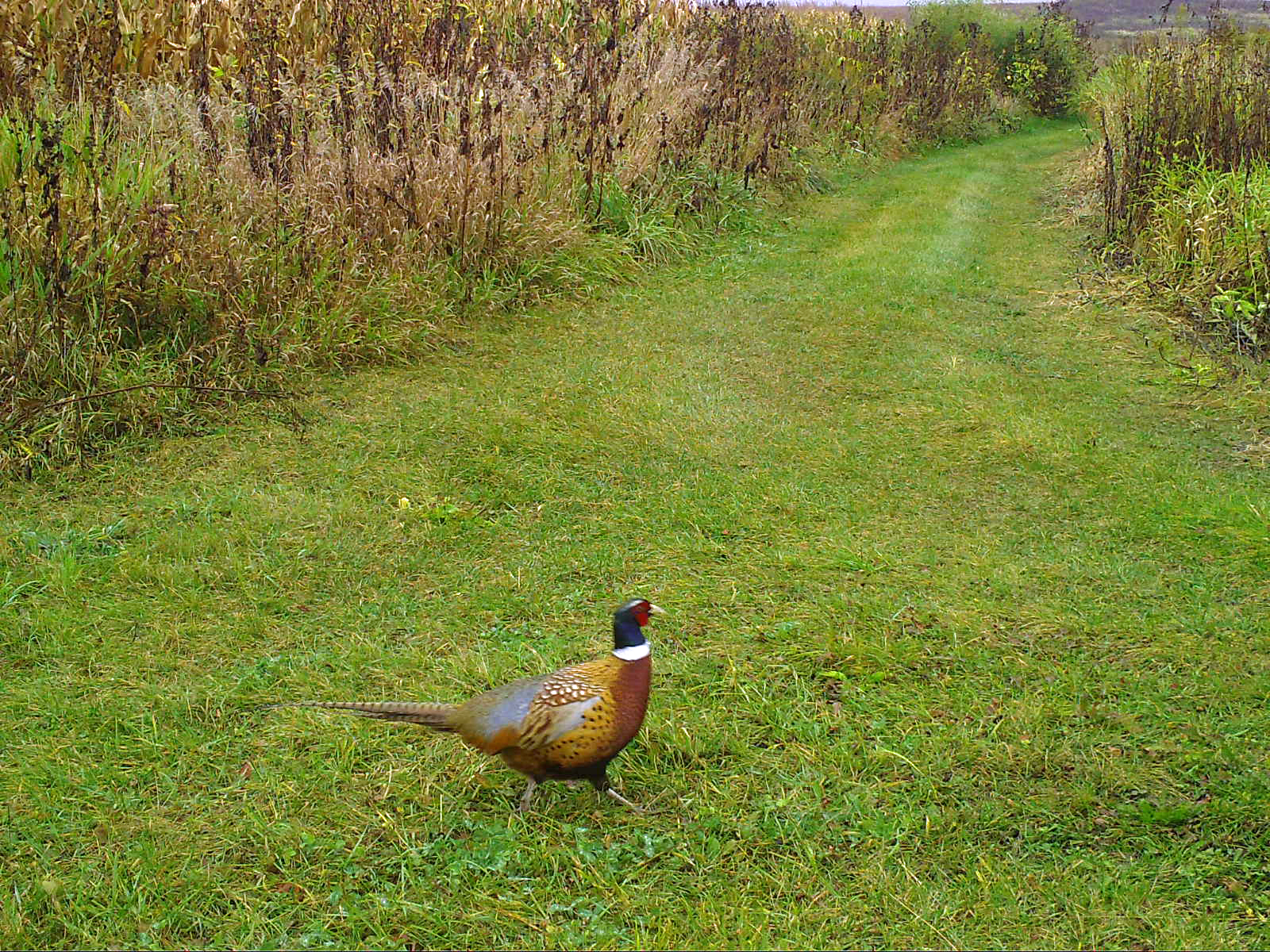
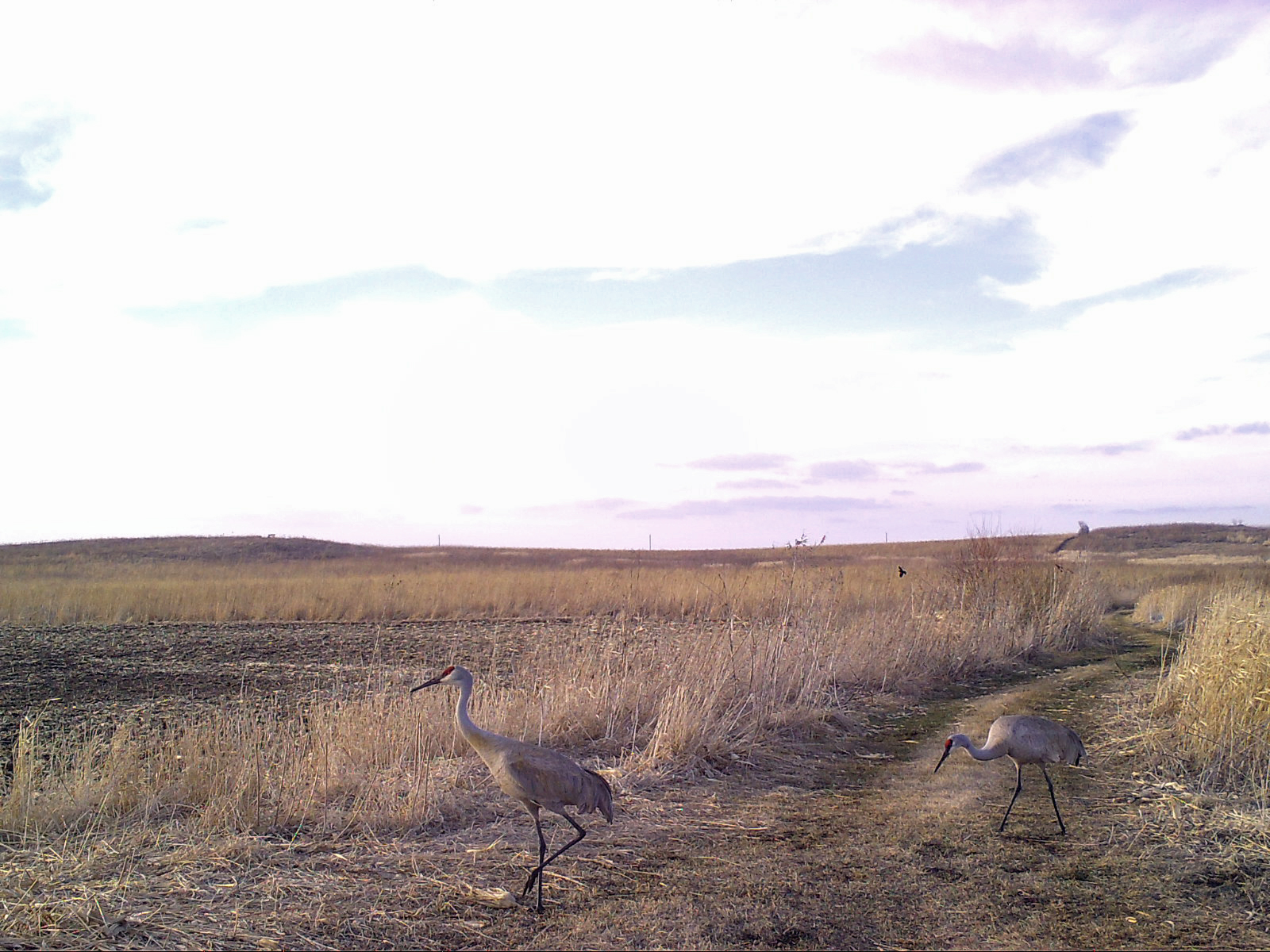
When we installed our camera, we were expecting to document mammals including raccoons, coyotes, red fox, and white-tailed deer (and we do see those! Check out our FFF from December 1, 2017). However, in the second week we were surprised and pleased to capture a photo of a Cooper’s hawk. Eleven species of birds were photographed from October 2017 to September 2018. Three of the most photographed species were ring-necked pheasants, Canada geese, and sandhill cranes (see table).

A comparison of bird species photographed through Project Snapshot at Goose Pond Sanctuary. Table by Graham Steinhauer

A comparison of bird species photographed through Project Snapshot at Goose Pond Sanctuary. Table by Graham Steinhauer

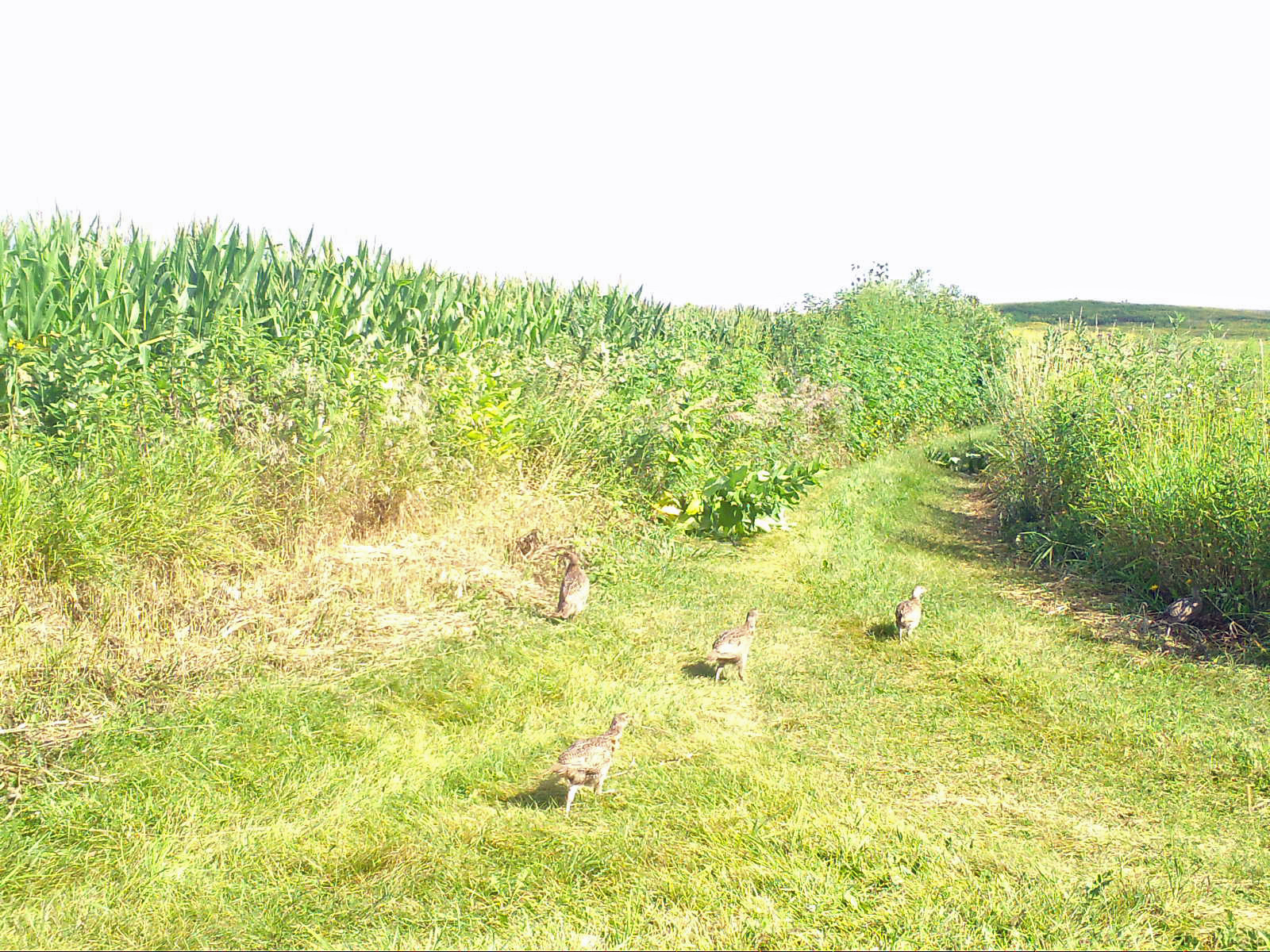
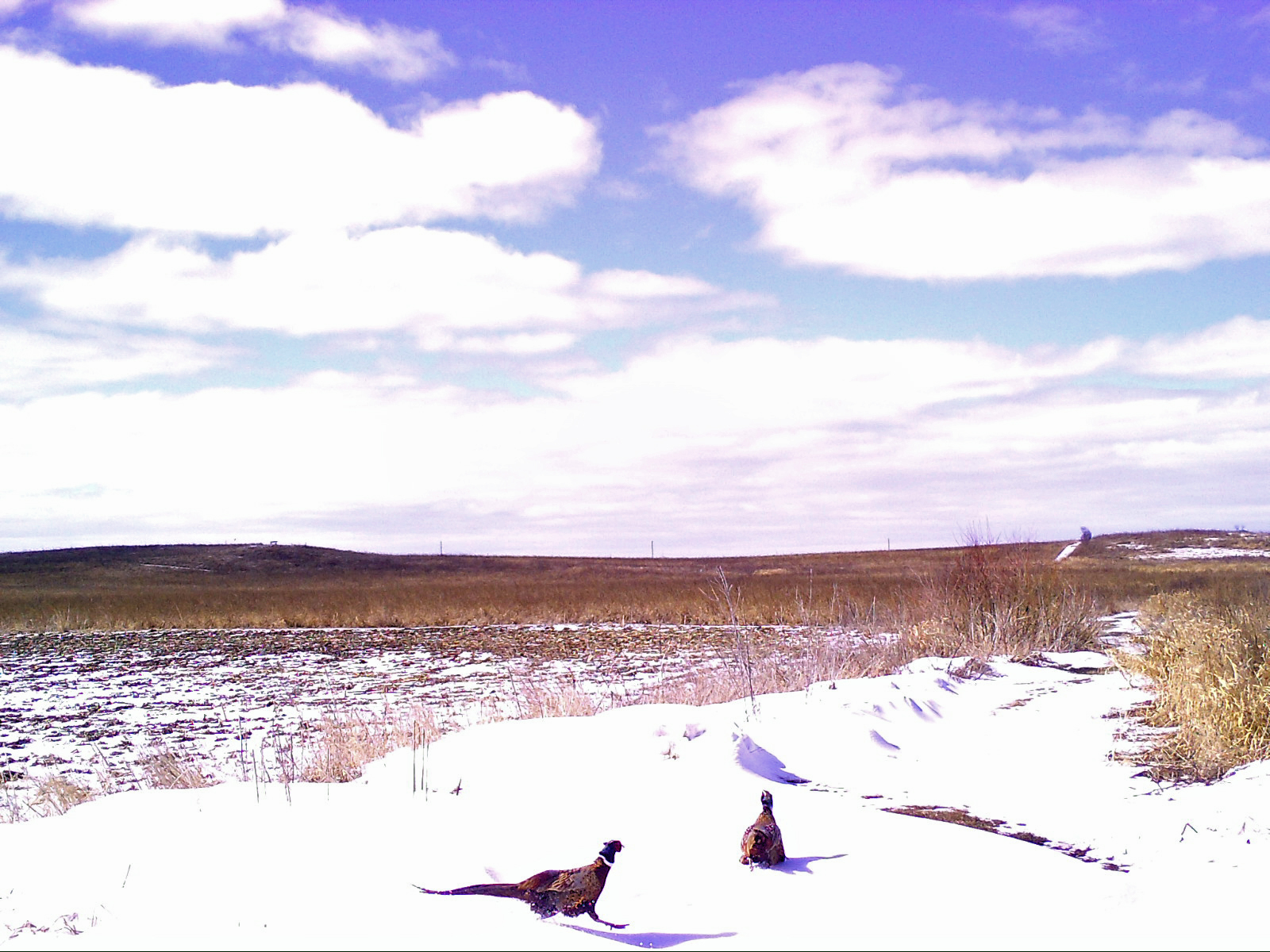
Pheasants were photographed (97 series of 3 photos) on 37 days; many of the August photos included a pheasant brood. We were surprised to see the number of brood photos with a rooster in them.

Canada geese were common in spring migration and the camera was sensitive to record geese flying a long distance away.

Sandhill cranes also liked to have their picture taken. Hopefully next year we will have photos of a pair and their colts — usually there is only one pair in this area.

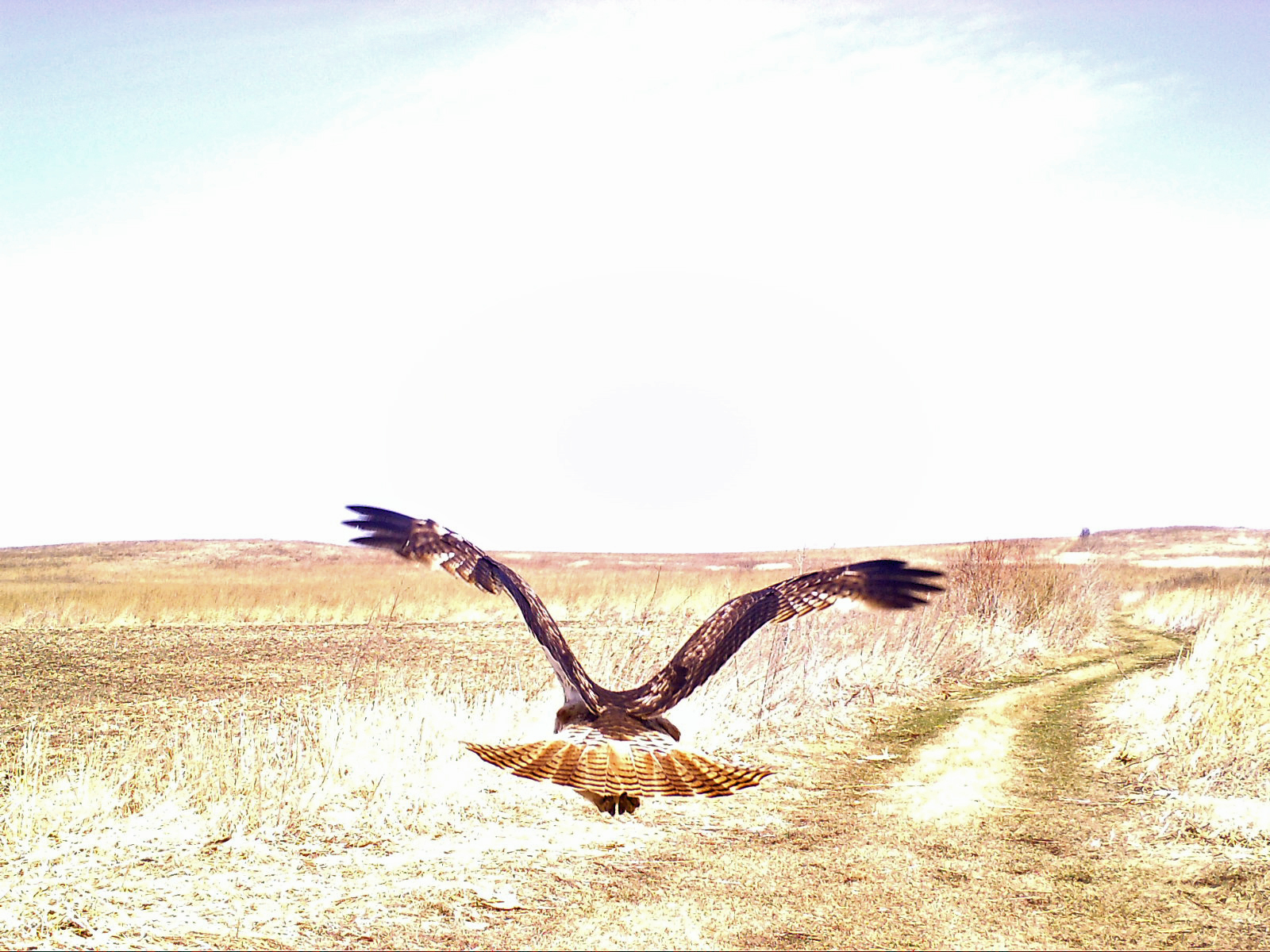
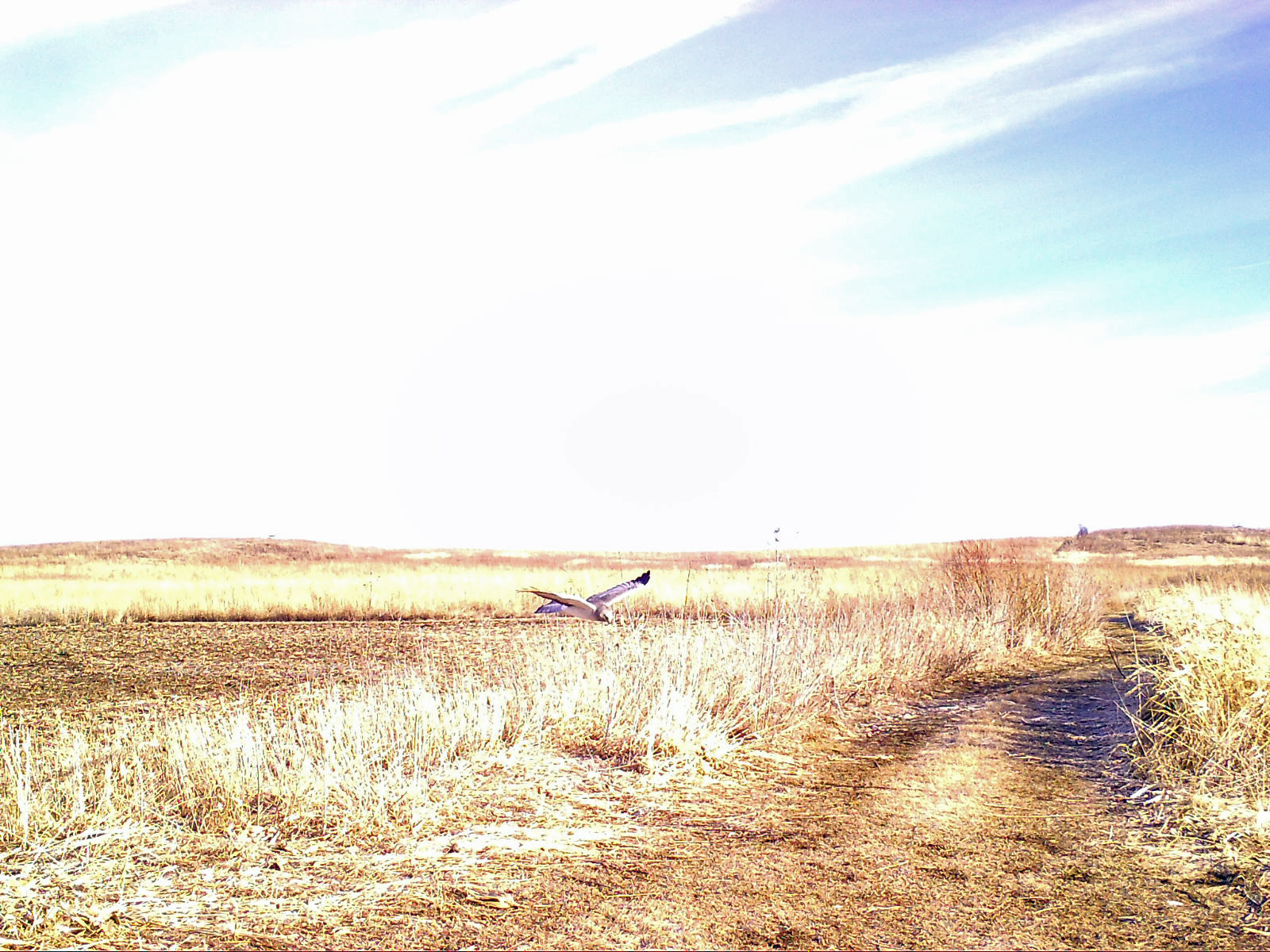
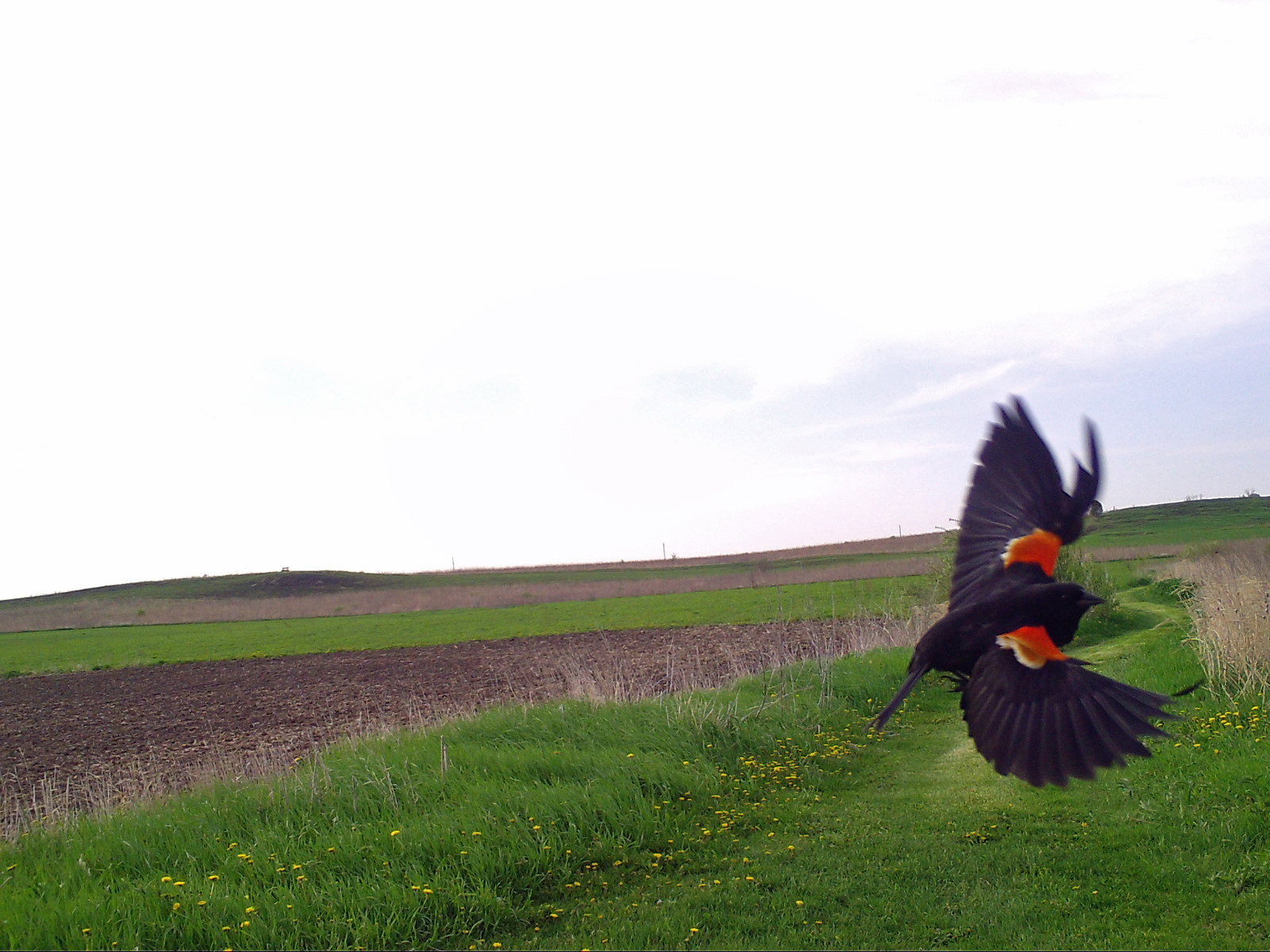
Additional species photographed were red-winged blackbirds (10 days in April and May), northern harriers (9 days in March and April), Cooper’s hawks (5 days in October, November, and August), American robins (5 days in March through May), red-tailed hawks (2 days in February and April), tundra swans (1 day in March), snowy owl (1 in December), and bobolinks (1 day in August).

Click on the photo to advance the slideshow. Photo descriptions: 1 & 2) Canada geese, 3) Cooper’s hawk, 4) Northern harrier, 5) Immature red-tailed hawk, 6) Red-winged blackbird, 7) Pheasant brood, 8) Pheasant roosters establishing territories, 9) Pheasant rooster, 10) Sandhill cranes, 11) Snowy owl. All photos by Project Snapshot Camera 01138.

The raptors, except for the harriers, were photographed as they landed on the post that held the camera. Bobolinks were found feeding in the food plot near the camera.

We look forward to checking the photos and learning what has been photographed. Thanks to the Department of Natural Resources for providing the trail camera.

Written by Mark Martin and Susan Foote-Martin, Goose Pond Sanctuary resident managers


Project Snapshot Information:

Learn more at the Snapshot Wisconsin website: dnr.wi.gov/topic/research/projects/snapshot

Learn more at the Snapshot Wisconsin website: dnr.wi.gov/topic/research/projects/snapshot

Snapshot Wisconsin is a volunteer-based, citizen science project which utilizes a statewide network of trail cameras to monitor wildlife year-round. From coniferous forests to vast prairies, volunteers host trail cameras throughout Wisconsin’s landscapes. The photos of diverse wildlife captured on Snapshot Wisconsin cameras are hosted online, where they can be classified by volunteers across the globe. The resulting dataset is used to inform WDNR management decisions, and help us learn more about Wisconsin’s wildlife.

As of September 2018, 1,019 volunteers monitored 1,264 cameras and that took 24,236,000 photos.

Recently the DNR opened Project Snapshot statewide. Anyone can request a camera if they have 10 acres and as long as there is not another snapshot camera in the same nine square mile block.

Vesper Sparrow

Print Friendly and PDF

Vesper, a rather antiquated word originating from the evening star, actually refers to a planet rather than a star—Venus. Wonderful integrations of this word relate in some way to the setting of the sun and the coming of night. Vesperate is a verb meaning to darken or become night. Vespertilio is a delightful 17th century word for bat. Vespering describes anything headed toward the setting sun, coined by poet Thomas Hardy. You could say the vesperate sky witnessed thousands of vespertilios vespering, while the vesper sparrows headed east, into the darkness, their chattery and cheery call complementing the peace of the setting sun.

If you did use that sentence, the most modern clause might include the vesper sparrow, as this bird name appropriately clings to the sparrow because the bird routinely sings at dusk and into the vesperate sky.

While its initial song notes resemble the song sparrow, the vesper song ends in repeated notes. You can find these repeated notes in a variety of dry, open habitats, from sand barrens to pine and oak barrens, to prairies and orchards. Because of the necessity of open ground for nesting, the vesper sparrow will often nest in agricultural fields. This sparrow is an early nester, beginning egg laying in late April to early May, however; later nesting attempts in agricultural fields may result in nest failure due to damage caused by heavy machinery.

Photo by Tom Murray

Photo by Tom Murray

Despite its preference for open habitats across the state, the vesper sparrow has seen declines in line with other grassland bird species. In Wisconsin's second Breeding Bird Atlas, only a half dozen vesper sparrows have been confirmed nesting in the southeastern part of Wisconsin. This species is most common in the central sands, where abundant open and sparse habitats create excellent nesting opportunities.

These birds follow cold fronts during their migrating months of September and October, and now might be a good time to see vesper sparrows moving through Faville Grove Sanctuary. While these migrating birds likely won't be singing their dusk song, identification can be determined in flight with their white outer tail feathers. As these October skies see the earlier setting of the sun, you'd be unlikely to see any vespering vesper sparrows, as they instead head south to their wintering grounds of Mexico and the southern United States.

Written by Drew Harry, Faville Grove Sanctuary land steward

Cover photo by Lynnea Parker