
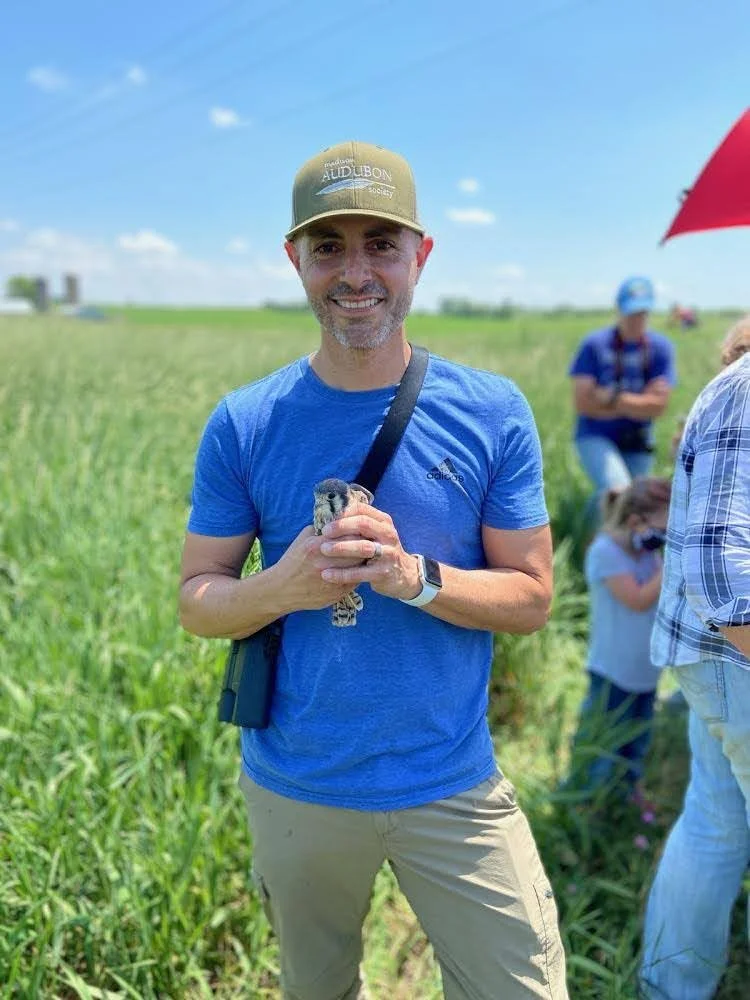
Matt Reetz participating in American Kestrel banding (photo by SoWBA staff)
In this episode, we answer questions like “how many species of birds are there?” and learn about birds' neighborhood watch system with our bird expert Dr. Matt Reetz, the Executive Director at Southern Wisconsin Bird Alliance.
Subscribe to QuACK on Spotify, iHeart Radio, Apple Podcasts, or your favorite podcast app!
Transcription
Hey and welcome to Questions Asked by Curious Kids or QuACK, a podcast made by Southern Wisconsin Bird Alliance. This is a podcast where we gather questions about nature from kids to be answered with a local expert. My name is Mickenzee. I'm an educator and I'll be the host for this series. This episode I'll be interviewing Doctor Matt Reetz again, the executive director here at Southern Wisconsin Bird Alliance, and he's going to be answering some of our more miscellaneous or random questions about birds. Alright, let's dive in with Matt.
-----
Mickenzee: Alright. Hey, Matt. Welcome back.
Matt: Great to be here, Mickenzee. Thanks.
Mickenzee: Last time you were on the show, we were talking about baby birds. And this time, I've got some more bird questions for you.
Matt: Love bird questions.
Mickenzee: All of these questions were submitted by a future fourth grader at Elvejehm elementary school. And our first question is how many different bird species are there?
Matt: Oh, I love this question. So, cool thing about this is that scientists aren't totally sure of the number. So the best answer right now is somewhere around 11,000 species of birds.
Mickenzee: Whoa.
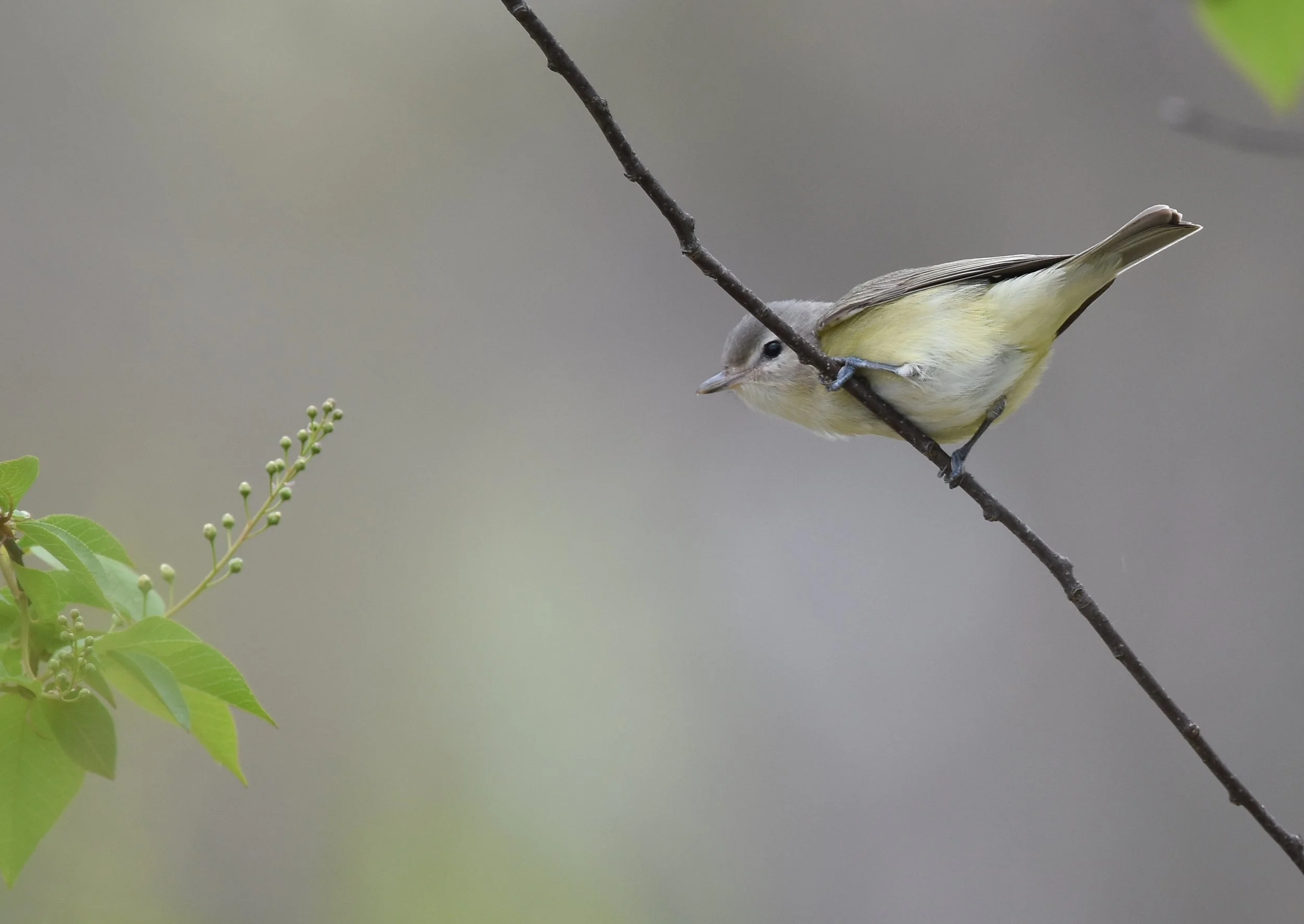
Eastern Warbling Vireo (photo by Andy Reago & Chrissy McClarren)
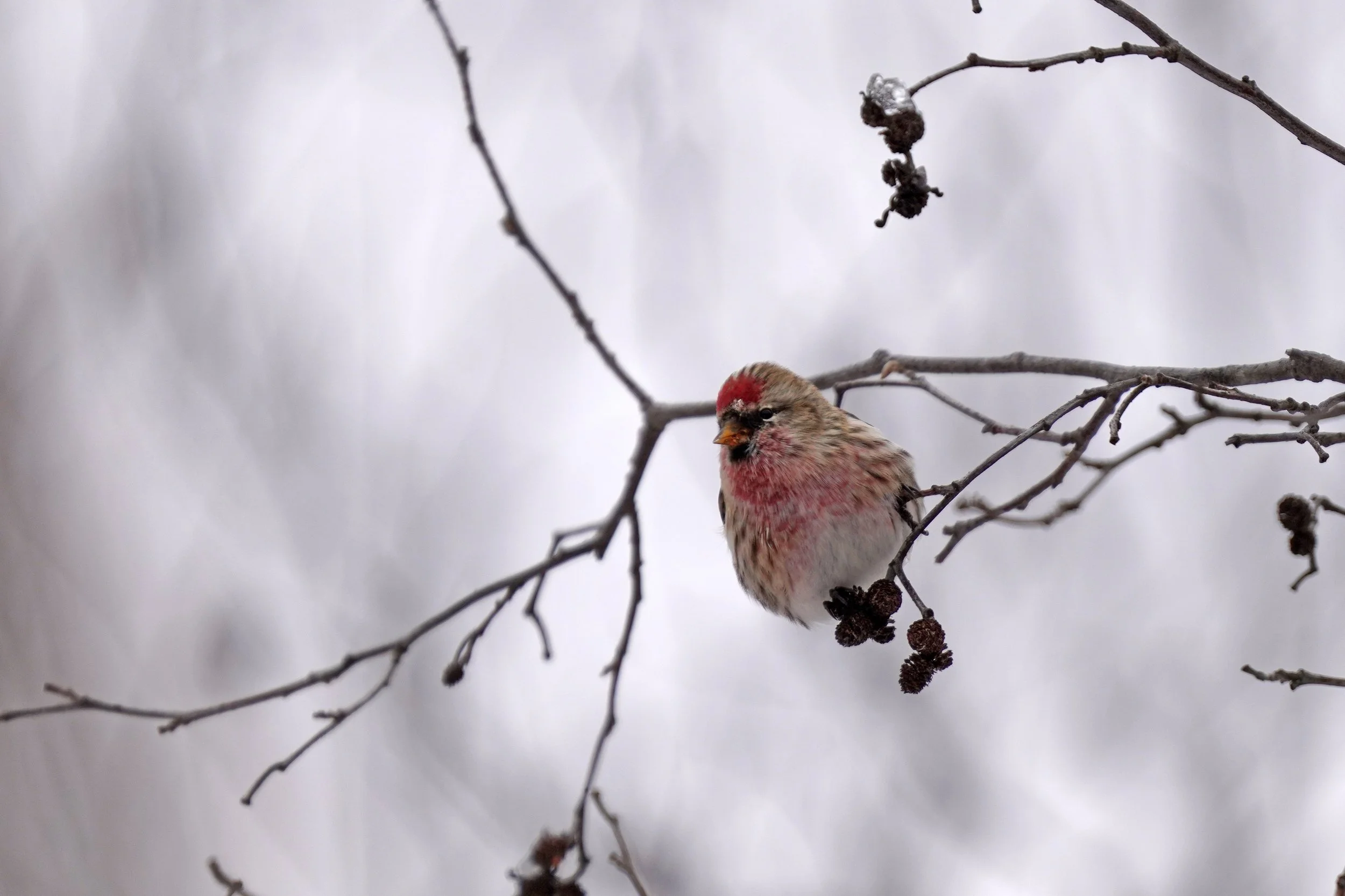
Redpoll foraging in a tree (photo by Courtney Celley/USFWS)
Matt: It's a lot. Yeah, it's not as many as beetles because there's around 400,000 known species of beetles, but it's still a lot. The tricky part about figuring out how many bird species there are is that the number keeps changing. Sometimes scientists will discover a brand new bird, which is rarer and rarer nowadays, but no one had ever maybe found it before. And scientists find a new species of maybe 5 to 10 in a really good year. But that's a really good year. This is usually pretty rare that this happens. And this is usually in mostly remote jungles and rainforests and places that are really hard for humans to access. So they might get in there with the, I don't know, machete and kind of do. But sometimes also the opposite happens. Scientists thought that two birds were the same species, but then they looked at their DNA, and then they realized that those birds are actually different from each other. And that's what's called a split. And in 2025, for example, scientists agreed to split the Warbling Vireo into two species: the Eastern Warbling vireo and the Western Warbling vireo. So now there's two species that were originally one, and sometimes even the opposite of that occurs. Two birds that were thought to be different species get lumped together. So they’ve looked at their DNA again. And in 2024, there were two species of what's called a Redpoll. It's like a finch. And they were lumped into a single species called the Redpoll. So and then the other part of this that's obviously very sad is that sometimes birds go extinct. And that's mostly due to something that humans did, like overhunting birds or killing them for their feathers or destroying their habitats, or a big one is introducing dangerous animals like outside cats, domestic cats that have been known to drive extinction for birds. And so over the last 500 years or so, 216 species have gone extinct.
Mickenzee: Oh my.
Matt: And we're hoping that that doesn't continue. So of all those 11,000 species, more than half of them over 5,000 are things called perching birds, sometimes called passerines or songbirds. And that includes backyard birds like robins and sparrows and finches and orioles.
And some people have traveled all over the world to see as many of these birds as they can. No one has seen all of them, but one person has observed over 9,000 of them.
Mickenzee: Whoa! Is that you?
Matt: It's not me. It's definitely not.
Mickenzee: It's not me either.
Matt: Yeah. And that takes a lot of time and effort to do that. And if you want to know where most of the birds that have been recorded live, it's in the rainforests. But a country called Colombia in South America has more bird species than any other country on Earth. Over 1,900 species, because it has so many different kinds of cool habitats, from mountains to jungles and coastlines. But what's interesting about birds is that, and one of the reasons that they're so diverse is that you can find them everywhere in the world, in the tropical jungles and in grasslands and in urban areas and super cool places like the arctic, the South Pole and the North Pole, they fly in the air. Some birds spend 90% of their life in the air.
Mickenzee: Wow.
Matt: And then others can swim under water like penguins and cormorants. And so you name a place and you're likely to find a bird there.
Mickenzee: That's so cool. That's so amazing. Our second question is how long do birds usually live? And is that different for every bird? And is it different if they're in captivity versus the wild?
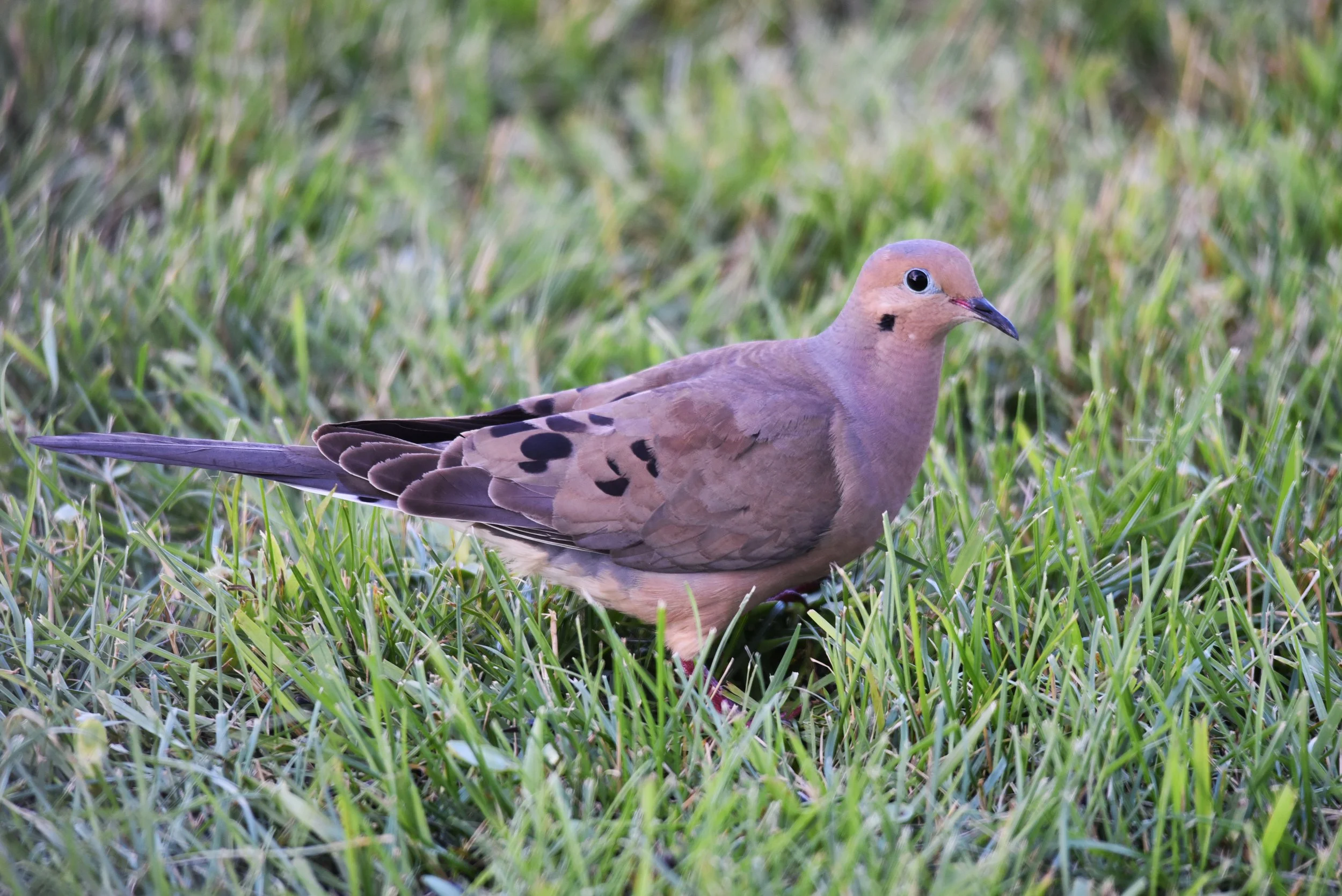
Mourning Dove foraging (photo by Courtney Celley/USFWS)
Matt: Yeah. Yes and yes. The lifespan of birds is different for almost every single bird species, and it's one of the most fascinating things about them. So we can start with a bird that has a short life. And you may have heard of a Mourning Dove. It's a common bird in Wisconsin. They give this really cool, cooing song that sounds almost sad, which is why they're called a “mourning” dove. That lives, on average, only about 1 to 3 years in the wild, which is really short. And the way that doves kind of make up for that is that they have lots of babies really quickly. And on the other end of the scale, some birds live incredibly long lives, like Barn Swallows, which is a Wisconsin bird. They've been recorded living for 16 years. Wow. European Goldfinches can live up to 27 years. And Common Ravens, which we also have in Wisconsin. Those big jet black birds that are like a crow. But they're even bigger. There are. They're known to have lived 69 years.
Mickenzee: Oh my God.
Matt: Which is more than twice as long as the oldest known dog.
Mickenzee: That’s wild.
Matt: And then there's a record holder. The oldest known wild bird is something called a Laysan Albatross it’s named wisdom, and she returns every year to her nest on a tiny island in the North Pacific. And she's more than 70 years old and has continued raising baby chicks. So she's basically the great great great grandmother of the bird world.
Mickenzee: Yeah, I couldn't imagine being 70 and having a baby to take care of.
Matt: Yeah, that's for sure. And then the difference between wild birds versus captive birds is really interesting too. Birds in captivity, meaning birds that live in zoos or aviaries or as pets, often live much, much longer than birds in the wild. That's because birds in the wild face weather and accidents and starvation and predators and disease, and those that are in properly maintained zoos or homes, they avoid most of those risks. So, for example, the oldest known wild American crow lived to just over 17 years. But the oldest captive crow made it all the way to 59.
Mickenzee: Wow.
Matt: So that's the difference between living like a kid and living like a great grandparent, like much more safer in that nice environment. So parrots are the most extreme example of this. Like macaws and cockatoos, they live 30 years in the wild, but some zoos and homes reach 70 to 80. And one famous Pink Cockatoo named Cookie arrived at the Brookfield Zoo near Chicago in 1934, and when he died in 2016, he was at least 83 years old.
Mickenzee: Wow.
Matt: If you did the math cookie has seen 14 US presidents. Or had seen. Yeah, it's a lot.
Mickenzee: That is a lot.
Matt: So there's a pretty big difference.
Mickenzee: Okay, our last question has a little bit of a story that goes with it. So this listener reported seeing a Mourning Dove sitting on a wire. And a hawk flew over the Mourning Dove and the Mourning Dove didn't really seem concerned. And this listener wants to know, how did the dove know that the hawk wasn't going to eat it? Why didn't it think it was a threat and fly away?
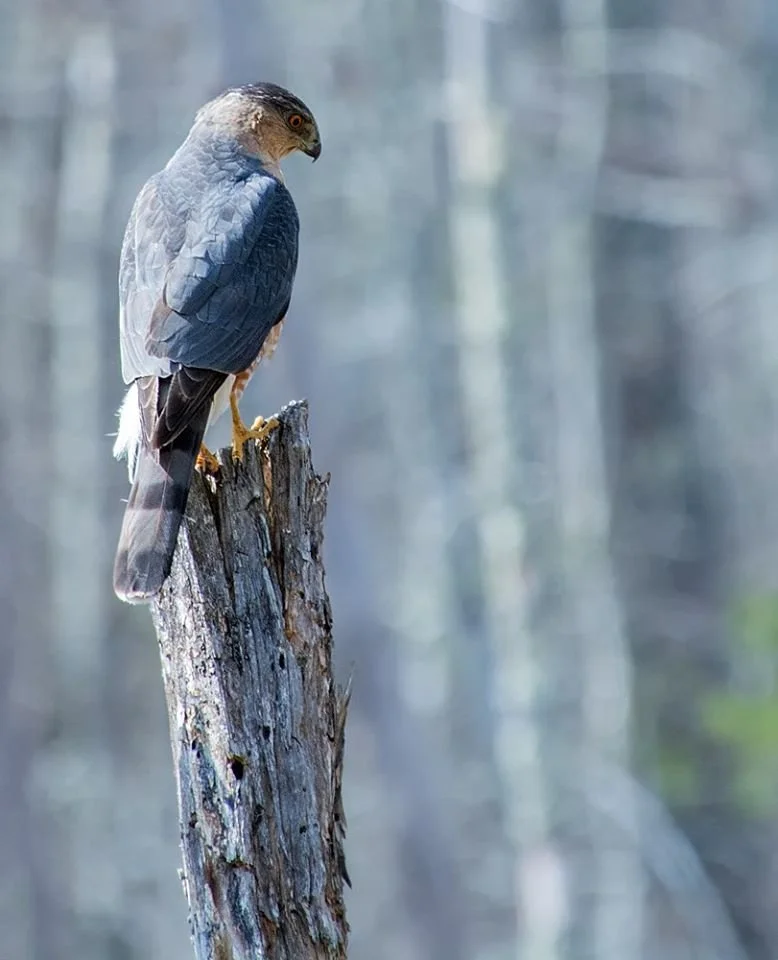
Cooper’s Hawk (photo by Matt Poole/USFWS)
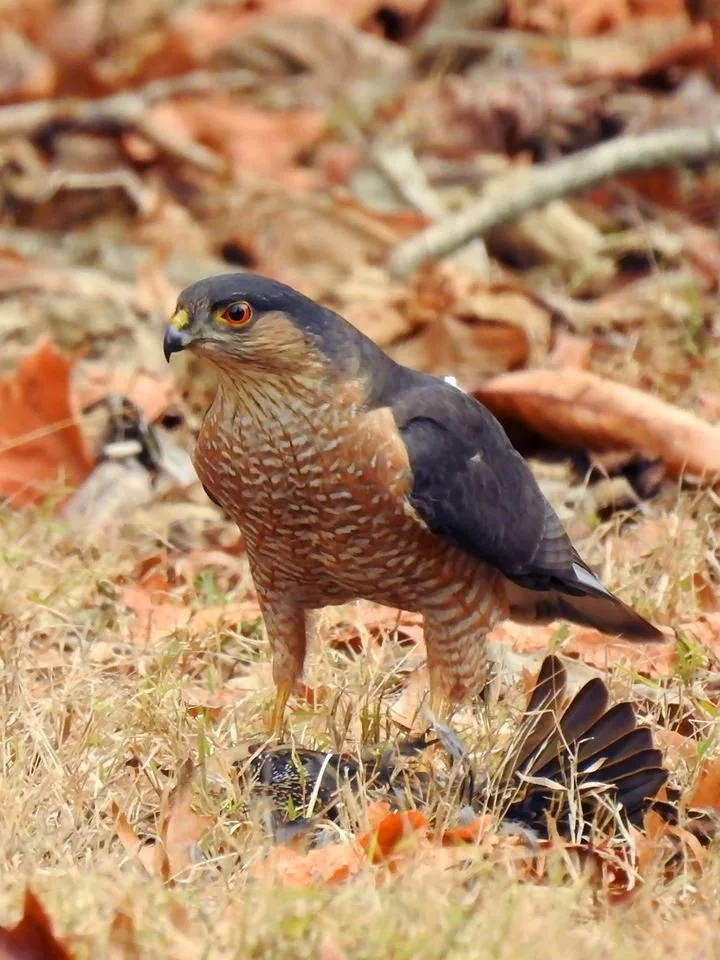
Sharp-shinned Hawk feeding on a starling (photo by Michael Schramm/USFWS)
Matt: This is such a cool observation from the listener. First of all, it's really great to just watch what birds are doing. You learn so much by just observing. Absolutely. It's so fun to just. You don't have to identify every bird. You don’t have to know what it is. But it's fun to just watch what they do. So this Mourning Dove was sitting on a wire and a hawk flew over. The dove didn't flinch. So how’d it know not to panic. Well, the answer is that birds are way smarter about danger than we might think, and they use a combination of instinct and experience and even listening to their neighbors to figure out what to do. So first instinct. Scientists think birds are partially genetically wired to avoid certain risks. So that means that kind of threat recognition, things that are dangerous is built into them from when they're born. So baby birds don't need a mom to say, watch out for that. They do learn from them, from their moms and other adults, but they have some built in alarm systems already. Second, the shape and behavior matter a lot, so birds pay very close attention to the shape and the movement of other animals flying above them. So a hawk that, for example, is kind of soaring lazily in circles as you might look up and see them kind of way up high in a circle. But that looks very different from a hawk that's diving fast with its wings tucked in and coming right at you. Research shows that size plays a really crucial role in how birds recognize those predators, so the tiny hawk might not trigger the same alarms as a big one. And the behavior of the hawk, whether it's hunting or just passing through, matters a lot. So and third, this is the. I think this is the really cool part. Not all hawks are equal threats to all birds. So we don't really know what the hawk was. Open country hawks like Red-tailed Hawks, which are big hawks. They tend to hunt in meadows and grasslands on voles and mice and small mammals. The hawks that really go after birds like the Mourning Dove are a different group called Accipiters. They're kind of made for this, and they're like Cooper's Hawks and Sharp-shin Hawks. They're really good at hunting birds. So if it was a Cooper's or a Sharp-shin Hawk, it might have been a different reaction than if it was a red tailed hawk. So if the hawk that the scene was a large, soaring hawk like a Red-tailed Hawk, the mourning dove may have essentially recognized that this one mostly eats mice. And I'm not. I'm probably okay. And city pigeons and other birds can tell the difference between even a female, Cooper's Hawk, and a Red-tailed Hawk. But just a glance. They're really good. They have great eyesight. Yeah, because one is a threat to them and the other isn't. But if the morning dove did see something that was a dangerous hawk, you'd notice it. The body feathers would compress and the head would go down and forward, and it would hold very still. And you know it. Maybe this was a dangerous hawk. And the dove decided, all right. It's better for me not to go anywhere, because if I move, the hawks are going to see me. So nearby chickadees and finches would also go silent at the same time. The whole neighborhood would kind of know that there's a hawk in the area. And that leads me into this last part, which I think is my favorite part, which is that birds learn from each other. So some birds, like there's a bird called a Siberian Jay and has different alarm calls for different hawk behaviors. So it'll make a different sound for a hawk that's just sitting still, and another for a hawk that's actively hunting. So the other birds are listening to that and they're getting information about it like a neighborhood alarm system. And chickadees are really good at this too. We have Black-capped Chickadees here in Wisconsin. They're awesome. Birds are little, little tough little, little birds. And they have developed a nuanced system known as a chickadee call. And the number of those that “dee” call “chicka-dee-dee-dee” at the end of their call can indicate the size and the threat level of a predator.
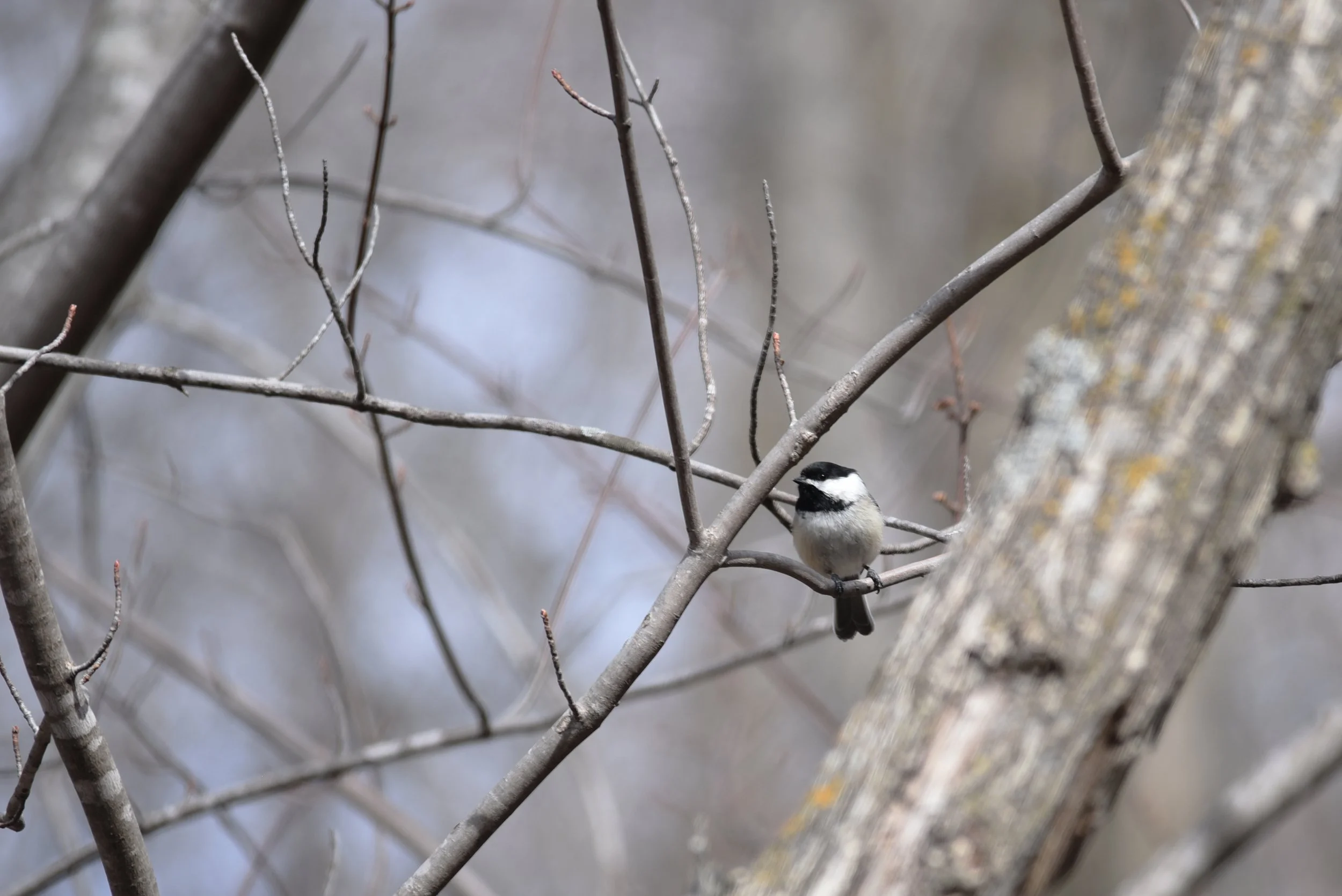
Perched Black-capped Chickadee (photo by Courtney Celley/USFWS)
Mickenzee: Whoa.
Matt: So they're conveying information about whether it's a more dangerous predator or a less dangerous predator. And the other birds are listening. So they have this great neighborhood watch program. No app required. You know, just a chickadee going bonkers and everybody listening to it for information. So what your listeners saw was really a very smart dove, making a very smart decision, thinking to itself that hawk isn't hunting me right now. So I'm going to go save my energy. I'm going to stay put. And birds don't want to panic for nothing, because panicking itself takes energy and could attract attention too. So they've learned to be calm when column is the right thing to do.
Mickenzee: Wow, what a cool lesson to learn from birds. Stay calm and rely on your neighbors.
Matt: I love that, that's great.
Mickenzee: That's all the questions we have today. Thank you Matt
Matt: Thank you. Anytime you have bird questions, happy to come and talk.
Mickenzee: Absolutely.
-----
If you are interested in learning more about birds or getting involved with our programs, please head to our website swibirds.org. From there you can find free lessons, games, and activities. Check out our event calendar or even get involved in our citizen science programs.
If you have a big nature question that you'd like to have answered, please have your grown up or a teacher submit your question to info@swibirds.org with the title Questions for QuACK. Make sure to include your grade in the school that you attend, so I can give you a shout out on the show. Thanks for tuning in and I hope you join us next time on QuACK!
Check out SoWBA’s free lessons, games, and activities!
Get out and explore nature with us!
Make a donation to Southern Wisconsin Bird Alliance
Audio Editing and Transcription by Mickenzee Okon
Logo design by Carolyn Byers and Kaitlin Svabek
Music: “The Forest and the Trees” by Kevin MacLeod
