
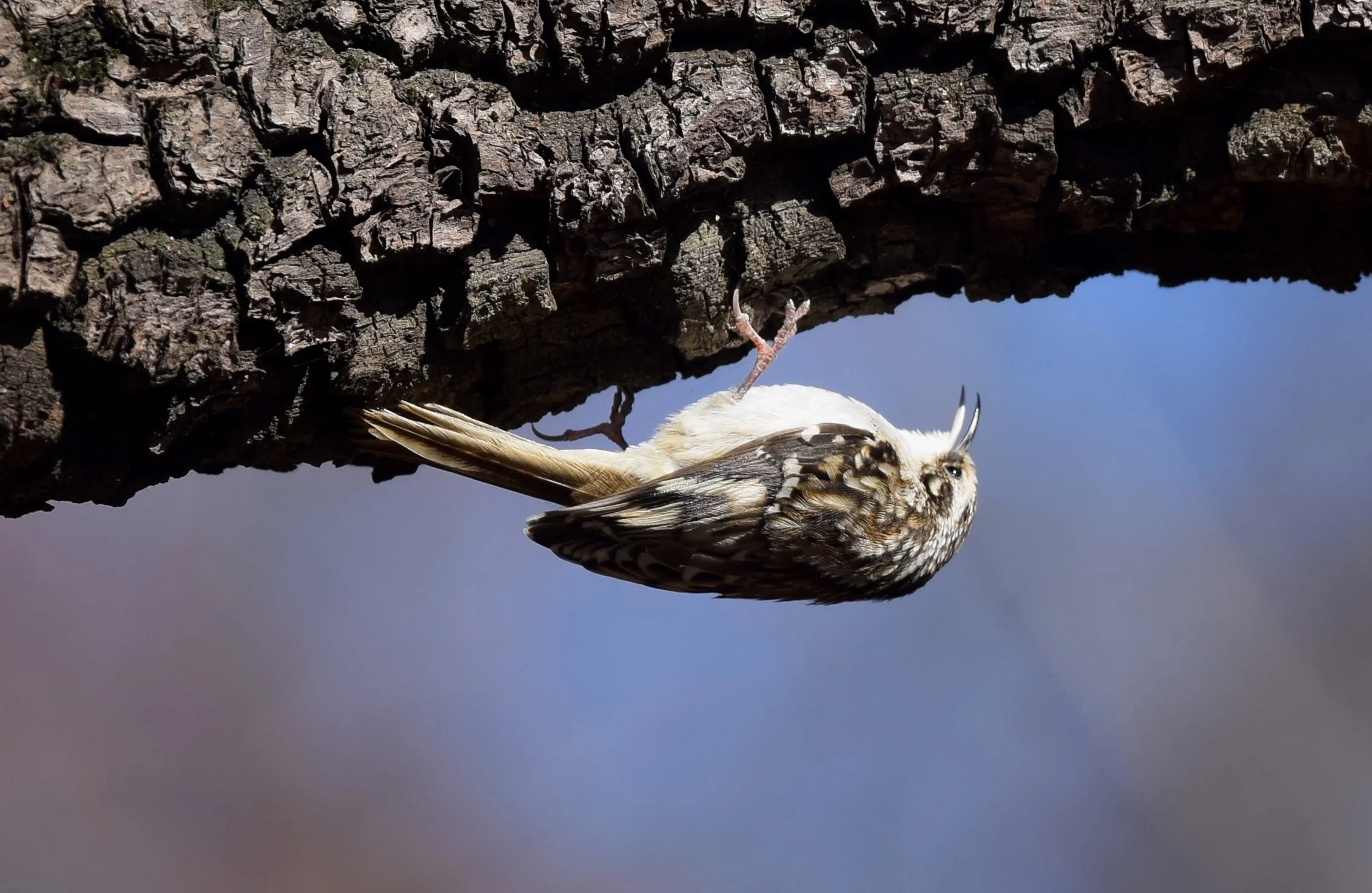

Now that the hush of winter is falling over the landscape, birders yearn for the chirping symphony of spring. But the bare trees and quiet air provide an opportunity for some more discreet birds to shine, such as the Brown Creeper (Certhia americana). Flitting through the wintry woods, these teeny songbirds are getting their time in the sun—and snow.
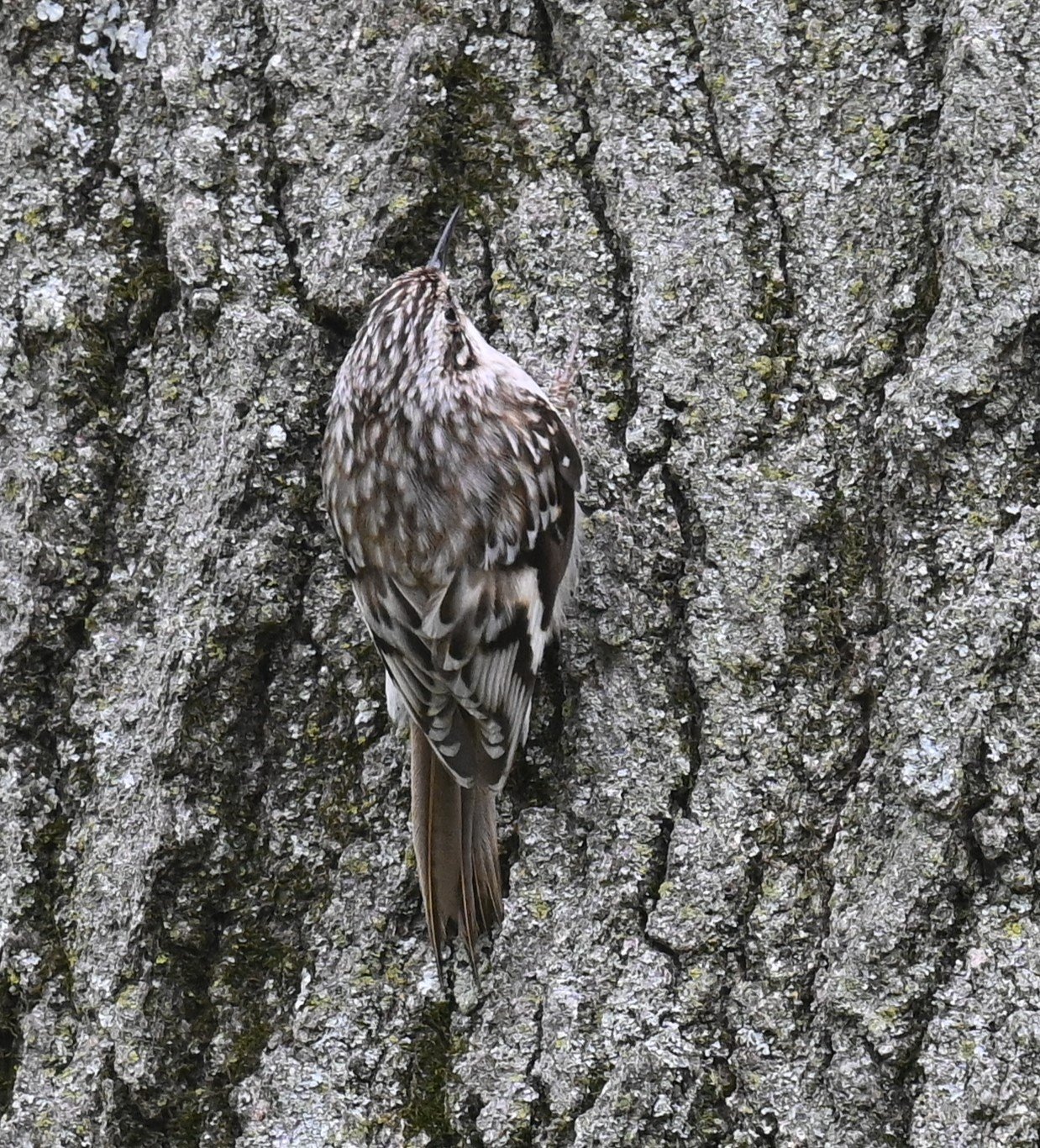
Well-camouflaged Brown Creeper on a tree trunk (photo by Andy Reago & Chrissy McClarren).
This pocket-sized passerine is the only member of the treecreeper family native to North America. It can be found year round in the Great Lakes region of the Midwest, but its petite frame and camouflaging streaky brown and white coloration can make it difficult to observe. Its thin, downward curving bill and long brown tail—used for stability while the bird does its namesake “creeping”—distinguish its silhouette from that of other songbirds. You can find Brown Creepers in mature woodlands, foraging for insects by landing at the base of a tree and spiraling up the trunk in short little bursts while probing the bark for food until there is no further to go, then flying to the base of another tree to start again. If you are very lucky, you might even hear the faint high-pitched buzzing calls or twinkling song of a particularly noisy Brown Creeper.
Their breeding habitat stretches from coniferous forests in the western United States to mixed deciduous and coniferous forests in the northeast and Canada. Typically, these birds migrate to the southern United States for the winter, but our region of southern Wisconsin seems to receive more in the winter as well. At Faville Grove, I have spotted these tiny birds amongst the oaks and hickories of the Lake Mills Ledge and in groves of cedars scattered throughout the western side of the sanctuary, but they can be found anywhere where there are large, old trees. Research suggests that clear-cutting forests for agriculture and timber harvesting in remaining woodlands, besides removing habitat altogether, also threatens the birds through increased risk of nest predation.
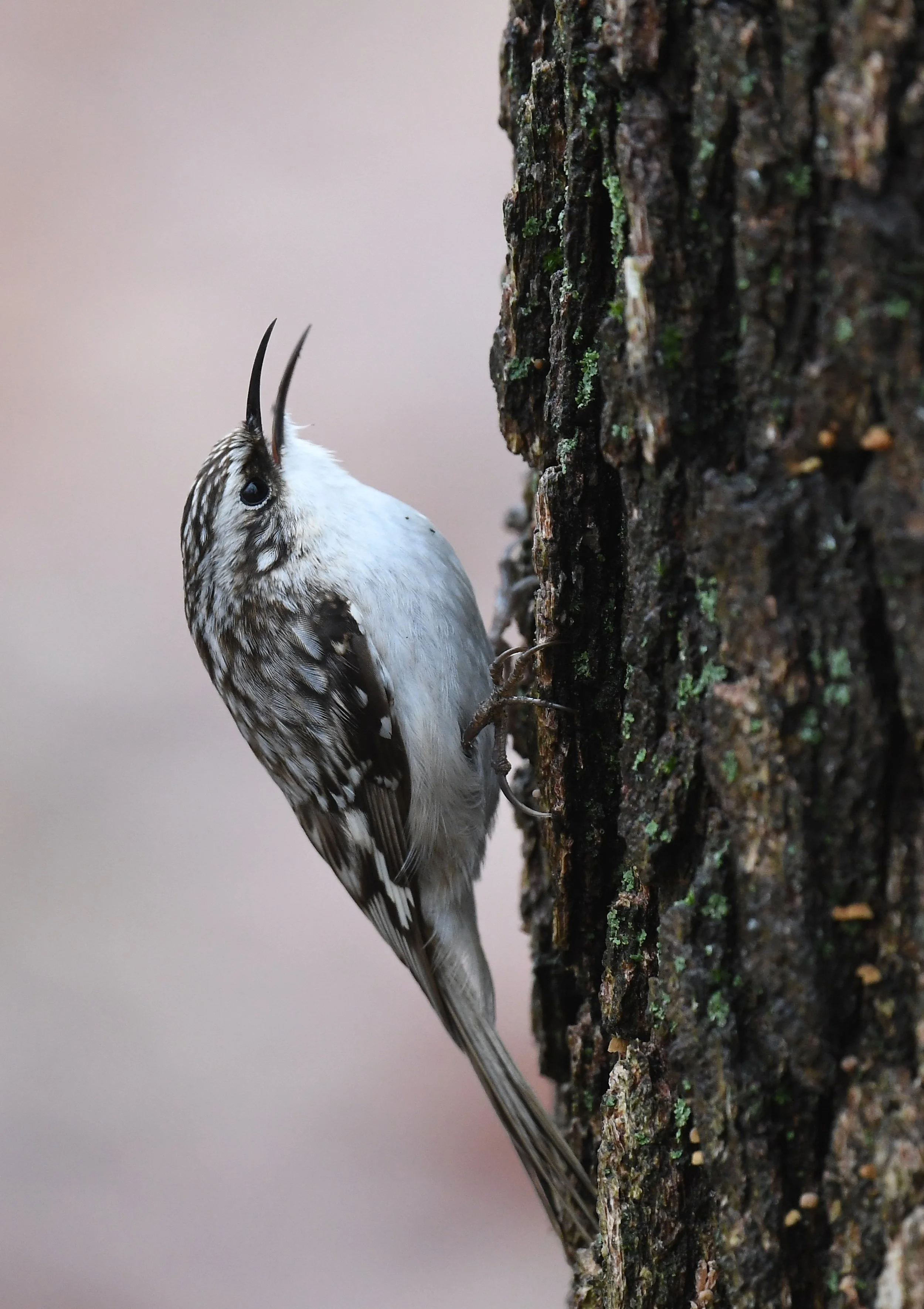
Brown Creeper calling from a perch on a tree trunk (photo by Andy Reago & Chrissy McClarren).
Brown Creepers prefer large and mature trees for their peeling bark and snags, which provide a cornucopia of insect meals to feed on and nooks for nesting sites. Parents of young creepers seem to divide their labor fairly evenly: females fix up a nest of grasses and feathers in a hollow behind some bark, then males provide their mates with food for a two-week incubation period. Once their eggs hatch, the chicks are co-parented for another two weeks before they are ready to leave the nest.
For those creepers here to stay in Wisconsin for the winter, now is the time to bulk up on seeds, nuts, and arthropods. For an opportunity to see one in your backyard, consider leaving an offering of birdseed and suet. They remain active throughout winter to keep warm, sometimes roosting in groups through the cold nights. They also affiliate with flocks of nuthatches and chickadees, so if you find some of those more gregarious songbirds on a woodland walk, look closely and you might see a secretive little creeper in their midst.
Written by Soraya Castle, Faville Grove Sanctuary restoration technician
Cover photo by Andy Reago & Chrissy McClarren. A Brown Creeper clings to the underside of a tree branch.
