
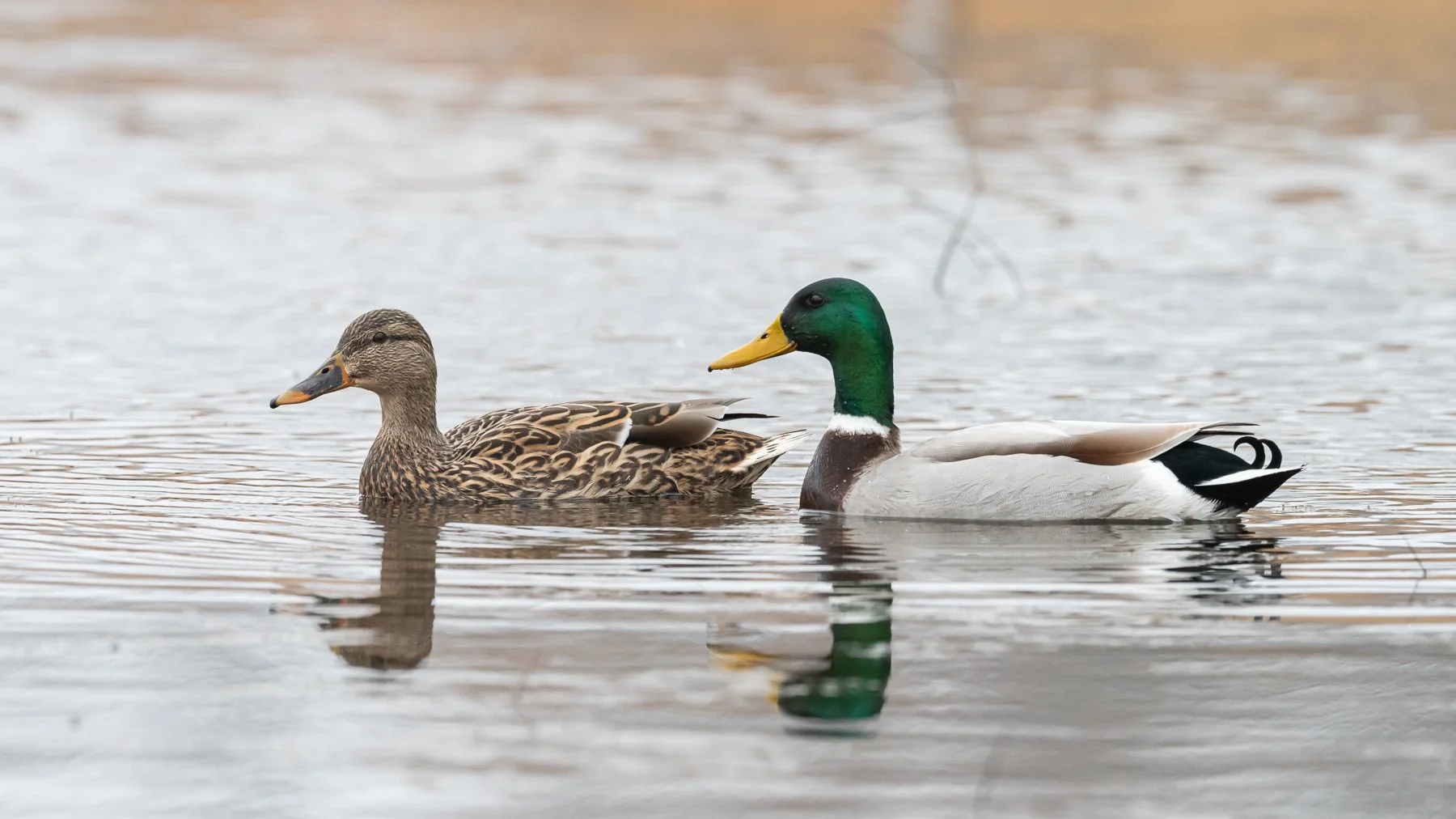

Having lived at Fair Meadows Sanctuary for many years, I have had numerous opportunities to observe Mallards (Anas platyrhynchos), our most common duck species on the property, and to familiarize myself with their multiple plumage variations in all seasons and during virtually all stages of their life cycle. Mallards are an iconic duck species familiar to many Wisconsinites—for most of the year, males sport a bright yellow bill on a striking green head, a white band around the neck, and a rich chocolate-brown breast with a body that is primarily gray. Female Mallards differ significantly in appearance—their plumage is mottled brown all over with white tail feathers, and their bills are orange with black blotching.
A less common duck that I occasionally see at Fair Meadows is the American Black Duck (A. rubripes), which is closely related to the Mallard. Unlike the sexually dimorphic Mallards, male and female American Black Ducks have very similar plumage—the color and pattern of which might be easily mistaken for a female Mallard on first glance. Careful study of these two species has allowed me to reliably distinguish them from one another when I get good, clear views of plumage and bill color.
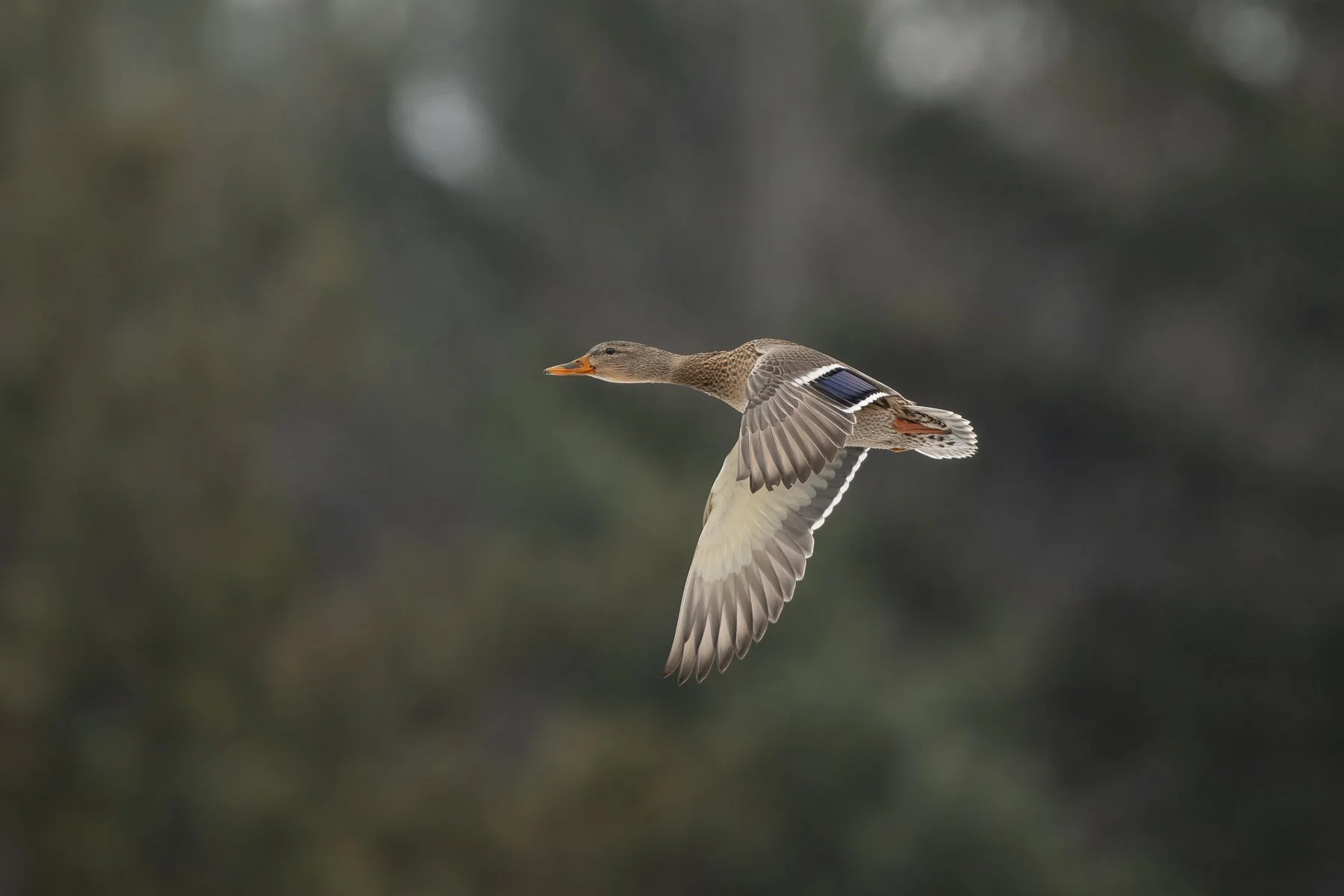
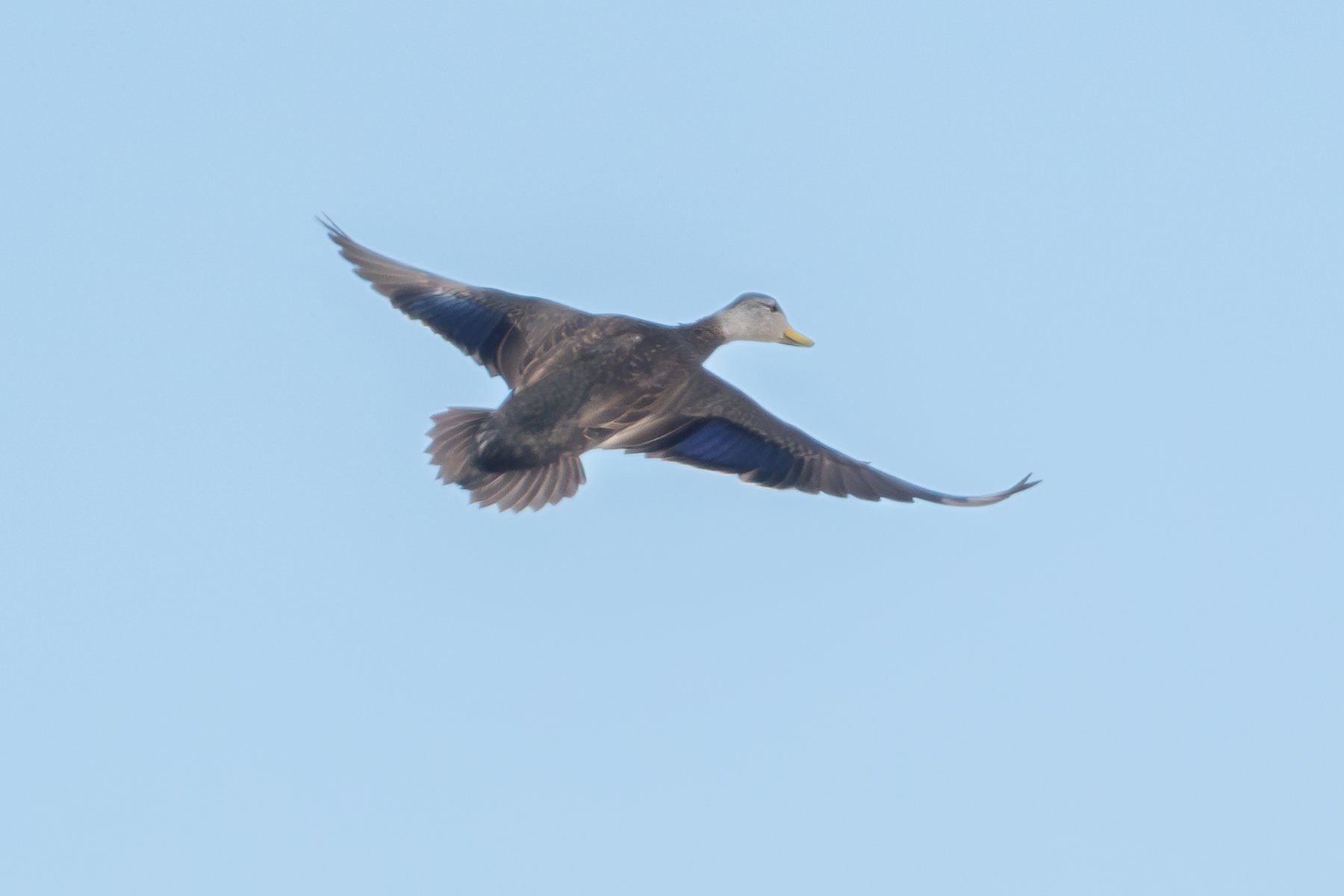
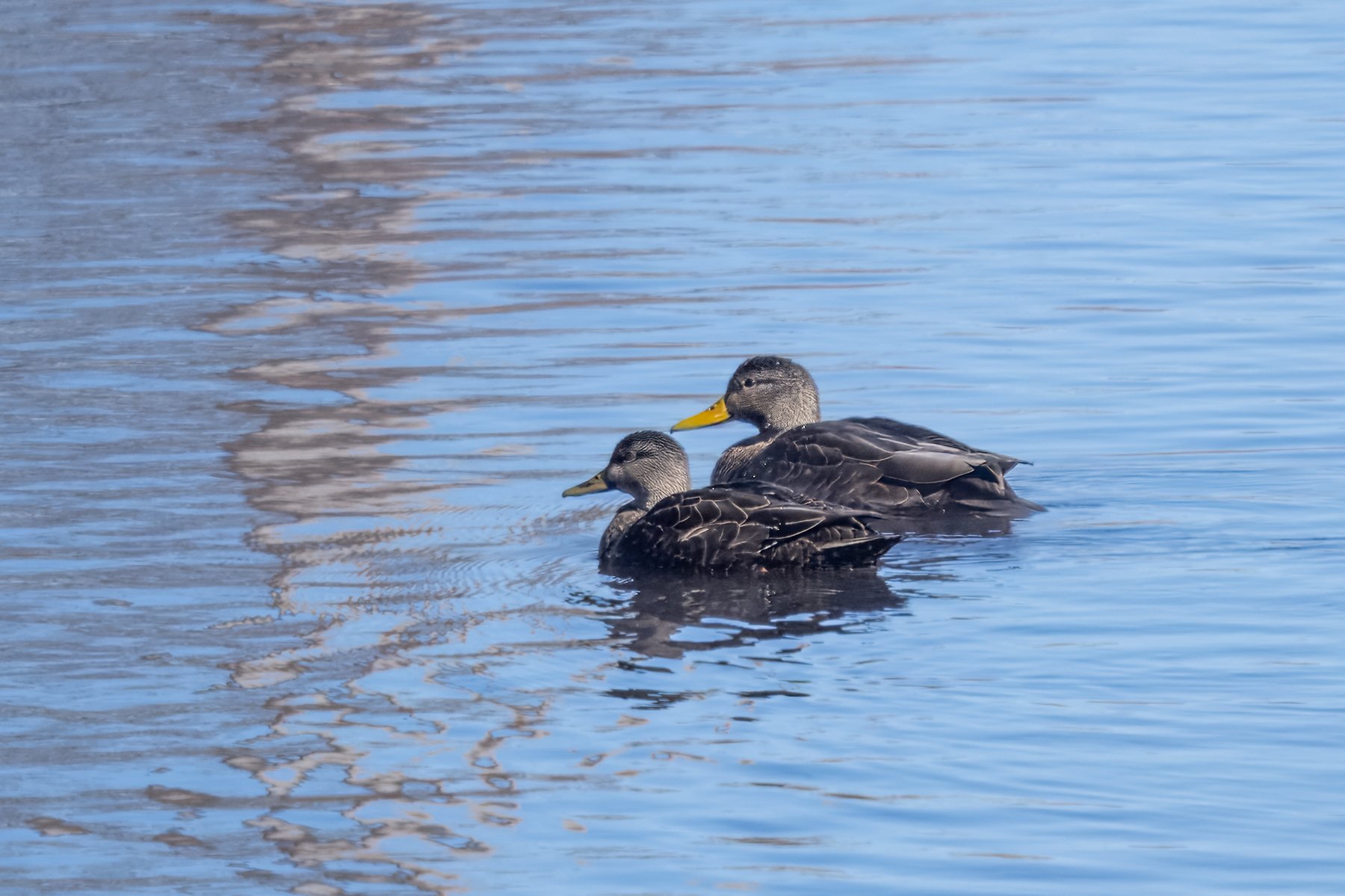
My familiarity with both of these species has stood me in good stead during frequent family trips to Miami, where I often find the Mottled Duck (A. fulvigula). This southern relative of the Mallard and American Black Duck inhabits peninsular Florida and coastal marshes along the Gulf of Mexico. Together with the Mexican Duck (A. diazi), whose range extends north from Mexico into south Texas and the southwestern United States, these four species are part of the “Mallard radiation.” They are a group of closely related species that are morphologically and genetically similar, having evolved from a single ancestral species. They can interbreed, indicating that they are not fully reproductively isolated. According to Birds of the World, additional species included in the Mallard radiation are the Hawaiian Duck, Laysan Duck, and several Old World species.
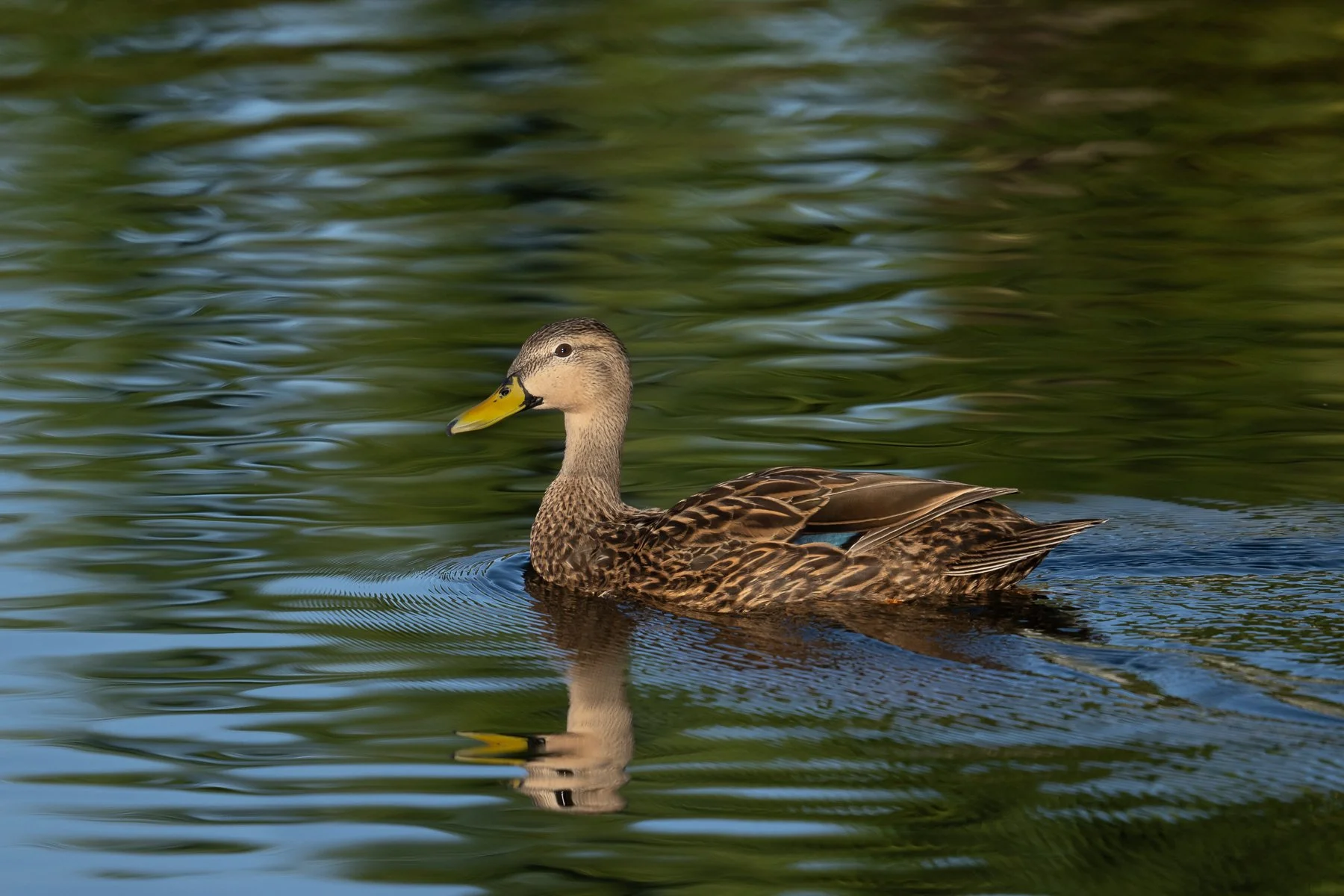
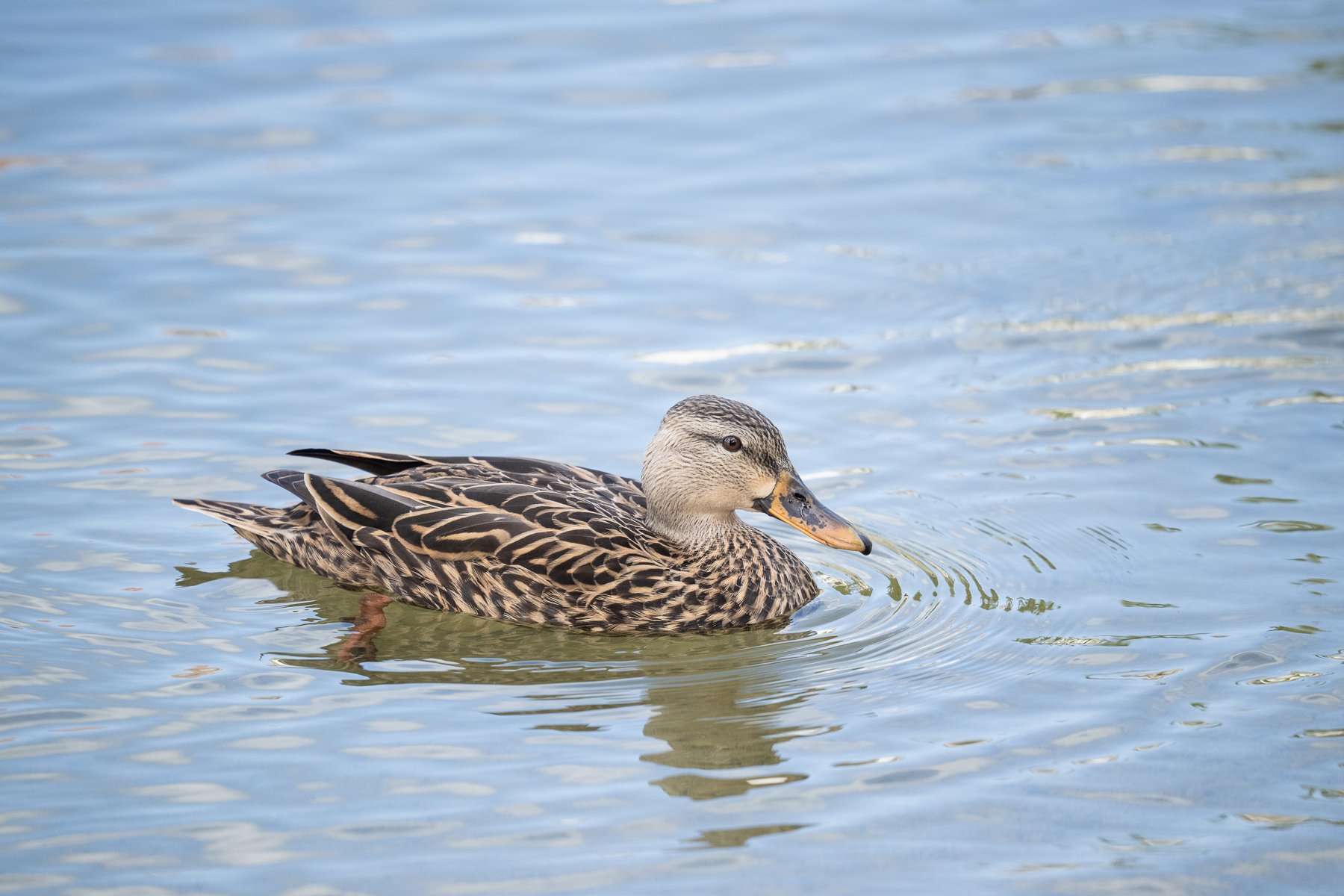
The plumages of Mottled Ducks and Mexican Ducks are similar to the mottled brown plumages of the female Mallard and both sexes of the American Black Duck. Each species has sometimes subtle variations that include degree of mottling, bill color, and appearance of the speculum, an iridescent patch of distinctively colored secondary wing feathers. The apparent color of the speculum in all species can vary slightly with the angle of the light that strikes it. Some of the key features that allow differentiation between the species are described in the captions of the accompanying photos.
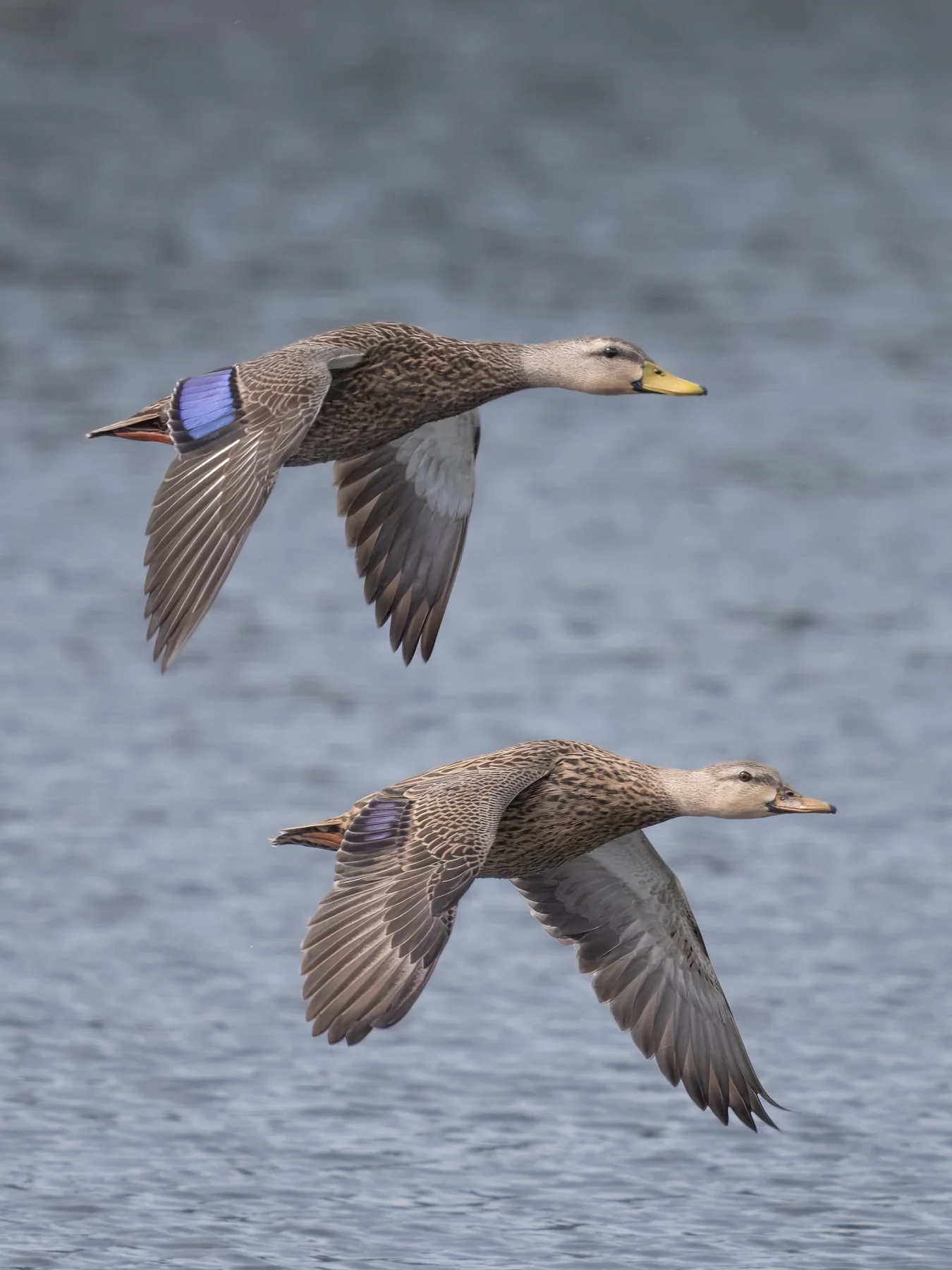
A pair of Mottled Ducks in flight in mid-November. Note the grayish-white underwings and the bluish-purple speculums with black borders. The speculum of the female is less boldly outlined than that of the male (photo by Gary Shackelford).
Mottled Ducks form pair bonds earlier than most other ducks, typically by November. During a recent trip to South Florida, I frequently observed pairs swimming together on a small pond. Although I feel confident that the Mottled Duck will never make its way to Wisconsin, I take pleasure in having learned about some of the fascinating behavior and identifying features of this beautiful denizen of the southern United States.
Written by Gary Shackelford, Fair Meadows Sanctuary manager
Cover image: A male and female Mallard at Fair Meadows Sanctuary. Note the female’s mottled brown plumage, white tail feathers, and an orange bill with blackish blotches focused on the midsection. The male has an iridescent green head, white neck band, brown breast, and gray body plumage (photo by Gary Shackelford).
