
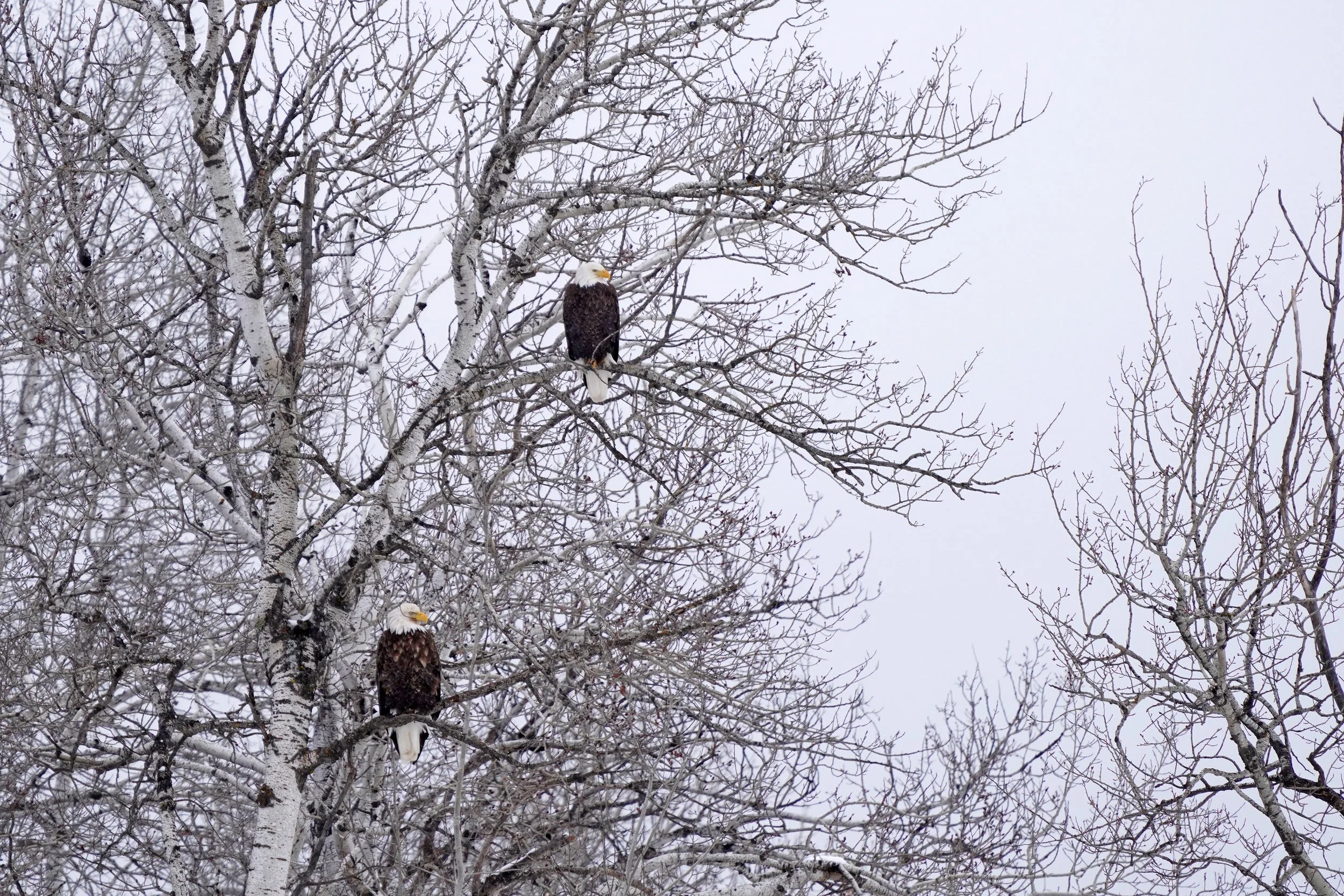

Arguably the most iconic bird in North America, the Bald Eagle is a national symbol for a reason. Piercing eyes and an alabaster head make it striking and instantly recognizable, even at a distance. It is also a symbol of conservation and hope for the status of today’s threatened species.
Bald Eagle populations have suffered many challenges since European settlement. Destruction of nesting sites and habitat, sterilization from environmental toxicants (particularly DDT), and hunting have all played a part in the decline and near-extirpation of Bald Eagles. It’s difficult to picture a time when eagles were erroneously perceived as pests and hunted for sport, but the decimation of eagle populations was so severe that it prompted the passing of the Bald and Golden Eagle Protection Act in 1940. This legislation set a precedent for codifying protections for wildlife populations and still upholds eagle conservation today. Efforts such as SoWBA’s Bald Eagle Nest Watch (BENW) citizen science program have strengthened our awareness of eagle reproduction and nesting behavior. The known Bald Eagle population in the lower 48 states skyrocketed from an all time low of only about 400 nesting pairs in 1963 to over 71,000 nesting pairs in 2020.
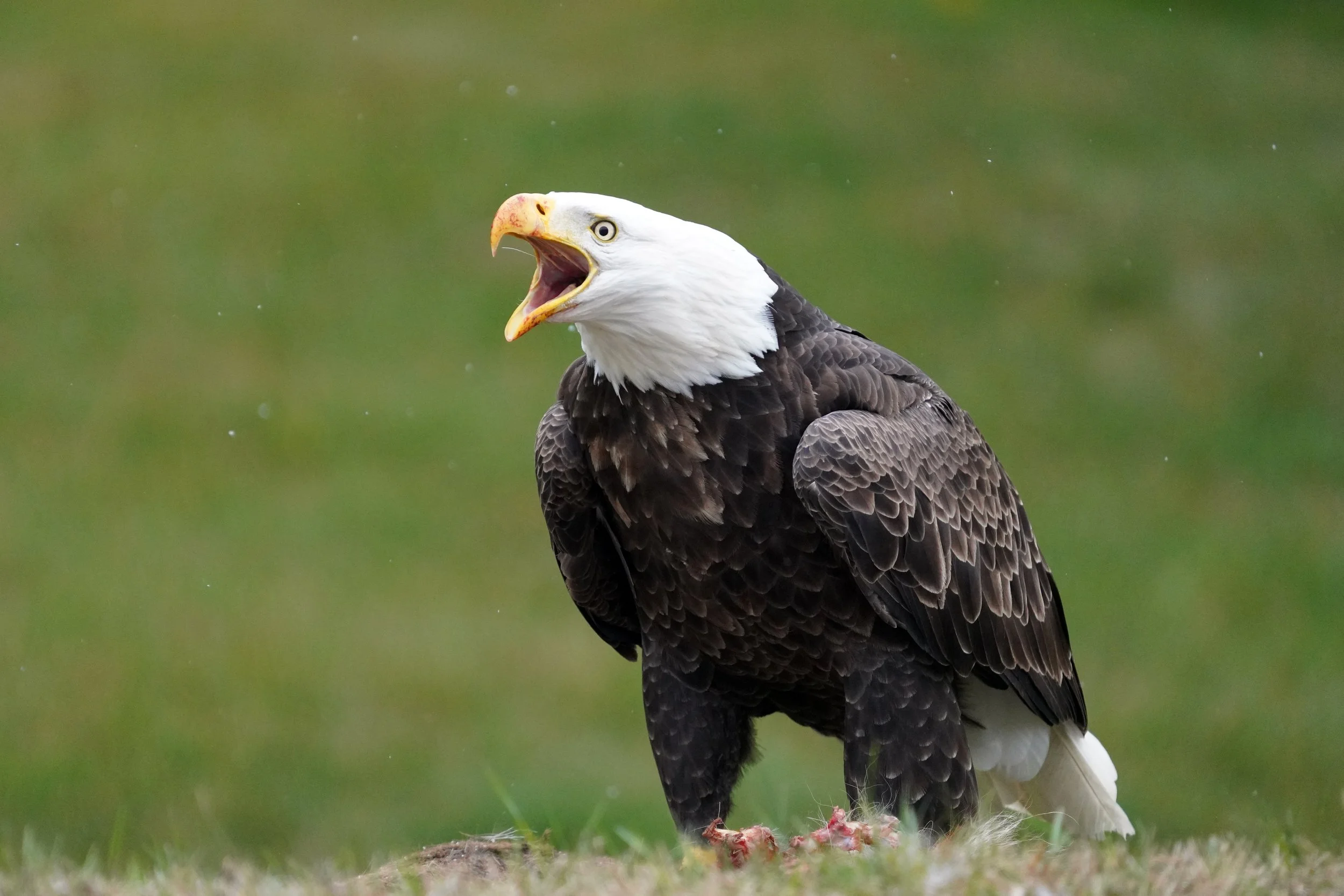
A Bald Eagle feeds on a carcass (photo by Courtney Celley/USFWS).
Though they are large and fearsome, Bald Eagles aren’t always predators. They are quite opportunistic, often feeding on roadkill, entrails left by hunters, carcasses, or stealing prey from other eagles or even other species. Even when food is abundant, large eagles will often steal fish from smaller eagles or raptors because the energy expenditure is about the same for the large eagle. For this reason, Benjamin Franklin opposed the selection of the Bald Eagle as a national symbol, stating: “he is a bird of bad moral character; he does not get his living honestly” and that “he is a rank coward; the little kingbird…attacks him boldly and drives him out of the district.”
When they do hunt, their primary prey is fish, so it’s no wonder that some of the greatest densities of Bald Eagles can be found in the lake-abundant wilds of Alaska, Minnesota, and Wisconsin. Bald Eagles can also be found in less water-heavy habitats, including Colorado and Wyoming, where they focus their hunting efforts on prairie dogs, snakes, and other available small critters. Adult eagles are even known for preying on other nests’ eaglets.
The birds that overwinter here are some of the largest in North America in accordance with Bergmann’s Rule: in taxa that occupy a wide range of latitude, individuals tend to be larger as they get further away from the equator. Females are also larger than males, making northern females the largest of all eagles, boasting wingspans of up to eight feet!
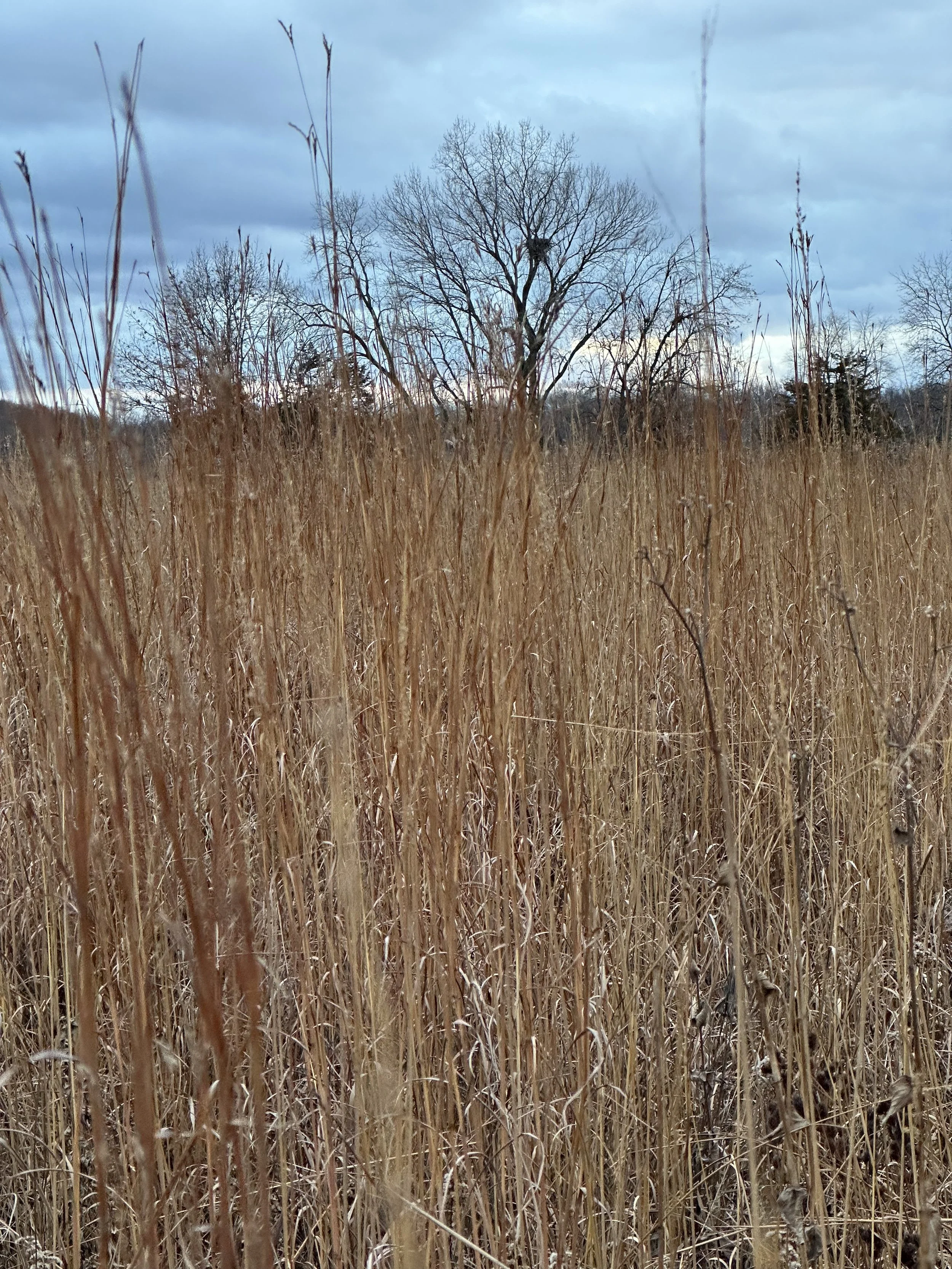
An eagle nest at Faville Grove, found during a previous season (photo by David Musolf).
Bald Eagle numbers have boomed across Wisconsin and the nation, but it is critical that we don’t let the apparent success of conservation efforts wane as eagles still face threats. In Wisconsin, local eagle populations face a particular nexus of threats. Since the 1990s, a mysterious and fatal disease befalling eagles along the Wisconsin River has baffled wildlife rehabilitators and caused speculation about if and how the syndrome could spread. Eagles nesting along the Great Lakes, especially Lake Michigan, are still at risk of impaired reproduction due to the biomagnification of the breakdown products of DDT in fish populations (though levels of these contaminants decrease every year). Deer hunting season ends right before our greatest influx of Bald Eagles, resulting in carcasses that are sometimes polluted with fragments of lead-based ammunition that pose a risk of lead poisoning. This is to say that our work conserving eagles is not yet done.
We have been pleased to see a family of Bald Eagles overwintering in Faville Grove: two adults and at least one juvenile, still young enough to be covered in speckled brown plumage. They have been seen perched in trees along Highway G and soaring over the Ledge Uplands. We look forward to spotting them and will continue to monitor the nests in the area this spring.
Written by Soraya Castle, Faville Grove land steward
Cover photo by Courtney Celley/USFWS. Two adult Bald Eagles perched in birch tree in winter.
