
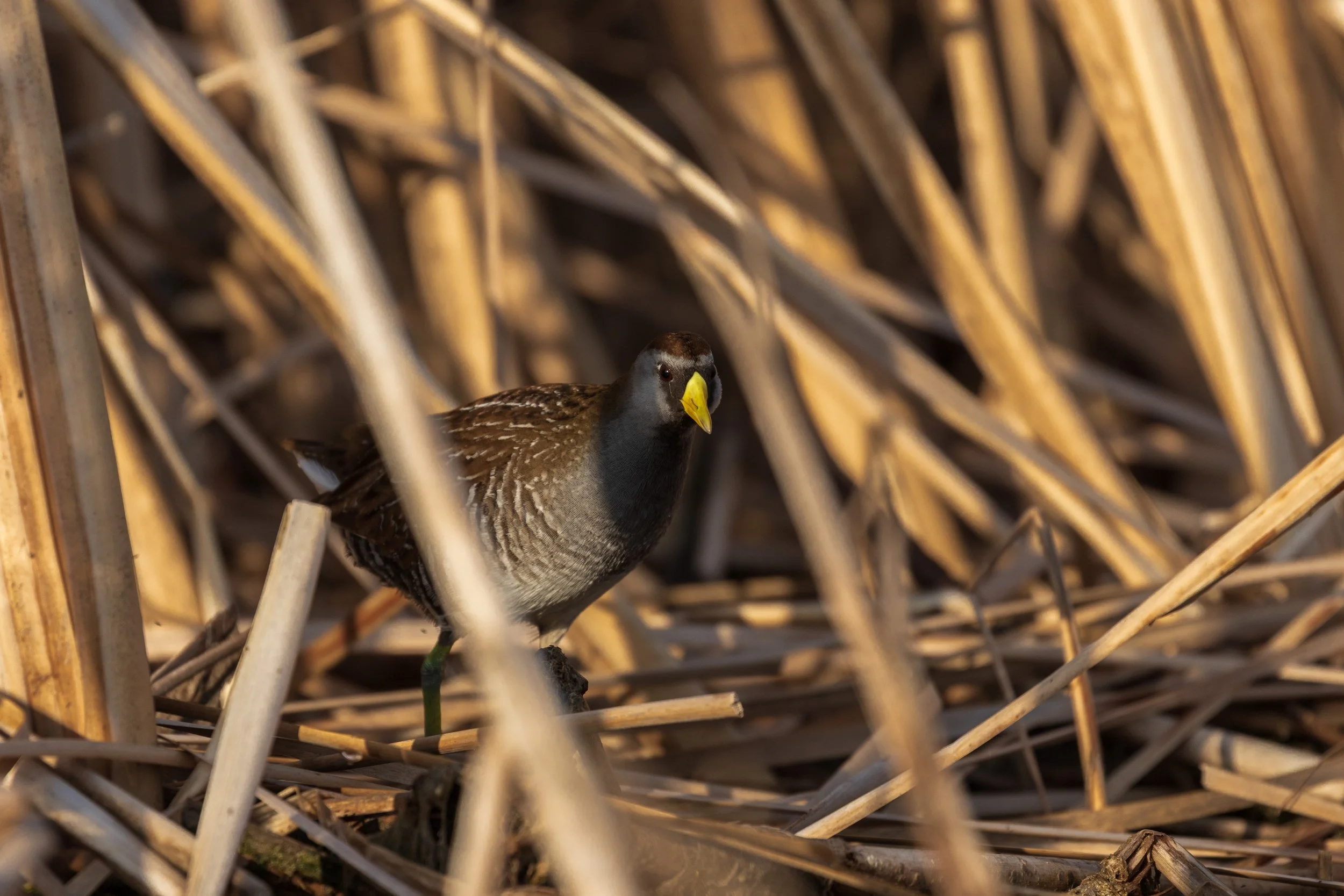

During the breeding season, in marshes populated with cattails and wet meadows full of tall grasses, cascading whinnies indicate the presence of an otherwise secretive little rail: the Sora. Their calls begin high and fast then descend in pitch while slowing down. Their song is a sharp kerWEE that rises at the end and contrasts with their call.
The Sora shares its appearance—a plump body and large dinosaur-like feet—with other members of the rail family, but its beak is shorter and more conical, as well as being distinctively yellow. Long and greenish-yellow toes disperse the pressure of its weight across greater surface area, helping it stalk through emergent vegetation while staying above the waterline.
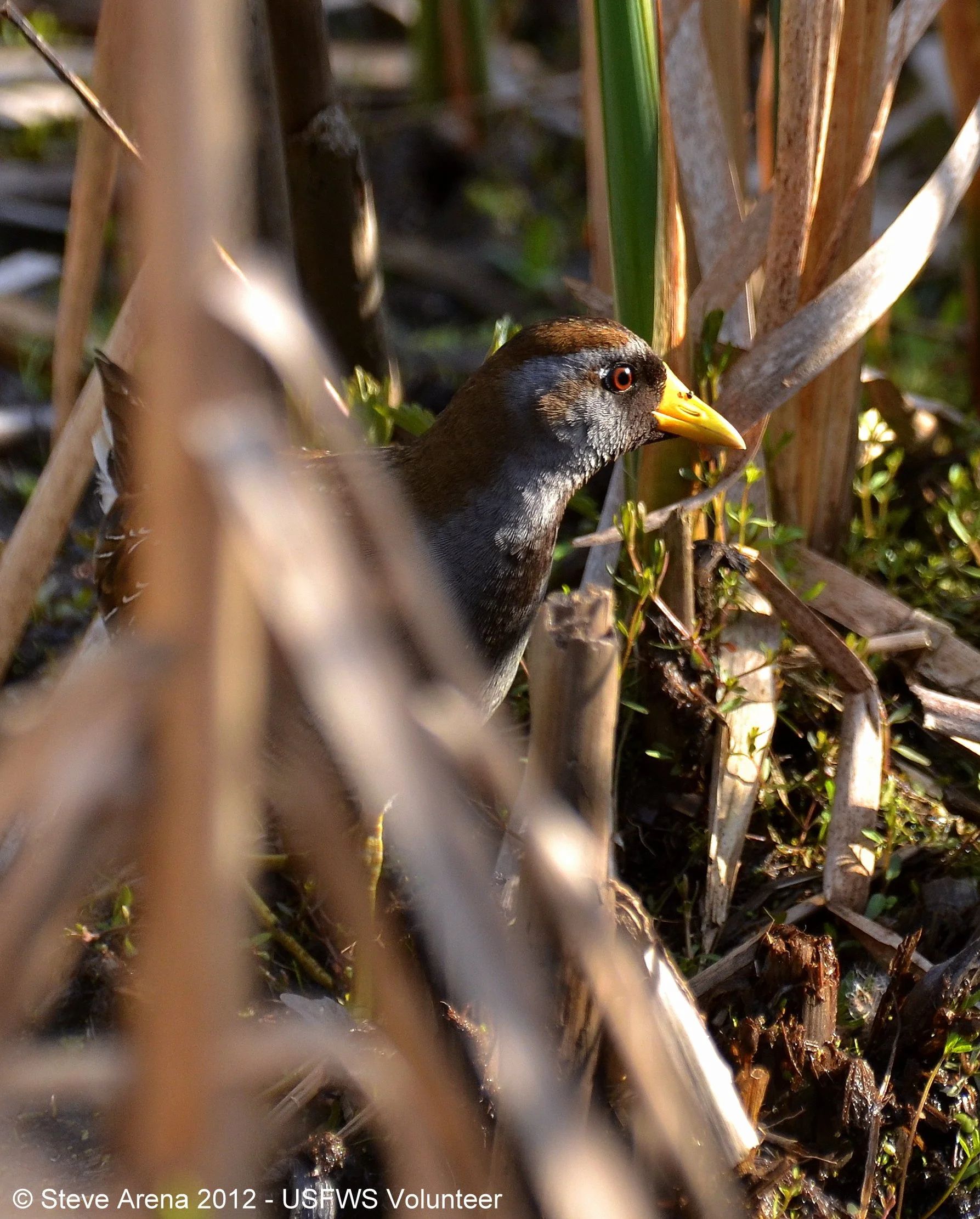
Hidden Sora (Steve Arena/USFWS)
Despite their relative abundance and loud calls, only the most patient birders get to actually see Soras. Their bright yellow beak is all that stands out in the dense freshwater marshes that serve as their preferred habitat. They tend to be found mostly where there is standing water at least a few inches deep but shallow enough to allow for substantial plant cover. Stands of cattails help to make them virtually invisible to predators, but vast cattail monocultures are not suitable habitats because they don’t provide seeds to eat or enough space between plants to forage for invertebrates and snails. Wetland plants like smartweeds, bulrushes, sedges, and grasses provide great sources of seed for Soras, their diets are supplemented by wild rice later in the year.
Despite their decidedly non-aerodynamic body supported by stubby wings, they migrate great distances to breed. They winter as far south as the northern coast of South America and breed as far north as the Yukon and Northwest Territories of Canada. Their numbers have been fairly stable for decades but as with so many other species, face range shifts due to climate change and loss of habitat to urbanization.

Sora nest with eggs (Sara Vacek/USFWS).
The areas that Soras breed and nest in are dynamic habitats that are subject to big shifts in water level. A study of nesting behavior in rails found that nesting survival actually increased in areas with greater variations in water level. When water levels rose, Soras added to their nests to make them taller, then let them settle and shrink when water levels fell. The most water-variable nesting sites provided better protection from both predation and flooding after rain events.
At Faville Grove, we have been hearing Soras near marshy areas but haven’t yet seen them. The emergent vegetation of the Laas Tamarack and the Snake Marsh offer a chance to hear and perhaps even catch a glimpse of these peculiar rails.
Written by Soraya Castle, Faville Grove land steward
Cover photo by Mike Budd/USFWS. A Sora peeks out from dried marsh vegetation.
