
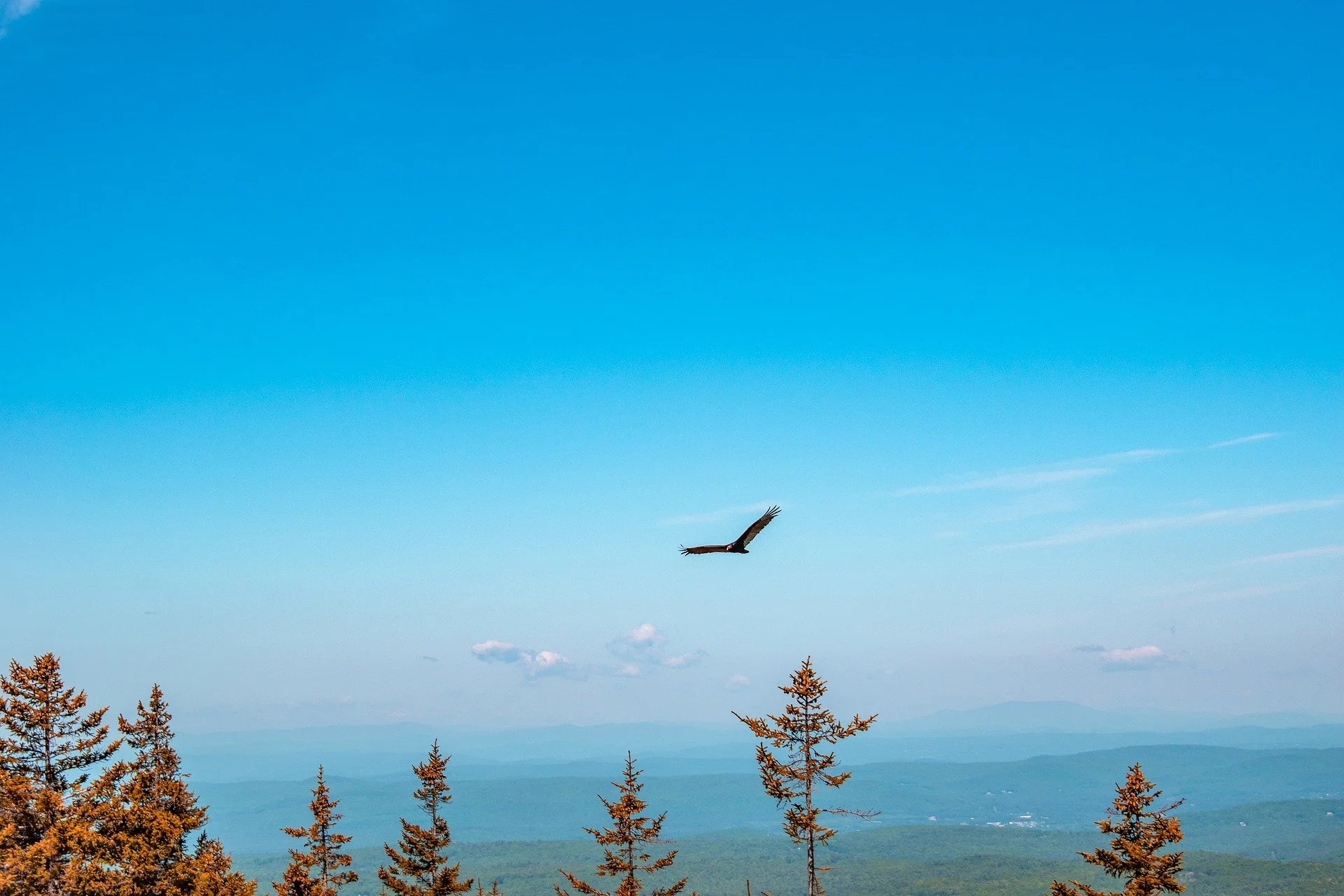

One of the most satisfying aspects of birding is learning to distinguish birds by the way they fly. The frantic flapping of the Bobolink. The way Red-winged Blackbirds angle their wings to slow their descent to a perch on a compass plant. Gliding high above an open prairie, soaring hundreds of feet into the air, Turkey Vultures’ flight is distinguished by what they don’t do: flap their wings.
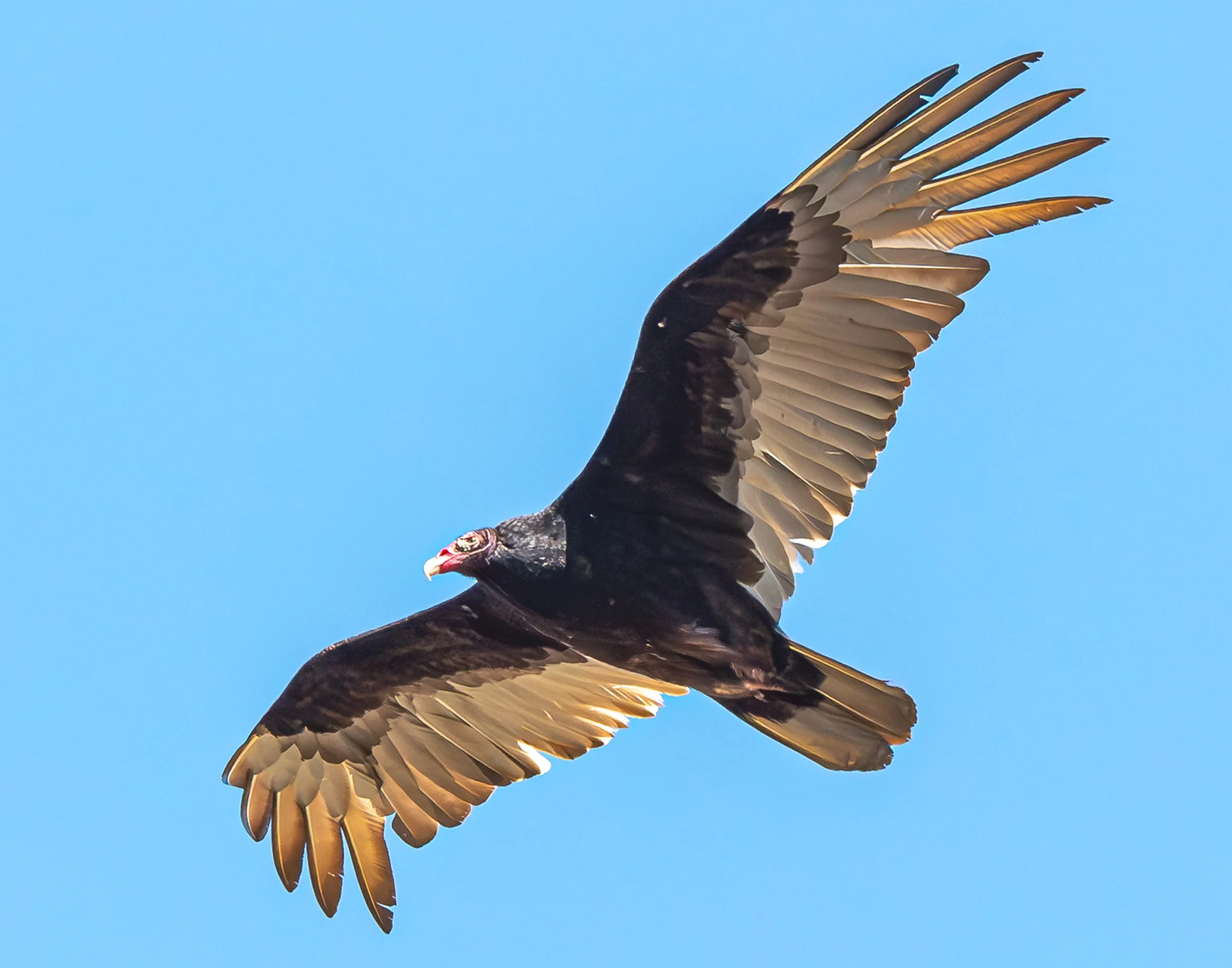
Turkey Vulture in flight, showing black body feathers and gray flight feathers (photo: Jeff Galligan).
Turkey Vultures are large birds with wing spans up to six feet and bodies almost three feet long. Their most distinctive feature is their featherless red head similar to a turkey, from which they get their name. Their body feathers are black, with grey flight feathers on the underside of their wings. Male and female Turkey Vultures look identical, while juveniles have a grey head which slowly becomes red as they age.
Holding their wings in a shallow “V”-shape, Turkey Vultures wobble side to side as they coast through the air. Some of them fly up to 200 miles in a single day, using their powerful sense of smell to find carrion. Black Vultures are aware of Turkey Vultures’ unique talent, and will often follow them to find food.
The scent created by a group of chemicals called mercaptans are what Turkey Vultures use to find their next meal. Oil companies discovered these chemicals could be injected into gas lines and used to find leaks by monitoring where Turkey Vultures congregated. These same chemicals are added to odorless gas today to alert people of gas leaks.
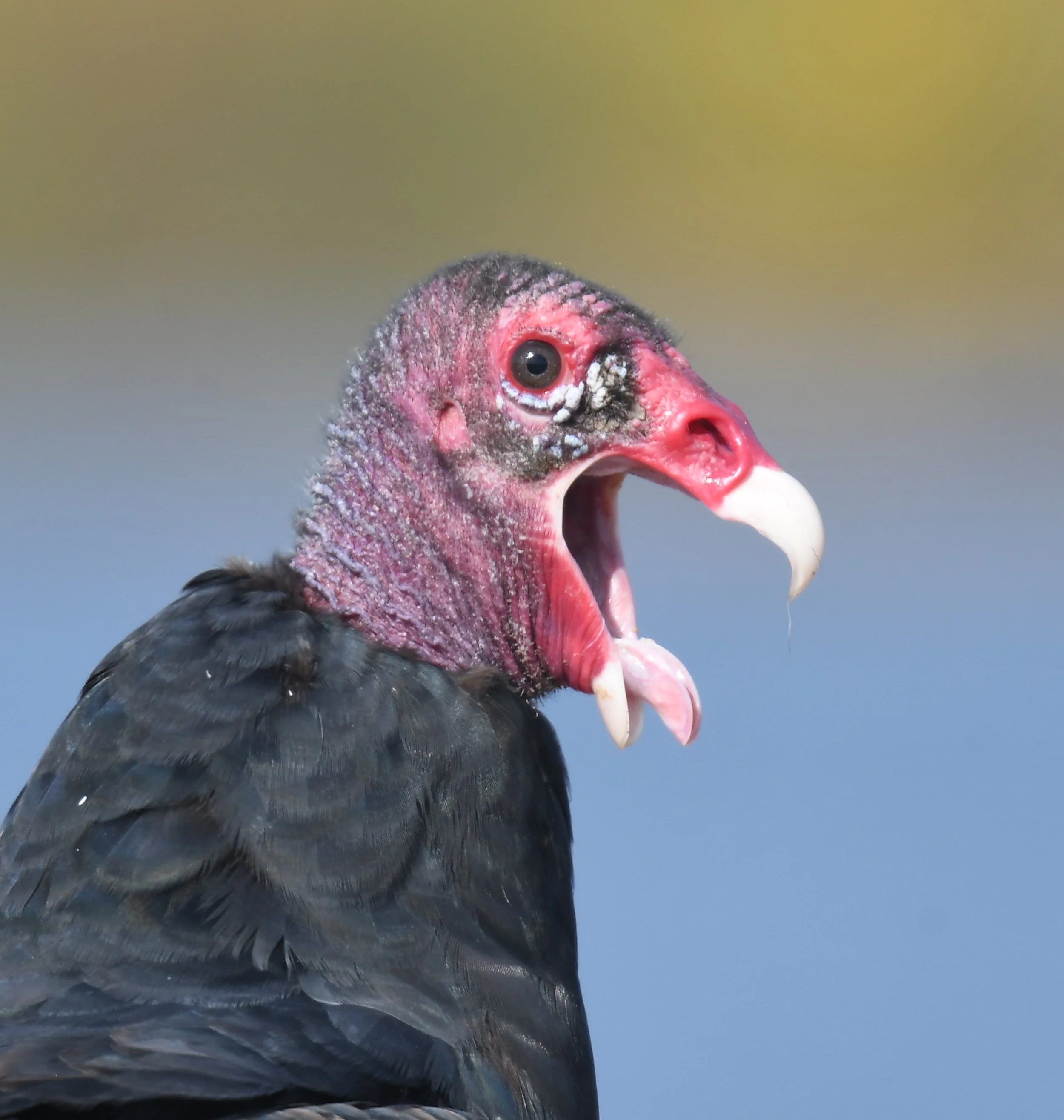
Turkey Vulture close up, showing the bird’s red head (photo: Andy Reago & Chrissy McClarren).
You are unlikely to ever hear a Turkey Vulture unless you get up close. They lack a syrinx, so instead of singing or tweeting, they hiss and grunt. You should certainly heed this warning—Turkey Vultures are known to vomit as a defense mechanism. These birds can sometimes be seen in the horaltic pose; spreading their wings out to dry. Breaking even more bird stereotypes, Turkey Vultures do not make their own nests; instead, they may use abandoned nests or burrows, or lay their eggs directly on soil or leaf litter in dense woods, caves, or abandoned buildings.
These birds can be seen frequently soaring over Faville Grove. The best viewing locations are on Prairie Lane or at Buddy's Prairie where the open space gives an unobstructed view.
Written by Parker Gimbel, Faville Grove land steward
Cover photo via PIxabay. A Turkey Vulture soars over the landscape.
