
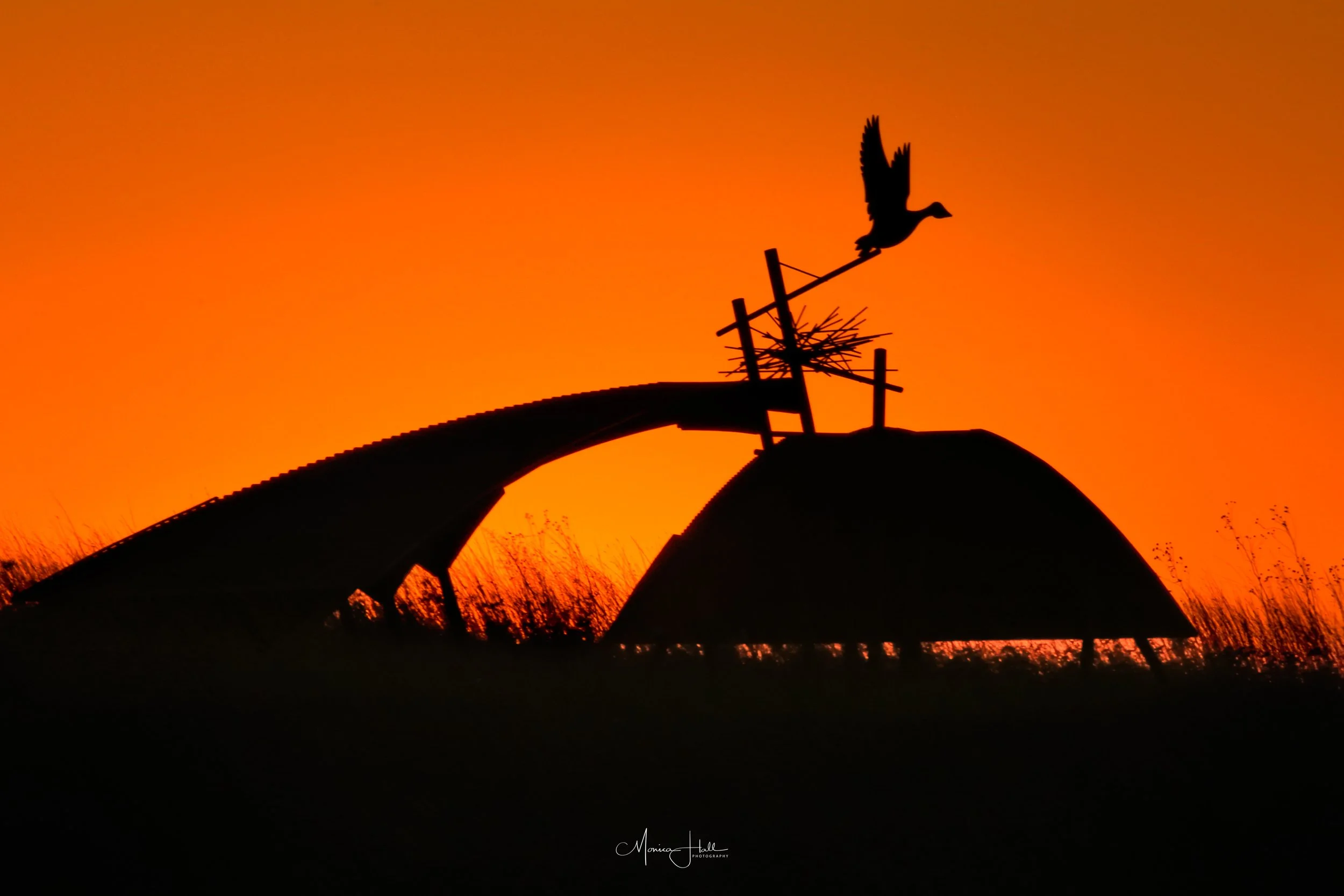
This season at the sanctuaries: spring 2026
Southern Wisconsin Bird Alliance’s lands are permanently protected and conserved habitat for birds, plants, and other wildlife. They are stewarded, restored, and managed by our sanctuary teams. Learn more here.
Starting burn season at goose pond
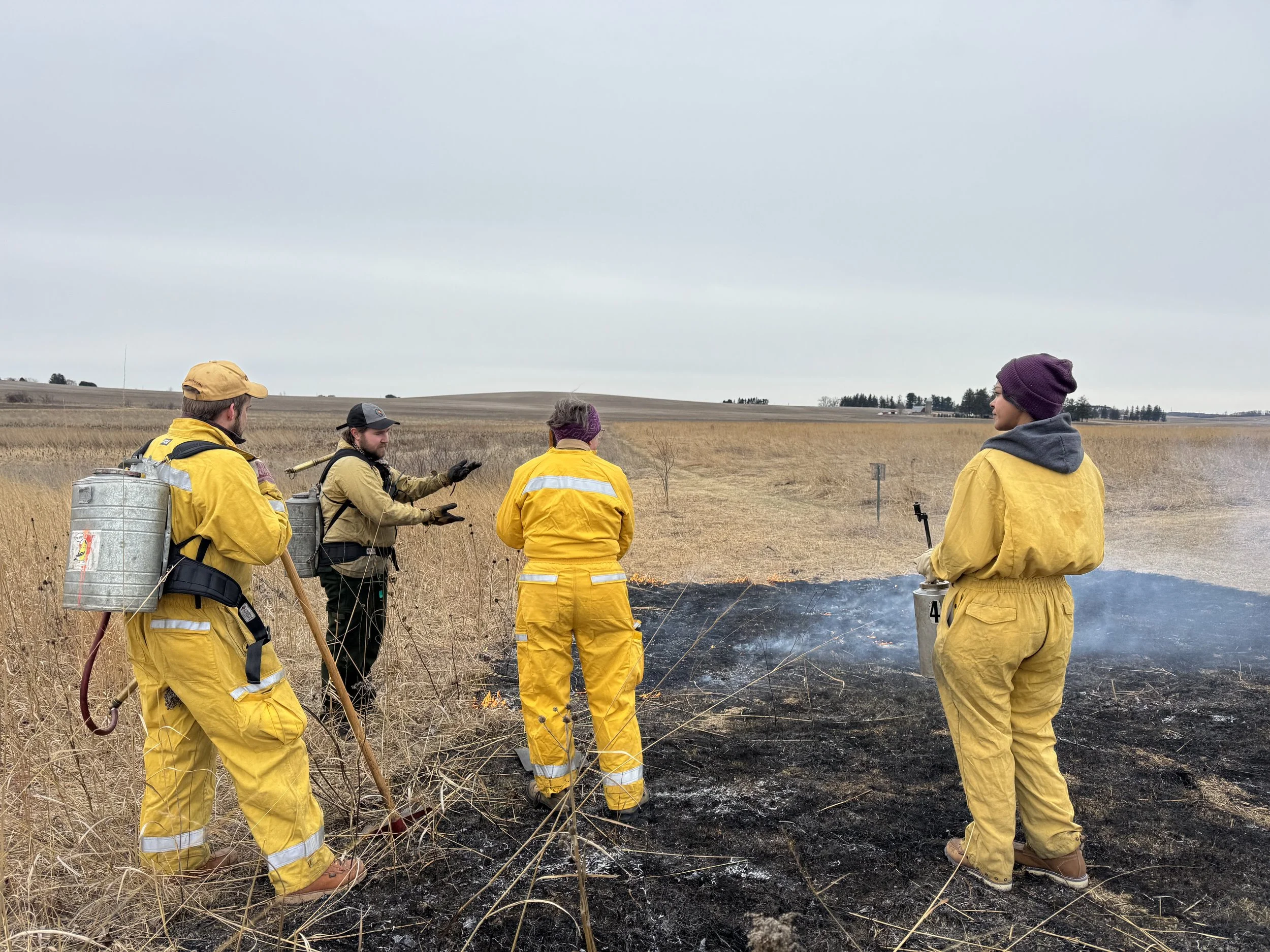
Miles Roth instructs three trainees on burning fire breaks (photo by Emma Raasch/SoWBA).
Spring is a very busy time at Goose Pond Sanctuary! To prepare for the hustle and bustle of spring burn season, we held our third annual Goose Pond volunteer prescribed fire training on March 14. This training is for people with little to no prescribed fire experience who would like to volunteer to assist with prescribed burns at Goose Pond or other places.
In true March-in-Wisconsin fashion, we wound up hosting our Saturday training in between a Friday with wind gusts of 55 mph and a Sunday blizzard (first March one since 2012)! Despite the cold, we had a great session and successfully instructed 14 new volunteers on the principles of prescribed fire, burning in fire breaks, and suppressing spot fires. Extra thanks to our volunteer instructors Matt Switzler, Cayla Matte, Tucker Sanborn, and Miles Roth for sharing your knowledge and passion for prescribed fire!
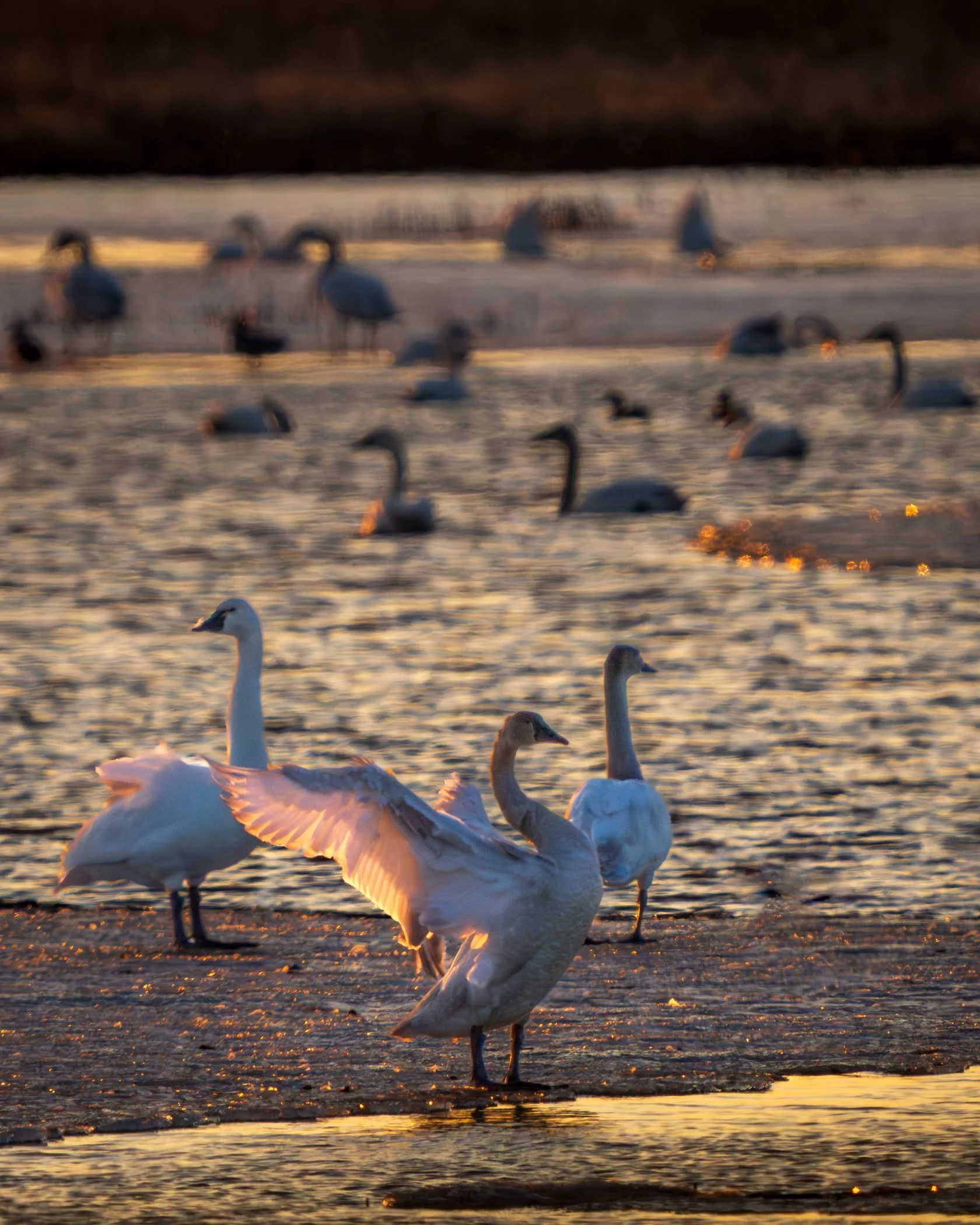
Tundra Swans at Goose Pond during spring 2025 (photo by Ralph Russo).
Plan your visit
Although water levels on the pond have been low, there is enough water to support hundreds of migrating waterfowl including Tundra and Trumpeter Swans, five species of geese, and sixteen species of ducks (read our recent Friday Feathered Features for more sanctuary birds). We expect the blizzard earlier this week will add significant water to the pond. Park along Prairie Lane or on the causeway on Goose Pond Road to see how many species you can find!
Waterfowl aren’t the only birds who’ve made their reappearance this spring. Listen and look for other returning friends like Eastern Meadowlarks, Song Sparrows, and Tree Swallows along our mowed hiking trails.
Get involved
If you’re interested in assisting with one of the most important ways we take care of Goose Pond’s prairies, wetlands, and savannas, sign up to help on a prescribed burn this spring! Prescribed burning is the primary volunteer opportunity during this season: if you’re unsure whether this opportunity is right for you or if you want to be on the volunteer burn email list, reach out to land steward Emma Raasch at eraasch@swibirds.org.
If prescribed fire isn’t the activity for you, park near the pond or take a walk on our mowed trails and submit an eBird checklist or document your nature finds on iNaturalist. These community science projects are always in season and provide meaningful data on the wildlife at the sanctuary.
Learn more:
Goose Pond StoryMap: take a virtual tour
If you have questions, or would like to receive more detailed updates from the team, email goosep@swibirds.org
planting new seeds at Faville Grove
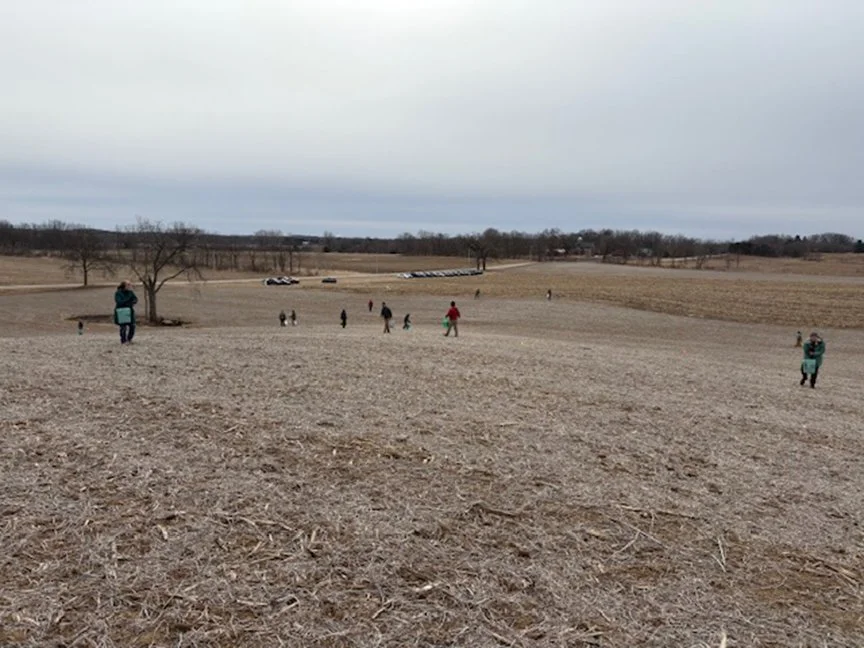
Volunteers and staff planting at Faville Grove Sanctuary on February 28, 2026 (photo by Pat Clark).
On February 28, Faville Grove staff and 31 volunteers seeded 14.5 acres of agricultural field back to prairie. This is part of a 55-acre field on an 80-acre tract acquired by SoWBA in 2023 (the remainder of the field will be planted in the fall of 2026 and 2027). Approximately 70 species of seed, most collected from Faville’s restorations, were prepared into diverse mixtures based on the moisture regime of the soil. We are eager to watch how the planting progresses over the next few years and see how wildlife responds.
Always an exciting time of the year, burn season has begun at Faville Grove. On March 9, we completed our first burn with volunteers on a neighbor’s 10-acre Big Hill Prairie restoration adjacent to our North Shore Moraine sanctuary lands. Burns enhance habitats for insects, birds, and other wildlife; encourage plant growth and seed production; and to knock back encroaching woody vegetation. When conditions aren’t conducive for burns, we are using brush cutters and chainsaws, and applying herbicide to the cut stems, on invasive brush in the savannas and woodlands.
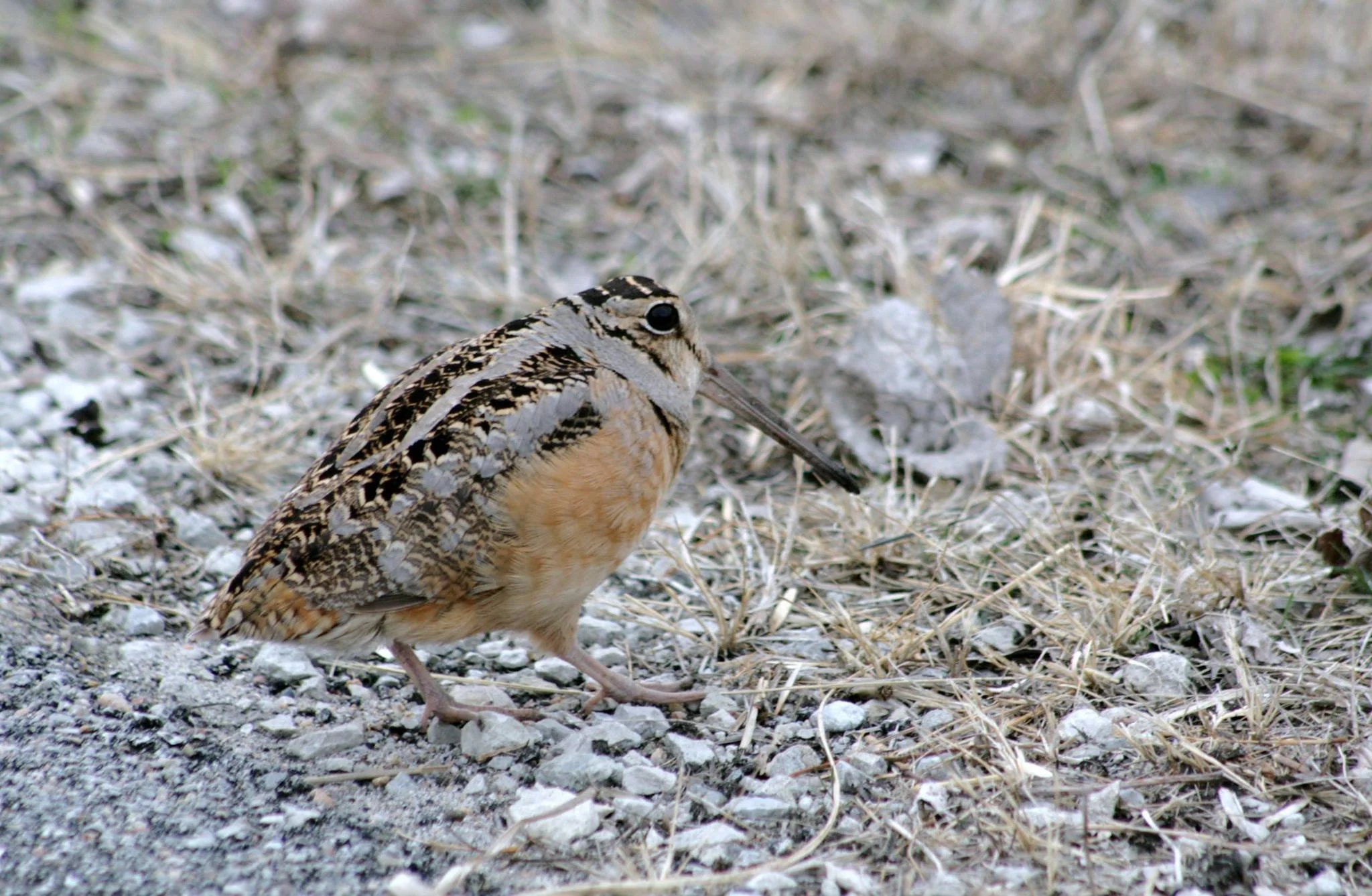
American Woodcock (photo by Peter Rea/USFWS).
Plan your visit
We heard the first American Woodcocks of the season along Prairie Lane on March 8, peenting away during the fading light of the day. Male birds perform their singular mating displays into May—spiral flights high into the sky, accompanied by a whistling sound of air flowing through their feathers. Once the birds reach their zeniths, they return to their exact starting point through chirpy falling descents, then recommence their throaty peents. If you would like to watch this unique display, you’re in luck. Visitors can come to Prairie Lane just before dusk to watch the sky dances on clear nights. Though our Woodcock and Snipe Walk is already full, you can still sign up for the waitlist.
Migratory waterfowl have also been returning to the sanctuary over the last few weeks, accompanied by their cacophony of calls as they stake out breeding season territories and to look for new mates (read about more migrating birds in our Friday Feathered Features).
Get involved
As temperatures warm up, garlic mustard begins to photosynthesize and resume its growth. If you would like to help us control invasive plants like garlic mustard, dame’s rocket, and more, please contact land stewards Soraya Castle and Parker Gimbel at faville@swibirds.org.
Learn more:
Faville Grove StoryMap: take a virtual tour
Questions? Contact faville@swibirds.org
Preparing nest boxes at FaIR MEADOWS
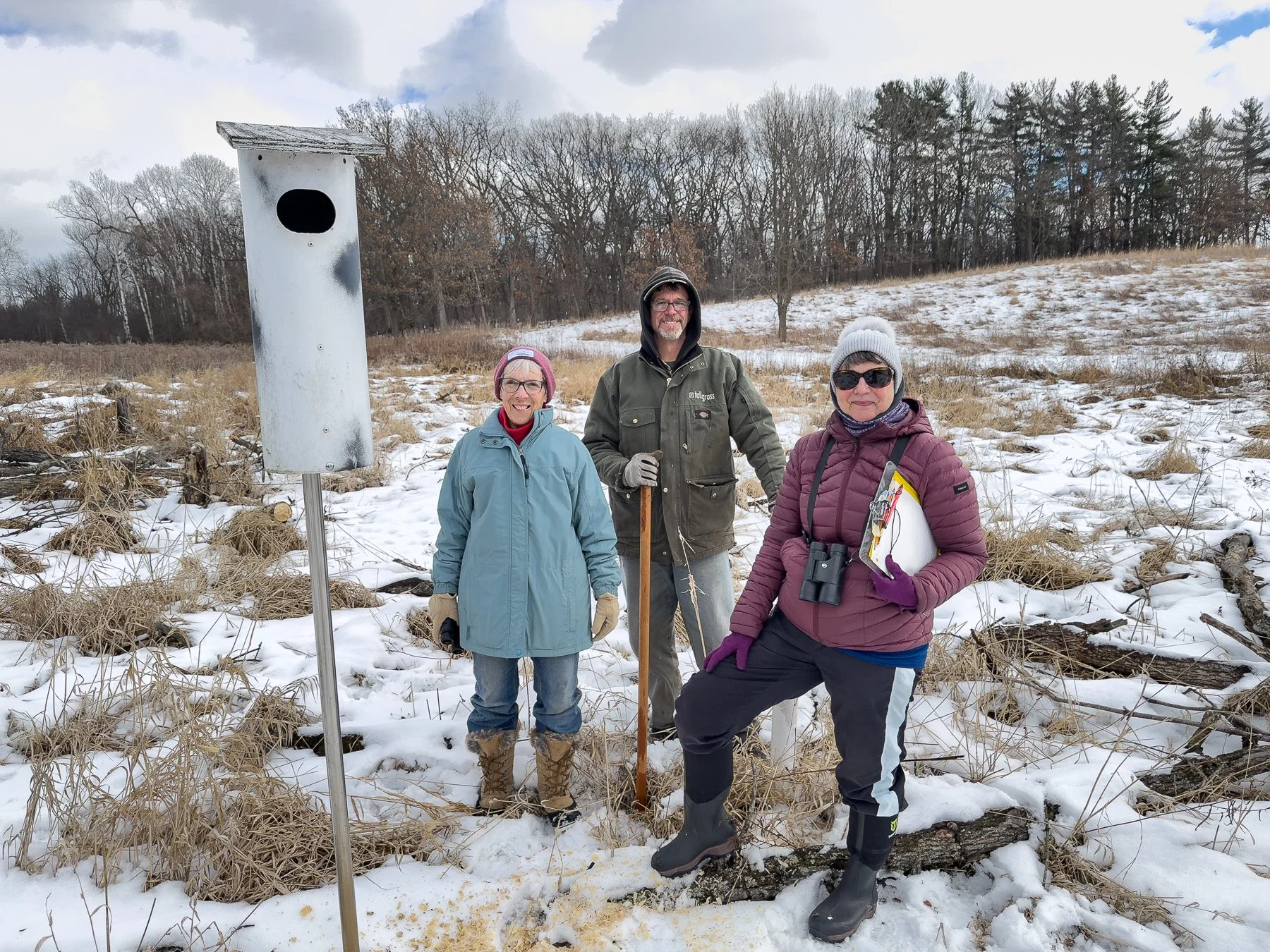
Penny Shackelford, Chris Kaplan, and Ellen Cummings inventory Wood Duck boxes along Thiebeau Marsh at Fair Meadows Sanctuary in early 2026 (photo by Gary Shackelford).
Colder-than-normal January temperatures produced frozen wetland soils and thick ice that allowed for easy cleaning of the 30 cavity nest boxes at Fair Meadows Sanctuary. As we remove the previous year’s nesting material, the eggs provide clues to the species that used the box—Wood Duck eggs are small, creamy-tan in color, and oval-shaped; Hooded Mergansers, another cavity-nesting duck and occasional resident of the nest boxes, have slightly larger, more spherical, pure white eggs. We also make note of repairs needed, evidence of attempted predation, and the presence of down (which the female pulls from her breast to line the nest and help insulate the eggs).
These data help us determine long-term use and which areas, if any, show trends of poor success or nest dumping (intraspecific brood parasitism which occurs when Wood Duck hens lay eggs in another female’s nest), so we can adjust nest box locations. The last step in the cleanout is to add a six-inch layer of fresh wood shavings to the box so the ducks have a nice clean home to return to. We saw our first pair of Wood Ducks on March 9 (read more about sanctuary birds in our Friday Feathered Features).
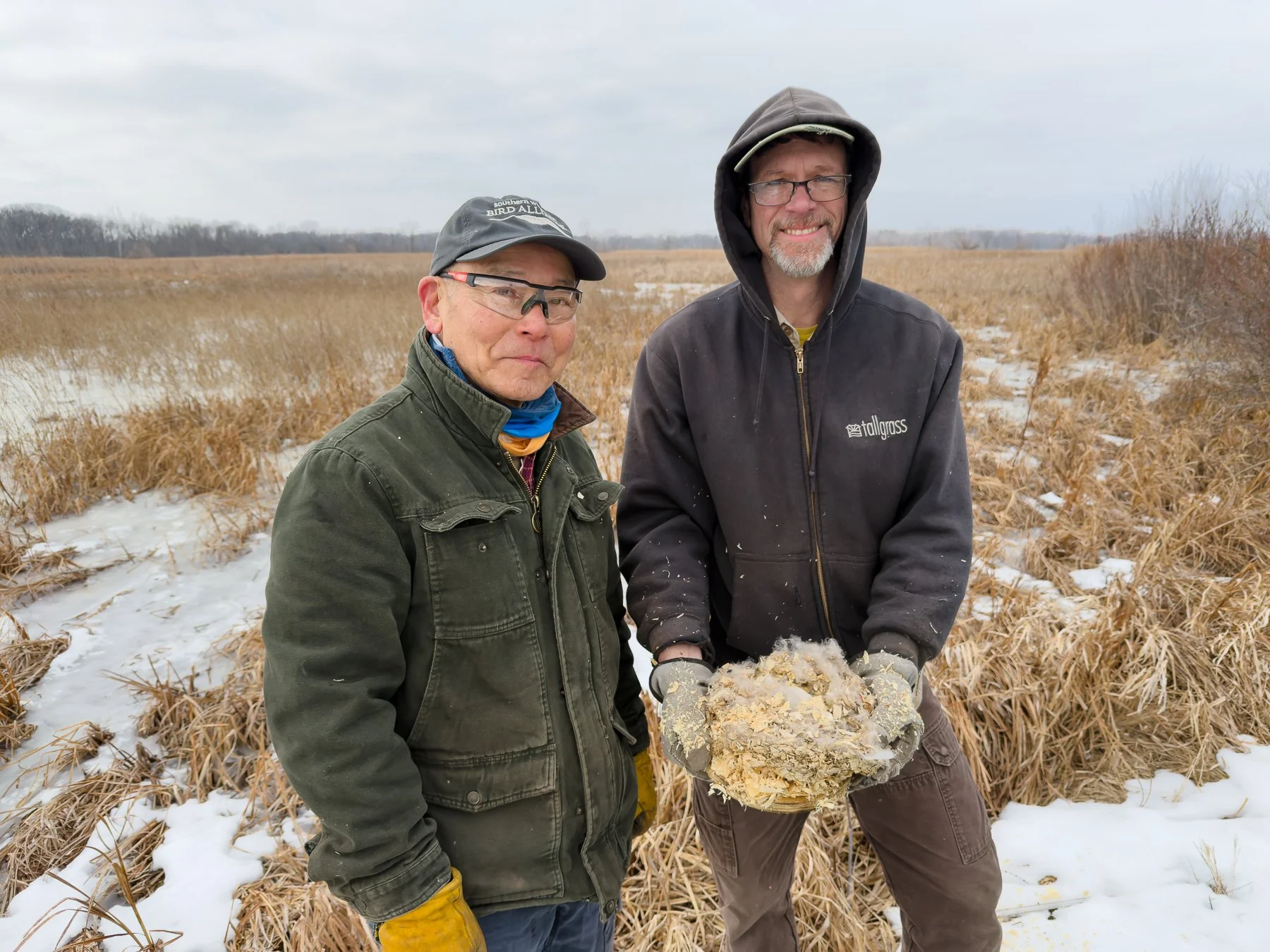
Yosh Saimi and Chris Kaplan with a down-covered Wood Duck nest (photo by Gary Shackelford).
Plan your visit
As a reminder, Fair Meadows Sanctuary is open to the public for monthly field trips and events, but not for spontaneous visits. Come and see returning Wood Ducks, Hooded Mergansers, and other spring migrants in the wetlands and woodlands at one (or more) of our birding days this spring!
For a guided exploration of the sanctuary this season, plan to register for Spring Birding at Fair Meadows on May 4. We expect to see warblers, warblers, and more warblers—and listen for the songs of Scarlet Tanagers, Indigo Buntings, and Sedge Wrens. May apples, wild geraniums, wild lupine, blue-flag iris, golden alexanders, shooting stars, marsh marigolds will likely be in bloom as well.
Get involved
Burn season is right around the corner. We are looking for help during this important time, so if you have interest and/or experience with prescribed fire, please reach out to Penny and Gary at fairmeadows@swibirds.org.
Learn more:
Fair Meadows StoryMap: take a virtual tour
Questions? Contact the team at fairmeadows@swibirds.org
Prairie Restoration progress at Hillside Prairie

A big crew of staff and volunteers plant at Hillside Prairie in December 2025 (photo by Mark Martin).
Winter was a busy season at Hillside Prairie Sanctuary. On December 16, 2025, fourteen volunteers and staff hand-planted 12 acres of prairie near the parking area. Then, on January 29, Graham Steinhauer planted 34 acres south of those 12 acres in one day using a Dane County Parks utility terrain vehicle. To date, 64.5 acres have been planted to prairie at the sanctuary!
We are also making progress on removing the interior fence-line trees—mostly black cherries, box elders, walnuts, and mulberries—that are fragmenting the grassland, which has a major impact on nesting grassland birds. This spring, our team is also preparing to conduct a prescribed burn on Jean’s Prairie.
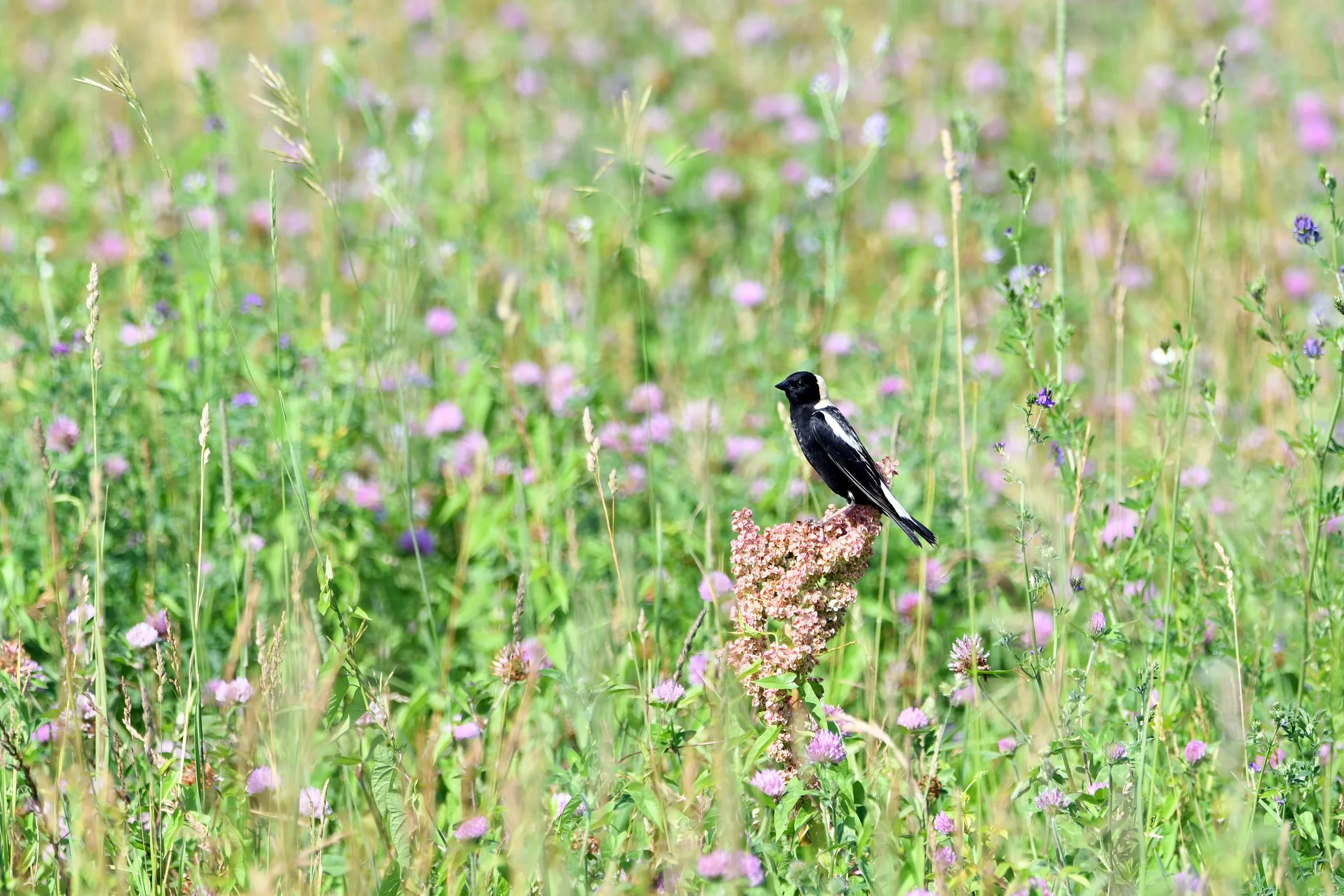
Bobolink at Hillside Prairie in June 2025 (photo by Kaitlin Svabek/SoWBA).
Plan your visit
Visitors are welcome! Bobolinks should arrive around mid-May to the large grasslands southwest and west of the farm buildings. There are hiking trails around the edges of the grassy fields that will be mowed this summer. For a guided opportunity to learn more about the birds at our newest sanctuary and the history of the land, stay tuned for more details about our upcoming Hillside Prairie Open House on May 31 (registration opens April 1).
After a few delays, the plan is to have the parking lot installed by May 1. Visitors may also park along the driveway off 1813 Hillside Road, east of the farm buildings. For access to Jean’s Prairie, visitors can park along the power lines on East Church Road west of the churches.
Get involved
Upcoming volunteer activities will include making Leopold benches and planting wild strawberries. If you’d like to participate, please contact land steward Emma Raasch at eraasch@swibirds.org to be added to the Hillside Prairie volunteer list.
Learn more:
General questions? Contact Mark Martin at goosep@swibirds.org
Cover image by Monica Hall. Sunset at Goose Pond Sanctuary’s Wingspan Pavilion.
