
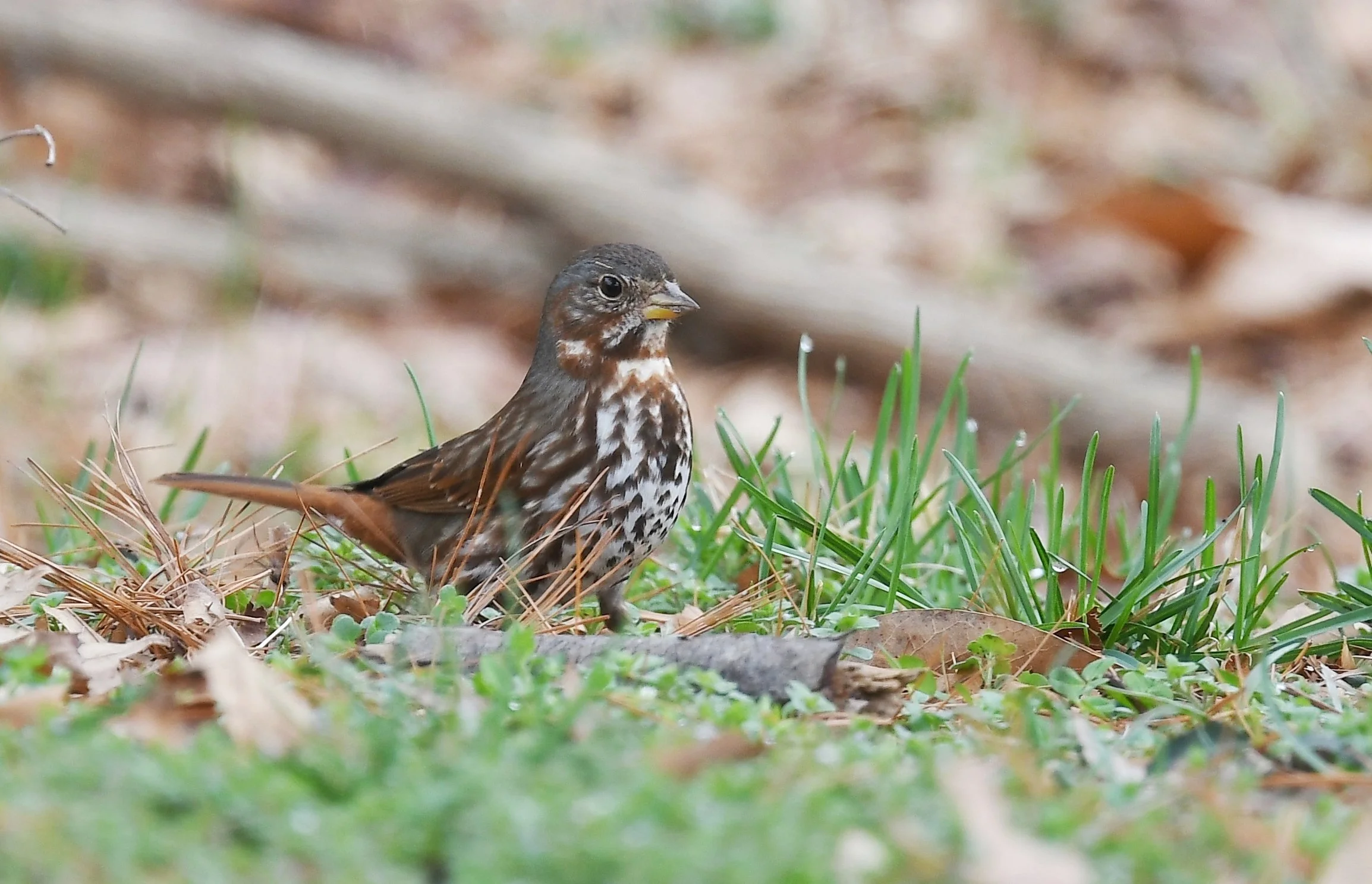

Amidst our influx of vernal visitors, the humble sparrow family makes for a particular identification challenge for birders. While songbirds like Yellow-rumped Warblers and Ruby-crowned Kinglets are kind enough to give us colored clues to look for, small brown sparrows demand a keen ear and a little background knowledge. One of the most recognizable is the Fox Sparrow, a plump and rufous migrant that visits southern Wisconsin in spring and fall. Its rust-colored body, streaky red and white chest, and gray eyebrows readily distinguish it from its more drab cousins.
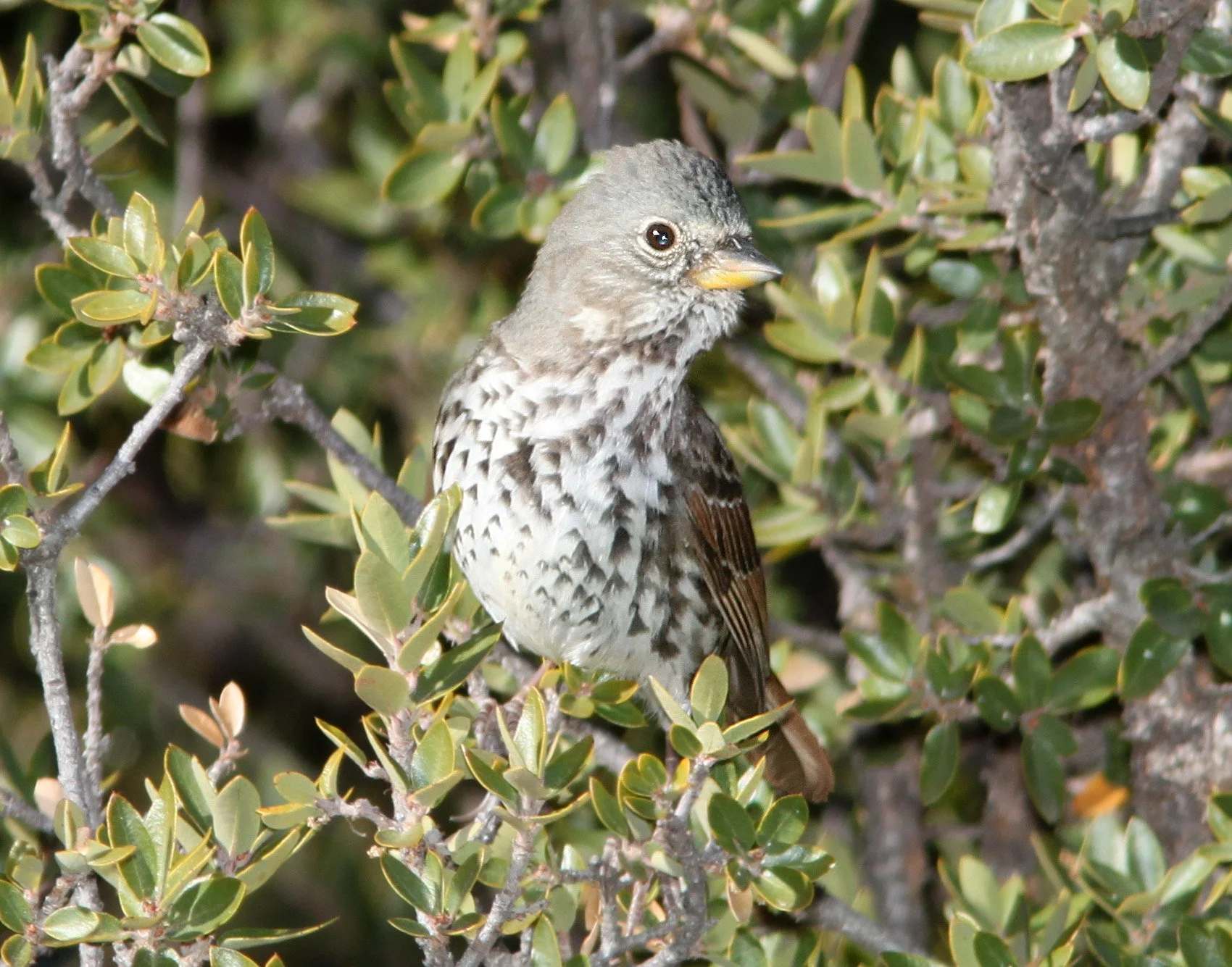
A “slate-colored” Fox Sparrow in Arizona (photo by Alan Schmierer/Flickr CC).
There are four subspecies of Fox Sparrow, the most common in Wisconsin being the “red” Fox Sparrow. This is the most brightly colored and has the largest overall range, breeding across the entire longitude of Canada. The “sooty” Fox Sparrow is restricted to the western coast of British Columbia and southwest Alaska, “slate-colored” Fox Sparrows to the interior western US and Canada, and the “thick-billed” Fox Sparrow to California and Oregon. The latter coastal sparrows have been found to be more genetically distinct from the other subspecies using molecular genetic data. Fossilized remains of the sparrow from the Pleistocene epoch (about 11,000 years ago) from the Carpinteria Tar Pits outside Santa Barbara as well as biogeographical records indicate that the “thick-billed” Fox Sparrow was isolated from the other populations during a glacial period of the Rocky Mountains.
Our migrant Fox Sparrows can be found around shrubby forest edges, singing happily in a chorus of their peers. Ornithologist Robert T. Moore noted in a 1913 publication of The Auk that the songster, despite his loud and lovely melody, is somewhat shy in his own singing abilities. A male on his breeding ground will often flit up in a tree to sing, but if not joined by a fellow male singing partner after a few attempts, will return to his mate, defeated. If just one individual ceases singing in a choir of other sparrows, the rest will soon fall silent and drop from their singing perches to the earth, even if they are not close together. After several minutes, one will send out a tentative chirp and be rewarded with the swelling song of his peers once more.
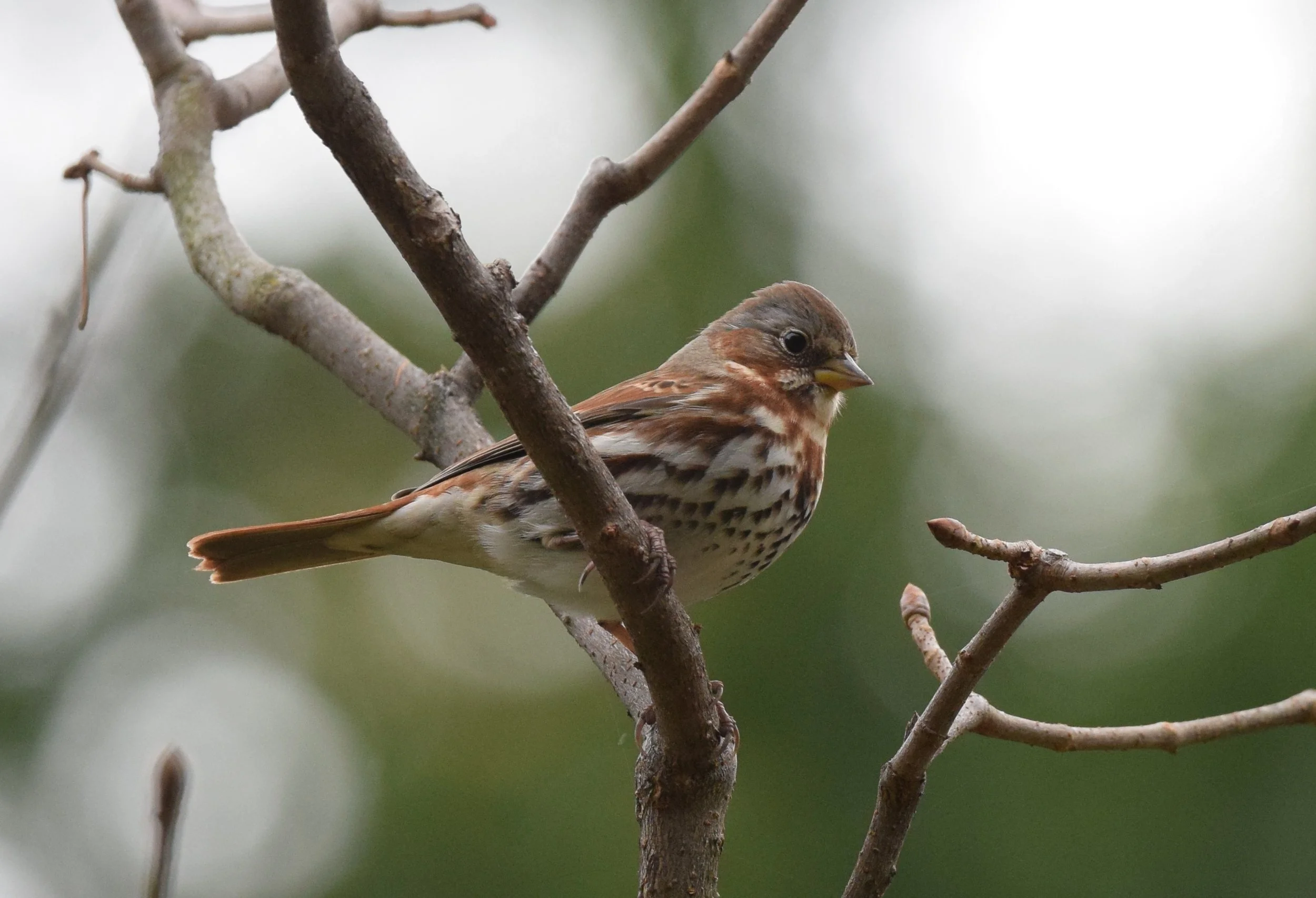
A Fox Sparrow perched on a branch up in a tree (photo by Andy Reago & Chrissy McClarren).
Western variants of the Fox Sparrow exhibit leap-frog migration in which the northernmost breeding populations actually winter further south than the more southern breeding populations. It is theorized that the reason for this is a temporal difference in food availability in spring migration that affects the cost of migration. The northerly breeders from Canada are travelling later and longer to winter in California, where there is more food available to fatten up before the spring migration. The southerly breeders travel a shorter distance but also eat less available and nutritious food.
April and October are the best months to encounter these birds at Faville Grove. The wooded edges of Lake Mills Ledge or Bur Oak Knoll are great places to see them shuffling on the ground and kicking up dried leaves for seeds.
Written by Soraya Castle, Faville Grove land steward
Cover photo by Andy Reago & Chrissy McClarren. A Fox Sparrow foraging on the ground in grass.
