
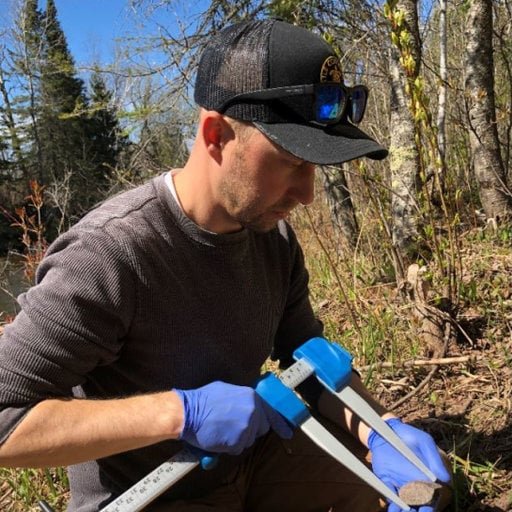
Andrew Badje in the field working with turtles (photo courtesy of Research Gate)
In this episode, we answer questions like "why do frogs and salamanders need to lay their eggs in water?" and learn about the benefits of external gills with our amphibian expert Andrew Badje, a Conservation Biologist for the Wisconsin Department of Natural Resources.
Subscribe to QuACK on Spotify, iHeart Radio, Apple Podcasts, or your favorite podcast app!
Transcription
Hey, and welcome to Questions Asked by Curious Kids, or QuACK, a podcast made by Southern Wisconsin Bird Alliance. This is a podcast where we gather questions about nature from kids to be answered with a local expert. My name is Mickenzee, I'm an educator and I'll be the host for this series. In this episode, Andrew Badje is here to answer our questions about amphibians. He's a conservation biologist for the Wisconsin Department of Natural Resources and does most of his work with amphibians and reptiles. Okay, let's get started.
-----
Mickenzee: Hey Andrew, welcome to the show. Before we get started with the questions from the kids, could you tell us about what you do at the Wisconsin DNR?
Andrew: Yes, hi Mickenzee. Yeah, so I work with the DNR’s Natural Heritage Conservation Bureau. And all of us are pretty much called conservation biologists, but within that term a lot of us have specialist roles. And so I work predominantly with amphibians and reptiles, and I do a lot of citizen science and volunteer outreach with those critters.
Mickenzee: What a coincidence, today we're talking all about amphibians! Could you tell us what got you interested in them?
Andrew: I kind of grew up wanting just to work with non-game and rare animals. And so I got my foot in the door with our bureau in some bat conservation work. And at that time there was also a side role where I got to do some Blanchard's cricket frog surveys and get into a research study where we looked at their overwintering ecology as well as their spring migration and immigration patterns. And so at that time that's ultimately what really got me hooked into the amphibian world was that project. And then I also got to be involved, in 2010, with our long-standing Wisconsin Frog and Toad Survey project, where I've been a long-standing coordinator. So that's kind of how I got involved in all of this and it's been kind of a fun journey since.
Mickenzee: Very cool! Our questions today were submitted by the third and fourth graders at Lincoln Elementary School here in Madison. Our first question is: why do frogs and salamanders have toes that kind of look like claws?
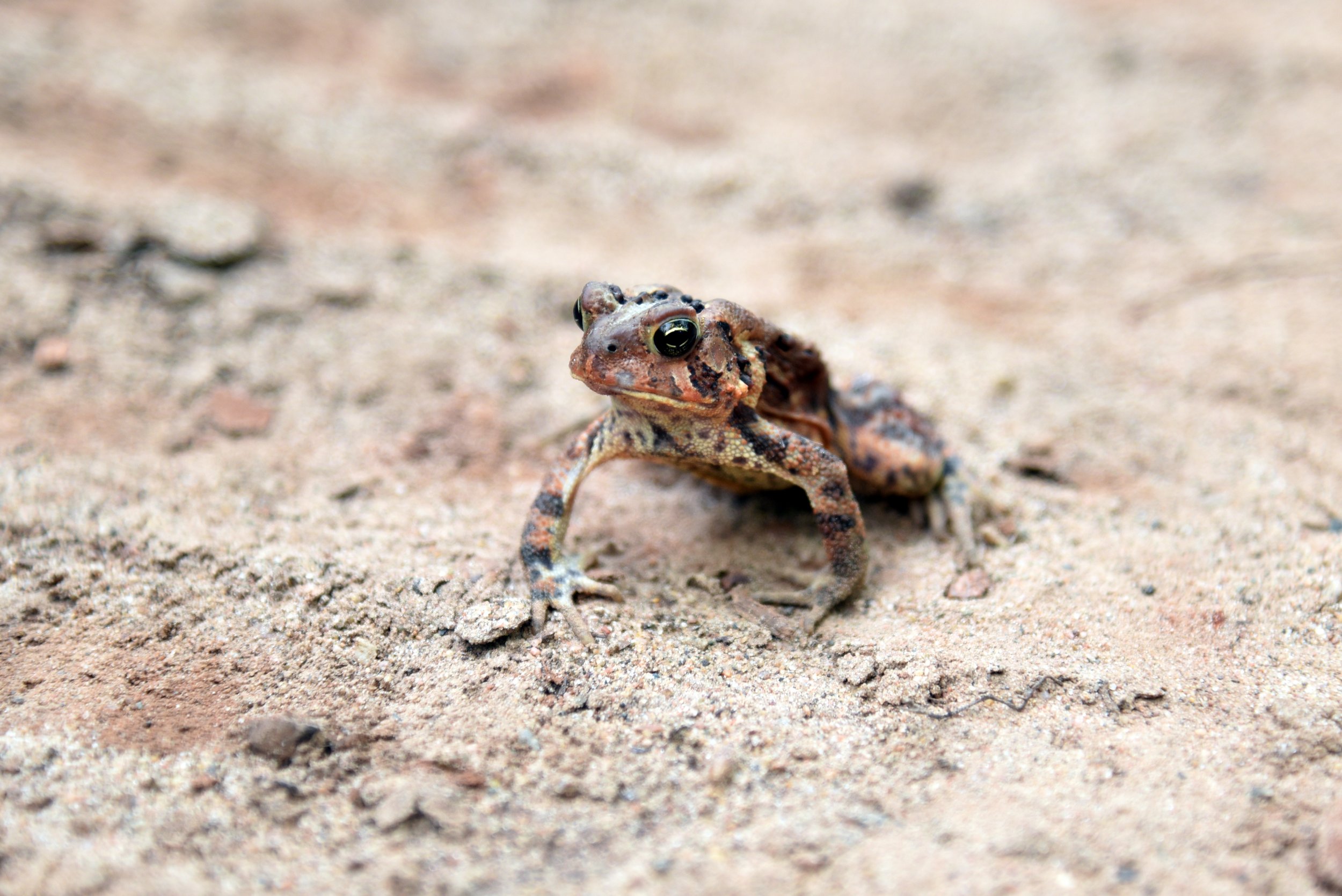
American toad with toes made for digging (photo by Courtney Celley/USFWS)
Andrew: Yeah, so that's a good question and one I had to look into a little bit, just to actually see if some of our frogs and salamanders do have claws. But from what I've been seeing, none of them actually do have claws.
Mickenzee: Ooh!
Andrew: They do have just tiny toes, and in a lot of cases tiny feet, too. And so it's kind of, you know, they do look like they have claws. But you know, there are a wide variety of differences between each of the species, and a lot of their toes are based off of the habitats they live in. And so, for example, many of our frogs have back feet that are webbed. And so that's primarily used to help them swim in their lake and aquatic habitats, like wetlands and in other water bodies. And then, some of our other frogs, like our tree frog species, have more disk-like toes. And so that helps them climb trees and branches and bushes. And also it helps them climb vertical services, like the windows in our homes. And so, every once in a while, if you live near a wetland, you might see one of our tree frogs clinging to the side of your window and looking for insects near a light source. So they do a lot of really cool things and have a lot of different features. And as well, salamanders typically have types of feet and toes that will help them climb, swim and perform various other tasks, too. So it's not a one-size-fits-all with toes for our amphibians in Wisconsin.
Mickenzee: That's really cool. It's kind of like they each have their own specialty or like, superpower with their toes.
Andrew: Yeah, absolutely.
Mickenzee: If I had to pick what kind of toes I'd want, I think I'd want toes like a tree frog because I think it would be really cool to climb on a vertical surface.
Andrew: Yeah, I would agree. And it also kind of helps you find different options for food and stuff. So yeah, I would agree with that.
Mickenzee: Definitely. This next student wonders, why do salamanders not sing like frogs?
Andrew: Well, so I'm going to get into the frog part first. But first of all, not all of our frogs do sing. What we're actually hearing are just the male frogs that sing. And so within that, males can also make various different sounds depending on the species, so that the females can find the right species to mate with. And so for example, our Green frog, the males have a call that sounds kind of like a plucked banjo string. That's pretty loose. Otherwise, we also have bullfrogs that have a really loud kind of booming bullhorn sound. And one of the more funny sounds, in Wisconsin at least, are the northern leopard frog’s call, which kind of sounds like a snoring sound. And so they have a lot of different ways that they can attract these females. Now getting more over to the salamander side of it, some salamanders will actually make sounds. I'm not exactly sure if any of our Wisconsin species make sounds to attract females, but in other parts of the world some of the males will make chirps, trills, or even croaks to attract some of these females. And so it's not specific just to frogs. However, instead salamanders have a variety of different ways to attract females. And so for one, the females have really good senses of smell. And so what males will do is produce a chemical signal, which is kind of like a smell or what's also called a pheromone, kind of like a perfume basically, to attract females to a breeding wetland or breeding area. And then males can also have a variety of other different ways to attract females. Sometimes they have bright colors, sometimes they have different body parts. And also, once they can get close to some of these females, some of the species actually even have elaborate courtship dances that further help impress the females to specific males. And so yeah, salamanders have a bunch of different ways to attract females that not all frogs do.
Mickenzee: That's so interesting! I had no idea that they still made noises too. And you'd said that it's mostly males that are doing the singing to attract mates. Are the females able to make noise or are they choosing to be quieter?
Andrew: Well if you handle certain frogs, sometimes they will make kind of chirps and stuff like that. And so females can make noises, but they don't per se use them on the same level as males do for breeding.
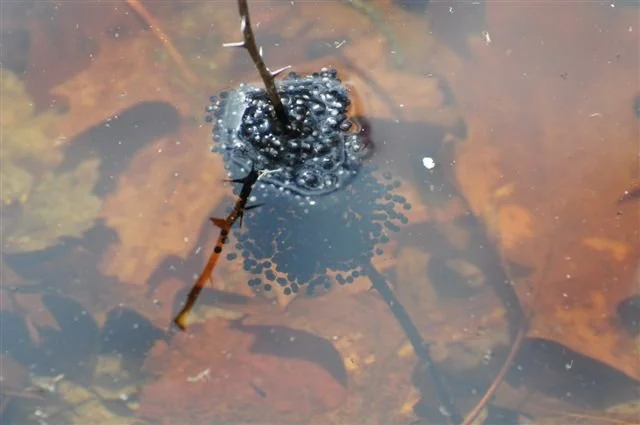
Frog eggs in a kettle pond (photo by Tom Tetzner/USFWS)
Mickenzee: That's a really great way to put that, yeah. Okay, our next question is: why do frogs and salamanders have to lay their eggs in water?
Andrew: That's a good question. And that's something that basically frogs and salamanders, under this larger term amphibian, why they're called amphibians is because they have two life stages: one is in water and one is on land. And so, you know, amphibians with water, they rely on that for the egg laying and the aquatic, water-based life stage. Meaning it's pretty much essential for that aquatic stage which is generally the eggs and then the juveniles. So either they're tadpoles with frogs, or larvae, which is kind of a salamander term, where they're in that wetland water stage. And so essentially they need that water to stay wet and moist and to help in their development to survive. If they don't have that water, they're not going to survive and thrive like they do. However, I should say not all frogs and salamanders do rely entirely on water for egg development. So there's some species that prefer more of a moist environment, but not in an environment where they're completely submerged in water. And so for example, our best example in Wisconsin is our four-toed salamander actually lays eggs underneath moist sphagnum moss pockets. And those sphagnum moss pockets kind of overhang wetlands. And essentially moss is a type of vegetation that, especially if it's near water, it tends to stay moist and wet. But again, it's not submerged entirely in water so that's very beneficial for that species of eggs. And interestingly, also in those sphagnum moss pockets, that's actually where the female, the mother, will lay her eggs and she'll actually stay there and protect the eggs for the first part of their lives. So that's a really unique habitat for that species.
Mickenzee: That's so interesting. You know, you're really taking everything I thought I knew about frogs and salamanders and saying well, that's not always the rule. And I love when that happens. Our last question today is why do baby salamanders look like axolotls? And an axolotl is a really popular animal among the elementary schoolers I work with. But for those of us unfamiliar with the axolotl, the student’s wondering why a baby salamander has external gills.
Andrew: Yeah, so axolotls, they look a lot like the larval stage, or the water based stage, of our Wisconsin salamanders. And so essentially they're white salamanders, I believe, a little bit of pink to them. And axolotls are more in kind of Texas in the southern United States. But to get to your question, yes, baby salamanders, again also known as juveniles, they’re out of that egg phase at this point in time. So they're exceptionally aquatic animals, for the most part, and during this stage, they actually need those appendages. They're basically feather-like gills. And so those gills help them transfer oxygen out of the water and help them breathe in that aquatic stage, almost like a fish would need those gill slits to help them breathe under the water. However, that's just the salamander's way of breathing. And so the cool thing about these gills are they look really feathery, they almost look like a big feather on the side of their heads. And so the reason why they look like a feather is because those gills with feathers have a lot of surface area. And that surface area then picks up a lot of the oxygen within the water, and then again transfers that over into their bodies to help them breathe. And so that's ultimately why that has evolved over time.
Mickenzee: That’s so interesting. It's so cool that they have this really awesome looking feature, but it's so practical for them.
Andrew: Yeah, it's actually kind of like a superpower, like you said. It just helps them live underwater in a very unique way that no other animals can.
Mickenzee: Yeah! So then I'm wondering if we could compare to tadpoles, they don't have these external gills. Is there a reason why frogs and salamanders have these two different solutions for their aquatic life stage?
Andrew: I can't give you an exact answer on that, but I can say that tadpoles, or frogs, tend to breathe better through their skin. Whereas salamanders can't absorb oxygen and stuff like that through their skin as well as frogs can. So that's kind of the main difference between those two groups of species’ breathing strategies under water.
Mickenzee: That's so cool. I've learned so much about our amphibious friends today. Thank you to the students at Lincoln for submitting your nature questions. And thank you, Andrew, for taking the time to teach us.
Andrew: Yeah, thanks for having me out, Mickenzee!
Mickenzee: Of course!
-----
If you're interested in learning more about amphibians or getting involved with our programs, please head to our website swibirds.org. From there you can find lessons like ‘frog call bingo’ or ‘metamorphosis obstacle course’. If you're looking to help our native frogs, get involved in the Wisconsin Frog and Toad Survey in our Citizen Science tab. You can also check out our event calendar for opportunities to get out in nature with us.
If you have a big nature question that you'd like to have answered, please have a grownup or your teachers submit a question to info@swibirds.org with the title ‘Questions for QuACK’. Make sure to include your grade and the school you attend so I can give you a shoutout. Thanks for tuning in and I hope you join us next time on QuACK!
Check out SoWBA’s free lessons, games, and activities!
Get out and explore nature with us!
Make a donation to Southern Wisconsin Bird Alliance
Audio Editing by Mickenzee Okon
Transcription by Juanita Duarte
Logo design by Carolyn Byers and Kaitlin Svabek
Music: “The Forest and the Trees” by Kevin MacLeod
